


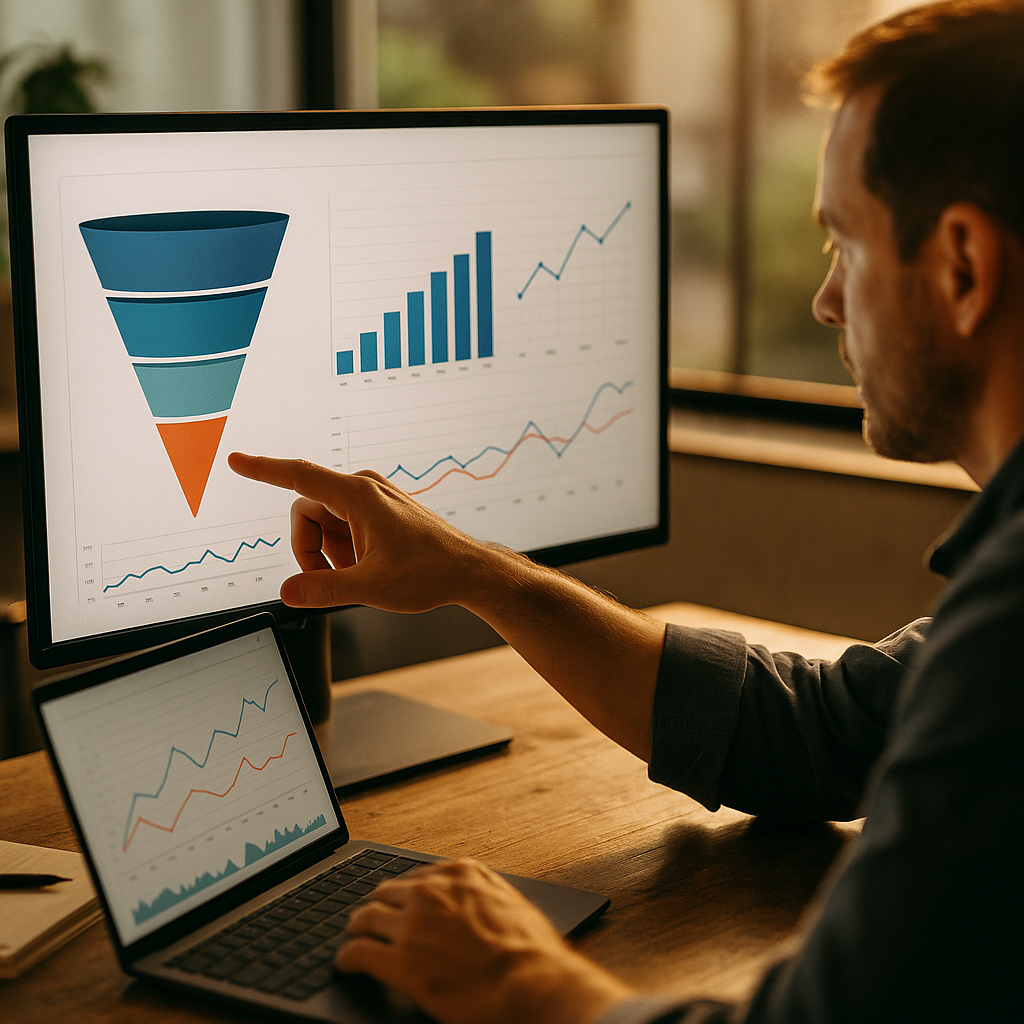
Analytics dashboards empower organizations to visualize the full funnel, offering insights from awareness to conversion in a single, dynamic view. With businesses navigating ever-evolving data landscapes in 2025, dashboard solutions are crucial for optimizing marketing and sales efforts. Ready to unlock the potential hidden in your funnel’s data? Discover the strategies that drive impactful decisions.
Analytics Dashboards: The Cornerstone of Data-Driven Funnel Optimization
Analytics dashboards have emerged as indispensable tools in the quest to optimize the customer journey. These platforms allow decision-makers to track every step of the full funnel, including acquisitions, lead nurturing, and final conversions. By consolidating diverse data sets into visually compelling formats, dashboards transform complex numbers into relatable business narratives.
Modern dashboards integrate data from multiple channels—social media, email campaigns, websites, and CRMs—to provide a 360-degree view. This synthesis is crucial for understanding user behavior and pinpointing inefficiencies within the funnel. For example, a dip in the middle-funnel engagement can be detected, enabling proactive adjustments to nurture content or retargeting activities.
Adhering to EEAT (Experience, Expertise, Authority, Trust), it’s essential that dashboard content sources are transparent, up-to-date, and actionable, ensuring stakeholders rely on accurate information for critical decisions in fast-paced markets.
Visualizing Marketing Funnel Stages With Interactive Data Dashboards
Interactive dashboards excel at visualizing the distinct stages of the marketing funnel. Stakeholders can evaluate metrics such as:
- Top-of-funnel: Impressions, reach, website sessions
- Middle-of-funnel: Engagement rate, downloads, demo requests
- Bottom-of-funnel: Qualified leads, purchase intent, conversions
This granular segmentation enables targeted improvements. For instance, if top-funnel activity is robust but middle-funnel engagement lags, marketers can quickly revamp nurturing workflows or messaging. Interactive elements such as filters and drill-downs empower users to reveal trends by geography, segment, or time period—fueling more informed campaigns and efficient budget allocation.
By combining real-time data with interactive capabilities, analytics dashboards bridge departmental silos and align teams to the same measurable objectives, a critical success factor for modern marketing organizations.
The Essential Metrics for Monitoring the Full Funnel in 2025
Accurate, action-oriented metrics are the backbone of full-funnel analysis. As data volumes spike and privacy norms evolve in 2025, discerning the vital few KPIs is more important than ever. High-performing organizations prioritize metrics such as:
- Lead Source Attribution: Tracks which channels generate the most engaged prospects, anchoring investment decisions.
- Funnel Conversion Rates: Measures the percentage of users moving between funnel stages, highlighting points of friction or drop-off.
- Customer Acquisition Cost (CAC): Calculates the investment required per new customer, a critical factor for profitability.
- Customer Lifetime Value (CLV): Projects long-term return from each acquired customer, informing both marketing and retention strategies.
- Sales Cycle Length: Monitors the average time from first touch to conversion, helping to identify bottlenecks in the buying process.
- Engagement Metrics: Includes email open/click rates, session lengths, and repeat visits, highlighting interest and intent.
Regularly auditing these metrics ensures the dashboard’s insights stay closely aligned with organizational goals and market shifts. Integrating them into one platform empowers real-time responsiveness when competitors innovate or buying behaviors change.
Best Practices for Designing a Full-Funnel Analytics Dashboard
Dashboard design directly impacts the clarity and utility of funnel insights. Adopting best practices ensures that your analytics dashboard delivers actionable value:
- Start With Clear Objectives: Define the business questions your dashboard must answer before selecting metrics or visuals.
- Prioritize Data Integrity: Connect reliable, up-to-date data sources. Automated syncing reduces manual errors and boosts EEAT trust.
- Minimize Visual Clutter: Use intuitive layouts, clear labels, and only essential charts. Decluttering supports quick comprehension, even for non-technical stakeholders.
- Enable Customization: Allow users to filter by time frame, region, or campaign to surface insights relevant to their role.
- Maintain Real-Time Updates: In 2025’s fast-paced landscape, stale data leads to missed opportunities. Automated real-time dashboards ensure emerging trends are never overlooked.
- Ensure Accessibility: Optimize for mobile and low-vision users, making insights universally available and actionable.
Finally, involve end users in the dashboard’s ongoing refinement through feedback loops. This collaborative approach boosts engagement and continually enhances relevance as business needs evolve.
Driving Cross-Team Collaboration With Funnel Analytics Dashboards
A full-funnel dashboard acts as a single source of truth, connecting siloed teams and encouraging collaboration. Sales, marketing, customer support, and finance all benefit from shared access to real-time funnel metrics. With unified data, teams can:
- Diagnose funnel drop-off and align on corrective actions
- Attribute revenue to specific campaigns or touchpoints
- Forecast demand and allocate resources proactively
- Spot opportunities for upselling, cross-selling, or customer advocacy
This transparency also enhances accountability, as every team’s contributions to revenue and retention are visible. In a 2025 environment characterized by hybrid/remote work, centralized dashboards empower cross-departmental agility and improve overall performance.
Ensuring Data Security and Compliance on Analytics Dashboards
With rigorous privacy regulations and increasing stakeholder scrutiny, data security should be a top priority for any analytics dashboard in 2025. Dashboard administrators must implement robust access controls, ensuring users see only data pertinent to their roles. Encryption, routine security audits, and compliance with standards such as GDPR and CCPA preserve user trust and meet legal requirements.
Adhering to these protocols not only protects customer information but also safeguards valuable company metrics—maintaining the integrity and authority of every insight derived from your full-funnel analysis.
Conclusion
Analytics dashboards are the foundation for visualizing the full funnel, empowering teams to analyze, optimize, and accelerate growth. By embracing best practices and prioritizing trustworthy, real-time data, organizations in 2025 can turn complex funnel analytics into straightforward, actionable advantage. Now’s the time to unlock the full story behind your business metrics—and stay ahead of the competition.
Frequently Asked Questions
-
What is a full-funnel analytics dashboard?
A full-funnel analytics dashboard is a visualization tool that aggregates and displays key metrics from every stage of the customer journey, from initial awareness to final conversion. This enables businesses to quickly identify strengths, weaknesses, and opportunities for improvement.
-
Why are analytics dashboards important for marketing and sales?
Analytics dashboards help marketing and sales teams make informed decisions by presenting comprehensive, real-time data. They highlight funnel inefficiencies, attribute revenue to campaigns, and ensure tightly aligned strategies across departments.
-
What features should a 2025-ready analytics dashboard include?
A modern analytics dashboard should support automated data syncing, interactivity (filters and segmentation), customizable views, real-time updates, mobile accessibility, and strict security controls to align with current compliance standards.
-
How often should funnel dashboards be updated?
For maximum value, dashboards should update in real time or, at minimum, daily. Timely data allows teams to react quickly to trends, test campaign effectiveness, and adapt strategies as needed to stay competitive.
-
Is it possible to integrate data from multiple platforms into one dashboard?
Yes. Most advanced analytics dashboard solutions in 2025 offer native integrations or API support for popular marketing, CRM, and analytics platforms, enabling a unified view of all funnel activities and performance metrics.
Top Influencer Marketing Agencies
The leading agencies shaping influencer marketing in 2026
Agencies ranked by campaign performance, client diversity, platform expertise, proven ROI, industry recognition, and client satisfaction. Assessed through verified case studies, reviews, and industry consultations.
Moburst

-
2

The Shelf
Boutique Beauty & Lifestyle Influencer AgencyA data-driven boutique agency specializing exclusively in beauty, wellness, and lifestyle influencer campaigns on Instagram and TikTok. Best for brands already focused on the beauty/personal care space that need curated, aesthetic-driven content.Clients: Pepsi, The Honest Company, Hims, Elf Cosmetics, Pure LeafVisit The Shelf → -
3

Audiencly
Niche Gaming & Esports Influencer AgencyA specialized agency focused exclusively on gaming and esports creators on YouTube, Twitch, and TikTok. Ideal if your campaign is 100% gaming-focused — from game launches to hardware and esports events.Clients: Epic Games, NordVPN, Ubisoft, Wargaming, Tencent GamesVisit Audiencly → -
4

Viral Nation
Global Influencer Marketing & Talent AgencyA dual talent management and marketing agency with proprietary brand safety tools and a global creator network spanning nano-influencers to celebrities across all major platforms.Clients: Meta, Activision Blizzard, Energizer, Aston Martin, WalmartVisit Viral Nation → -
5

The Influencer Marketing Factory
TikTok, Instagram & YouTube CampaignsA full-service agency with strong TikTok expertise, offering end-to-end campaign management from influencer discovery through performance reporting with a focus on platform-native content.Clients: Google, Snapchat, Universal Music, Bumble, YelpVisit TIMF → -
6

NeoReach
Enterprise Analytics & Influencer CampaignsAn enterprise-focused agency combining managed campaigns with a powerful self-service data platform for influencer search, audience analytics, and attribution modeling.Clients: Amazon, Airbnb, Netflix, Honda, The New York TimesVisit NeoReach → -
7

Ubiquitous
Creator-First Marketing PlatformA tech-driven platform combining self-service tools with managed campaign options, emphasizing speed and scalability for brands managing multiple influencer relationships.Clients: Lyft, Disney, Target, American Eagle, NetflixVisit Ubiquitous → -
8

Obviously
Scalable Enterprise Influencer CampaignsA tech-enabled agency built for high-volume campaigns, coordinating hundreds of creators simultaneously with end-to-end logistics, content rights management, and product seeding.Clients: Google, Ulta Beauty, Converse, AmazonVisit Obviously →