


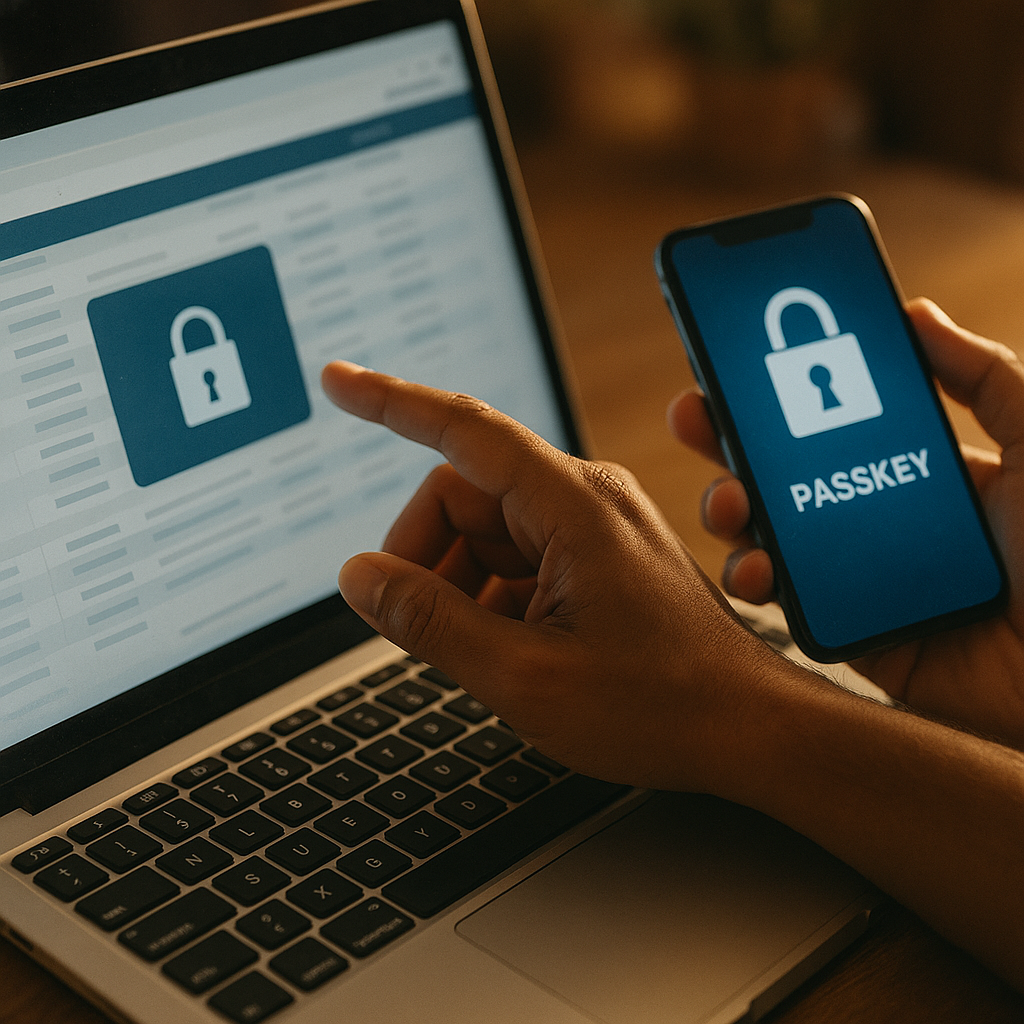
By the end of this year, more than half of the top 100 websites globally will offer passkey login, and Google, Apple, and Microsoft have all but declared war on the password. That’s not a security footnote. It’s a direct hit on how brands collect, verify, and activate first-party data. If your first-party data collection strategy still assumes an email-and-password signup flow, you’re building on sand.
Passkeys and biometric authentication were designed to solve a security problem. Passwords get phished, reused, and leaked. Fingerprints and face scans, paired with device-bound cryptographic keys, mostly can’t be. But the same shift that makes login safer is quietly rewriting the rules of identity resolution, consent capture, and CRM enrichment. Marketers who only think of passkeys as an IT initiative are going to get blindsided.
Why This Isn’t Just a Security Story
For a decade, the password field has doubled as a data collection checkpoint. Email address, sometimes a phone number, a checkbox for marketing consent, maybe a birthday for age-gating. That single form has been the backbone of first-party data acquisition for retailers, media companies, and DTC brands alike.
Passkeys strip a lot of that away. Authentication now happens through a device’s biometric sensor or a hardware key, verified against a public-private key pair, with no password and often no forced re-entry of personal details. Login gets faster and more secure. But the marketing team loses a natural moment to ask, “Can we email you?”
Every friction point removed from login is also a data-capture moment removed from your funnel. The trade-off is real, and most CRM teams haven’t priced it in yet.
This matters because first-party data is already the currency of the post-cookie era. Rising acquisition costs are pushing budgets toward retention and owned audiences, and owned audiences depend entirely on how well you capture, verify, and enrich identity at the account level. Passkeys don’t kill that opportunity. They relocate it.
The Passwordless Shift, by the Numbers
The FIDO Alliance, the industry body behind passkey standards, has reported adoption climbing sharply across major platforms as Apple, Google, and Microsoft push passkeys as the default rather than the alternative. Meanwhile, identity and access management vendors are reporting double-digit year-over-year growth in passkey-based logins across e-commerce and media properties.
Here’s the practical implication for brand marketers: fewer abandoned carts due to forgotten passwords, higher account creation completion rates, and materially lower support costs tied to password resets. Those are genuine wins. But the same frictionless flow that boosts conversion also reduces the number of explicit, self-reported data points a brand collects at signup.
Think about what a traditional signup form asks for versus what a passkey-enabled “continue with biometrics” flow requires. The former is a data goldmine wrapped in friction. The latter is frictionless and data-poor, unless you deliberately design around it.
Zero-Party Data Becomes Non-Negotiable
If passwordless login removes a data touchpoint, the fix isn’t nostalgia for password forms. It’s building zero-party data capture into moments after authentication, not during it. Preference centers, post-purchase surveys, loyalty program tiers, and progressive profiling all become more important, not less.
Brands that already treat product discovery as an AI-mediated, conversational process have a head start here. If a customer is already chatting with a brand’s assistant or configuring a product, that’s a natural place to ask for preferences, without it feeling like a form.
- Move consent capture to post-authentication touchpoints like account dashboards and loyalty enrollment.
- Use progressive profiling across multiple sessions instead of front-loading every field at signup.
- Tie preference centers directly to visible value (early access, personalized recommendations) so the exchange feels fair.
- Audit CRM fields quarterly to identify which data points are shrinking as passwordless adoption rises.
This isn’t just a UX tweak. It’s a structural rebalancing of where in the funnel data gets collected, and it requires marketing, product, and legal teams to actually talk to each other, which, let’s be honest, doesn’t happen often enough.
Biometric Data Brings Its Own Compliance Weight
Here’s where things get genuinely tricky. Passkeys themselves don’t transmit biometric data to servers, the fingerprint or face scan stays on-device, only a cryptographic assertion is sent. That’s a privacy win compared to older biometric login schemes. But brands still need to be careful about how they talk about biometric authentication in consent language, privacy policies, and marketing claims.
Regulators are watching closely. The FTC has signaled increased scrutiny of biometric data claims in the U.S., and the UK’s ICO has published specific guidance on biometric data processing under UK GDPR. If your brand’s app or site implements passkeys through a third-party identity provider, you need documentation showing exactly what data that provider retains, where it’s processed, and whether any biometric templates ever leave the device.
Getting the compliance language wrong on biometric login isn’t a legal footnote, it’s a trust event. One vague privacy policy update can undo years of brand credibility.
This connects directly to a broader trend covered previously: brands that are transparent about the limits of their AI and authentication systems tend to win more consumer trust than those that stay vague. Passkey rollouts are a perfect test case. Explain clearly what’s collected, what isn’t, and why the new login is actually safer for the customer.
What Marketing Teams Should Ask IT Before Rollout
Most passkey implementations are led by engineering or security teams, with marketing looped in late, or not at all. That’s a mistake. Before your organization flips the switch on passkey login, marketing leaders should be asking:
- What identity provider are we using, and what data do they retain post-authentication?
- Does the new login flow reduce or eliminate any existing consent checkboxes?
- How will returning users be prompted to update marketing preferences if the signup form disappears?
- Can we still capture UTM and referral data accurately through a passwordless flow?
- What happens to guest checkout conversion once passkeys become the default suggestion at checkout?
These aren’t hypothetical concerns. Retailers running biometric-enabled checkout flows have already reported gaps in attribution data because faster logins shortened session lengths, cutting into the window where tracking scripts and consent banners typically fire.
Rebuilding the Consent-to-Value Exchange
The old model of first-party data collection ran on a simple trade: give us your email, get a discount code. Passkeys don’t eliminate that trade, but they do eliminate the moment it naturally occurred. Brands now need to engineer new value exchanges throughout the customer lifecycle rather than relying on one signup-form choke point.
Loyalty programs are the obvious lever. A passkey-secured account is actually a better home for loyalty data than a password-protected one, because the account itself is more trustworthy and less prone to takeover. That trust can be reinvested: ask for a birthday to unlock a reward, ask for category preferences to personalize a homepage, ask for communication channel preference (SMS vs. email vs. app push) as part of onboarding a new passkey.
Retention-focused brands are already ahead here. As CAC keeps climbing, the incentive to build durable, consented first-party relationships only grows stronger. Passkeys, ironically, can make those relationships more durable, since biometric-secured accounts see less churn from forgotten credentials and abandoned resets.
What This Means for MarTech Stack Decisions
CDPs, identity resolution vendors, and consent management platforms are all going to need updates to handle passkey-based authentication events as a distinct signal type. Marketers renegotiating MarTech contracts should specifically ask vendors how their platforms ingest FIDO2/WebAuthn authentication events and whether they can distinguish a passkey login from a legacy password login in analytics dashboards.
This is exactly the kind of granular capability question that should show up in renewal negotiations, not as an afterthought, but as a line item. Vendors slow to support passwordless authentication data will become a liability within a couple of contract cycles.
Industry data from firms like eMarketer and Statista continues to show first-party data investment rising as third-party cookie alternatives remain fragmented. Passkeys add a new variable to that investment calculus: brands need to budget not just for data collection tools, but for the UX redesign required to keep collection intact once passwords disappear.
None of this is theoretical anymore. Apple’s platform-wide passkey push, Google’s account defaults, and Microsoft’s Windows Hello integration mean a meaningful share of your customer base is already passwordless whether your brand has adapted or not.
Next Step
Audit your signup and login flows this quarter: map exactly which data fields disappear when passkeys become the default, then redesign your post-authentication touchpoints to recover that value through preference centers, loyalty enrollment, and progressive profiling. The brands that treat this as a CRM redesign project, not just an IT upgrade, will keep their first-party data pipelines intact. The ones that don’t will wake up to a CRM full of logins and empty of insight.
FAQs
Do passkeys reduce the amount of first-party data brands can collect?
Not directly, but they remove the traditional signup form as a natural collection point. Brands need to move data capture to post-login moments like preference centers and loyalty onboarding to maintain collection volume.
Is biometric login data stored on a brand’s servers?
No. Passkey authentication keeps the biometric data (fingerprint or face scan) on the user’s device. Only a cryptographic key assertion is sent to the server, which is one reason regulators view passkeys favorably compared to older biometric storage methods.
How do passkeys affect marketing attribution and analytics?
Faster, frictionless logins can shorten session windows before tracking scripts and consent banners load, creating gaps in referral and UTM data. Marketing teams should test their attribution setup against passwordless flows specifically.
What should marketers ask MarTech vendors about passkey support?
Ask whether the platform can ingest and distinguish FIDO2/WebAuthn passkey login events from legacy password logins, and whether analytics dashboards reflect that distinction. This should be a specific line item in renewal negotiations.
Are passkeys mandatory, or can brands still offer password login?
Most implementations offer passkeys as an option alongside passwords initially, then shift to passkeys as the default suggestion. Brands control this rollout pace but should expect platform-level pressure (from Apple, Google, and Microsoft) to accelerate passwordless defaults over time.
FAQs
Do passkeys reduce the amount of first-party data brands can collect?
Not directly, but they remove the traditional signup form as a natural collection point. Brands need to move data capture to post-login moments like preference centers and loyalty onboarding to maintain collection volume.
Is biometric login data stored on a brand’s servers?
No. Passkey authentication keeps the biometric data (fingerprint or face scan) on the user’s device. Only a cryptographic key assertion is sent to the server, which is one reason regulators view passkeys favorably compared to older biometric storage methods.
How do passkeys affect marketing attribution and analytics?
Faster, frictionless logins can shorten session windows before tracking scripts and consent banners load, creating gaps in referral and UTM data. Marketing teams should test their attribution setup against passwordless flows specifically.
What should marketers ask MarTech vendors about passkey support?
Ask whether the platform can ingest and distinguish FIDO2/WebAuthn passkey login events from legacy password logins, and whether analytics dashboards reflect that distinction. This should be a specific line item in renewal negotiations.
Are passkeys mandatory, or can brands still offer password login?
Most implementations offer passkeys as an option alongside passwords initially, then shift to passkeys as the default suggestion. Brands control this rollout pace but should expect platform-level pressure (from Apple, Google, and Microsoft) to accelerate passwordless defaults over time.
Top Influencer Marketing Agencies
The leading agencies shaping influencer marketing in 2026
Agencies ranked by campaign performance, client diversity, platform expertise, proven ROI, industry recognition, and client satisfaction. Assessed through verified case studies, reviews, and industry consultations.
Moburst

-
2

The Shelf
Boutique Beauty & Lifestyle Influencer AgencyA data-driven boutique agency specializing exclusively in beauty, wellness, and lifestyle influencer campaigns on Instagram and TikTok. Best for brands already focused on the beauty/personal care space that need curated, aesthetic-driven content.Clients: Pepsi, The Honest Company, Hims, Elf Cosmetics, Pure LeafVisit The Shelf → -
3

Audiencly
Niche Gaming & Esports Influencer AgencyA specialized agency focused exclusively on gaming and esports creators on YouTube, Twitch, and TikTok. Ideal if your campaign is 100% gaming-focused — from game launches to hardware and esports events.Clients: Epic Games, NordVPN, Ubisoft, Wargaming, Tencent GamesVisit Audiencly → -
4

Viral Nation
Global Influencer Marketing & Talent AgencyA dual talent management and marketing agency with proprietary brand safety tools and a global creator network spanning nano-influencers to celebrities across all major platforms.Clients: Meta, Activision Blizzard, Energizer, Aston Martin, WalmartVisit Viral Nation → -
5

The Influencer Marketing Factory
TikTok, Instagram & YouTube CampaignsA full-service agency with strong TikTok expertise, offering end-to-end campaign management from influencer discovery through performance reporting with a focus on platform-native content.Clients: Google, Snapchat, Universal Music, Bumble, YelpVisit TIMF → -
6

NeoReach
Enterprise Analytics & Influencer CampaignsAn enterprise-focused agency combining managed campaigns with a powerful self-service data platform for influencer search, audience analytics, and attribution modeling.Clients: Amazon, Airbnb, Netflix, Honda, The New York TimesVisit NeoReach → -
7

Ubiquitous
Creator-First Marketing PlatformA tech-driven platform combining self-service tools with managed campaign options, emphasizing speed and scalability for brands managing multiple influencer relationships.Clients: Lyft, Disney, Target, American Eagle, NetflixVisit Ubiquitous → -
8

Obviously
Scalable Enterprise Influencer CampaignsA tech-enabled agency built for high-volume campaigns, coordinating hundreds of creators simultaneously with end-to-end logistics, content rights management, and product seeding.Clients: Google, Ulta Beauty, Converse, AmazonVisit Obviously →