


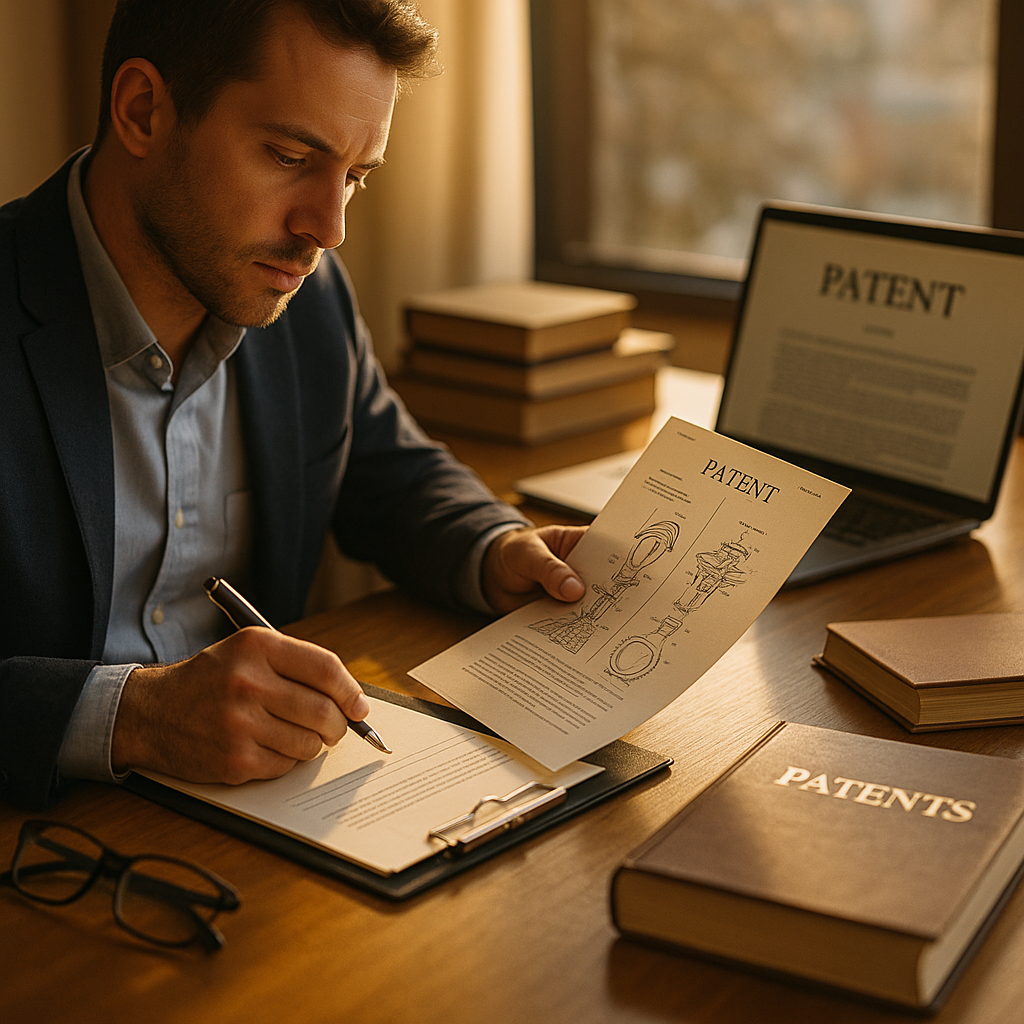
Understanding patent law basics is crucial for marketing teams navigating today’s competitive landscape. The primary keyword, “patent law basics,” is essential to safeguard innovations and avoid costly legal errors. Whether you’re launching new products or creating content, knowing the ins and outs of patent law can mean the difference between campaign success and setbacks—discover what marketers need to know today.
What Is Patent Law? Key Intellectual Property Principles for Marketers
Patent law protects inventions by granting inventors exclusive rights to make, use, or sell their creations for a set period, typically up to 20 years. This area of intellectual property law ensures inventors can benefit financially from their work, which fuels innovation across industries. For marketing professionals, understanding these legal protections is critical when introducing new products or technologies to market.
A patent is granted by government authorities and applies only in certain territories, such as the United States or the European Union. Violating patents can result in expensive litigation, brand damage, and loss of trust. As marketers often work with innovative features and messaging, being aware of a company’s patent rights—and competitors’ patents—minimizes risks and keeps campaigns on solid legal ground.
Three main types of patents that marketers encounter include:
- Utility patents—protect new processes, machines, or compositions of matter.
- Design patents—cover the unique visual qualities of a product.
- Plant patents—relate to new, asexually reproduced plant varieties.
Having clarity on these patent categories helps marketing teams tailor messaging and product launches to stay legally compliant and build consumer trust.
How Patent Law Impacts Marketing Strategies and Campaigns
Patent law directly shapes how marketing teams position products and services. For example, claiming a feature is “unique” or “patented” can create strong value propositions—but only if those claims are accurate and legally substantiated. Misleading marketing puts both campaign credibility and the company at legal risk.
Several real-world scenarios underline the link between patent law and marketing:
- Launching a campaign for a newly patented product can provide early-mover advantage and justify premium pricing.
- Copying competitor messaging or visuals protected by design patents may result in rapid takedown and even penalties.
- Publicly disclosing innovation details too early—such as in pre-launch teasers—may jeopardize patent applications if novelty is compromised.
Ensuring close collaboration between R&D, legal, and marketing departments helps avoid unintentional disclosure or infringement, which can harm a brand’s reputation and bottom line.
Patent Searches and Freedom to Operate: What Every Marketing Team Must Know
Before launching new campaigns, marketing teams must verify that their messaging and featured products do not infringe on existing patents. This is achieved through thorough patent searches and so-called “freedom to operate” (FTO) analyses, essential for risk management in 2025’s fast-moving markets.
Patent searches involve reviewing public databases to check whether similar inventions or design patents exist. Resources such as the United States Patent and Trademark Office (USPTO), European Patent Office (EPO), and global platforms like WIPO’s PATENTSCOPE make this process more accessible. Engaging a patent attorney or specialist is highly recommended for comprehensive searching.
Freedom to operate analyses go further by evaluating whether your marketing activities—or the underlying products—may infringe on valid, enforceable patents in your target geographies. The FTO helps companies tweak design or messaging before launch and identifies the need for licensing agreements or collaboration with other patent owners.
Best Practices for Marketing Claims: ‘Patented,’ ‘Patent Pending,’ and Legal Compliance
Misrepresenting a product’s patent status can have legal and reputational consequences. Marketing teams should understand—and accurately use—terms like “patented” and “patent pending” in all public communications.
- “Patented” should be used only if a patent has been officially granted. Claiming “patented” status without an issued patent can result in penalties from regulatory bodies.
- “Patent pending” is appropriate after a patent application has been filed but before a decision is issued. It signals innovation while noting that legal protection is in process.
- Disclaimers and clear language should accompany any patent-related claim. Avoid overstating legal protections, and clarify if patents apply to just one product aspect or territory.
According to the UK Intellectual Property Office (IPO) and recent U.S. Federal Trade Commission (FTC) guidelines, substantiating marketing claims with verifiable, up-to-date information is crucial in 2025. Marketers should always coordinate with their company’s legal advisors to ensure claims are accurate and defensible.
Collaborating With Legal and Product Teams: Building a Patent-Smart Marketing Workflow
Given the complexity of patent law basics, successful marketing teams establish ongoing dialogue with legal and product departments. Clear processes mitigate risk and streamline go-to-market timelines:
- Involve legal counsel early. Bring lawyers or intellectual property specialists into campaign planning from the start. Early collaboration eliminates late-stage setbacks and costly rework.
- Maintain patent documentation. Ensure marketing has access to up-to-date records of the company’s active patents and applications, which can be referenced for correct claims.
- Review third-party rights. Check whether any technology, design, or messaging proposed for campaigns might infringe on competitors’ patents—especially in cross-border projects.
- Educate the team. Offer regular training on intellectual property basics to keep non-legal marketing staff abreast of best practices and regulatory updates.
These steps foster a culture of innovation without compromising on legal integrity, ensuring product launches and brand messaging are consistently effective and compliant.
International Considerations: Global Patent Laws and Multi-Country Marketing
With many campaigns spanning countries in 2025, marketing teams must navigate complex patent law differences across jurisdictions. Patent rights are territorial, meaning a patent granted in one region (e.g., the U.S.) doesn’t automatically confer legal protection elsewhere. This has direct implications for global marketing initiatives:
- Always verify patent status in each target country before launching campaigns or using patent claims in messaging.
- Be vigilant about varying legal terminology and requirements—what is legal to say in one market could be misleading in another.
- Work with local legal experts when entering new international markets, and consider the Patent Cooperation Treaty (PCT) for streamlined application in multiple regions.
Overlooking these nuances can expose brands to market-specific risks and slow global expansion efforts. Ensuring patent-smart, locally compliant strategies is essential for modern marketing success.
Conclusion: Why Patent Law Basics Matter for Every Marketing Team
In 2025, understanding patent law basics empowers marketing teams to innovate confidently, avoid costly mistakes, and strengthen brand reputation. By integrating legal insights into campaign planning, marketers protect both their creativity and company assets. Make patent law knowledge a standard part of your workflow for sustainable success in today’s fast-paced markets.
FAQs: Patent Law Basics for Marketing Teams
-
Can we market a product as “patent pending” before a patent is granted?
Yes—once a patent application is formally filed, “patent pending” is a lawful claim. However, do not use “patented” until official approval is received. -
What risks are associated with infringing another company’s patent in marketing?
Infringement can result in lawsuits, costly settlements, product pullbacks, and loss of trust. Marketers may also face regulatory penalties for misleading or unlawful claims. -
Should we mention all our patents in product materials?
Only reference patents relevant to the specific product or feature being marketed. Overstating coverage can be misleading and may draw regulatory scrutiny. -
Do we need to check patents if our product is only launching in one country?
Yes—ensure that your marketing and product do not infringe on any patents in that country. Even single-country launches can trigger litigation if local rights are violated. -
Who in the company should marketers consult about patents?
Always work with legal counsel or designated intellectual property specialists. They ensure your claims are accurate and that messaging aligns with company patent strategy.
Top Influencer Marketing Agencies
The leading agencies shaping influencer marketing in 2026
Agencies ranked by campaign performance, client diversity, platform expertise, proven ROI, industry recognition, and client satisfaction. Assessed through verified case studies, reviews, and industry consultations.
Moburst

-
2

The Shelf
Boutique Beauty & Lifestyle Influencer AgencyA data-driven boutique agency specializing exclusively in beauty, wellness, and lifestyle influencer campaigns on Instagram and TikTok. Best for brands already focused on the beauty/personal care space that need curated, aesthetic-driven content.Clients: Pepsi, The Honest Company, Hims, Elf Cosmetics, Pure LeafVisit The Shelf → -
3

Audiencly
Niche Gaming & Esports Influencer AgencyA specialized agency focused exclusively on gaming and esports creators on YouTube, Twitch, and TikTok. Ideal if your campaign is 100% gaming-focused — from game launches to hardware and esports events.Clients: Epic Games, NordVPN, Ubisoft, Wargaming, Tencent GamesVisit Audiencly → -
4

Viral Nation
Global Influencer Marketing & Talent AgencyA dual talent management and marketing agency with proprietary brand safety tools and a global creator network spanning nano-influencers to celebrities across all major platforms.Clients: Meta, Activision Blizzard, Energizer, Aston Martin, WalmartVisit Viral Nation → -
5

The Influencer Marketing Factory
TikTok, Instagram & YouTube CampaignsA full-service agency with strong TikTok expertise, offering end-to-end campaign management from influencer discovery through performance reporting with a focus on platform-native content.Clients: Google, Snapchat, Universal Music, Bumble, YelpVisit TIMF → -
6

NeoReach
Enterprise Analytics & Influencer CampaignsAn enterprise-focused agency combining managed campaigns with a powerful self-service data platform for influencer search, audience analytics, and attribution modeling.Clients: Amazon, Airbnb, Netflix, Honda, The New York TimesVisit NeoReach → -
7

Ubiquitous
Creator-First Marketing PlatformA tech-driven platform combining self-service tools with managed campaign options, emphasizing speed and scalability for brands managing multiple influencer relationships.Clients: Lyft, Disney, Target, American Eagle, NetflixVisit Ubiquitous → -
8

Obviously
Scalable Enterprise Influencer CampaignsA tech-enabled agency built for high-volume campaigns, coordinating hundreds of creators simultaneously with end-to-end logistics, content rights management, and product seeding.Clients: Google, Ulta Beauty, Converse, AmazonVisit Obviously →