


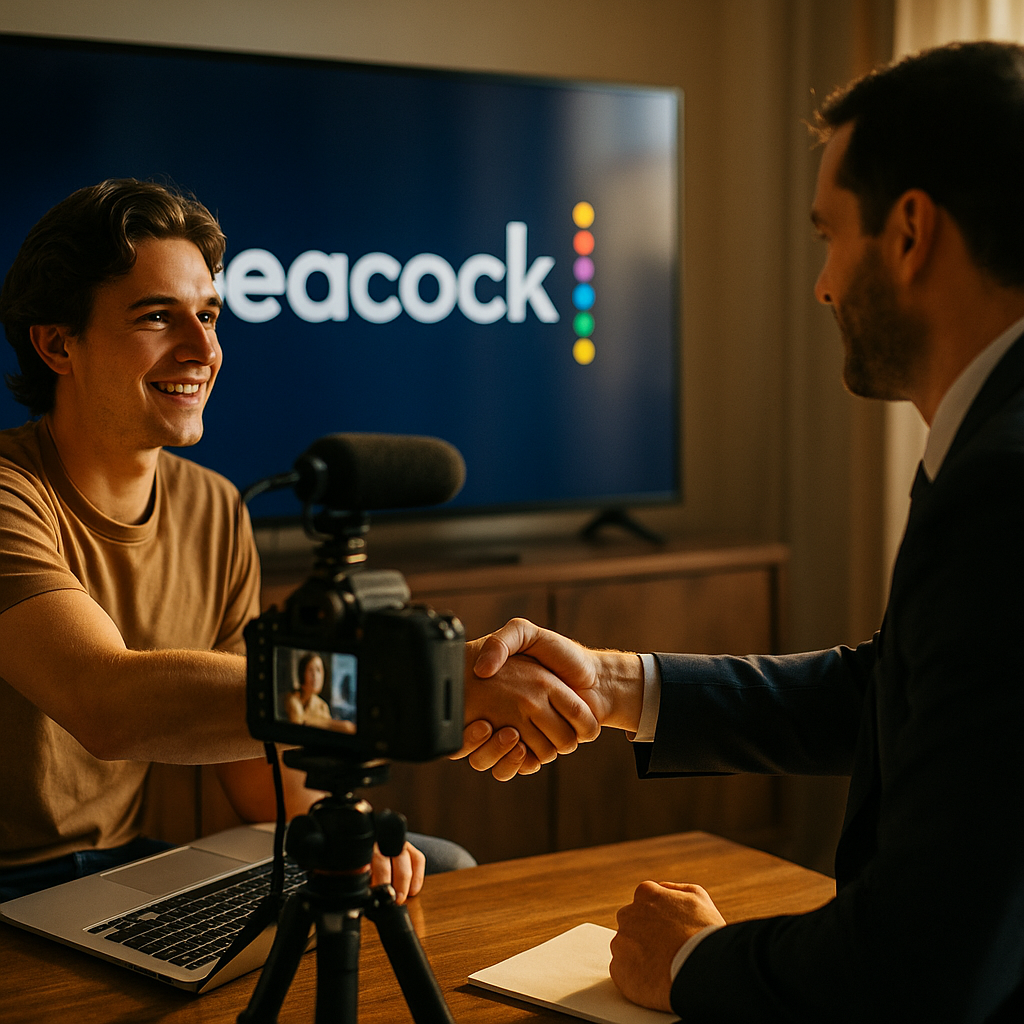
Streaming platforms lost 1.8 million hours of viewer attention to creator content last year, according to Nielsen’s Gauge data, and NBCUniversal just decided to stop fighting it. The company’s new Peacock deal brings creators directly onto its streaming platform as programmed talent, not just promotional partners. For brands still treating streaming ad buys and influencer budgets as separate line items, this is the moment those lines blur permanently.
What Actually Changed With the Peacock Deal
NBCUniversal restructured part of its Peacock content pipeline to feature creator-led shows and personalities alongside its traditional network programming. That’s not a licensing arrangement where a creator’s YouTube series gets mirrored on a streaming app. It’s a production and distribution relationship where creators get real budgets, editorial support, and a built-in audience that skews differently than their native platform followers.
Why does that distinction matter? Because it changes the economics for brands buying into that content. A creator show on Peacock carries the measurement infrastructure of a streaming platform (Nielsen ratings, subscriber data, ad server logs) layered on top of the creator’s existing parasocial trust with their audience. That combination has been rare. Streaming had scale and measurement. Creators had trust and engagement. Nobody had both in one package until now.
The Peacock deal isn’t a content licensing footnote, it’s a signal that legacy media companies now see creators as programming, not just promotion.
Why Streaming Platforms Suddenly Want Creators
Subscription fatigue is real. Streaming services are bleeding subscribers to churn, and original content budgets have tightened across the industry. Creators solve two problems at once: they’re cheaper to produce than scripted television, and they arrive with an audience that doesn’t need to be built from zero through marketing spend.
This mirrors what YouTube has been arguing for years about its own economic footprint on culture and commerce, a point covered in our look at YouTube’s GDP claim and what it means for brand media plans. Streaming executives read those numbers too. When a platform’s own economic self-assessment gets that large, traditional media companies start asking whether they should compete with creators or absorb them. NBCUniversal chose absorption.
There’s also a talent pipeline argument. Streaming platforms have struggled to develop new stars organically. Creators arrive pre-vetted by their audiences, with performance data attached. A creator with a loyal, engaged following is a lower-risk bet than a scripted pilot nobody has tested. That’s not a small efficiency gain, it’s a fundamentally different development model.
Does This Mean Bigger Budgets or Just Bigger Confusion?
Here’s the uncomfortable question every media buyer is quietly asking: does this deal expand the creator budget pie, or does it just move money from one bucket to another?
Early signs suggest both. Some brands will treat streaming-creator inventory as an extension of their existing influencer spend, folding it into creator budgets already under pressure from CFO scrutiny. Our coverage of the CFO level audits now hitting creator spend makes clear that finance teams want fewer ambiguous line items, not more. Other brands, particularly those with large upfront TV commitments, will treat Peacock’s creator slate as a natural streaming buy and fund it from linear or CTV budgets instead.
Either way, the accounting matters. Attribution gets messier when a creator’s audience spans YouTube, TikTok, and now a subscription streaming platform with its own login wall and viewing behavior. Brands need to decide upfront which budget owns this spend and which KPIs apply, because retrofitting measurement after the campaign launches rarely works cleanly.
The Brand Playbook for Streaming-Creator Crossovers
If you’re a brand strategist evaluating whether to buy into this new inventory, a few practical questions should shape the decision before the media plan does.
- Who owns the audience relationship? On Peacock, the platform controls distribution and some editorial guardrails. That’s different from a creator’s owned channel, where they control tone, timing, and format entirely.
- What’s the measurement stack? Streaming platforms bring Nielsen-grade audience data. Creators bring engagement and social proof. Ask which metrics the deal actually reports on, and whether they reconcile with your existing creator ROI dashboards.
- Does this fit your acquisition or retention goals? Streaming-native creator content tends to skew toward brand awareness and top-funnel reach rather than the direct-response performance that platforms like TikTok Shop have trained brands to expect.
- How does compliance work here? Disclosure rules don’t disappear because content moved to a subscription platform. If anything, the production-partner structure raises new questions about material connections.
This is also a moment for brands to revisit internal org charts. Teams built around platform-specific creator relationships (TikTok specialists, Instagram leads) may not have a clear owner for streaming-creator hybrids. Our piece on influencer roles going permanent covers how brands are restructuring internally to keep pace with exactly this kind of platform sprawl.
Agencies are adapting too. Expect boutique talent shops, the ones already reshaping fee structures and vetting, to start negotiating streaming-inclusive contracts as a standard clause rather than a special case. If your agency partner isn’t already asking about this, that’s worth flagging in your next review.
Risk, Compliance, and the FTC Question
Regulatory exposure doesn’t shrink just because a creator’s content lives on a premium streaming platform instead of a social feed. The Federal Trade Commission has been explicit that disclosure obligations follow the material connection, not the distribution channel. If NBCUniversal is paying a creator to produce content and a brand is paying to be featured within it, that’s a layered disclosure situation brands need their legal teams reviewing now, not after launch.
This connects directly to a trend we’ve tracked closely: finance creators facing tighter compliance demands after events like FinCon, where deals now require documented compliance proof before they close. Expect that standard to spread into entertainment and lifestyle categories as streaming platforms formalize creator partnerships. A platform with broadcast-standards legal teams behind it is not going to tolerate the loose disclosure practices that persist on some social platforms.
Brands that treat streaming-creator content as exempt from standard disclosure review are setting themselves up for the next FTC enforcement wave, not avoiding it.
There’s a data point worth sitting with here: the ANA’s widely cited research found that 29 percent of influencer spend goes to waste, often due to poor vetting and unclear performance tracking. Streaming-creator hybrids introduce a new layer of complexity to that same problem. Without clear attribution and compliance frameworks from day one, brands risk repeating the same waste in a shinier package.
What This Means for Media Planning Going Forward
NBCUniversal won’t be the last legacy media company to make this move. Expect Warner Bros. Discovery, Paramount, and Disney to explore similar creator-integration strategies on their own streaming platforms as subscriber growth slows and content costs stay stubbornly high. Industry analysts at eMarketer have flagged creator-brand crossover content as one of the fastest-growing categories in digital ad spend, and streaming distribution is a natural next step for that growth curve.
For brand strategists, the practical takeaway is this: streaming and creator marketing are no longer separate disciplines with separate teams, separate budgets, and separate measurement frameworks. The Peacock deal is proof that the biggest media companies in the world have already made that call internally. Brands that keep those functions siloed will find themselves negotiating from a weaker position when the next streaming platform announces its own creator slate.
It’s also worth watching how audience trust holds up. Creators built their reputations on independence from traditional media gatekeepers. Folding them into a legacy network’s programming structure could dilute exactly the authenticity that made them valuable in the first place. Brands should watch engagement data closely on this early Peacock slate before committing large budgets, because the audience reaction here will tell you more than any press release will.
Next step: Before your next streaming or upfront negotiation, ask your media partner directly whether their platform has creator-integrated inventory in the pipeline, and get your legal and analytics teams reviewing disclosure and attribution frameworks now, not after the first campaign launches.
Frequently Asked Questions
What is the NBCUniversal Peacock deal with creators?
It’s a partnership structure where NBCUniversal produces and distributes creator-led content directly on its Peacock streaming platform, treating creators as programming talent rather than external promotional partners.
Why does the Peacock deal matter for brand marketers?
It signals that streaming platforms and creator marketing are merging into a single discipline. Brands that keep influencer budgets and streaming ad buys in separate silos will need to rethink measurement, attribution, and team structure to compete for this new inventory.
Does creator content on Peacock require FTC disclosure?
Yes. The FTC’s disclosure rules apply based on material financial connections, not the platform where content appears. Brands and creators involved in streaming-distributed sponsored content still need clear, conspicuous disclosures.
How should brands measure ROI on streaming-creator content?
Combine platform-level audience data (like Nielsen ratings or subscriber viewing metrics) with standard creator performance indicators such as engagement rate and conversion tracking. Treat this as a hybrid measurement problem rather than forcing it into either a pure TV or pure social framework.
Will other streaming platforms follow NBCUniversal’s approach?
Industry analysts widely expect it. As subscriber growth slows and content production costs remain high, competitors are likely to explore similar creator-integration strategies to reduce costs and tap into pre-built audiences.
Top Influencer Marketing Agencies
The leading agencies shaping influencer marketing in 2026
Agencies ranked by campaign performance, client diversity, platform expertise, proven ROI, industry recognition, and client satisfaction. Assessed through verified case studies, reviews, and industry consultations.
Moburst

-
2

The Shelf
Boutique Beauty & Lifestyle Influencer AgencyA data-driven boutique agency specializing exclusively in beauty, wellness, and lifestyle influencer campaigns on Instagram and TikTok. Best for brands already focused on the beauty/personal care space that need curated, aesthetic-driven content.Clients: Pepsi, The Honest Company, Hims, Elf Cosmetics, Pure LeafVisit The Shelf → -
3

Audiencly
Niche Gaming & Esports Influencer AgencyA specialized agency focused exclusively on gaming and esports creators on YouTube, Twitch, and TikTok. Ideal if your campaign is 100% gaming-focused — from game launches to hardware and esports events.Clients: Epic Games, NordVPN, Ubisoft, Wargaming, Tencent GamesVisit Audiencly → -
4

Viral Nation
Global Influencer Marketing & Talent AgencyA dual talent management and marketing agency with proprietary brand safety tools and a global creator network spanning nano-influencers to celebrities across all major platforms.Clients: Meta, Activision Blizzard, Energizer, Aston Martin, WalmartVisit Viral Nation → -
5

The Influencer Marketing Factory
TikTok, Instagram & YouTube CampaignsA full-service agency with strong TikTok expertise, offering end-to-end campaign management from influencer discovery through performance reporting with a focus on platform-native content.Clients: Google, Snapchat, Universal Music, Bumble, YelpVisit TIMF → -
6

NeoReach
Enterprise Analytics & Influencer CampaignsAn enterprise-focused agency combining managed campaigns with a powerful self-service data platform for influencer search, audience analytics, and attribution modeling.Clients: Amazon, Airbnb, Netflix, Honda, The New York TimesVisit NeoReach → -
7

Ubiquitous
Creator-First Marketing PlatformA tech-driven platform combining self-service tools with managed campaign options, emphasizing speed and scalability for brands managing multiple influencer relationships.Clients: Lyft, Disney, Target, American Eagle, NetflixVisit Ubiquitous → -
8

Obviously
Scalable Enterprise Influencer CampaignsA tech-enabled agency built for high-volume campaigns, coordinating hundreds of creators simultaneously with end-to-end logistics, content rights management, and product seeding.Clients: Google, Ulta Beauty, Converse, AmazonVisit Obviously →