


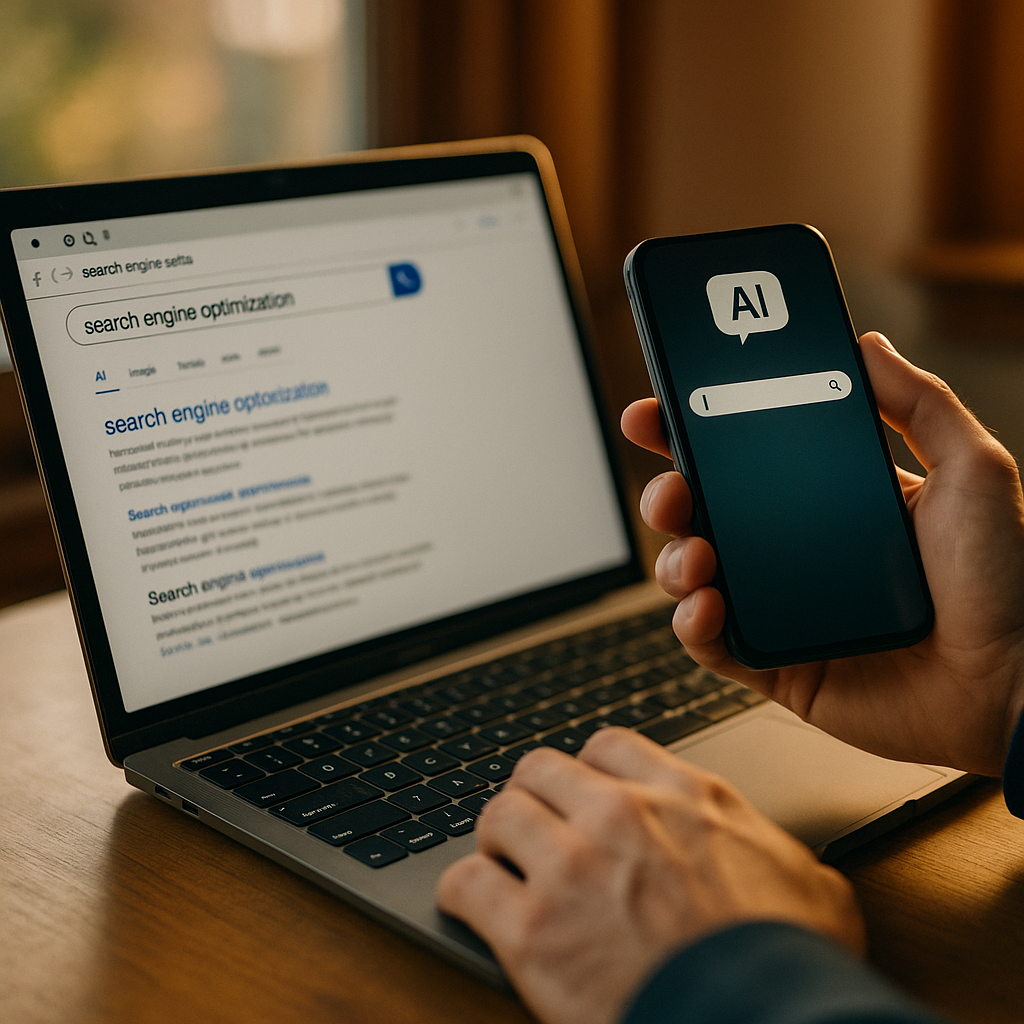
Roughly one in four consumers now start a product search inside a chatbot instead of Google. That single shift is quietly rewriting the rules of consumer product discovery, and most brand marketing plans still haven’t caught up. If your influencer briefs, SEO strategy, and content calendars were built for a search-first world, they’re already behind.
The Discovery Funnel Just Got a New Front Door
For two decades, product discovery followed a predictable path: type a query into Google, scan ten blue links, click a few, compare, buy. Brands built entire marketing stacks around that pattern. SEO teams chased featured snippets. Paid search teams bid on high-intent keywords. Affiliate and influencer teams optimized for “best of” roundups that would rank on page one.
That pattern is fracturing. Tools like ChatGPT, Perplexity, and Google’s AI Overviews now answer product questions directly, often without a single click to a brand’s website. A shopper asking “what’s the best moisturizer for sensitive skin” no longer gets a list of links. She gets a synthesized answer, sometimes with three product names, a short rationale, and maybe a shopping widget. The traffic that used to flow to comparison blogs, retailer pages, and creator content gets compressed into a single AI-generated paragraph.
According to eMarketer’s ongoing research into consumer behavior, a growing share of younger shoppers treat AI chat interfaces as a default research tool for purchases, not a novelty. That’s not a niche behavior anymore. It’s becoming the default entry point for category research, especially in beauty, tech, home goods, and wellness.
Why This Isn’t Just “SEO 2.0”
It’s tempting to file this under “another algorithm update, adjust and move on.” That undersells what’s happening. Traditional SEO optimizes for ranking on a results page a human will browse. Answer engine optimization, often shortened to AEO or GEO (generative engine optimization), optimizes for being cited, quoted, or recommended inside an AI-generated answer that a human may never scroll past.
The mechanics are different. Search engines rank pages. Answer engines synthesize claims from multiple sources and decide which brand names and product attributes to surface. That means the inputs matter differently. Structured data, clear factual claims, third-party validation, and consistent brand mentions across trusted sources carry more weight than backlink volume or exact-match keywords ever did.
If an AI model can’t find your product mentioned favorably across independent, credible sources, it simply won’t recommend it, no matter how well your own website ranks.
This is where influencer and creator content quietly becomes infrastructure rather than just top-of-funnel awareness. Large language models are trained and continuously updated on a mix of web content that includes creator reviews, UGC-style comparisons, forum threads, and social commentary. A product that shows up consistently in creator-generated reviews across YouTube, TikTok, and Reddit has a better shot at being cited by an AI answer engine than one that only appears in brand-owned copy.
What Brands Are Getting Wrong Right Now
Most marketing teams are still measuring success with search-era KPIs: organic traffic, click-through rate, keyword rankings. Those metrics don’t capture what happens when a consumer gets their answer inside the AI interface and never visits your site at all. You could be winning the recommendation and losing the analytics dashboard.
- Overreliance on owned content. Brand websites alone rarely carry enough independent credibility signal for an AI model to trust them as the sole source.
- No tracking for zero-click discovery. Most attribution models can’t yet detect when a sale originated from an AI chat recommendation rather than a search click.
- Treating creators as a media buy, not a data source. Creator content is increasingly training-set and retrieval-source material for these models, not just a campaign line item.
- Ignoring platform-native answer surfaces. TikTok search, Amazon’s Rufus, and Google’s AI Overviews are each becoming their own mini answer engines with different ranking logic.
This connects directly to a trend we’ve covered before: agentic commerce lets AI skip the influencer funnel entirely in some cases, with shopping agents completing purchases based on pre-set preferences rather than a human browsing a feed. Discovery and transaction are collapsing into the same moment, and neither happens on a results page anymore.
Creator Content as the New Trust Signal
Here’s the uncomfortable truth for brand marketers who’ve spent years polishing owned-channel messaging: AI answer engines don’t trust brands. They trust patterns of independent agreement. A product that gets mentioned favorably across dozens of nano and micro creator posts, forum threads, and third-party reviews builds a kind of aggregate credibility that a polished landing page cannot replicate.
This is partly why nano and micro creator engagement keeps outperforming bigger names in campaign data. Our reporting on nano creators winning the ROI argument and nano creator engagement resetting vetting rules both point to the same underlying dynamic: volume and authenticity of independent voices matter more than reach from a single large account. In an AI-mediated discovery world, that volume of independent, topically relevant content is exactly what feeds the retrieval systems behind answer engines.
Topical relevance also matters more than raw follower count when it comes to what gets surfaced. Our piece on topical fit beating follower count already flagged this shift for algorithmic feeds. Answer engines apply a similar logic. A skincare-focused micro creator with a track record of specific, factual product commentary is a more useful citation source for an AI model than a general lifestyle influencer with ten times the audience.
Operational Fallout: Budgets, Roles, and Measurement
This shift is already showing up in how brands staff and structure their marketing teams. Job titles focused on “acquisition” and “creator operations” are multiplying, a trend we detailed in new job titles revealing the influencer shift to acquisition and creator ops job postings now outnumbering creative roles. Part of that buildout is about scaling creator content volume specifically because volume feeds discoverability across both search and answer engines.
Budget scrutiny is intensifying too. CFOs are asking harder questions about where creator spend actually moves the needle, a dynamic explored in Digiday Summit signals on CFO-level audits. When a meaningful share of product discovery happens inside an AI answer with no clickable link, proving ROI on creator spend gets harder using legacy attribution, even as the underlying influence becomes more important, not less.
Brands still measuring creator success purely by click-through traffic are optimizing for a discovery model that’s already losing share to zero-click AI answers.
The martech layer is scrambling to catch up. Tools that track brand mentions across the open web, monitor AI citation frequency, and map which creator content actually gets pulled into model outputs are emerging fast. That’s consistent with the broader trend we covered in the AI martech market set to triple, straining brand budgets that were already stretched across platforms, tools, and compliance requirements.
What Actually Works: A Practical Checklist
None of this means abandoning SEO or traditional influencer campaigns. It means layering a new set of practices on top of what already works.
- Diversify third-party mentions. Prioritize creator partnerships and press coverage on platforms that AI models actively crawl and cite, not just high-DA websites.
- Make product facts extractable. Use clear, structured claims (ingredients, specs, pricing, comparisons) in both owned content and briefed creator content so models can lift accurate information.
- Track brand mentions in AI outputs. Regularly query ChatGPT, Perplexity, and Google AI Overviews for your core product categories to see whether you’re being cited, and how accurately.
- Weight nano and micro creators higher in vetting. Their content tends to be more specific, more frequently indexed, and more trusted as an independent source than large-scale brand-adjacent content.
- Build compliance into creator briefs now. As AI-sourced recommendations blur the line between organic mention and paid placement, disclosure requirements from the FTC still apply, and getting this wrong carries real legal exposure.
Platforms are adapting their own commerce layers in parallel. Social commerce features that let users buy without ever leaving the app, detailed in half of social users now buying without leaving the app, and marketplace growth covered in TikTok Shop hitting 6.5 billion, both point to a discovery-to-purchase path that’s getting shorter and less dependent on a traditional search results page at every step.
Where This Is Headed
Search isn’t disappearing. Google still handles billions of queries a day, and tools like Google Search continue to integrate AI summaries rather than replace the core results page outright. But the share of discovery that happens through conversational, synthesized answers keeps growing, and brands that treat this as a passing trend rather than a structural shift will lose ground on categories where it matters most: high-consideration purchases where consumers actually ask questions before buying.
The brands winning this transition treat every piece of creator content, every product page, and every press mention as a potential input into someone else’s AI answer, not just a standalone asset measured by its own clicks. That’s a mindset shift as much as a tactical one, and it’s happening faster than most budget cycles can keep up with.
The Next Move
Audit how your top three product categories show up when you ask ChatGPT, Perplexity, and Google AI Overviews to recommend a product today. If your brand isn’t mentioned, or worse, is mentioned inaccurately, that’s your next quarter’s priority, not a someday project.
Frequently Asked Questions
What is an AI answer engine and how is it different from a search engine?
An AI answer engine, like ChatGPT or Perplexity, synthesizes information from multiple sources into a direct response rather than returning a list of links for a user to click through. Search engines rank pages; answer engines generate answers, often citing few or no sources visibly.
How does this shift affect influencer marketing specifically?
Creator content increasingly functions as a trust and citation signal that AI models draw on when generating product recommendations, not just a channel for direct audience engagement. Brands need to think about creator content as feeding both human audiences and machine retrieval systems.
Can brands track when a sale comes from an AI recommendation?
Tracking is still immature. Most attribution tools weren’t built to detect zero-click AI referrals, though new martech tools are emerging specifically to monitor brand mentions and citation frequency across AI platforms.
Does traditional SEO still matter?
Yes. Search still drives significant traffic and AI answer engines often pull from well-optimized, factually structured web content. SEO and answer engine optimization should run in parallel, not compete for budget.
Are nano and micro creators more valuable in this new landscape?
Often, yes. Their content tends to be more specific, more frequently published, and perceived as more independent, which makes it more useful as a citation source for AI models compared to broader brand-adjacent content from larger influencers.
Top Influencer Marketing Agencies
The leading agencies shaping influencer marketing in 2026
Agencies ranked by campaign performance, client diversity, platform expertise, proven ROI, industry recognition, and client satisfaction. Assessed through verified case studies, reviews, and industry consultations.
Moburst

-
2

The Shelf
Boutique Beauty & Lifestyle Influencer AgencyA data-driven boutique agency specializing exclusively in beauty, wellness, and lifestyle influencer campaigns on Instagram and TikTok. Best for brands already focused on the beauty/personal care space that need curated, aesthetic-driven content.Clients: Pepsi, The Honest Company, Hims, Elf Cosmetics, Pure LeafVisit The Shelf → -
3

Audiencly
Niche Gaming & Esports Influencer AgencyA specialized agency focused exclusively on gaming and esports creators on YouTube, Twitch, and TikTok. Ideal if your campaign is 100% gaming-focused — from game launches to hardware and esports events.Clients: Epic Games, NordVPN, Ubisoft, Wargaming, Tencent GamesVisit Audiencly → -
4

Viral Nation
Global Influencer Marketing & Talent AgencyA dual talent management and marketing agency with proprietary brand safety tools and a global creator network spanning nano-influencers to celebrities across all major platforms.Clients: Meta, Activision Blizzard, Energizer, Aston Martin, WalmartVisit Viral Nation → -
5

The Influencer Marketing Factory
TikTok, Instagram & YouTube CampaignsA full-service agency with strong TikTok expertise, offering end-to-end campaign management from influencer discovery through performance reporting with a focus on platform-native content.Clients: Google, Snapchat, Universal Music, Bumble, YelpVisit TIMF → -
6

NeoReach
Enterprise Analytics & Influencer CampaignsAn enterprise-focused agency combining managed campaigns with a powerful self-service data platform for influencer search, audience analytics, and attribution modeling.Clients: Amazon, Airbnb, Netflix, Honda, The New York TimesVisit NeoReach → -
7

Ubiquitous
Creator-First Marketing PlatformA tech-driven platform combining self-service tools with managed campaign options, emphasizing speed and scalability for brands managing multiple influencer relationships.Clients: Lyft, Disney, Target, American Eagle, NetflixVisit Ubiquitous → -
8

Obviously
Scalable Enterprise Influencer CampaignsA tech-enabled agency built for high-volume campaigns, coordinating hundreds of creators simultaneously with end-to-end logistics, content rights management, and product seeding.Clients: Google, Ulta Beauty, Converse, AmazonVisit Obviously →