


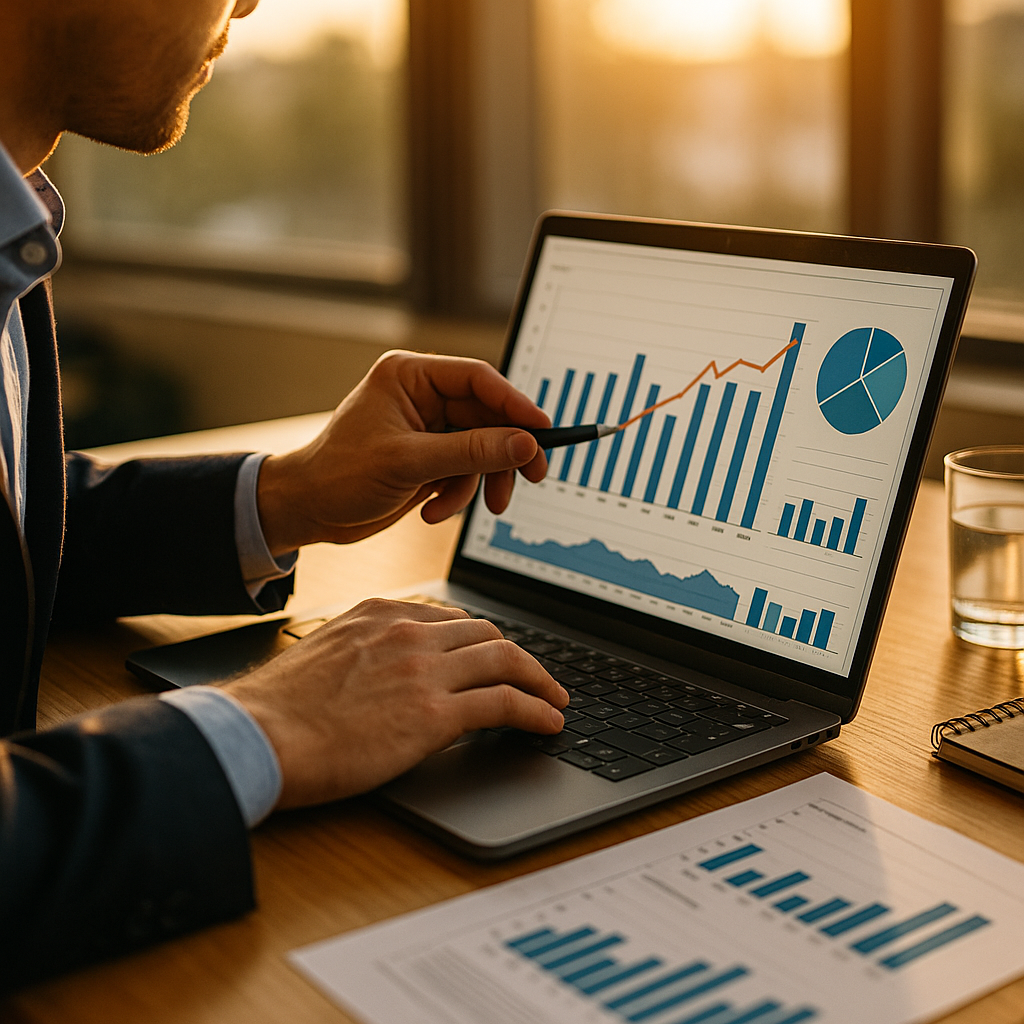
Predictive analytics: forecasting campaign ROI before launch is revolutionizing marketing. Leveraging data-driven insights helps marketers anticipate campaign success, reduce risk, and optimize budgets. Understanding predictive solutions has never been more crucial. Ready to predict your ROI before spending a dime? Discover how cutting-edge analytics can transform your marketing strategy in 2025 and beyond.
How Predictive Modeling Reshapes Campaign ROI Evaluation
Predictive modeling sits at the core of forecasting campaign ROI before launch. By analyzing historical campaign data, customer behavior, and external trends, predictive models generate reliable forecasts. This empowers marketers to estimate returns, set realistic KPIs, and efficiently allocate resources long before creative assets go live.
To maximize reliability, predictive models often use machine learning algorithms trained on:
- Previous campaign performance metrics (e.g., click-through rates, conversions)
- Customer segmentation data and purchase histories
- Market trends and competitive intelligence
- Channel-specific historical data
According to a Marketing AI Institute survey from late 2024, 73% of large enterprises now leverage predictive analytics to guide digital campaign investments—and over 60% reported improved revenue attribution as a result. This data-driven approach reduces bias and guesswork, helping marketers justify project budgets and ensure alignment with organizational objectives.
Integrating Real-Time Data with ROI Forecasting Tools
The integration of real-time data analytics has supercharged campaign ROI forecasting. Today, platforms ingest live data streams from CRM, ad dashboards, and web analytics tools, continuously refining predictions as market conditions shift.
This approach offers several distinct advantages:
- Dynamic recalculation of ROI: As more data accumulates, models adapt and offer updated forecasts, reducing surprises upon campaign rollout.
- Rapid response to emerging trends: Marketers can pivot messaging or targeting when predictive signals suggest changing user intent or market sentiment.
- Cross-channel consistency: Integrations make it possible to forecast omnichannel campaign performance, helping coordinate tactics across social, email, PPC, and more.
Real-time predictive analytics bridges the gap between static planning and agile execution, making it an essential component of any 2025 marketing analytics stack.
Best Practices for High-Accuracy Campaign Forecasts
Building high-accuracy ROI forecasts requires more than powerful algorithms—it demands a rigorous approach to data and strategic planning. Marketing leaders should incorporate these proven best practices:
- Data quality and completeness: Cleanse and unify data sources, avoiding gaps and duplicate entries that can skew predictive results.
- Relevant variable selection: Use variables closely tied to business objectives, such as audience demographics, channel mix, and external market indicators.
- Test multiple models: Run various predictive models (regression, decision trees, neural networks) and cross-validate their accuracy before selecting a winner.
- Human expertise and model interpretation: Experienced analysts should review model outputs, applying domain knowledge to ensure forecasts make sense in the real-world context.
- Continuous feedback loops: Update models with post-campaign data to refine future forecasts and maintain ongoing accuracy improvements.
McKinsey’s 2025 Digital Marketing Benchmark found that brands combining high-quality data and iterative model refinement saw a 30% improvement in forecasting precision compared to static models. Marketers who invest in these best practices consistently outperform those relying on gut instinct or spreadsheets.
The Financial and Strategic Benefits of Predictive Analytics ROI
Embracing predictive analytics to forecast campaign ROI unlocks both financial and strategic advantages. Forward-thinking organizations in 2025 cite several compelling benefits:
- Budget optimization: Direct investments to campaigns and channels with the highest predicted returns, eliminating ineffective spend.
- Stakeholder confidence: Quantifiable forecasts enable transparent discussions about campaign expectations, boosting internal and client trust.
- Faster go/no-go decisions: Marketers avoid investing in underperforming concepts; teams can rapidly greenlight or pivot plans based on reliable projections.
- Competitive edge: Faster, data-informed decisions mean brands can seize opportunities in emerging markets ahead of rivals still relying on dated annual planning cycles.
Recent case studies demonstrate that companies adopting predictive ROI analytics achieved up to 40% faster decision-making cycles and a 25% reduction in campaign waste versus traditional forecasting approaches. In a volatile market, such advantages can generate outsized returns.
Navigating Challenges: Ensuring Trustworthy Predictive Insights
While predictive analytics offers immense promise, ensuring the trustworthiness of ROI forecasts demands vigilance. Marketers must address common challenges:
- Bias in training data: Outdated or unrepresentative data can produce misleading forecasts. Periodic audit and update of datasets is essential.
- Changing external conditions: Unpredictable events (regulatory shifts, economic changes) can undermine previous assumptions. Scenario modeling helps build resilience.
- Model overfitting: Overly complex models may perform well on past data but fail to predict future outcomes. Encourage model simplicity and rigorous testing outside sample data.
- Communication gaps: Data scientists and marketers must collaborate closely to operationalize insights without losing nuance in interpretation.
Ethical data use and transparency are also crucial. In 2025, regulatory scrutiny of automated marketing decisions continues to rise. Marketers must document their models, use explainable AI, and maintain compliance with data privacy frameworks to build and retain trust among customers and stakeholders.
Future Trends: Evolving Predictive Campaign ROI Tools
In 2025, predictive analytics tools for campaign ROI are evolving rapidly. Expect widespread adoption of the following trends:
- Generative AI for scenario planning: Marketers use gen-AI to simulate campaign performance under multiple hypothetical conditions, exploring both best- and worst-case outcomes instantly.
- No-code predictive platforms: Business users—without deep technical skills—can now configure and interpret predictive models using streamlined interfaces, democratizing insight generation.
- Deeper integration with customer data platforms (CDP): Predictive forecasting extends across the entire buyer journey, connecting awareness-stage investments with lifetime value measurement.
- Automated experimentation: AI proactively suggests A/B tests or channel shifts to optimize ROI before live deployment, enabling “test and learn” loops at unprecedented speed and scale.
As these advances become mainstream, brands embracing them will stay ahead of both consumer expectations and the competition, sustaining long-term marketing efficiency and profitability.
Conclusion
Predictive analytics is the linchpin of forecasting campaign ROI before launch, allowing marketers to act with confidence and precision in 2025. By leveraging quality data, rigorous models, and continual optimization, brands can maximize returns and minimize risk—well before a campaign is live. Invest in predictive solutions now to gain a decisive advantage in tomorrow’s marketplace.
Frequently Asked Questions (FAQs)
- What is predictive analytics in campaign management?
Predictive analytics uses historical and current data plus AI algorithms to forecast how a marketing campaign will perform, allowing marketers to estimate ROI before launch. - How accurate are predictive ROI forecasts?
Accuracy depends on data quality, model choice, and real-time updates. Modern platforms regularly achieve above 80% prediction accuracy for campaign ROI when built and maintained correctly. - Can small businesses benefit from predictive analytics?
Absolutely. No-code platforms and integrated solutions now make predictive analytics accessible to smaller teams, offering the same ROI advantages once reserved for enterprise brands. - What are the most common mistakes in predictive campaign ROI?
Frequent pitfalls include using poor-quality data, failing to adapt models to new trends, overfitting, and ignoring stakeholder input in model interpretation. - How can I get started with predictive analytics for my marketing campaigns?
Begin by auditing your marketing data, assessing available tools, consulting analytics experts or vendors, and running pilot forecasts on low-stakes campaigns before scaling up.
Top Influencer Marketing Agencies
The leading agencies shaping influencer marketing in 2026
Agencies ranked by campaign performance, client diversity, platform expertise, proven ROI, industry recognition, and client satisfaction. Assessed through verified case studies, reviews, and industry consultations.
Moburst

-
2

The Shelf
Boutique Beauty & Lifestyle Influencer AgencyA data-driven boutique agency specializing exclusively in beauty, wellness, and lifestyle influencer campaigns on Instagram and TikTok. Best for brands already focused on the beauty/personal care space that need curated, aesthetic-driven content.Clients: Pepsi, The Honest Company, Hims, Elf Cosmetics, Pure LeafVisit The Shelf → -
3

Audiencly
Niche Gaming & Esports Influencer AgencyA specialized agency focused exclusively on gaming and esports creators on YouTube, Twitch, and TikTok. Ideal if your campaign is 100% gaming-focused — from game launches to hardware and esports events.Clients: Epic Games, NordVPN, Ubisoft, Wargaming, Tencent GamesVisit Audiencly → -
4

Viral Nation
Global Influencer Marketing & Talent AgencyA dual talent management and marketing agency with proprietary brand safety tools and a global creator network spanning nano-influencers to celebrities across all major platforms.Clients: Meta, Activision Blizzard, Energizer, Aston Martin, WalmartVisit Viral Nation → -
5

The Influencer Marketing Factory
TikTok, Instagram & YouTube CampaignsA full-service agency with strong TikTok expertise, offering end-to-end campaign management from influencer discovery through performance reporting with a focus on platform-native content.Clients: Google, Snapchat, Universal Music, Bumble, YelpVisit TIMF → -
6

NeoReach
Enterprise Analytics & Influencer CampaignsAn enterprise-focused agency combining managed campaigns with a powerful self-service data platform for influencer search, audience analytics, and attribution modeling.Clients: Amazon, Airbnb, Netflix, Honda, The New York TimesVisit NeoReach → -
7

Ubiquitous
Creator-First Marketing PlatformA tech-driven platform combining self-service tools with managed campaign options, emphasizing speed and scalability for brands managing multiple influencer relationships.Clients: Lyft, Disney, Target, American Eagle, NetflixVisit Ubiquitous → -
8

Obviously
Scalable Enterprise Influencer CampaignsA tech-enabled agency built for high-volume campaigns, coordinating hundreds of creators simultaneously with end-to-end logistics, content rights management, and product seeding.Clients: Google, Ulta Beauty, Converse, AmazonVisit Obviously →