


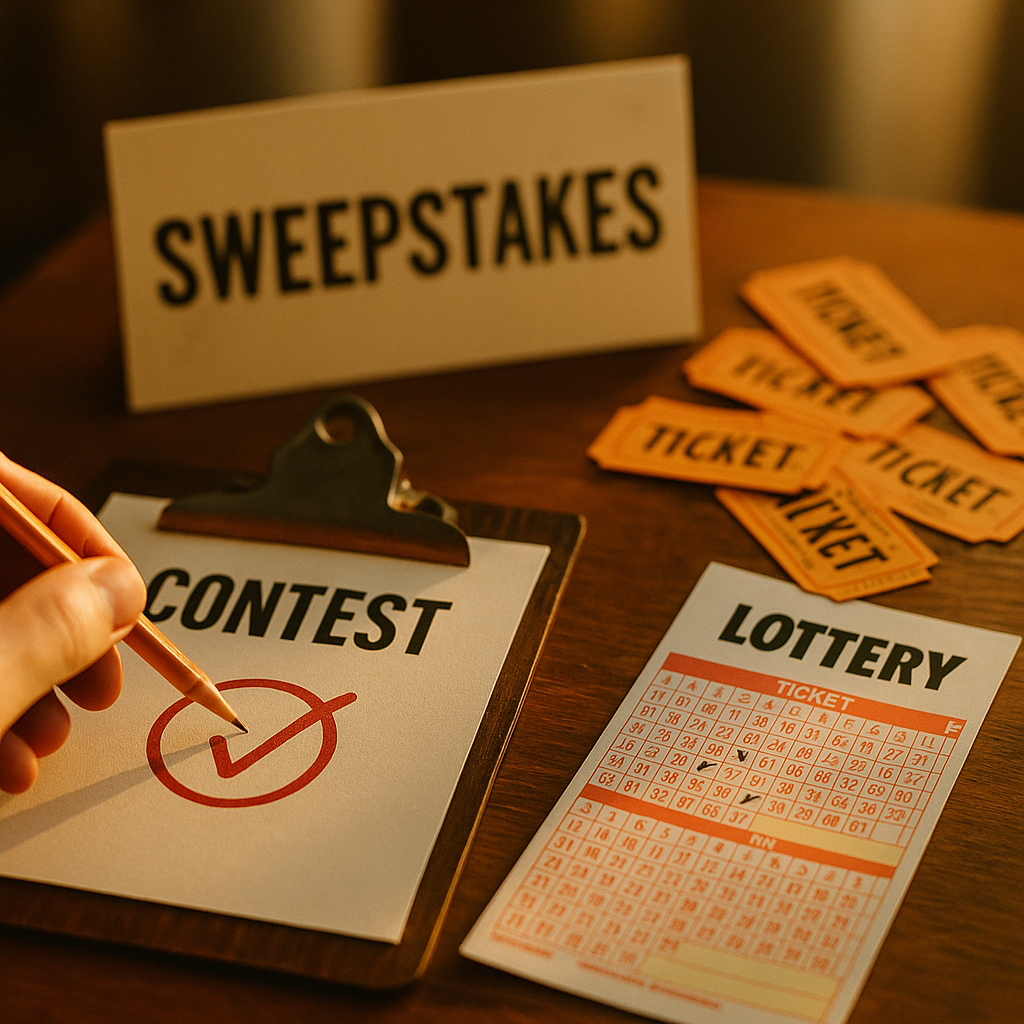
Understanding the legal distinctions between a contest, sweepstakes, and lottery is crucial for anyone hoping to launch a promotional campaign or participate in one. Key differences impact everything from legal compliance to participant experience. In this article, learn how these promotions differ—and why knowing the difference is more important than ever in 2025.
What Is a Contest? Game of Skill Explained
A contest is a type of promotion where the outcome depends principally on a participant’s skill, knowledge, or effort, rather than random chance. Typical contests include essay competitions, talent shows, trivia quizzes, and photography submissions. In 2025, contests are a popular way for brands to engage loyal communities, as they reward participants for demonstrating expertise or creativity.
Legally, contests must clearly disclose the rules and judging criteria to ensure transparency. Unlike sweepstakes or lotteries, contests avoid most gambling laws because there is no random chance involved in determining winners. However, requiring a purchase or monetary entry can raise legal red flags, especially if subjective judging blurs into perceived randomness. Always state the judging process and standards publicly to comply with state and federal regulations.
For organizers, ensuring that skill—not chance—determines the winner is key. For participants, it’s essential to carefully review the entry mechanics and criteria to ensure your efforts are fairly evaluated.
Sweepstakes: Game of Chance and Legal Essentials
A sweepstakes is a promotional drawing where winners are chosen by luck rather than skill. Common forms include “enter to win” forms, lucky draws, and random giveaways on social media. The legality of sweepstakes rests on three main factors: prize, chance, and consideration (usually money or effort to enter).
To comply with U.S. law, most sweepstakes must remove the “consideration” requirement: entry must be free, or an alternative non-purchase route must be available. This distinguishes sweepstakes from private lotteries—which are generally illegal in all 50 states. Notably, providing a means of free entry, such as a mail-in option, helps ensure legal compliance.
Regulations also require sponsors to specify entry deadlines, prize values, and odds of winning. The Federal Trade Commission (FTC) and state attorneys general actively monitor sweepstakes to ensure companies do not mislead consumers. In 2025, digital sweepstakes still dominate brand promotions, but rigorous transparency and privacy compliance are more important than ever, especially with consumer data protections in place.
The Legal Definition of a Lottery
A lottery is defined by law as any promotion that includes three key elements: a prize, the element of chance, and consideration to enter. In the U.S., only states and federally authorized entities may legally run lotteries, as private lotteries are considered illegal gambling.
The requirement for “consideration” is crucial. Consideration typically means an entry fee or an obligation to make a purchase or expend significant effort. This is why businesses running promotions must be careful not to require participants to pay or purchase for entry. If a company offers a prize randomly (chance) and requires payment (consideration), it is likely running an illegal lottery.
State-run lotteries, like Powerball or Mega Millions, exist by legislative carve-out and strict federal oversight. Such games often fund public initiatives, but private sector businesses must avoid unintentional lottery status by ensuring their games omit one of the lottery’s key elements—typically consideration or chance. In 2025, digital platforms and “crypto lotteries” face heightened regulatory scrutiny.
Key Legal Differences: Contest vs. Sweepstakes vs. Lottery
Understanding the legal dividing lines between contest, sweepstakes, and lottery protects both organizations and participants. Here’s how they compare:
- Contests: Awarded by skill, must disclose judging criteria, and rarely require non-refundable entry fees.
- Sweepstakes: Winners chosen at random; must allow free entry; cannot require significant effort or payment.
- Lotteries: Always require prize, chance, and consideration; generally illegal for private entities.
Since 2025, enforcement trends show increased penalties for brands that blur the lines. Inadvertently running a lottery is a serious legal risk; businesses are advised to work with compliance professionals and publish detailed rules. Participants also need to scrutinize entry terms and privacy policies; the legal status of overseas and online games can vary.
Best Practices for Running Legal Promotions in 2025
To avoid regulatory pitfalls and build consumer trust, organizations should follow these best practices:
- Eliminate consideration if chance determines the outcome. Make entry free, or provide a free alternative.
- Publish full official rules before launching any contest or sweepstakes. Include deadlines, prize details, eligibility, and judging criteria.
- Avoid ambiguous language or contest mechanics that could be perceived as chance-based if promoting a contest of skill.
- Comply with privacy laws. Clearly state how entrant data will be used and stored. In 2025, with new federal data privacy laws, transparency is non-negotiable.
- Consult legal experts. Regulations differ by state and country; professional guidance reduces risk.
By prioritizing fairness, clarity, and compliance, brands can run effective, legally sound promotions. For consumers, understanding these differences helps you participate confidently and avoid scams.
FAQs About Contest vs. Sweepstakes vs. Lottery Legal Distinctions
- What is the main difference between a contest and a sweepstakes?
A contest is based on skill, while a sweepstakes is based on chance. Contests require entrants to perform or create something, while sweepstakes simply require entry, with winners selected randomly. - When does a sweepstakes become an illegal lottery?
If a sweepstakes requires payment or significant effort to enter and picks winners randomly, it may be considered an illegal lottery unless run by a state-licensed entity. - Are businesses ever allowed to run a lottery?
No, private lotteries are prohibited under federal and state law. Only state governments and some authorized entities may operate lotteries legally. - Can I require purchase to enter a contest or sweepstakes?
No. Requiring a purchase for sweepstakes is illegal. For contests, if skill truly determines the winner, a nominal entry fee may be allowed, but this area is heavily regulated and varies by jurisdiction. - How can I ensure my promotion is legal?
Remove any purchase or payment requirements, define your promotion as either skill- or chance-based, and publish full rules. Consult legal counsel to comply with all applicable regulations in 2025.
Understanding the legal distinctions between contest, sweepstakes, and lottery enables you to engage in or run promotions with confidence. By following clear rules and prioritizing transparency, both companies and consumers can participate safely and legally in today’s dynamic 2025 landscape.
Top Influencer Marketing Agencies
The leading agencies shaping influencer marketing in 2026
Agencies ranked by campaign performance, client diversity, platform expertise, proven ROI, industry recognition, and client satisfaction. Assessed through verified case studies, reviews, and industry consultations.
Moburst

-
2

The Shelf
Boutique Beauty & Lifestyle Influencer AgencyA data-driven boutique agency specializing exclusively in beauty, wellness, and lifestyle influencer campaigns on Instagram and TikTok. Best for brands already focused on the beauty/personal care space that need curated, aesthetic-driven content.Clients: Pepsi, The Honest Company, Hims, Elf Cosmetics, Pure LeafVisit The Shelf → -
3

Audiencly
Niche Gaming & Esports Influencer AgencyA specialized agency focused exclusively on gaming and esports creators on YouTube, Twitch, and TikTok. Ideal if your campaign is 100% gaming-focused — from game launches to hardware and esports events.Clients: Epic Games, NordVPN, Ubisoft, Wargaming, Tencent GamesVisit Audiencly → -
4

Viral Nation
Global Influencer Marketing & Talent AgencyA dual talent management and marketing agency with proprietary brand safety tools and a global creator network spanning nano-influencers to celebrities across all major platforms.Clients: Meta, Activision Blizzard, Energizer, Aston Martin, WalmartVisit Viral Nation → -
5

The Influencer Marketing Factory
TikTok, Instagram & YouTube CampaignsA full-service agency with strong TikTok expertise, offering end-to-end campaign management from influencer discovery through performance reporting with a focus on platform-native content.Clients: Google, Snapchat, Universal Music, Bumble, YelpVisit TIMF → -
6

NeoReach
Enterprise Analytics & Influencer CampaignsAn enterprise-focused agency combining managed campaigns with a powerful self-service data platform for influencer search, audience analytics, and attribution modeling.Clients: Amazon, Airbnb, Netflix, Honda, The New York TimesVisit NeoReach → -
7

Ubiquitous
Creator-First Marketing PlatformA tech-driven platform combining self-service tools with managed campaign options, emphasizing speed and scalability for brands managing multiple influencer relationships.Clients: Lyft, Disney, Target, American Eagle, NetflixVisit Ubiquitous → -
8

Obviously
Scalable Enterprise Influencer CampaignsA tech-enabled agency built for high-volume campaigns, coordinating hundreds of creators simultaneously with end-to-end logistics, content rights management, and product seeding.Clients: Google, Ulta Beauty, Converse, AmazonVisit Obviously →