


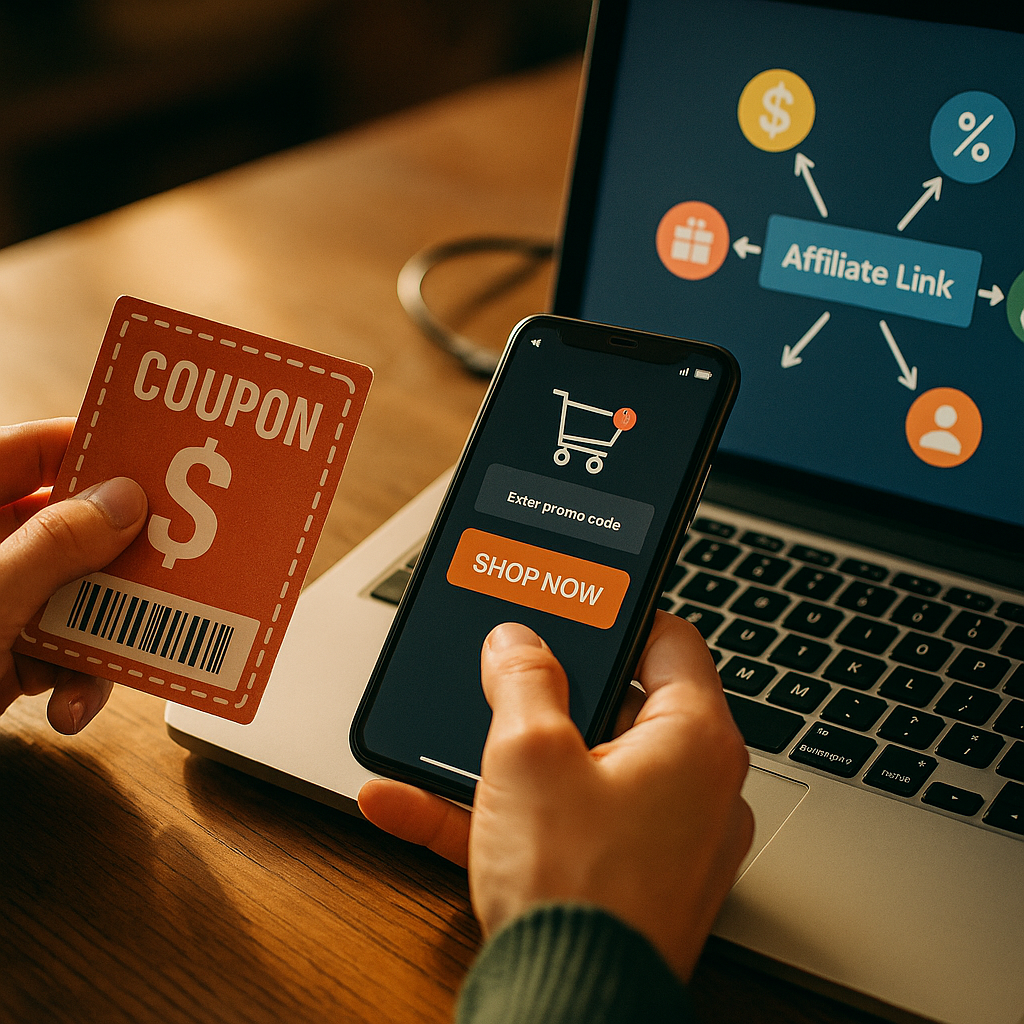
Nearly 30% of affiliate and influencer sales get double counted or lost entirely when brands run promo codes and affiliate links side by side, according to industry estimates from performance marketing networks. If your finance team can’t reconcile creator payouts with actual revenue, you don’t have a marketing problem. You have an attribution problem. Promo code and affiliate link stacking is supposed to give you redundancy. Too often it just gives you noise.
Why Promo Codes and Affiliate Links Keep Breaking Attribution
Here’s the uncomfortable truth: most brands stack tracking methods because they don’t trust any single one. A promo code catches the customer who screenshots a discount and applies it three weeks later. An affiliate link catches the click-through, cookie-based conversion. Stack them together and you’d think you get full coverage. Instead, you often get duplicate credit, orphaned codes nobody can trace to a creator, and finance reconciling two spreadsheets that never agree.
The root cause is structural. Promo codes and affiliate links were built by different teams solving different problems, often years apart. Promo codes came from retail and coupon culture. Affiliate links came from performance marketing platforms like Rakuten Advertising, Impact.com, and ShareASale. When brands bolt both onto an influencer program without a shared data layer, they end up with two attribution systems talking past each other.
If a purchase can be claimed by both a promo code and an affiliate link, and your system doesn’t flag it, you’re paying twice for the same sale and reporting revenue that doesn’t exist.
The 4 Rs Framework: Reach, Response, Revenue, Retention
Brands need a framework that forces every tracking method to answer to a specific business question, not just “did the code get used.” That’s where the 4 Rs come in: Reach, Response, Revenue, and Retention. Each R corresponds to a different layer of your attribution stack, and each one needs its own data source.
- Reach: Impressions, views, and audience exposure. This is platform-native data from TikTok, Instagram, or YouTube, not code or link data at all.
- Response: Clicks, code entries, and link taps. This is where promo codes and affiliate links actually live.
- Revenue: Verified transactions tied to a unique creator or campaign, ideally deduplicated across channels.
- Retention: Repeat purchase behavior and customer lifetime value from creator-driven customers versus paid or organic acquisition.
Most brands only measure Response and call it done. That’s like judging a movie by ticket sales at the box office window and ignoring streaming revenue six months later. You need all four Rs stacked in sequence, not scattered across disconnected tools.
What “Stacking” Actually Means
Stacking isn’t about running more tracking methods. It’s about layering them so each one fills a gap the others can’t cover. A well-built attribution stack treats promo codes and affiliate links as complementary inputs feeding a single source of truth, not competing systems fighting for credit.
Think of it like this: affiliate links are strong on click-based, in-session attribution. Promo codes are strong on delayed, cross-device, or offline conversion (in-store redemptions, for instance). Combine them correctly and you cover both fast conversions and the slow-burn purchases that happen days later on a different device. Combine them poorly and you get double attribution, inflated ROI reports, and a CFO asking pointed questions in the next budget review.
Tools like Everflow, Refersion, and LinkTrust now offer deduplication logic that flags when a code and a link both claim the same order ID. That’s a start. But software alone doesn’t fix a stack that was never designed with the 4 Rs in mind.
Building the Attribution Stack Layer by Layer
Start with a single customer ID that persists across code redemption and link clicks. Without that, deduplication is guesswork. Most brands solve this by routing all creator traffic through a customer data platform that can match order data back to a unique creator source, regardless of whether the customer used a code or a link. This is exactly the gap covered in our breakdown of closing the creator attribution gap, and it’s the foundation everything else in this stack depends on.
Once you have a unified ID, layer in real-time dashboards that can show Response and Revenue data together instead of in separate exports. We’ve tested several of these directly, and the results vary wildly in how honestly they handle overlapping credit. Our review of real time attribution dashboards is worth reading before you sign another annual contract.
Finally, connect the commerce layer. If you’re running TikTok Shop alongside a traditional affiliate program, the sync between shop data and your CRM is often where attribution quietly falls apart. We covered this exact failure mode in our audit of TikTok Shop to CRM syncing, and the same logic applies to any platform-native checkout running parallel to your affiliate stack.
Where Stacking Goes Wrong
The most common failure isn’t technical. It’s organizational. Marketing owns the creator relationships and promo code creation. Performance marketing owns the affiliate network. Finance owns revenue recognition. Nobody owns the reconciliation between all three, so it happens manually, in a spreadsheet, once a month, usually right before a board report is due.
According to HubSpot’s research on marketing operations, misaligned attribution ownership is one of the top three reasons brands overstate campaign ROI internally. Add promo code and affiliate link stacking into that mix and the margin for error compounds fast.
Attribution stacks fail less often from bad tools and more often from unclear ownership over who reconciles the data.
There’s also a compliance angle brands underweight. If a creator’s promo code and affiliate link both get credited without proper disclosure of the paid relationship, you’re exposed on two fronts at once. The FTC’s endorsement guidelines apply regardless of which tracking method drove the sale, and duplicate crediting doesn’t excuse a missing disclosure. If you haven’t audited your governance layer recently, our checklist on creator data governance is a reasonable starting point.
Is Manual Reconciliation Still Realistic?
Short answer: no, not at scale. If you’re running more than a handful of creators across multiple codes and links, manual reconciliation becomes a full-time job that still produces stale data. eMarketer data shows influencer and affiliate spend continuing to climb year over year, which means the volume of transactions needing reconciliation grows faster than most internal teams can staff for.
Many brands still default to spreadsheets because the alternative, integrating a proper attribution platform, feels like a bigger lift than it actually is. We’ve written about why this happens in the integration gap keeping spreadsheets alive, and the short version is that most teams underestimate how quickly a modern stack pays for itself once duplicate crediting stops draining budget.
For brands running creator activity across CTV and mobile as well as commerce, the reconciliation problem gets even more layered. That’s a separate build entirely, and we cover the technical requirements in our guide to cross-channel creator attribution.
A Quick Audit Before You Scale Further
Before adding another affiliate network or promo code tier, run this check:
- Can you trace every order back to a single creator ID, regardless of code or link used?
- Does your system flag when a code and link both claim the same order?
- Do Reach and Response numbers ever get reported as if they were Revenue?
- Does anyone own monthly reconciliation, or does it happen ad hoc?
- Are disclosure requirements met consistently across both tracking methods?
If you answered “no” or “not sure” to more than two of these, your stack needs rebuilding before it needs expanding. Sprout Social’s influencer benchmarks consistently show that programs with clean attribution outperform larger, messier programs on reported ROI, not because they spend less, but because they can prove what’s actually working.
Next Step
Don’t add another tracking method until you’ve mapped your existing promo codes and affiliate links to all four Rs, Reach, Response, Revenue, and Retention, and confirmed a single owner for reconciliation. That one fix will do more for your reported ROI than any new platform you’re considering.
Frequently Asked Questions
What is promo code and affiliate link stacking?
It’s the practice of running promo codes and affiliate links simultaneously for the same creator or campaign to capture conversions that either method might miss on its own, such as delayed purchases or cross-device sales.
Why do brands get duplicate attribution with stacked tracking?
Duplicate attribution happens when a single order can be claimed by both a promo code redemption and an affiliate link click without a deduplication system checking order IDs against both sources.
What is the 4 Rs framework in influencer attribution?
The 4 Rs framework organizes attribution into Reach (impressions and views), Response (clicks and code entries), Revenue (verified sales), and Retention (repeat purchase behavior), giving each tracking method a clear job within the stack.
How do brands fix duplicate credit between codes and links?
Most brands solve this with a unified customer ID that persists across both tracking methods, paired with deduplication logic in their affiliate platform or customer data platform that flags matching order IDs.
Does the FTC treat promo codes and affiliate links differently for disclosure?
No. FTC endorsement guidelines apply to any paid or incentivized relationship regardless of which tracking method captures the sale, so disclosure requirements stay the same across both.
Top Influencer Marketing Agencies
The leading agencies shaping influencer marketing in 2026
Agencies ranked by campaign performance, client diversity, platform expertise, proven ROI, industry recognition, and client satisfaction. Assessed through verified case studies, reviews, and industry consultations.
Moburst

-
2

The Shelf
Boutique Beauty & Lifestyle Influencer AgencyA data-driven boutique agency specializing exclusively in beauty, wellness, and lifestyle influencer campaigns on Instagram and TikTok. Best for brands already focused on the beauty/personal care space that need curated, aesthetic-driven content.Clients: Pepsi, The Honest Company, Hims, Elf Cosmetics, Pure LeafVisit The Shelf → -
3

Audiencly
Niche Gaming & Esports Influencer AgencyA specialized agency focused exclusively on gaming and esports creators on YouTube, Twitch, and TikTok. Ideal if your campaign is 100% gaming-focused — from game launches to hardware and esports events.Clients: Epic Games, NordVPN, Ubisoft, Wargaming, Tencent GamesVisit Audiencly → -
4

Viral Nation
Global Influencer Marketing & Talent AgencyA dual talent management and marketing agency with proprietary brand safety tools and a global creator network spanning nano-influencers to celebrities across all major platforms.Clients: Meta, Activision Blizzard, Energizer, Aston Martin, WalmartVisit Viral Nation → -
5

The Influencer Marketing Factory
TikTok, Instagram & YouTube CampaignsA full-service agency with strong TikTok expertise, offering end-to-end campaign management from influencer discovery through performance reporting with a focus on platform-native content.Clients: Google, Snapchat, Universal Music, Bumble, YelpVisit TIMF → -
6

NeoReach
Enterprise Analytics & Influencer CampaignsAn enterprise-focused agency combining managed campaigns with a powerful self-service data platform for influencer search, audience analytics, and attribution modeling.Clients: Amazon, Airbnb, Netflix, Honda, The New York TimesVisit NeoReach → -
7

Ubiquitous
Creator-First Marketing PlatformA tech-driven platform combining self-service tools with managed campaign options, emphasizing speed and scalability for brands managing multiple influencer relationships.Clients: Lyft, Disney, Target, American Eagle, NetflixVisit Ubiquitous → -
8

Obviously
Scalable Enterprise Influencer CampaignsA tech-enabled agency built for high-volume campaigns, coordinating hundreds of creators simultaneously with end-to-end logistics, content rights management, and product seeding.Clients: Google, Ulta Beauty, Converse, AmazonVisit Obviously →