


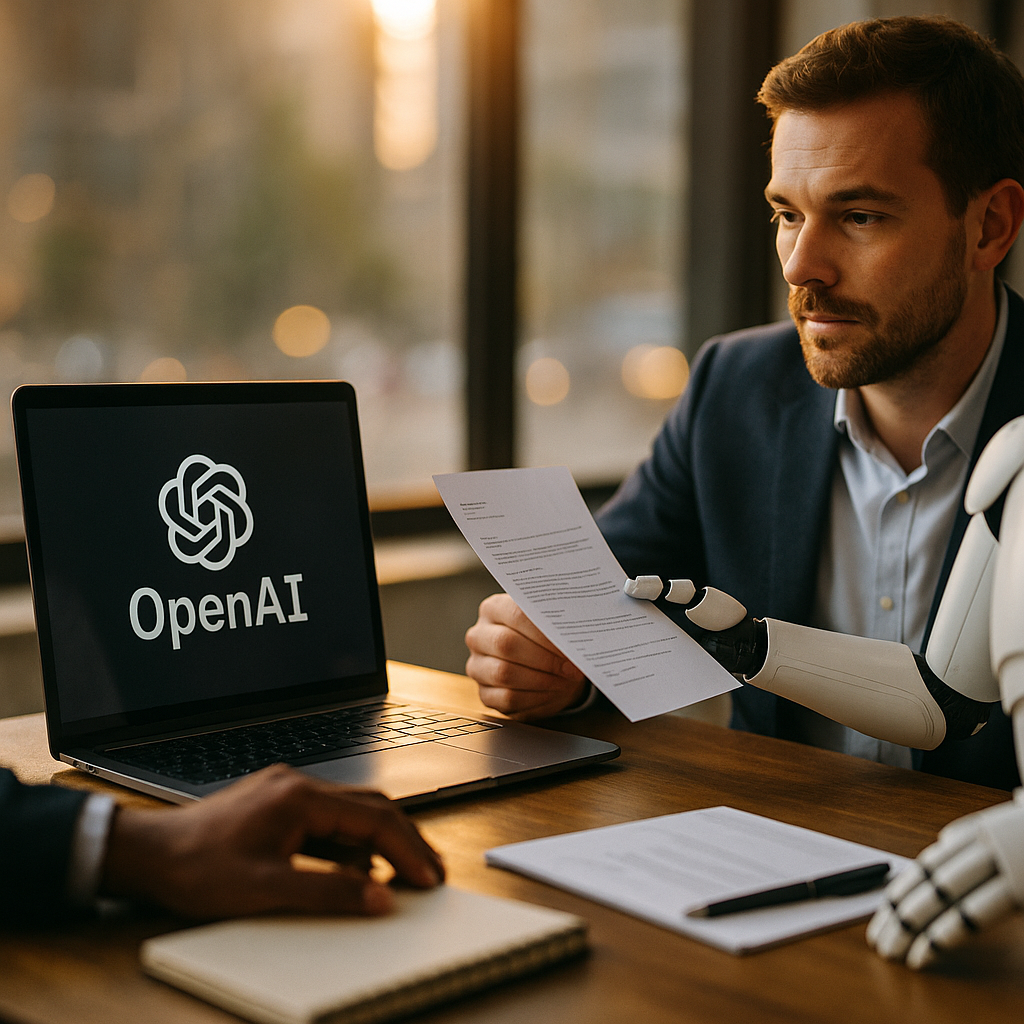
PwC just spent nine figures betting that AI agents can handle work humans used to bill hourly. When one of the world’s largest professional services firms restructures around LLM agents for client-facing engagement, that’s not a pilot program. That’s a signal flare for every brand still treating chatbots as a cost-center afterthought.
The partnership, which embeds OpenAI’s models across PwC’s client delivery workflows, is being framed internally as an efficiency play. But look closer and it’s really a customer engagement play. PwC is betting that AI agents can own first contact with clients, triage requests, and escalate only what genuinely needs a human. That’s the same architecture brands have been circling for two years with mixed results. PwC just made it board-level strategy.
Why This Deal Matters Beyond Consulting
Professional services firms sell judgment. If PwC is comfortable letting an LLM agent handle first-line engagement with clients who pay premium rates for human expertise, that tells you something about where confidence levels have landed industry-wide.
This isn’t PwC dabbling. Reports put the investment in the hundreds of millions, with agents deployed across tax, audit support, and client advisory intake. The firm isn’t hiding the AI layer from clients either — it’s positioning agentic AI as part of the value proposition, not a hidden cost-cutting measure. That transparency matters more than the technology itself.
When a firm built on billable human judgment puts LLM agents in front of paying clients, it resets the risk calculus for every brand still debating whether AI can own first-line engagement.
Compare this to where most consumer brands sit today. Sprout Social and other platforms have pushed AI-assisted response tools for years, but adoption has largely stayed shallow: canned replies, FAQ deflection, maybe a sentiment-tagging layer. PwC’s move suggests the ceiling is much higher, and that brands under-deploying agentic AI in customer engagement are leaving efficiency — and increasingly, competitive parity — on the table.
The Shift From Chatbot to Agent
Words matter here. A chatbot answers scripted questions. An LLM agent reasons through context, pulls from multiple data sources, takes actions (rebooking a flight, adjusting a subscription, drafting a contract summary), and knows when to hand off. That distinction is the entire story.
Brands that bought “AI chat” tools three years ago are sitting on infrastructure that can’t do what PwC is now doing. The gap between conversational AI and agentic AI has become the gap between a support cost center and a genuine engagement channel.
Gartner and McKinsey have both flagged agentic AI as the dominant enterprise AI theme, and enterprise software vendors are racing to rebrand accordingly. Salesforce, Microsoft, and Google have all shipped “agent” products in the last eighteen months. PwC’s OpenAI partnership is simply the most visible proof that a risk-averse, reputation-sensitive industry is willing to put agents in front of real customers with real money on the line.
What “First-Line Engagement” Actually Means for Brands
First-line engagement is the moment a customer reaches out and something on the brand side responds first. Historically, that’s been a human rep, a scripted bot, or an email autoresponder. The PwC model reframes it as an AI agent with genuine reasoning capability, brand-specific knowledge, and limited but real authority to resolve issues without escalation.
For consumer brands, that maps directly onto:
- Influencer and creator inquiries — rate negotiations, brief clarifications, contract questions handled by an agent before a human touches it
- Customer service triage — returns, order status, loyalty program questions resolved end-to-end
- Community management — first-response comments and DMs on social platforms, especially at scale during campaign spikes
- Sales qualification — agents pre-screening creator partnership requests or brand deal inbound before handing warm leads to a human strategist
This is where it gets relevant for marketing leaders specifically. Influencer programs generate enormous inbound volume: creator applications, rate inquiries, brief questions, usage rights disputes. Most brands still route all of it through a human coordinator, which is exactly the bottleneck agentic AI is designed to remove. The efficiency argument mirrors what’s already happening with AI-powered CAC reduction in influencer budgets, just applied to the operational side of creator relationships rather than the media-buying side.
Is This Actually Safe for Brand Reputation?
Fair question. Air Canada’s chatbot famously invented a refund policy that a tribunal later forced the airline to honor. That single incident is cited in nearly every risk-committee slide deck about AI customer service. So why would PwC — a firm whose entire brand is risk management — take this bet?
Because the model has changed. Early chatbots hallucinated because they had no grounding in real company data and no defined escalation boundaries. Modern agentic deployments (the kind OpenAI is building with PwC) are heavily scoped: retrieval-augmented generation against verified company documents, hard-coded escalation triggers, and audit logging on every interaction. The technology that failed Air Canada in 2024 is not the same architecture PwC is deploying now.
That said, the reputational risk hasn’t disappeared, it’s just shifted. Brands adopting this model need the same rigor PwC presumably applied: clear scope boundaries, documented escalation paths, and legal sign-off on what an agent is authorized to promise a customer. This overlaps heavily with concerns already reshaping data-privacy-first creator platforms and compliance requirements across the creator economy. Agentic customer engagement isn’t just a martech decision, it’s a compliance decision, and legal teams should be in the room before procurement signs anything.
The Budget Conversation Nobody’s Having Yet
Here’s the uncomfortable part for CMOs: agentic AI customer engagement doesn’t fit neatly into existing budget lines. Is it martech? Customer service ops? A subset of the AI transformation budget finance already approved? Most brands haven’t decided, which means the spend is either invisible or getting blocked by nobody owning the decision.
The broader AI-MarTech market forecast shift already points to vendor consolidation and re-pricing as agentic capabilities become table stakes rather than premium add-ons. Expect the same platforms handling influencer relationship management to start bundling agentic first-response tools into their core pricing tiers within the next few product cycles.
There’s a parallel worth drawing to what’s happened with UGC tooling. A few years ago, user-generated content widgets were a nice-to-have. Now they’re a standard line item in paid media budgets. Agentic customer engagement is on the same trajectory: novelty today, budget-line reality within eighteen months.
What This Means for Creator and Influencer Ops Specifically
Influencer marketing generates a volume problem that’s rarely discussed publicly. A single campaign can generate thousands of creator applications, rate negotiations, and content approval threads. Agencies scaling creator programs (see how Singapore’s AI-native agencies are restructuring around this exact problem) are already using LLM-based triage to handle first-contact creator outreach, freeing strategists to focus on relationship-building and negotiation rather than inbox management.
The PwC deal validates that direction at enterprise scale. If a Big Four firm trusts agents with client-facing tax and audit conversations, a marketing team trusting agents with creator rate inquiries and campaign brief FAQs is a comparatively low-risk application.
Every hour a human coordinator spends answering “what’s the deliverable deadline” is an hour not spent negotiating better creator rates or building long-term partnerships.
That efficiency math connects directly to what the data already shows about relationship quality. Long-term creator partnerships outperform one-off sponsorships, and those partnerships require sustained, high-touch human relationship management. Agentic AI handling the transactional first-line work is precisely what frees up the human capacity that long-term partnerships demand.
Where Brands Should Actually Start
Don’t copy PwC’s scale. Copy PwC’s sequencing. The firm didn’t flip a switch on full agentic deployment; it built the OpenAI partnership around specific, bounded use cases with clear success metrics before expanding scope.
For marketing and brand teams, that translates to:
- Audit first-line engagement volume — how many inbound creator, customer, and partner inquiries are genuinely transactional versus requiring judgment?
- Pick one bounded use case (FAQ deflection for creator applications, order status inquiries, basic contract clarification) and scope it tightly
- Build escalation logic before launch, not after — define exactly what the agent is authorized to say and promise
- Loop in legal and compliance early, especially for anything touching contracts, refunds, or usage rights
- Measure resolution rate and escalation accuracy, not just response speed
This mirrors the maturity curve already visible in all-in-one AI marketing platforms consolidating fragmented tool stacks. The winners won’t be the brands that deployed agentic AI first. They’ll be the ones that deployed it with the same discipline PwC is publicly attaching to its OpenAI partnership: bounded scope, clear escalation, measurable outcomes.
For deeper context on how AI is reshaping vendor economics generally, OpenAI’s enterprise offerings and eMarketer’s coverage of enterprise AI adoption are worth tracking closely, alongside HubSpot’s customer service AI benchmarks for comparative deployment data.
Frequently Asked Questions
What does PwC’s OpenAI partnership actually involve?
PwC has integrated OpenAI’s models into client-facing workflows across tax, audit, and advisory services, using LLM agents to handle first-line engagement and routine reasoning tasks before escalating complex matters to human staff.
Is agentic AI the same as a chatbot?
No. A chatbot follows scripted response logic. An LLM agent reasons through context, pulls data from multiple sources, can take limited actions, and determines when human escalation is required.
How risky is it for brands to let AI handle first-line customer engagement?
Risk depends entirely on scope and grounding. Agents built on retrieval-augmented generation with hard-coded escalation rules and audit logging carry far less reputational risk than early unscoped chatbots, but legal and compliance review remains essential before deployment.
How does this trend apply to influencer marketing specifically?
Creator programs generate high volumes of transactional inquiries (rate questions, brief clarifications, application triage) that are strong candidates for agentic first-response handling, freeing human strategists for relationship-building and negotiation.
What budget line should agentic AI customer engagement fall under?
Most organizations haven’t standardized this yet. It typically spans martech, customer service ops, and broader AI transformation budgets, and brands should assign clear ownership before scaling deployment.
Visible FAQ (HTML)
Frequently Asked Questions
What does PwC’s OpenAI partnership actually involve?
PwC has integrated OpenAI’s models into client-facing workflows across tax, audit, and advisory services, using LLM agents to handle first-line engagement and routine reasoning tasks before escalating complex matters to human staff.
Is agentic AI the same as a chatbot?
No. A chatbot follows scripted response logic. An LLM agent reasons through context, pulls data from multiple sources, can take limited actions, and determines when human escalation is required.
How risky is it for brands to let AI handle first-line customer engagement?
Risk depends entirely on scope and grounding. Agents built on retrieval-augmented generation with hard-coded escalation rules and audit logging carry far less reputational risk than early unscoped chatbots, but legal and compliance review remains essential before deployment.
How does this trend apply to influencer marketing specifically?
Creator programs generate high volumes of transactional inquiries (rate questions, brief clarifications, application triage) that are strong candidates for agentic first-response handling, freeing human strategists for relationship-building and negotiation.
What budget line should agentic AI customer engagement fall under?
Most organizations haven’t standardized this yet. It typically spans martech, customer service ops, and broader AI transformation budgets, and brands should assign clear ownership before scaling deployment.
The brands that win the next two years won’t be the ones chasing PwC’s headline. They’ll be the ones auditing inbound creator and customer volume this quarter, scoping one bounded agentic use case, and building the escalation guardrails before a vendor demo talks them into skipping that step.
Top Influencer Marketing Agencies
The leading agencies shaping influencer marketing in 2026
Agencies ranked by campaign performance, client diversity, platform expertise, proven ROI, industry recognition, and client satisfaction. Assessed through verified case studies, reviews, and industry consultations.
Moburst

-
2

The Shelf
Boutique Beauty & Lifestyle Influencer AgencyA data-driven boutique agency specializing exclusively in beauty, wellness, and lifestyle influencer campaigns on Instagram and TikTok. Best for brands already focused on the beauty/personal care space that need curated, aesthetic-driven content.Clients: Pepsi, The Honest Company, Hims, Elf Cosmetics, Pure LeafVisit The Shelf → -
3

Audiencly
Niche Gaming & Esports Influencer AgencyA specialized agency focused exclusively on gaming and esports creators on YouTube, Twitch, and TikTok. Ideal if your campaign is 100% gaming-focused — from game launches to hardware and esports events.Clients: Epic Games, NordVPN, Ubisoft, Wargaming, Tencent GamesVisit Audiencly → -
4

Viral Nation
Global Influencer Marketing & Talent AgencyA dual talent management and marketing agency with proprietary brand safety tools and a global creator network spanning nano-influencers to celebrities across all major platforms.Clients: Meta, Activision Blizzard, Energizer, Aston Martin, WalmartVisit Viral Nation → -
5

The Influencer Marketing Factory
TikTok, Instagram & YouTube CampaignsA full-service agency with strong TikTok expertise, offering end-to-end campaign management from influencer discovery through performance reporting with a focus on platform-native content.Clients: Google, Snapchat, Universal Music, Bumble, YelpVisit TIMF → -
6

NeoReach
Enterprise Analytics & Influencer CampaignsAn enterprise-focused agency combining managed campaigns with a powerful self-service data platform for influencer search, audience analytics, and attribution modeling.Clients: Amazon, Airbnb, Netflix, Honda, The New York TimesVisit NeoReach → -
7

Ubiquitous
Creator-First Marketing PlatformA tech-driven platform combining self-service tools with managed campaign options, emphasizing speed and scalability for brands managing multiple influencer relationships.Clients: Lyft, Disney, Target, American Eagle, NetflixVisit Ubiquitous → -
8

Obviously
Scalable Enterprise Influencer CampaignsA tech-enabled agency built for high-volume campaigns, coordinating hundreds of creators simultaneously with end-to-end logistics, content rights management, and product seeding.Clients: Google, Ulta Beauty, Converse, AmazonVisit Obviously →