


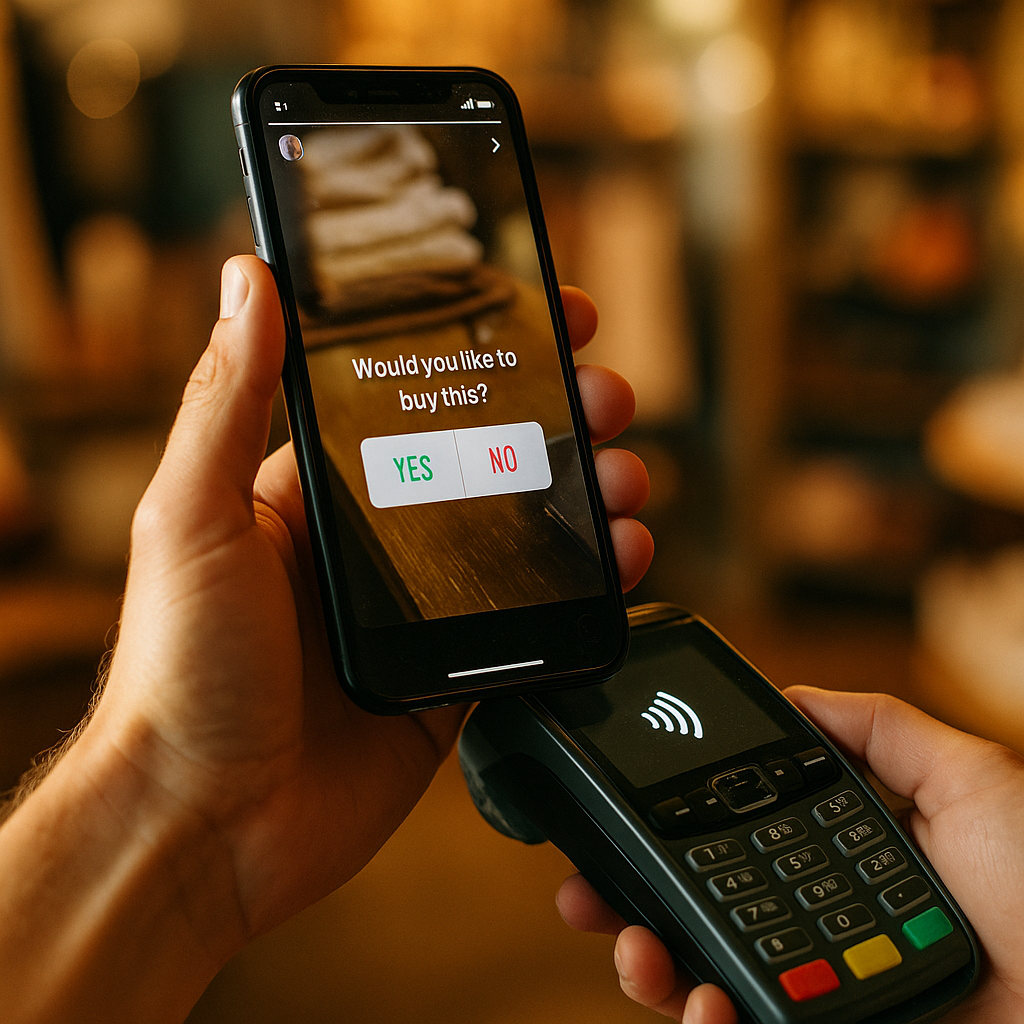
Instagram says over 500 million accounts use Stories daily, and a chunk of that time gets spent tapping polls just to see the results. That’s free intent data most brands throw away. The poll-to-purchase format fixes that by turning a two-second tap into a checkout flow, and the brands testing it are seeing conversion lifts that make traditional link-in-bio setups look like relics.
Why a Poll Tap Is the Cheapest Intent Signal in Marketing
Think about what a Story poll actually captures. A viewer sees two options, “Would you buy this?” or “Team A vs Team B,” and taps one. No form fill, no friction, no cognitive load. That single tap is a self-reported preference signal, and it’s more honest than most survey data because nobody’s overthinking a poll on a phone screen at 9pm.
The problem has always been what happens next. Historically, that tap dead-ended. The user saw aggregate results, felt a tiny dopamine hit, and moved on. The brand got a vanity metric for a slide deck. No revenue, no retargeting list, no attribution trail.
A poll tap is a purchase signal in disguise. Treating it as engagement fluff instead of a checkout trigger is leaving money on the table.
Poll-to-purchase flows change the sequence entirely. Instead of ending at a results screen, the poll routes the respondent straight into a shoppable sticker, a swipe-up product card, or a DM-triggered checkout link based on which option they picked. Tap “Team A” and you get shown Team A’s product with a direct buy button. It’s segmentation and conversion happening in the same gesture.
How the Mechanics Actually Work
There’s no single native tool that does this end to end yet, which is exactly why agencies building it now have an edge. The typical stack looks like this:
- Poll sticker as the front door. A binary or multi-option poll (“Which scent are you craving?”) captures the initial preference.
- Branching logic via link tools. Platforms like Linktree, Later, or custom landing pages read the poll response (via UTM-tagged follow-up stickers or a creator’s manual DM automation) and route the viewer to a segmented product page.
- Shoppable sticker or swipe-up checkout. Meta’s native shopping tags or a third-party checkout layer (Shopify’s Linkpop, for example) close the loop without forcing the user to leave the app for more than one tap.
- Retargeting pixel fires on poll interaction. Even if the viewer doesn’t buy immediately, the tap itself becomes an audience signal for a warmer retargeting pool.
Some creators are running this manually with DM automation tools that detect poll responses and auto-send a checkout link based on the selection. It’s clunky compared to what platforms will eventually build natively, but it works today, and “works today” beats “elegant in eighteen months” for most performance marketers.
What the Data Says So Far
Hard public benchmarks on poll-to-purchase specifically are thin because it’s an emerging tactic, but the adjacent data points are compelling. Interactive Stories content, according to industry reporting cited by eMarketer, consistently outperforms static Stories on completion rate and time spent. Meanwhile, Sprout Social has repeatedly flagged interactive stickers as the highest-engagement Story element across verticals.
Stack that engagement lift on top of a checkout flow that removes even one extra tap, and you’re compounding two proven conversion levers instead of relying on either alone. Brands running early tests report double-digit lifts in click-through from the poll to the product page compared to static “swipe up to shop” Stories, though sample sizes are still small enough that you should pilot before you commit budget at scale.
This isn’t wildly different from the logic behind shoppable carousel ads, where sequencing product cards in a specific order drives more checkouts than a single static ad. Poll-to-purchase just adds a personalization layer on top: the sequence a viewer sees depends on what they told you they wanted.
Where This Format Actually Fits in a Media Plan
Poll-to-purchase isn’t a top-of-funnel awareness play. It’s mid-funnel at best, closer to bottom-funnel when the poll options are specific enough (“Buy now vs remind me later”). It works best in these scenarios:
- Product launches with genuine variant choice. Two flavors, two colorways, two bundle sizes. The poll needs a real decision behind it, not a fake binary.
- Limited drops where urgency compounds curiosity. Fashion and beauty brands running capsule collections see the sharpest results because the poll doubles as a hype mechanic and a routing tool.
- Retargeting warm audiences who already follow the creator. Cold audiences tap polls for fun; warm audiences tap polls with buying intent already baked in.
It fits less well for considered purchases with long sales cycles. Nobody’s buying a mattress off a poll tap. For that end of the spectrum, formats like documentary process content or chaptered long-form explainers do more of the trust-building heavy lifting before a purchase decision ever gets close.
The Brief: What to Give Creators
Creators need more structure here than they do for a standard sponsored post, because the poll copy directly determines segmentation quality. A vague poll produces vague data and a broken checkout flow. The brief should specify:
- Exact poll wording, tested for clarity. “Which vibe are you?” is weaker than “Bold red or soft nude?” Specificity drives better routing.
- What happens after each tap, spelled out literally. Option A leads to Product Page A with UTM tag X. Option B leads to Product Page B with UTM tag Y. Don’t leave this to creator improvisation.
- Disclosure placement per FTC guidance. Paid partnership labels still apply even when the format is interactive. Check current requirements at the FTC’s endorsement guidance page before launch, and confirm platform-specific disclosure tools through Meta’s business resources.
- Timeline for follow-up content. A results Story (“You all picked Option B, here’s why”) drives a second wave of traffic and reinforces the choice architecture.
This is the same discipline used in UGC briefs with tracking fields, where attribution gets baked into the creative brief instead of bolted on after the fact. If your poll-to-purchase brief doesn’t include UTM parameters and a tracking field for which poll option drove which sale, you’re flying blind on ROI.
Common Failure Points
Three things break this format more than anything else.
First, over-segmenting. Two poll options is manageable. Four options with four different checkout paths turns into an operational nightmare for a creator managing DMs manually. Keep it binary unless you’ve got real automation behind it.
Second, ignoring the “loser” segment. If someone taps Option A and gets shown nothing but Option B content in retargeting, you’ve told them their input didn’t matter. Respect the signal. Route them to what they actually chose.
Third, treating the poll as a one-off instead of a series. A single poll-to-purchase Story is a novelty. A weekly cadence, similar in structure to ambassador reel series that build an arc over time, trains the audience to expect and engage with the mechanic, which compounds both engagement and conversion over a campaign lifecycle.
Measuring It Properly
Don’t just track checkout conversions from the poll. Track poll participation rate, option split, time from tap to purchase, and drop-off between the poll and the checkout page. That drop-off number tells you whether your friction is in the poll itself or in the handoff to purchase.
Compare cost per acquisition against your standard shoppable reel formats to see whether the added personalization actually justifies the extra production and tracking overhead. For some categories, particularly ones with genuine SKU-level choice, the answer is a clear yes. For others, it’s marginal at best, and you’re better off putting that production budget into a simpler format.
Your Next Move
Pick one upcoming launch with a real either/or decision, brief a single creator on a two-option poll with fully mapped checkout paths, and run it for two weeks before scaling. Measure the option split against actual sales by SKU, then decide if the segmentation earns its keep.
FAQs
What platforms currently support poll-to-purchase natively?
No major platform offers a fully native, automated poll-to-purchase flow yet. Most brands stitch it together using Instagram or Snapchat poll stickers combined with third-party link tools, shoppable tags, or manual DM automation to route respondents to segmented checkout pages.
Does poll-to-purchase work for cold audiences or only warm followers?
It performs best with warm, already-engaged audiences who follow the creator or brand. Cold audiences tend to tap polls for entertainment rather than purchase intent, so conversion rates drop significantly without a retargeting layer behind the format.
How many poll options should a checkout flow support?
Stick to two options unless you have full automation in place. Binary choices keep the routing simple for creators to manage manually and keep the checkout paths clean enough to track accurately.
What disclosure rules apply to interactive sponsored formats like this?
Standard paid partnership disclosure rules still apply regardless of format interactivity. Creators must label sponsored polls clearly per FTC endorsement guidance, and the disclosure should appear before the viewer taps, not buried after the checkout redirect.
How do I measure ROI on a poll-to-purchase campaign?
Track poll participation rate, the split between options, drop-off rate between the tap and the checkout page, and final cost per acquisition by segment. Comparing these against a standard shoppable Story benchmark tells you whether the added personalization justifies the production effort.
Top Influencer Marketing Agencies
The leading agencies shaping influencer marketing in 2026
Agencies ranked by campaign performance, client diversity, platform expertise, proven ROI, industry recognition, and client satisfaction. Assessed through verified case studies, reviews, and industry consultations.
Moburst

-
2

The Shelf
Boutique Beauty & Lifestyle Influencer AgencyA data-driven boutique agency specializing exclusively in beauty, wellness, and lifestyle influencer campaigns on Instagram and TikTok. Best for brands already focused on the beauty/personal care space that need curated, aesthetic-driven content.Clients: Pepsi, The Honest Company, Hims, Elf Cosmetics, Pure LeafVisit The Shelf → -
3

Audiencly
Niche Gaming & Esports Influencer AgencyA specialized agency focused exclusively on gaming and esports creators on YouTube, Twitch, and TikTok. Ideal if your campaign is 100% gaming-focused — from game launches to hardware and esports events.Clients: Epic Games, NordVPN, Ubisoft, Wargaming, Tencent GamesVisit Audiencly → -
4

Viral Nation
Global Influencer Marketing & Talent AgencyA dual talent management and marketing agency with proprietary brand safety tools and a global creator network spanning nano-influencers to celebrities across all major platforms.Clients: Meta, Activision Blizzard, Energizer, Aston Martin, WalmartVisit Viral Nation → -
5

The Influencer Marketing Factory
TikTok, Instagram & YouTube CampaignsA full-service agency with strong TikTok expertise, offering end-to-end campaign management from influencer discovery through performance reporting with a focus on platform-native content.Clients: Google, Snapchat, Universal Music, Bumble, YelpVisit TIMF → -
6

NeoReach
Enterprise Analytics & Influencer CampaignsAn enterprise-focused agency combining managed campaigns with a powerful self-service data platform for influencer search, audience analytics, and attribution modeling.Clients: Amazon, Airbnb, Netflix, Honda, The New York TimesVisit NeoReach → -
7

Ubiquitous
Creator-First Marketing PlatformA tech-driven platform combining self-service tools with managed campaign options, emphasizing speed and scalability for brands managing multiple influencer relationships.Clients: Lyft, Disney, Target, American Eagle, NetflixVisit Ubiquitous → -
8

Obviously
Scalable Enterprise Influencer CampaignsA tech-enabled agency built for high-volume campaigns, coordinating hundreds of creators simultaneously with end-to-end logistics, content rights management, and product seeding.Clients: Google, Ulta Beauty, Converse, AmazonVisit Obviously →