


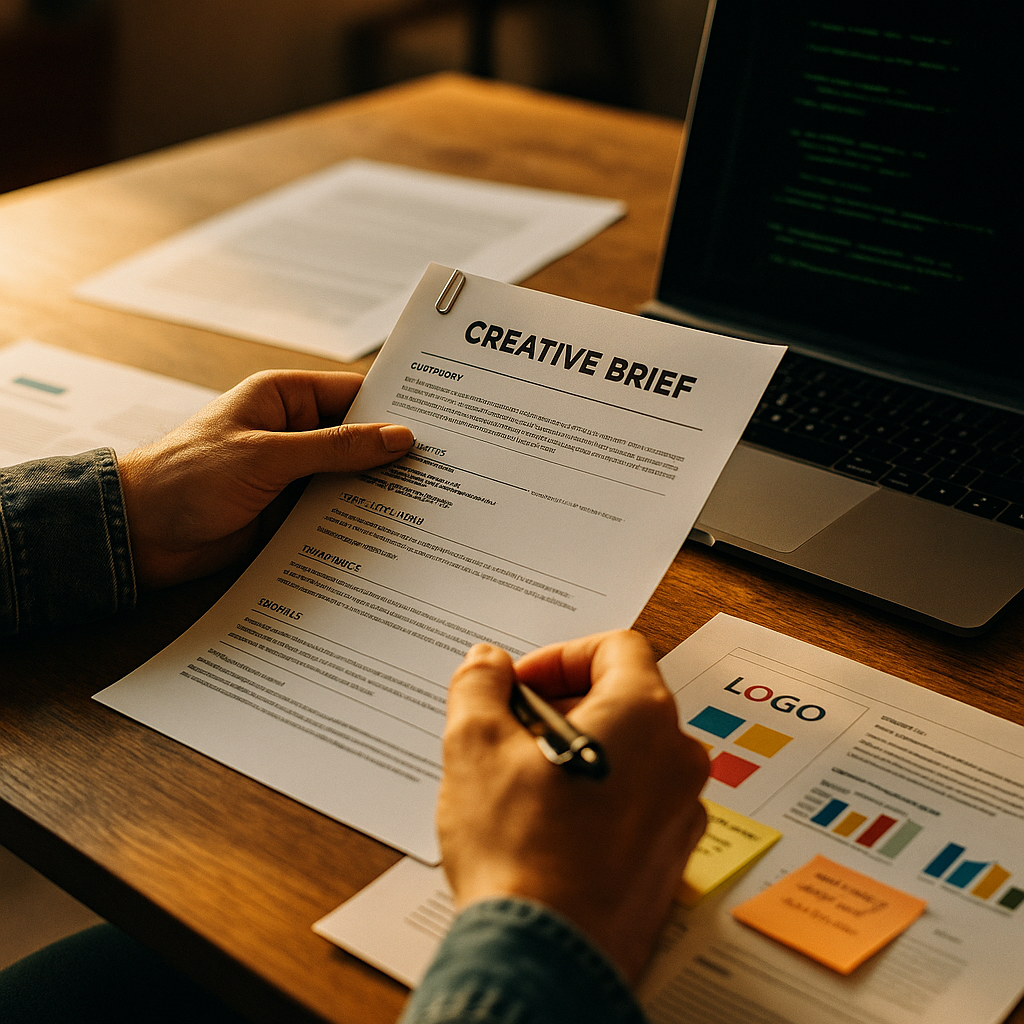
Seventy-one percent of marketers now use generative AI somewhere in their content workflow, according to HubSpot’s own research, yet most creative briefs still get built the old-fashioned way: a strategist copy-pastes fragments from a brand guidelines PDF, a competitor deck, and last quarter’s performance report, then hopes nothing critical got left out. That gap is exactly where retrieval-augmented generation belongs, and almost nobody has plugged it in yet.
Ask any brand strategist how a creative brief actually gets written and you’ll hear some version of the same story: tribal knowledge, tab-switching, and a prayer that the intern remembered the updated tone-of-voice doc. Retrieval-augmented generation, or RAG, fixes the part of that process that generative AI alone can’t touch — grounding output in your actual brand truth instead of a model’s best guess.
The Brief-Writing Problem Nobody Talks About
Most agencies and in-house teams treat the creative brief as a formality. It’s the document everyone skims before the “real” creative work starts. But a weak brief is the single biggest predictor of campaign rework — bad briefs mean revision cycles, missed compliance flags, and creators who go off-message because nobody gave them anything precise to work from.
Plug a generic large language model into brief creation and you get fluent, confident, occasionally wrong output. Ask ChatGPT to draft a brief for a skincare brand’s new influencer campaign and it will produce something plausible-sounding. It will not know that your brand banned the word “clinical” after an FTC inquiry, or that your Q3 messaging pivoted away from ingredient callouts toward sustainability claims. It doesn’t know your brand. It knows patterns.
That’s the core failure mode. Generic generation without retrieval is confident, not accurate. RAG changes the equation by forcing the model to pull from an approved, current source — your brand guidelines, past approved briefs, legal redlines, performance data — before it writes a word.
A brief generated without retrieval is a guess dressed up as guidance. A brief generated with retrieval is a synthesis of everything your brand has already learned, applied to a new problem.
What RAG Actually Does Differently
Retrieval-augmented generation isn’t a fancier chatbot. It’s an architecture: a retrieval layer fetches relevant documents from a vetted knowledge base, then hands them to the generation layer as context before it produces text. For creative briefs, that knowledge base could include:
- Brand style guides and tone-of-voice documentation
- Legal and compliance redlines from past campaigns
- FTC disclosure requirements and platform-specific ad policies
- Historical campaign performance data, segmented by creator tier and content format
- Competitor creative analysis and category benchmarks
When a strategist asks the system to draft a brief for a new product launch, the retrieval layer doesn’t just riff — it pulls the actual approved guidelines and precedent, then the generation layer writes within those constraints. The output cites its sources internally, which means reviewers can trace every claim back to an approved document instead of trusting a black box.
This matters more than it sounds. Teams already burned by AI hallucinations in sales attribution claims understand the pattern: fluent output that turns out to be fabricated undermines trust in the entire system, even when 90% of it was correct. Briefs carry the same risk, just with brand safety and legal exposure attached instead of revenue numbers.
Why This Is a Compliance Issue, Not Just a Productivity One
Marketing leaders tend to pitch AI-assisted briefs as a speed play — faster turnaround, fewer meetings, more campaigns shipped per quarter. That’s real, but it undersells the bigger win: risk reduction.
Every influencer campaign brief that omits a required disclosure clause, mischaracterizes a claim the legal team already rejected, or contradicts platform policy is a liability sitting in a Google Doc waiting to be discovered during an audit. The FTC’s endorsement guidelines haven’t gotten less strict — enforcement actions against undisclosed partnerships have increased steadily, and regulators are paying closer attention to how briefs instruct creators, not just how creators execute.
A RAG-backed brief workflow can be configured to always pull the current compliance checklist before generating creator instructions. No stale template. No strategist working from a version of the guidelines that predates last quarter’s legal review. This is the same logic driving interest in compliance scanning at scale — smaller, purpose-built systems retrieving current rules rather than relying on a model’s training cutoff.
Teams already building governance frameworks for autonomous AI systems, like those outlined in agentic AI governance models, will recognize the pattern. RAG in brief workflows is a smaller-scale version of the same principle: don’t let a generative system act without a grounding mechanism and an audit trail.
Where Most Martech Vendors Get It Wrong
Plenty of creative brief tools on the market claim “AI-powered” generation. Dig into the product docs and you’ll often find a wrapper around a general-purpose LLM API call with a prompt template, no retrieval layer, no source grounding, and no way to verify where a claim in the output actually came from.
This is worth scrutinizing during procurement. Ask vendors directly: does the system retrieve from a controlled knowledge base, or does it generate from general training data alone? Can outputs be traced to source documents? What happens when the knowledge base is updated — does the model need retraining, or does retrieval simply pull fresher documents on the next query? (Good RAG architecture should answer “the latter” without hesitation.)
The vendor-vetting discipline here mirrors what smart teams are already doing with other AI systems. The same rigor applied when teams audit a RAG vendor for product copy generation applies directly to brief workflows — the risk profile (inaccurate claims, off-brand language, compliance gaps) is nearly identical.
If a vendor can’t explain their retrieval architecture in plain language, assume there isn’t one — and assume you’re buying a prompt wrapper, not a knowledge system.
Building the Knowledge Base Is the Real Work
Here’s the uncomfortable truth: implementing RAG is the easy part. Most vendors offer it as a checkbox feature now. The hard part is building and maintaining the knowledge base it retrieves from.
If your brand guidelines live in seventeen versions across Slack, Notion, and someone’s desktop, RAG has nothing good to retrieve. Garbage in, garbage out still applies — retrieval doesn’t fix fragmented source material, it just surfaces it faster. Teams that have already hit this wall with broader AI initiatives will recognize the diagnosis from why AI marketing fails: it’s rarely the model. It’s the data underneath it.
Before evaluating a RAG-based brief tool, marketing ops teams should audit their own source-of-truth documents. Questions worth answering internally:
- Is there a single, current version of brand voice guidelines, or multiple conflicting drafts?
- Are legal redlines from past campaigns documented anywhere searchable, or only in email threads?
- Does performance data (which creator formats convert, which messaging underperforms) exist in a structured, queryable format?
- Who owns updating the knowledge base when guidelines change, and how often does that happen?
Teams without good answers here should fix the knowledge base before buying the tool. A retrieval system pointed at chaos just generates confident-sounding chaos, faster.
What Good Implementation Looks Like
The strongest early implementations we’ve seen pair RAG-generated briefs with a mandatory human review checkpoint, not full automation. The system drafts; a strategist or brand manager reviews the retrieved sources alongside the generated brief, confirms accuracy, and signs off. This isn’t a limitation — it’s the correct design. Full automation of brand-critical documents without human review is how compliance gaps slip through unnoticed.
Some teams are also layering in structured feedback loops: when a reviewer edits a RAG-generated brief, that edit gets logged and, over time, informs what gets prioritized in future retrieval. It’s a lightweight version of the same feedback discipline showing up in AI content pipeline evaluation — treat the system as something that improves with structured input, not a black box you fire and forget.
Worth noting: this isn’t just an internal efficiency story. Brands increasingly need their brief and content systems interoperable with external creator-matching and campaign platforms, which is why interest in agent interoperability standards has picked up alongside RAG adoption. A brief generated with clean retrieval and structured metadata is far easier to hand off to downstream systems, whether that’s a creator-matching platform or an automated bidding tool.
For teams benchmarking their broader content and marketing stack for AI readiness, eMarketer’s ongoing research and Statista’s creator economy data are useful reference points for understanding how quickly the rest of the industry is moving on this — spoiler: faster than most brief workflows currently allow.
The Bottom Line for Budget Owners
If you’re the one signing off on martech spend, the pitch for RAG in brief workflows isn’t “AI, but better.” It’s risk reduction with a productivity dividend attached. Fewer compliance misses. Fewer off-brand briefs reaching creators. Fewer rework cycles eating agency hours you’re paying for by the retainer.
Treat it the way you’d treat any infrastructure investment: audit your source documents first, vet vendors on retrieval architecture (not just output fluency), and keep a human checkpoint in the loop until the system has earned trust through a track record, not a demo.
Frequently Asked Questions
What is retrieval-augmented generation in the context of marketing briefs?
Retrieval-augmented generation (RAG) is an AI architecture where a system retrieves relevant, approved documents — like brand guidelines, legal redlines, or past campaign data — before generating text. Applied to creative briefs, it means the AI drafts content grounded in your actual brand knowledge rather than generic training data.
How is RAG different from just using ChatGPT to write briefs?
A general-purpose model like ChatGPT generates based on patterns learned during training, with no guarantee it reflects your current brand guidelines or compliance requirements. RAG forces the system to pull from a specific, controlled knowledge base first, then generate output constrained by those sources, which reduces hallucination and off-brand output.
What’s the biggest risk of not using RAG in brief workflows?
Compliance exposure. Briefs written without grounding in current legal and disclosure guidelines can instruct creators incorrectly, leading to FTC violations, platform policy breaches, or off-brand messaging that requires expensive rework.
What should marketing teams do before implementing a RAG-based brief tool?
Audit and consolidate the source documents the system will retrieve from — brand guidelines, legal redlines, performance data. RAG only works well when the underlying knowledge base is current, structured, and centralized. A messy knowledge base produces messy output, just faster.
Should AI-generated briefs be fully automated?
No. The strongest implementations keep a human review checkpoint where a strategist or brand manager verifies the retrieved sources and confirms the generated brief before it goes to creators or agencies. Full automation of brand-critical documents without oversight increases risk rather than reducing it.
Next step: before evaluating any RAG-powered brief tool, run a two-week audit of where your brand guidelines, legal redlines, and compliance rules actually live — if the answer is “scattered across five tools,” fix that first. The retrieval layer is only as good as what it’s retrieving from.
Frequently Asked Questions
What is retrieval-augmented generation in the context of marketing briefs?
Retrieval-augmented generation (RAG) is an AI architecture where a system retrieves relevant, approved documents — like brand guidelines, legal redlines, or past campaign data — before generating text. Applied to creative briefs, it means the AI drafts content grounded in your actual brand knowledge rather than generic training data.
How is RAG different from just using ChatGPT to write briefs?
A general-purpose model like ChatGPT generates based on patterns learned during training, with no guarantee it reflects your current brand guidelines or compliance requirements. RAG forces the system to pull from a specific, controlled knowledge base first, then generate output constrained by those sources, which reduces hallucination and off-brand output.
What’s the biggest risk of not using RAG in brief workflows?
Compliance exposure. Briefs written without grounding in current legal and disclosure guidelines can instruct creators incorrectly, leading to FTC violations, platform policy breaches, or off-brand messaging that requires expensive rework.
What should marketing teams do before implementing a RAG-based brief tool?
Audit and consolidate the source documents the system will retrieve from — brand guidelines, legal redlines, performance data. RAG only works well when the underlying knowledge base is current, structured, and centralized. A messy knowledge base produces messy output, just faster.
Should AI-generated briefs be fully automated?
No. The strongest implementations keep a human review checkpoint where a strategist or brand manager verifies the retrieved sources and confirms the generated brief before it goes to creators or agencies. Full automation of brand-critical documents without oversight increases risk rather than reducing it.
Top Influencer Marketing Agencies
The leading agencies shaping influencer marketing in 2026
Agencies ranked by campaign performance, client diversity, platform expertise, proven ROI, industry recognition, and client satisfaction. Assessed through verified case studies, reviews, and industry consultations.
Moburst

-
2

The Shelf
Boutique Beauty & Lifestyle Influencer AgencyA data-driven boutique agency specializing exclusively in beauty, wellness, and lifestyle influencer campaigns on Instagram and TikTok. Best for brands already focused on the beauty/personal care space that need curated, aesthetic-driven content.Clients: Pepsi, The Honest Company, Hims, Elf Cosmetics, Pure LeafVisit The Shelf → -
3

Audiencly
Niche Gaming & Esports Influencer AgencyA specialized agency focused exclusively on gaming and esports creators on YouTube, Twitch, and TikTok. Ideal if your campaign is 100% gaming-focused — from game launches to hardware and esports events.Clients: Epic Games, NordVPN, Ubisoft, Wargaming, Tencent GamesVisit Audiencly → -
4

Viral Nation
Global Influencer Marketing & Talent AgencyA dual talent management and marketing agency with proprietary brand safety tools and a global creator network spanning nano-influencers to celebrities across all major platforms.Clients: Meta, Activision Blizzard, Energizer, Aston Martin, WalmartVisit Viral Nation → -
5

The Influencer Marketing Factory
TikTok, Instagram & YouTube CampaignsA full-service agency with strong TikTok expertise, offering end-to-end campaign management from influencer discovery through performance reporting with a focus on platform-native content.Clients: Google, Snapchat, Universal Music, Bumble, YelpVisit TIMF → -
6

NeoReach
Enterprise Analytics & Influencer CampaignsAn enterprise-focused agency combining managed campaigns with a powerful self-service data platform for influencer search, audience analytics, and attribution modeling.Clients: Amazon, Airbnb, Netflix, Honda, The New York TimesVisit NeoReach → -
7

Ubiquitous
Creator-First Marketing PlatformA tech-driven platform combining self-service tools with managed campaign options, emphasizing speed and scalability for brands managing multiple influencer relationships.Clients: Lyft, Disney, Target, American Eagle, NetflixVisit Ubiquitous → -
8

Obviously
Scalable Enterprise Influencer CampaignsA tech-enabled agency built for high-volume campaigns, coordinating hundreds of creators simultaneously with end-to-end logistics, content rights management, and product seeding.Clients: Google, Ulta Beauty, Converse, AmazonVisit Obviously →