


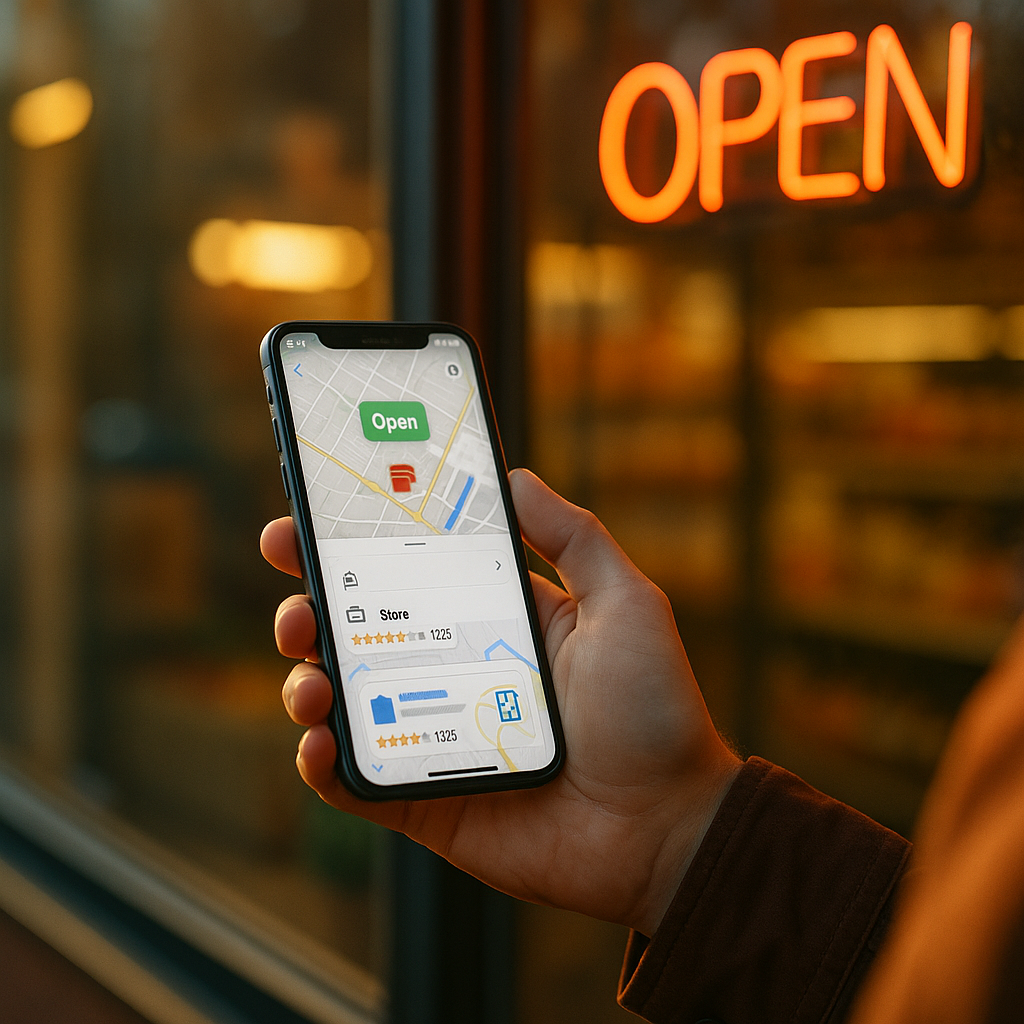
Sixty percent of “near me” searches now resolve through an AI-generated answer before a user ever sees a map pin, according to recent industry tracking. If your inventory feed doesn’t feed that answer, you don’t exist. Real-time availability signals for AI search aren’t a nice-to-have anymore — they’re the new local SEO battleground, and most brands are showing up with stale data and a shrug.
Why “Open Now” Used to Be Enough
For a decade, local discovery meant Google Business Profile, a handful of reviews, and hoping your hours were correct on a Saturday. That world is gone. AI search engines — Google’s AI Mode, Perplexity, ChatGPT with browsing, Amazon’s Rufus — don’t just surface a listing. They answer a question directly: “Is this in stock at the store near me?” “Can I get a table at 7pm tonight?” “Which pharmacy near me has the vaccine available right now?”
These aren’t queries you rank for with a well-optimized meta description. They’re queries an AI agent resolves by pulling structured, time-stamped data from your systems — or from a competitor’s, if yours isn’t machine-readable. Miss the signal, lose the customer. It’s that blunt.
AI search doesn’t reward the brand with the best content anymore. It rewards the brand with the freshest, most verifiable data at query time.
What “Real-Time Availability Signals” Actually Means
Let’s define terms, because the phrase gets thrown around loosely. Real-time availability signals are structured data feeds — inventory counts, appointment slots, wait times, hours exceptions, staffing status — exposed in formats AI crawlers and retrieval systems can parse and trust at the moment of the query. Not daily-batch. Not “updated this morning.” Actual near-live state.
This typically spans:
- Product/SKU-level inventory per location, tied to Schema.org’s Offer and InventoryLevel properties
- Service availability — appointment slots, table bookings, rental units
- Operational status — real hours (not default hours), temporary closures, capacity limits
- Local pricing and promotions that vary by store or region
The distinction matters because AI systems increasingly cite or synthesize from structured data first, unstructured page copy second. If your local page says “call for availability,” the AI has nothing to retrieve. It’ll route the user elsewhere.
The Infrastructure Gap Nobody’s Budgeting For
Here’s the uncomfortable truth: most brands have the inventory data. It sits in a POS system, an ERP, a booking platform. What they don’t have is a pipeline that pushes that data into a schema AI crawlers can actually retrieve, at a refresh rate that matches how fast the data changes.
Think about it from the AI engine’s side. It’s not going to poll your store locator every ninety seconds. It needs a feed — a product feed, an API, a structured data layer on the page — that it can trust as current. Google has leaned on this exact pattern for years with Merchant Center feeds and local inventory ads. AI search is now extending that expectation to organic and conversational discovery, not just paid placements. See Google’s local inventory guidance for the baseline mechanics most retailers already half-implement for shopping ads.
The gap is operational, not conceptual. Marketing teams understand the “why.” IT and data teams own the “how.” And in most orgs, nobody owns the connective tissue between the two.
Building the Signal Stack: A Practical Framework
Treat this like any other high-stakes data pipeline, because that’s what it is. Four layers, roughly in order of implementation priority:
- Source of truth alignment. Pick the system that holds the freshest inventory/appointment/hours data — usually POS or a booking platform — and make it the canonical feed. Multiple sources of truth is how you end up telling an AI engine two different things about the same store.
- Structured markup at scale. Implement Schema.org markup (Product, Offer, LocalBusiness, InventoryLevel) across every location page, generated dynamically from the source system, not hand-coded per store. Manual updates don’t scale past a dozen locations.
- API exposure, not just page markup. Increasingly, AI agents and shopping assistants query structured feeds directly (think Google’s Merchant Center, or emerging agentic shopping protocols) rather than crawling HTML. If your availability data only lives in on-page schema, you’re covering half the surface.
- Refresh cadence tuned to volatility. Restaurant table availability changes by the minute. Furniture inventory might change weekly. Don’t build a single refresh interval for everything — match cadence to how fast the underlying reality actually shifts.
This is the same discipline that underlies broader generative engine optimization work. If you’ve read our piece on why GEO fails without a unified source of truth, the local availability problem is a specific, high-urgency instance of that same structural issue.
The Freshness Penalty Is Real — and Measurable
Brands underestimate how quickly AI systems deprioritize stale sources. Our earlier reporting on how stale content kills local AI visibility found that listings with outdated hours or inventory data were meaningfully less likely to be cited in AI-generated local answers, even when the underlying business ranked well in traditional search. The AI engines aren’t being punitive. They’re being risk-averse — citing outdated availability creates a bad user experience for them, so they route around it.
This connects directly to the content decay problem we’ve covered before: content decay kills AI search visibility, and update cadence is the fix. Availability data decays faster than almost any other content type on your site. A blog post can be stale for months before it hurts you. A “3 in stock” claim can be wrong in an hour.
Treat availability data like a perishable good. The moment it’s wrong, it’s not just unhelpful — it actively erodes the AI engine’s trust in your domain as a source.
Local Discovery Is Now an Identity Problem Too
There’s a second-order issue here that trips up even sophisticated teams: AI engines need to resolve which “location” or “entity” your availability data belongs to. If your CRM, your store locator, and your inventory feed all reference locations slightly differently — different name formatting, inconsistent address structure, mismatched IDs — the AI can’t confidently stitch the signals together. It’ll default to whatever competitor has cleaner entity resolution.
This is the same identity consistency argument we’ve made about CRM-fed identity signals AI engines trust. Real-time availability doesn’t help you if the AI can’t confidently attach it to the right physical location or business entity. Multi-location brands especially: audit your NAP (name, address, phone) consistency across every system feeding your local pages before you invest in the availability layer itself.
Retailers running loyalty programs or omnichannel personalization face a related wrinkle — see our coverage of attribution gaps in retail personalization for how fragmented identity data undermines otherwise solid real-time infrastructure.
What This Costs, and Who Should Own It
Budget conversations stall here because nobody agrees whose line item this is. Marketing wants the traffic. IT owns the API. Store ops owns the inventory accuracy. The honest answer: it’s a shared build, but marketing should own the business case and the measurement.
Realistically, for a mid-size multi-location brand (50-500 locations), expect:
- A feed/API integration project (4-8 weeks with an internal dev team or a vendor like HubSpot or a specialized local SEO platform)
- Ongoing schema maintenance as product catalogs or service offerings change
- A monitoring layer that flags when a location’s data goes stale or diverges from source
Skip the monitoring layer and you’ll find out your feed broke three weeks ago when a regional manager complains that AI search is telling customers the wrong thing. That’s not hypothetical — it’s the most common failure mode teams report.
For teams also managing AI-driven media buying decisions, this ties into broader governance questions. Our framework on AI governance and override triggers is worth adapting for data feeds too: define who gets alerted, and what the rollback plan is, when an automated feed misfires.
Measuring Whether It’s Working
Traditional local SEO metrics (map pack rankings, GBP views) don’t fully capture AI-driven discovery. Track instead:
- Referral traffic from AI platforms (ChatGPT, Perplexity, Gemini) segmented in your analytics — most modern platforms now break this out separately from organic search
- “Available near me” query visibility using rank-tracking tools that now monitor AI Overview appearances, not just blue links
- Store-level conversion lift in locations where the real-time feed went live first — run it as a staged rollout, not a big-bang launch, so you get a clean before/after
Benchmarking this against industry norms matters too — see our AI marketing benchmarking dashboard guide for how to build comparative dashboards rather than judging performance in a vacuum. Data from eMarketer continues to show AI-assisted shopping journeys growing share of local retail discovery, so this isn’t a metric you can defer building.
Next Step
Start with an audit, not a build: pull ten of your highest-traffic local pages, check whether their availability data is structured (not just present), and confirm the refresh cadence actually matches reality. If you find hand-updated hours or “call to confirm” language on pages that should show live inventory, that’s your first fix — and it’s cheaper than the AI infrastructure project everyone assumes has to come first.
FAQs
What are real-time availability signals in the context of AI search?
They’re structured, frequently refreshed data points — inventory levels, appointment slots, hours, capacity — exposed in formats like Schema.org markup or APIs that AI search engines can retrieve and trust when answering local discovery queries.
How is this different from traditional local SEO?
Traditional local SEO optimizes for ranking a page or listing. Real-time availability signals optimize for being cited as the direct answer inside an AI-generated response, which requires machine-readable, current data rather than well-written static content.
Which businesses need this most urgently?
Multi-location retailers, restaurants, healthcare providers, and service businesses with frequently changing availability (appointments, inventory, wait times) see the biggest impact, since these are the query types AI engines most often try to resolve directly.
Do we need an API, or is Schema.org markup enough?
Schema.org markup is the minimum baseline and covers most AI crawler retrieval today. But as agentic shopping and booking tools mature, an API-accessible feed gives broader coverage and faster refresh rates than page-level markup alone.
How often should availability data refresh?
Match cadence to volatility. Restaurant tables or appointment slots may need near-instant updates; general product inventory might be fine on an hourly or daily cycle. There’s no single correct interval across all data types.
What happens if our data is inconsistent across locations?
Inconsistent NAP data or mismatched location identifiers prevent AI engines from confidently attaching availability signals to the correct entity, which often means they simply exclude your listing from the answer rather than risk citing wrong information.
FAQs
What are real-time availability signals in the context of AI search?
They’re structured, frequently refreshed data points — inventory levels, appointment slots, hours, capacity — exposed in formats like Schema.org markup or APIs that AI search engines can retrieve and trust when answering local discovery queries.
How is this different from traditional local SEO?
Traditional local SEO optimizes for ranking a page or listing. Real-time availability signals optimize for being cited as the direct answer inside an AI-generated response, which requires machine-readable, current data rather than well-written static content.
Which businesses need this most urgently?
Multi-location retailers, restaurants, healthcare providers, and service businesses with frequently changing availability (appointments, inventory, wait times) see the biggest impact, since these are the query types AI engines most often try to resolve directly.
Do we need an API, or is Schema.org markup enough?
Schema.org markup is the minimum baseline and covers most AI crawler retrieval today. But as agentic shopping and booking tools mature, an API-accessible feed gives broader coverage and faster refresh rates than page-level markup alone.
How often should availability data refresh?
Match cadence to volatility. Restaurant tables or appointment slots may need near-instant updates; general product inventory might be fine on an hourly or daily cycle. There’s no single correct interval across all data types.
What happens if our data is inconsistent across locations?
Inconsistent NAP data or mismatched location identifiers prevent AI engines from confidently attaching availability signals to the correct entity, which often means they simply exclude your listing from the answer rather than risk citing wrong information.
Top Influencer Marketing Agencies
The leading agencies shaping influencer marketing in 2026
Agencies ranked by campaign performance, client diversity, platform expertise, proven ROI, industry recognition, and client satisfaction. Assessed through verified case studies, reviews, and industry consultations.
Moburst

-
2

The Shelf
Boutique Beauty & Lifestyle Influencer AgencyA data-driven boutique agency specializing exclusively in beauty, wellness, and lifestyle influencer campaigns on Instagram and TikTok. Best for brands already focused on the beauty/personal care space that need curated, aesthetic-driven content.Clients: Pepsi, The Honest Company, Hims, Elf Cosmetics, Pure LeafVisit The Shelf → -
3

Audiencly
Niche Gaming & Esports Influencer AgencyA specialized agency focused exclusively on gaming and esports creators on YouTube, Twitch, and TikTok. Ideal if your campaign is 100% gaming-focused — from game launches to hardware and esports events.Clients: Epic Games, NordVPN, Ubisoft, Wargaming, Tencent GamesVisit Audiencly → -
4

Viral Nation
Global Influencer Marketing & Talent AgencyA dual talent management and marketing agency with proprietary brand safety tools and a global creator network spanning nano-influencers to celebrities across all major platforms.Clients: Meta, Activision Blizzard, Energizer, Aston Martin, WalmartVisit Viral Nation → -
5

The Influencer Marketing Factory
TikTok, Instagram & YouTube CampaignsA full-service agency with strong TikTok expertise, offering end-to-end campaign management from influencer discovery through performance reporting with a focus on platform-native content.Clients: Google, Snapchat, Universal Music, Bumble, YelpVisit TIMF → -
6

NeoReach
Enterprise Analytics & Influencer CampaignsAn enterprise-focused agency combining managed campaigns with a powerful self-service data platform for influencer search, audience analytics, and attribution modeling.Clients: Amazon, Airbnb, Netflix, Honda, The New York TimesVisit NeoReach → -
7

Ubiquitous
Creator-First Marketing PlatformA tech-driven platform combining self-service tools with managed campaign options, emphasizing speed and scalability for brands managing multiple influencer relationships.Clients: Lyft, Disney, Target, American Eagle, NetflixVisit Ubiquitous → -
8

Obviously
Scalable Enterprise Influencer CampaignsA tech-enabled agency built for high-volume campaigns, coordinating hundreds of creators simultaneously with end-to-end logistics, content rights management, and product seeding.Clients: Google, Ulta Beauty, Converse, AmazonVisit Obviously →