


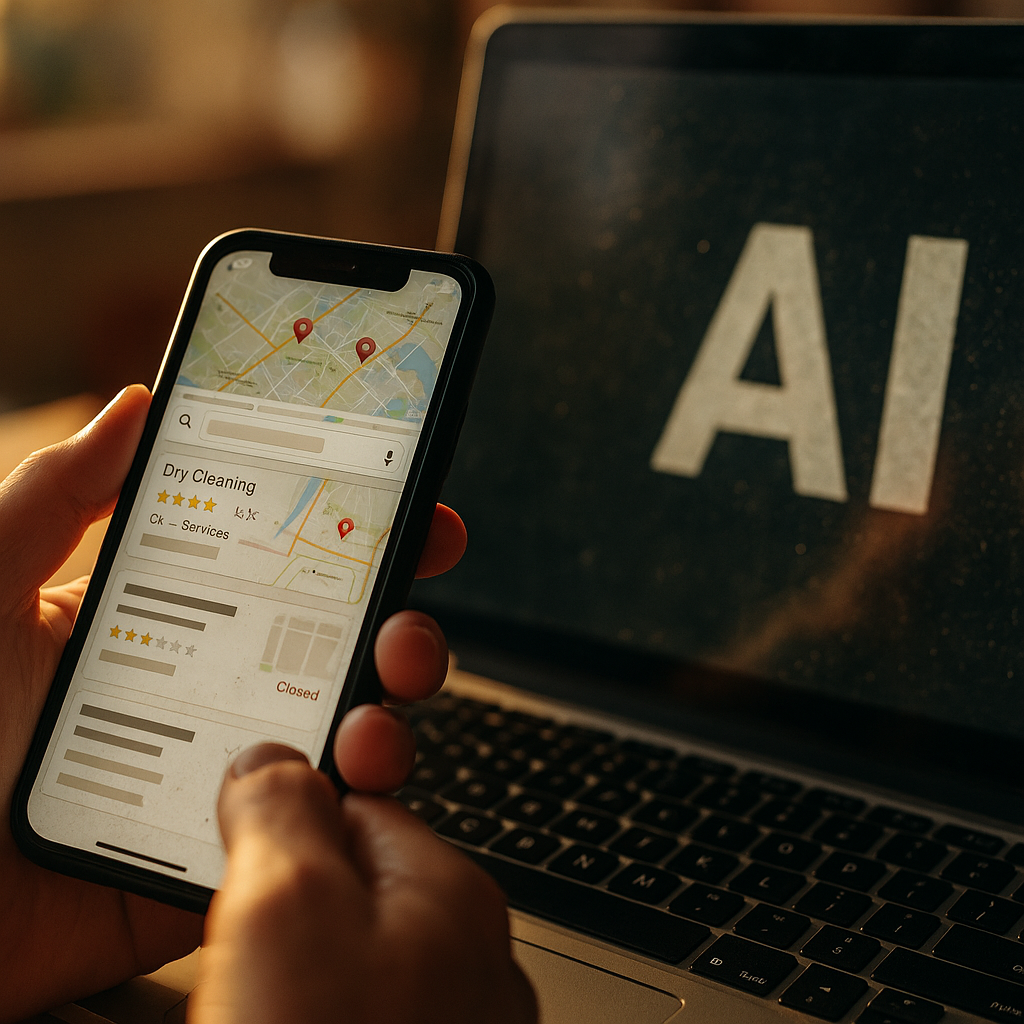
Content older than 90 days is 60% less likely to surface in local AI-generated recommendations — that’s the headline finding from a July survey that should reset how brand teams think about content maintenance. If your local pages haven’t been touched since Q1, an AI search engine may already be quietly ignoring them. Welcome to the era where “publish and forget” gets you erased.
The Survey, and Why It Matters Now
The study tracked how AI-driven search tools (think Google’s AI Overviews, ChatGPT search, and Perplexity’s local answers) surface business recommendations across mid-sized metro markets. Researchers sampled thousands of local queries — “best dentist near me,” “top-rated HVAC company,” that sort of thing — and cross-referenced which businesses got recommended against how recently their web content, review responses, and listing data had been updated.
The pattern was blunt. Businesses that updated core pages, FAQs, or location content within the prior 60 days appeared in AI-generated answers at nearly double the rate of businesses that hadn’t touched their content in six months or more. This isn’t a minor ranking nuance. It’s a visibility cliff.
Content decay in AI search isn’t gradual — it behaves more like a cliff edge than a slow slide, with recommendation rates dropping sharply once content crosses the 90-day staleness threshold.
For brand and agency teams managing multi-location clients or franchise networks, this is a wake-up call. Traditional SEO tolerated stale content reasonably well, provided backlinks and domain authority stayed strong. AI search models appear to weight recency far more heavily, likely because they’re optimizing for answers that feel current and trustworthy to the end user, not just technically authoritative.
Why AI Engines Punish Stale Content Harder Than Google Ever Did
Classic search ranking rewarded accumulated authority. A page from three years ago with strong backlinks could still outrank fresher competitors. AI answer engines work differently — they’re synthesizing a response, not just ranking a list of links, and synthesis models seem to prefer sources that signal ongoing activity.
Why would that be? A few working theories from practitioners tracking this shift:
- Trust proxies: Recent updates signal a business is still operating, still accurate, still worth recommending. An AI model answering “is this pharmacy open on Sundays” doesn’t want to cite a page last touched two years ago.
- Training and retrieval overlap: Retrieval-augmented systems often prioritize freshness in their indexing logic, similar to how news aggregators boost recent articles regardless of raw authority.
- Review velocity as a signal: Businesses with steady review activity and updated responses look “alive” to the model, whereas dormant profiles look abandoned even if the business is thriving offline.
This connects to a broader theme we’ve covered before: generative engine optimization fails without a unified source of truth. If your local content, your CRM records, and your review responses aren’t synchronized, you’re sending mixed freshness signals — and AI models notice.
What “Fresh” Actually Means to an AI Model
Here’s where marketers get tripped up. Freshness isn’t just a timestamp swap. Slapping a new “last updated” date on a page without substantive changes is the digital equivalent of repainting a house that’s structurally falling apart. The survey found that businesses making cosmetic-only updates (date changes, minor typo fixes) saw negligible improvement in AI recommendation rates compared to businesses making substantive edits.
Substantive, in this context, means:
- New service details, pricing changes, or updated hours reflected across the page and structured data
- Fresh FAQ content that answers actual questions customers are asking right now
- Updated review responses that reference specific, current details (not generic “thanks for your feedback”)
- New photos, staff bios, or location-specific details that couldn’t have existed a year ago
This aligns with what we’ve seen work for AI Overviews generally — see our breakdown on structuring content so AI overviews quote your brand. The models reward specificity and demonstrable currency, not just word count or keyword density.
The Update Cadence That Actually Moves the Needle
So what’s the magic frequency? The survey data suggests a tiered cadence works best, rather than a single blanket rule:
- High-priority local pages (location, services, hours): Review and refresh every 30-45 days, even if changes are minor. These pages carry the most weight in local AI recommendation queries.
- FAQ and support content: Update every 60 days, pulling from actual customer service logs or search query data to keep answers relevant.
- Review responses: Near real-time. Businesses responding within 48 hours to new reviews showed meaningfully better AI visibility than those with response lags over two weeks.
- Blog and thought-leadership content: Quarterly refreshes are sufficient here, since these pages compete less directly on “is this business currently operating” signals.
Franchise and multi-location brands should treat this cadence as an operational requirement, not a marketing nice-to-have. That means building it into workflows, not hoping local managers remember to log in.
A 30-to-45-day refresh cycle for core local pages isn’t a best practice suggestion anymore — the survey data treats it as the minimum threshold for AI search visibility.
The CRM Connection Nobody’s Talking About
Here’s the part most agencies miss: content freshness at scale is impossible without clean, centralized customer and location data. If your CRM doesn’t feed real business updates (new hours, new staff, new service areas) directly into your content management workflow, you’re stuck manually chasing freshness across dozens or hundreds of locations. That’s not scalable, and it’s exactly why so many brands fail at this even when they know the stakes.
We’ve written extensively about this gap. GEO needs a CRM-fed identity signal AI engines trust, and without it, your freshness updates are guesswork rather than a system. Similarly, GEO without unified CRM and identity data is just guessing — a survey like this one only reinforces that point with hard numbers.
Practically, this means marketing ops teams need to treat local content updates the way they treat inventory management: automated triggers, not manual reminders. When a location changes hours, that change should propagate to the website, the Google Business Profile, and any AI-facing structured data within hours, not weeks.
Content Decay Isn’t Just an AI Problem — It’s a Brand Trust Problem
Step back from the AI mechanics for a second. A customer who gets an AI-generated answer citing a stale hours listing and shows up to a closed business isn’t going to blame the algorithm. They’re going to blame the brand. Content decay in AI search is really a proxy for a much older problem: operational discipline around local data accuracy.
This is where brand teams have leverage that pure SEO tactics can’t provide. Investing in structured update workflows, and building genuine review-response practices, isn’t just about gaming AI recommendation rates. It’s about not embarrassing yourself when a customer trusts what the AI told them.
For teams building out broader AI content governance, this pairs well with thinking through diagnostic frameworks for AI marketing underperformance — content decay is often the quiet root cause behind visibility drops that get misattributed to algorithm changes.
What Brand Teams Should Do This Quarter
Don’t try to boil the ocean. Start with an audit:
- Pull last-modified dates across all local and location pages. Anything past 90 days gets flagged as high risk.
- Check review response times across your top 20 locations by traffic or revenue. Anything averaging more than five days needs a process fix.
- Map your CRM-to-CMS data flow. If hours, staff, or service changes require manual re-entry on the website, that’s your bottleneck.
- Set a recurring 30-day content review cycle for your highest-traffic local pages, and actually staff it — this can’t be a task nobody owns.
External benchmarking helps here too. eMarketer’s research on AI search adoption and Statista’s consumer search behavior data both suggest AI-mediated discovery is growing fast enough that this isn’t a fringe concern anymore, it’s mainstream customer acquisition infrastructure. Meanwhile, tools like Sprout Social’s local engagement tracking can help operationalize review response monitoring without adding headcount.
One more thing worth flagging: none of this replaces good old-fashioned accuracy. Google’s Business Profile guidelines still matter, and getting flagged for inconsistent NAP (name, address, phone) data will undercut any freshness strategy you build on top of it.
Next Step
Run the 90-day audit this week, not next quarter — every local page past that threshold is actively costing you AI-driven visibility right now, and the fix is operational, not creative.
FAQs
What does “content decay” mean in the context of AI search?
Content decay refers to the drop in visibility that pages experience as they age without substantive updates. In AI search specifically, decay happens faster and more sharply than in traditional SEO, with recommendation rates dropping significantly once content passes roughly 90 days without meaningful changes.
How often should local business pages be updated to stay visible in AI recommendations?
Survey data suggests core local pages (location details, services, hours) should be reviewed and refreshed every 30-45 days. FAQ content can run on a 60-day cycle, while review responses should happen within 48 hours of a new review being posted.
Does simply updating the “last modified” date help?
No. The survey found cosmetic-only changes, like date stamps without content changes, produced negligible improvement in AI recommendation visibility. Updates need to be substantive: new details, pricing, hours, or genuinely refreshed FAQ answers.
Why do AI search tools weight freshness more heavily than traditional search engines?
AI answer engines are synthesizing responses rather than ranking a list of links, and they appear to use recency as a trust proxy, favoring sources that look actively maintained over those with only strong historical authority.
What role does CRM data play in maintaining content freshness at scale?
A unified CRM feeding real-time business updates into your content management system is essential for multi-location brands. Without it, freshness updates become manual, inconsistent, and impossible to scale across dozens or hundreds of locations.
Top Influencer Marketing Agencies
The leading agencies shaping influencer marketing in 2026
Agencies ranked by campaign performance, client diversity, platform expertise, proven ROI, industry recognition, and client satisfaction. Assessed through verified case studies, reviews, and industry consultations.
Moburst

-
2

The Shelf
Boutique Beauty & Lifestyle Influencer AgencyA data-driven boutique agency specializing exclusively in beauty, wellness, and lifestyle influencer campaigns on Instagram and TikTok. Best for brands already focused on the beauty/personal care space that need curated, aesthetic-driven content.Clients: Pepsi, The Honest Company, Hims, Elf Cosmetics, Pure LeafVisit The Shelf → -
3

Audiencly
Niche Gaming & Esports Influencer AgencyA specialized agency focused exclusively on gaming and esports creators on YouTube, Twitch, and TikTok. Ideal if your campaign is 100% gaming-focused — from game launches to hardware and esports events.Clients: Epic Games, NordVPN, Ubisoft, Wargaming, Tencent GamesVisit Audiencly → -
4

Viral Nation
Global Influencer Marketing & Talent AgencyA dual talent management and marketing agency with proprietary brand safety tools and a global creator network spanning nano-influencers to celebrities across all major platforms.Clients: Meta, Activision Blizzard, Energizer, Aston Martin, WalmartVisit Viral Nation → -
5

The Influencer Marketing Factory
TikTok, Instagram & YouTube CampaignsA full-service agency with strong TikTok expertise, offering end-to-end campaign management from influencer discovery through performance reporting with a focus on platform-native content.Clients: Google, Snapchat, Universal Music, Bumble, YelpVisit TIMF → -
6

NeoReach
Enterprise Analytics & Influencer CampaignsAn enterprise-focused agency combining managed campaigns with a powerful self-service data platform for influencer search, audience analytics, and attribution modeling.Clients: Amazon, Airbnb, Netflix, Honda, The New York TimesVisit NeoReach → -
7

Ubiquitous
Creator-First Marketing PlatformA tech-driven platform combining self-service tools with managed campaign options, emphasizing speed and scalability for brands managing multiple influencer relationships.Clients: Lyft, Disney, Target, American Eagle, NetflixVisit Ubiquitous → -
8

Obviously
Scalable Enterprise Influencer CampaignsA tech-enabled agency built for high-volume campaigns, coordinating hundreds of creators simultaneously with end-to-end logistics, content rights management, and product seeding.Clients: Google, Ulta Beauty, Converse, AmazonVisit Obviously →