


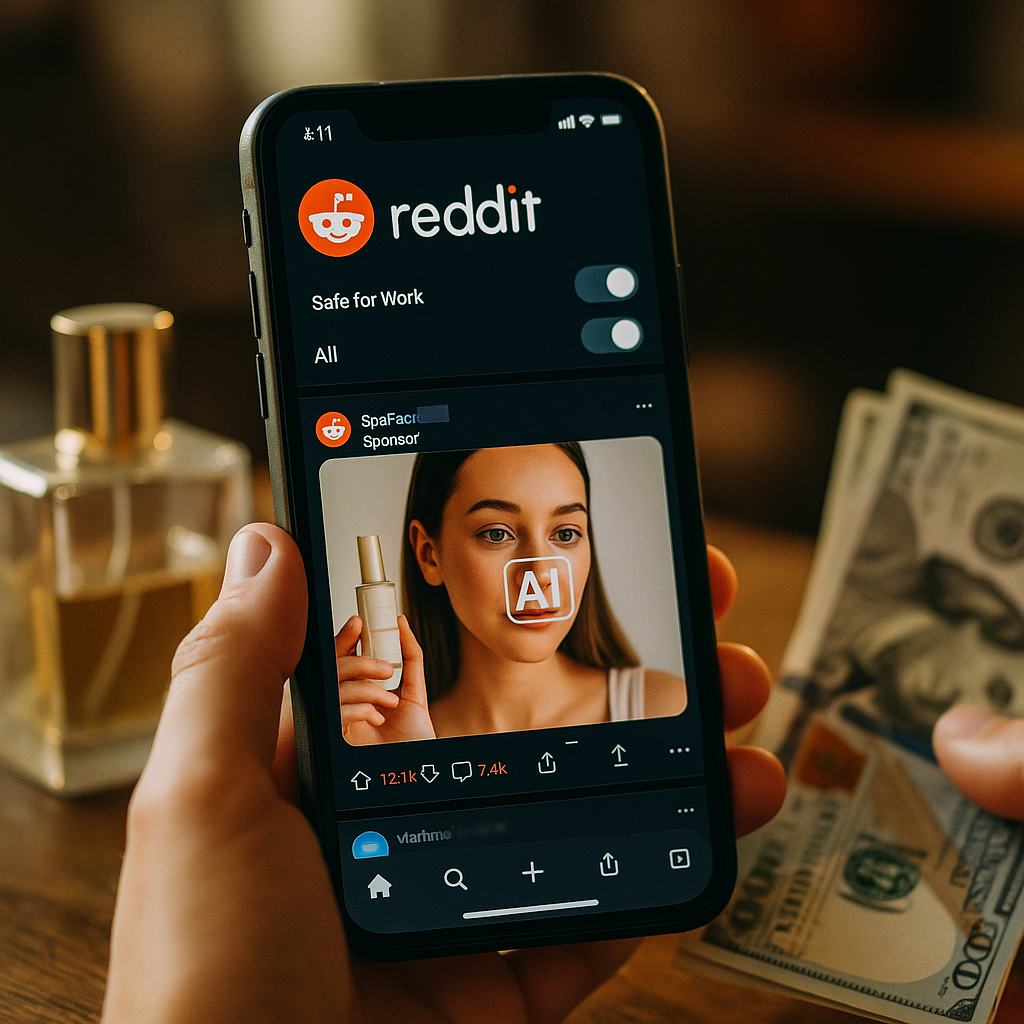
Reddit’s brand seeding rejection rate reportedly climbed past 40% in certain verticals this quarter. That’s not a spam problem anymore. That’s a pricing signal. Reddit AI content-quality filters are now the single biggest variable determining whether a seeding campaign breaks even or bleeds budget, and most brands haven’t updated their math to reflect it.
For years, Reddit seeding ran on volume economics. Flood enough subreddits with enough accounts, absorb the bans, and the surviving posts paid for the losses. That model is dead. Reddit’s classifier stack now scores content quality, account authenticity, and community fit before a post ever gets meaningful reach — and it does this in near real time.
What actually changed in the filter stack
Reddit has been building anti-spam machine learning for years, but the Q3 rollout marked a shift from reactive moderation to predictive suppression. Instead of removing bad posts after users report them, the system now downranks suspicious content before it accumulates upvotes. Think shadow-throttling, not shadow-banning.
The signals feeding this system are broader than most brands assume. Account age and karma history still matter, but so does writing cadence, posting velocity across subreddits, vocabulary overlap with known seeding templates, and even the timing gap between account creation and first promotional post. Reddit has effectively built a fingerprinting system for inauthentic marketing behavior, and it’s aggressive.
Our earlier coverage of Reddit’s anti-spam vetting requirements flagged this trajectory months ago. What’s new in Q3 is the economic bite. Brands running seeding programs at scale are seeing cost-per-successful-post triple in categories like supplements, crypto-adjacent fintech, and B2B SaaS, where template-driven copy used to be the norm.
Agencies report that posts surviving Reddit’s filters now cost roughly 2.5x to 3x what they did before the Q3 update, not because Reddit raised prices, but because the failure rate on low-effort content quietly tripled.
Why this is really a repricing event
Call it what it is: Reddit just repriced authenticity. Low-effort, templated seeding used to be cheap because volume covered for quality. Now volume gets you flagged faster, and the content that survives requires genuine subreddit fluency, unique voice, and real community history behind the account.
That means the actual per-post cost of effective Reddit seeding has gone up even though Reddit hasn’t touched its ad rate card. This is a hidden tax on lazy execution, and it’s forcing agencies to rethink how they staff and price seeding retainers.
Some numbers worth sitting with: eMarketer has tracked steady growth in Reddit’s ad revenue as the platform leans into brand safety as a selling point, a strategy that mirrors what Meta and Google have done with their own quality scoring systems for years. Reddit is betting that a smaller, higher-quality inventory of “trusted” seeding accounts is worth more to advertisers than an unlimited supply of disposable ones. Early signs suggest that bet is paying off — CPMs on filtered-safe content in finance and health subreddits are commanding premiums brands wouldn’t have accepted a year ago.
The account-farming business model is collapsing
Agencies that built entire practices around managing hundreds of aged Reddit accounts are watching that inventory lose value fast. An account that survived quietly for two years, dropping the occasional comment to build karma, used to be a reusable asset across dozens of client campaigns. Reddit’s classifier now looks at behavioral patterns across an account’s full history, not just recent activity, and flags accounts that suddenly pivot from lurking to promotional posting.
This is functionally the same lesson TikTok and YouTube pre-screening tools have already taught brands: AI pre-screening tools are catching mislabeled and inauthentic content earlier in the pipeline than platforms used to. Reddit is simply the latest, and arguably most aggressive, to weaponize this against seeding-for-hire operations.
How brands should rebuild seeding budgets
The old rule of thumb, budget for 20% post survival and 80% waste, no longer applies. Waste rates are higher, but the surviving 20% now performs meaningfully better because it’s competing in a cleaner feed. That’s the trade brands need to model.
Here’s what a realistic Q3 seeding budget structure should account for:
- Higher per-account investment. Genuine community participation over months, not days, before any promotional content goes live.
- Smaller account pools, deeper vetting. Five well-established accounts now outperform fifty burner accounts.
- Content written by people who actually use Reddit. Generic copywriters producing templated posts get flagged fast; subreddit-native writers don’t.
- Slower campaign timelines. Rushed seeding pushes are the clearest tell to Reddit’s classifier that something’s inauthentic.
- Built-in attrition budget. Even well-vetted accounts get flagged occasionally. Plan for it rather than treating it as a crisis.
This isn’t just a Reddit problem, either. It echoes a broader industry shift toward platform-native authenticity requirements that Sprout Social and others have documented across social platforms generally. Brands that treat every platform’s anti-spam system as a one-time compliance hurdle rather than an ongoing cost center keep getting burned.
Vetting vendors just got harder, too
If your seeding agency can’t explain how they’re building account authenticity signals over time, that’s a red flag. Ask specifically how long accounts have existed before posting client content, what percentage of their account pool has been flagged in the last quarter, and whether they can show organic (non-promotional) posting history as proof of authenticity.
This maps closely to the vetting discipline outlined in our AI agent marketplace governance checklist — the same due-diligence muscle brands are building for AI vendors applies directly to seeding vendors now. Reddit’s filters have made vendor transparency a genuine competitive differentiator, not just a nice-to-have on an RFP.
Brands should also request evidence of subreddit-specific approval rates, not blended averages. A vendor claiming an 80% survival rate across all campaigns might be hiding a 95% survival rate in low-scrutiny hobby subreddits and a 30% survival rate in the finance and health communities that actually matter for most B2B and DTC clients.
What this means for measurement and ROI
Attribution on Reddit seeding was always messy. It gets messier when survival rates vary this dramatically by content quality and subreddit category. Brands need to stop measuring seeding ROI purely on posts-live and start weighting for post longevity, since content flagged after 48 hours delivers a fraction of the impressions that untouched content generates over two or three weeks.
This is the same recalibration marketers have had to do around attribution windows for AI-driven referral traffic: the old snapshot metrics undercount value that accrues slowly, and overcount value that looks good on day one but evaporates once a platform’s quality system catches up to it.
Practically, that means tracking:
- Time-to-flag for each seeded post, not just whether it went live.
- Comment engagement quality, since Reddit’s system also weighs how a community responds, not just whether a post appears.
- Account survival across campaigns, to catch degrading vendor performance before it tanks a whole quarter’s program.
- Category-specific benchmarks, since a 50% survival rate in r/technology means something very different than 50% in r/personalfinance.
None of this is exotic. It’s the same rigor brands already apply to vendor ROAS claims in paid media. Reddit seeding just resisted that discipline longer because it lived in a gray zone between organic and paid for so long.
Is this actually good news for brands?
Counterintuitively, yes, if you’re willing to do the work. Reddit’s filter aggression is killing the race-to-the-bottom seeding model that made the platform noisy and unreliable for advertisers in the first place. Brands willing to invest in genuine community presence are getting cleaner inventory, better engagement, and less competition from disposable-account spam.
This mirrors a pattern we’ve tracked elsewhere in the platform ecosystem: as anti-spam AI matures, it rewards brands that were already building real community trust and punishes the ones optimizing purely for volume. Reddit is not unique here. It’s just catching up faster than most platforms did.
Statista’s ongoing tracking of social platform ad spend shows brands continuing to shift budget toward platforms with clearer brand-safety signaling, a trend Statista’s advertising data has documented across several platforms navigating similar trust-and-safety pressure. Reddit’s timing puts it in a strong position to capture some of that reallocated spend, provided brands adjust their seeding playbooks accordingly.
The uncomfortable truth: brands that can’t or won’t adapt their seeding approach are going to see costs rise without a corresponding quality bump, because they’ll keep feeding low-effort content into a system built specifically to detect it.
The bottom line for Q3 planning
Rebuild your seeding budget around fewer, better-vetted accounts and longer campaign runways, then measure survival and engagement quality separately from raw post counts — that’s the only model that holds up against Reddit’s current filter aggression.
Frequently Asked Questions
Why are Reddit seeding costs rising even though ad rates haven’t changed?
Reddit’s AI classifier now flags low-effort or templated content earlier and more aggressively than before, so a much higher percentage of seeded posts get suppressed or removed. Brands need more attempts, better-vetted accounts, and longer lead times to hit the same number of surviving posts, which drives up effective cost per post even though Reddit’s rate card is unchanged.
What signals does Reddit’s AI use to flag brand seeding content?
Reported signals include account age and posting history, writing style consistency, posting velocity across multiple subreddits, vocabulary overlap with known promotional templates, and sudden shifts from lurking behavior to promotional activity. The system reportedly weighs the full behavioral history of an account, not just the content of a single post.
How should brands vet seeding vendors given these changes?
Ask vendors for subreddit-specific survival rates rather than blended averages, evidence of organic non-promotional posting history on accounts, and details on how long accounts exist before running client content. Vendors unwilling to share this data are a warning sign.
Does this affect all subreddit categories equally?
No. High-scrutiny categories like finance, health, and crypto-adjacent topics see far more aggressive filtering than hobby or entertainment subreddits, largely because these are also categories where misinformation and manipulation risks are higher.
Is organic Reddit seeding still worth the investment?
Yes, for brands willing to invest in genuine community participation over time. Content that survives Reddit’s filters now performs better on average because it faces less competition from low-quality, disposable-account spam.
FAQPage Schema
Top Influencer Marketing Agencies
The leading agencies shaping influencer marketing in 2026
Agencies ranked by campaign performance, client diversity, platform expertise, proven ROI, industry recognition, and client satisfaction. Assessed through verified case studies, reviews, and industry consultations.
Moburst

-
2

The Shelf
Boutique Beauty & Lifestyle Influencer AgencyA data-driven boutique agency specializing exclusively in beauty, wellness, and lifestyle influencer campaigns on Instagram and TikTok. Best for brands already focused on the beauty/personal care space that need curated, aesthetic-driven content.Clients: Pepsi, The Honest Company, Hims, Elf Cosmetics, Pure LeafVisit The Shelf → -
3

Audiencly
Niche Gaming & Esports Influencer AgencyA specialized agency focused exclusively on gaming and esports creators on YouTube, Twitch, and TikTok. Ideal if your campaign is 100% gaming-focused — from game launches to hardware and esports events.Clients: Epic Games, NordVPN, Ubisoft, Wargaming, Tencent GamesVisit Audiencly → -
4

Viral Nation
Global Influencer Marketing & Talent AgencyA dual talent management and marketing agency with proprietary brand safety tools and a global creator network spanning nano-influencers to celebrities across all major platforms.Clients: Meta, Activision Blizzard, Energizer, Aston Martin, WalmartVisit Viral Nation → -
5

The Influencer Marketing Factory
TikTok, Instagram & YouTube CampaignsA full-service agency with strong TikTok expertise, offering end-to-end campaign management from influencer discovery through performance reporting with a focus on platform-native content.Clients: Google, Snapchat, Universal Music, Bumble, YelpVisit TIMF → -
6

NeoReach
Enterprise Analytics & Influencer CampaignsAn enterprise-focused agency combining managed campaigns with a powerful self-service data platform for influencer search, audience analytics, and attribution modeling.Clients: Amazon, Airbnb, Netflix, Honda, The New York TimesVisit NeoReach → -
7

Ubiquitous
Creator-First Marketing PlatformA tech-driven platform combining self-service tools with managed campaign options, emphasizing speed and scalability for brands managing multiple influencer relationships.Clients: Lyft, Disney, Target, American Eagle, NetflixVisit Ubiquitous → -
8

Obviously
Scalable Enterprise Influencer CampaignsA tech-enabled agency built for high-volume campaigns, coordinating hundreds of creators simultaneously with end-to-end logistics, content rights management, and product seeding.Clients: Google, Ulta Beauty, Converse, AmazonVisit Obviously →