


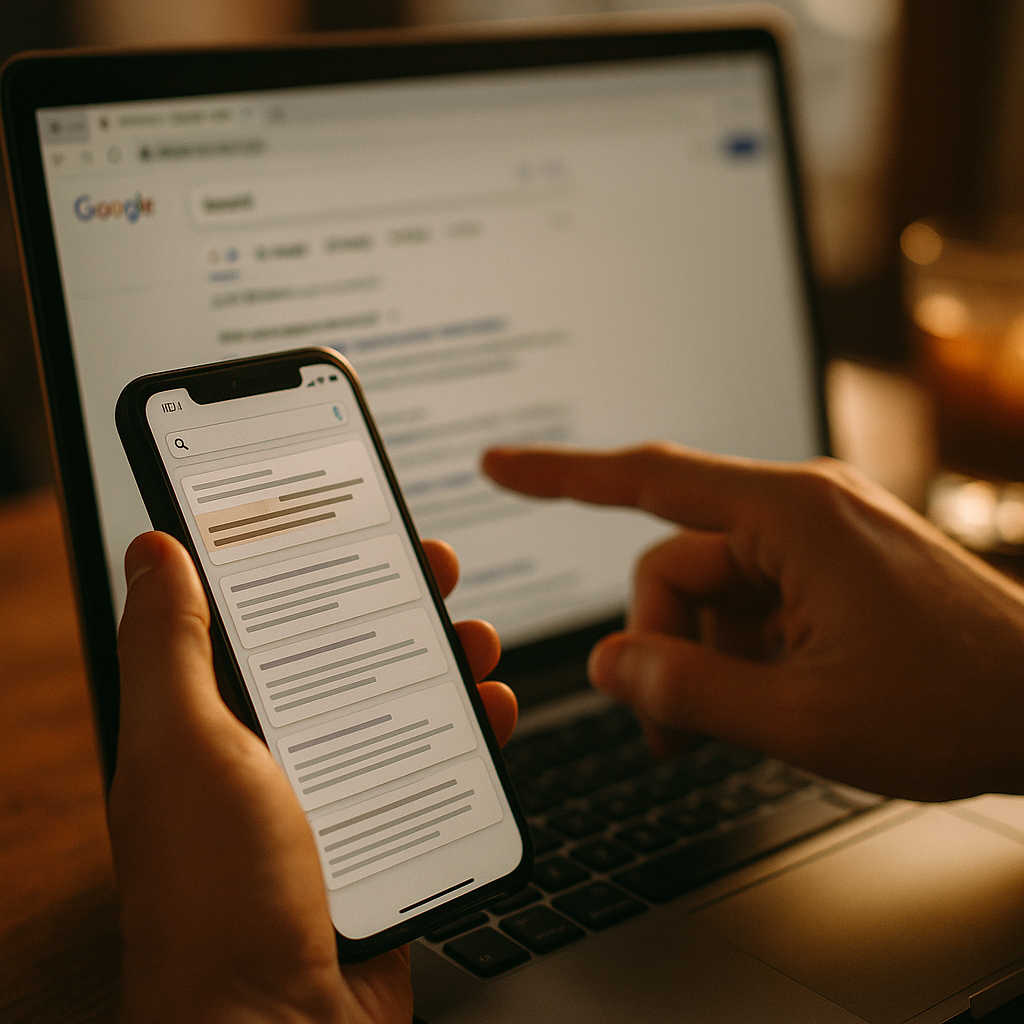
Designing Scannable Content For The Emerging Zero-Click Search Era is now a core skill for marketers, editors, and product teams in 2025. Search engines increasingly answer queries directly on results pages, reducing clicks while raising expectations for clarity and credibility. If your pages are hard to scan, you lose attention fast. If they are easy to scan, you earn trust—and visibility. Here’s how to win.
Zero-click search optimization: what changed and what it means
Zero-click behavior is not a trend; it is the default experience for many informational searches. Users can see definitions, steps, comparisons, and even product details without opening a website. For publishers, that shifts the goal from “get the click” to “own the answer” and “be the cited source.”
In practice, this means your content must do two things at once:
- Be extractable: search systems must quickly identify concise, correct answer blocks and supporting context.
- Be useful beyond the snippet: once a user does click (or once your brand is exposed in a summary), the page must deliver deeper value—examples, edge cases, tools, and next steps.
Zero-click optimization also changes how you measure success. You still track clicks and conversions, but you also watch indicators of “SERP influence,” such as impressions, brand searches, and assisted conversions. If your content consistently appears in featured answers, “People also ask,” and AI summaries, it can lift awareness even when the click does not happen.
Follow-up question you may have: “Should I stop writing long content?” No. You should structure depth so it is scannable: short answers first, then expanded detail, then practical assets.
Scannable content structure: make the answer obvious in seconds
Scannability is not just visual formatting; it is information architecture. In a zero-click environment, your page competes with the search results page itself. A reader who lands on your article decides in a few seconds whether it is worth staying. Make those seconds count with a predictable structure.
Use an “inverted pyramid” for every key topic:
- 1–2 sentence direct answer (what it is / what to do).
- Key bullets (criteria, steps, pros/cons).
- Short explanatory paragraphs (why it works, when it fails).
- Examples and edge cases (industry-specific or scenario-based).
Write for skimming without dumbing down: keep paragraphs tight, lead with the conclusion, and place qualifying details after the claim. If you need a statistic, put the number in the first sentence and explain it in the next.
Make each section self-contained: many users jump to one part of the page from sitelinks or in-page navigation. Each section should stand on its own with a clear outcome: a decision made, a step completed, or a concept understood.
Answer the “so what” immediately: if a section explains a concept (like “passage ranking” or “helpful content”), include the action it implies (like “add a one-paragraph definition plus a checklist”).
Featured snippets and AI overviews: format for extraction and trust
To earn visibility in featured snippets and AI-generated overviews, your content must be both easy to extract and safe to cite. That means clarity, consistency, and verifiable claims. You are not writing “for algorithms”; you are writing so systems can confidently reuse your wording.
Formatting patterns that improve extractability:
- Definition boxes in plain language: start with “X is…” and keep it under 40–60 words when possible.
- Ordered steps for processes: use an ol list for “how to” tasks; keep each step a single action.
- Unordered checklists for criteria: use a ul list for “what to include,” “requirements,” or “common mistakes.”
- Consistent terminology: choose one term for the concept (e.g., “zero-click search”), and avoid swapping synonyms every paragraph.
Trust signals that make your content safer to cite:
- Attribute claims: if you state a fact, clarify whether it is your observation, an industry report, or a standard practice.
- Limit speculation: separate what you know from what you expect. Use may and often only when accurate.
- Provide constraints: explain when advice does not apply (e.g., local intent, regulated industries, medical or legal topics).
Follow-up question: “If Google answers the question, why would anyone click?” They click when they need specifics: implementation steps, templates, tools, comparisons, downloadable assets, screenshots, or an explanation tailored to their situation. Your job is to make that depth visible with scannable structure.
On-page UX and readability: build scan paths that guide decisions
Scannable content depends on design choices that create a clear “scan path”—the route a reader’s eyes follow to evaluate relevance. Even with only basic HTML, you can create strong readability through disciplined writing and layout.
Prioritize these UX principles:
- Front-load value: start sections with the outcome, not background.
- One idea per paragraph: if a paragraph contains “and,” it might need splitting.
- Use bold sparingly: highlight the decision points, not every sentence.
- Keep lists tight: 3–7 items is usually enough; if you have 15, group them.
- Remove filler transitions: replace “It’s important to note that” with the actual note.
Make your content “action-complete”: after reading a section, the user should be able to do something tangible—rewrite a paragraph, adjust a template, run a check. Add mini-outcomes like:
- Decision rules: “If the query implies steps, use an ordered list; if it implies options, use a comparison checklist.”
- Copy-ready patterns: “Start with: ‘Zero-click searches happen when…’ then add three bullets: causes, impact, what to do.”
Follow-up question: “Does scannable mean short?” Not necessarily. It means navigable. Long content can be highly scannable when it is modular and each module starts with a clear answer.
EEAT content signals: show expertise, experience, and accountability
In 2025, helpful content is not just accurate; it is accountable. EEAT (Experience, Expertise, Authoritativeness, Trustworthiness) is not a checkbox, but you can design pages to demonstrate it clearly—especially when search systems summarize and cite sources.
Practical EEAT moves that also improve scannability:
- State your vantage point: explain the context behind your advice in one sentence (e.g., “This guidance reflects common patterns seen in content audits and SERP analysis for informational queries.”).
- Use concrete examples: show a “before/after” rewrite in plain text so readers can replicate your method.
- Define boundaries: specify where your advice is strongest (e.g., blogs, help centers, product docs) and where it needs specialist review (e.g., health, finance, legal).
- Update discipline: add a visible review cadence in your workflow so guidance stays current as SERP features evolve.
- Reduce ambiguity: replace vague claims like “optimize for AI” with actions like “add a 50-word summary, then a checklist, then a step-by-step.”
Build trust with “verification hooks”: when you introduce a claim, explain how a reader can validate it. For example: “Check your Search Console impressions for queries that trigger SERP features, then compare CTR by query type.” This approach signals integrity and helps users act.
Follow-up question: “Do I need credentials?” Credentials help when topics require them, but credibility also comes from transparent process, clear sourcing, and practical results. If you cannot cite a source, share the method you used and the limitations.
Measurement and iteration: optimize for visibility, not just clicks
Zero-click does not mean zero value. It means value is distributed across the SERP, brand recall, and downstream journeys. Your measurement model should reflect that reality, then guide iterative improvements to scannability and extractability.
What to track in 2025:
- Impressions by query intent: informational vs navigational vs transactional.
- CTR trends by SERP feature presence: identify where answers reduce clicks and where deeper pages still earn them.
- Query-to-section alignment: map top queries to the exact section that answers them; improve that section first.
- Assisted conversions and brand lift proxies: growth in branded searches, direct traffic, returning users, and conversion paths that include informational pages.
Iteration process that works:
- Pick one page with high impressions and low CTR. It likely appears in SERPs but loses clicks due to answer saturation.
- Add a tighter “answer-first” block and one supporting checklist that clarifies next steps.
- Expand the “reason to click” with a template, decision tree, or troubleshooting section that SERPs cannot fully replace.
- Re-check performance after indexing, then refine the top section again before adding more length.
Follow-up question: “What if my goal is leads?” Then the page needs a clear continuation: after the answer, include a scannable path to the next action (download, demo, audit checklist, or internal link to a product comparison). The action should feel like the logical next step, not an interruption.
FAQs about scannable content and zero-click search
-
What is a zero-click search?
A zero-click search happens when a user gets what they need directly on the search results page through features like snippets, knowledge panels, “People also ask,” or AI summaries, and does not click a result.
-
How do I make content more scannable without redesigning my site?
Start with writing: shorten paragraphs, add direct answers at the top of each section, convert explanations into lists, and bold only key decision points. These changes improve scan paths even with basic HTML.
-
Does scannable content help rankings?
It can help because scannable structure improves clarity, engagement, and extractability for SERP features. It also reduces pogo-sticking by making relevance obvious quickly.
-
How long should an “answer paragraph” be for snippets or AI summaries?
Aim for roughly 40–80 words for a definition-style answer, then support it with a short list. Keep the wording precise, avoid jargon, and include qualifiers only when necessary.
-
How do I create a reason to click if the SERP already answers the question?
Offer depth that summaries cannot fully deliver: implementation steps, templates, tools, troubleshooting, examples for specific scenarios, and clear decision frameworks.
-
What’s the biggest mistake teams make in the zero-click era?
They chase tricks instead of clarity. Over-optimizing headings, stuffing keywords, or writing vague “thought leadership” weakens extractability and trust. Direct answers plus accountable detail wins.
Scannable content is how you stay visible when clicks are no longer guaranteed. In 2025, structure matters as much as substance: lead with direct answers, support them with lists, then provide depth that earns trust and action. Combine extractable formatting with EEAT signals and a measurement plan that values impressions and influence. Build pages that satisfy fast and guide next steps—then watch visibility compound.
Top Influencer Marketing Agencies
The leading agencies shaping influencer marketing in 2026
Agencies ranked by campaign performance, client diversity, platform expertise, proven ROI, industry recognition, and client satisfaction. Assessed through verified case studies, reviews, and industry consultations.
Moburst

-
2

The Shelf
Boutique Beauty & Lifestyle Influencer AgencyA data-driven boutique agency specializing exclusively in beauty, wellness, and lifestyle influencer campaigns on Instagram and TikTok. Best for brands already focused on the beauty/personal care space that need curated, aesthetic-driven content.Clients: Pepsi, The Honest Company, Hims, Elf Cosmetics, Pure LeafVisit The Shelf → -
3

Audiencly
Niche Gaming & Esports Influencer AgencyA specialized agency focused exclusively on gaming and esports creators on YouTube, Twitch, and TikTok. Ideal if your campaign is 100% gaming-focused — from game launches to hardware and esports events.Clients: Epic Games, NordVPN, Ubisoft, Wargaming, Tencent GamesVisit Audiencly → -
4

Viral Nation
Global Influencer Marketing & Talent AgencyA dual talent management and marketing agency with proprietary brand safety tools and a global creator network spanning nano-influencers to celebrities across all major platforms.Clients: Meta, Activision Blizzard, Energizer, Aston Martin, WalmartVisit Viral Nation → -
5

The Influencer Marketing Factory
TikTok, Instagram & YouTube CampaignsA full-service agency with strong TikTok expertise, offering end-to-end campaign management from influencer discovery through performance reporting with a focus on platform-native content.Clients: Google, Snapchat, Universal Music, Bumble, YelpVisit TIMF → -
6

NeoReach
Enterprise Analytics & Influencer CampaignsAn enterprise-focused agency combining managed campaigns with a powerful self-service data platform for influencer search, audience analytics, and attribution modeling.Clients: Amazon, Airbnb, Netflix, Honda, The New York TimesVisit NeoReach → -
7

Ubiquitous
Creator-First Marketing PlatformA tech-driven platform combining self-service tools with managed campaign options, emphasizing speed and scalability for brands managing multiple influencer relationships.Clients: Lyft, Disney, Target, American Eagle, NetflixVisit Ubiquitous → -
8

Obviously
Scalable Enterprise Influencer CampaignsA tech-enabled agency built for high-volume campaigns, coordinating hundreds of creators simultaneously with end-to-end logistics, content rights management, and product seeding.Clients: Google, Ulta Beauty, Converse, AmazonVisit Obviously →