


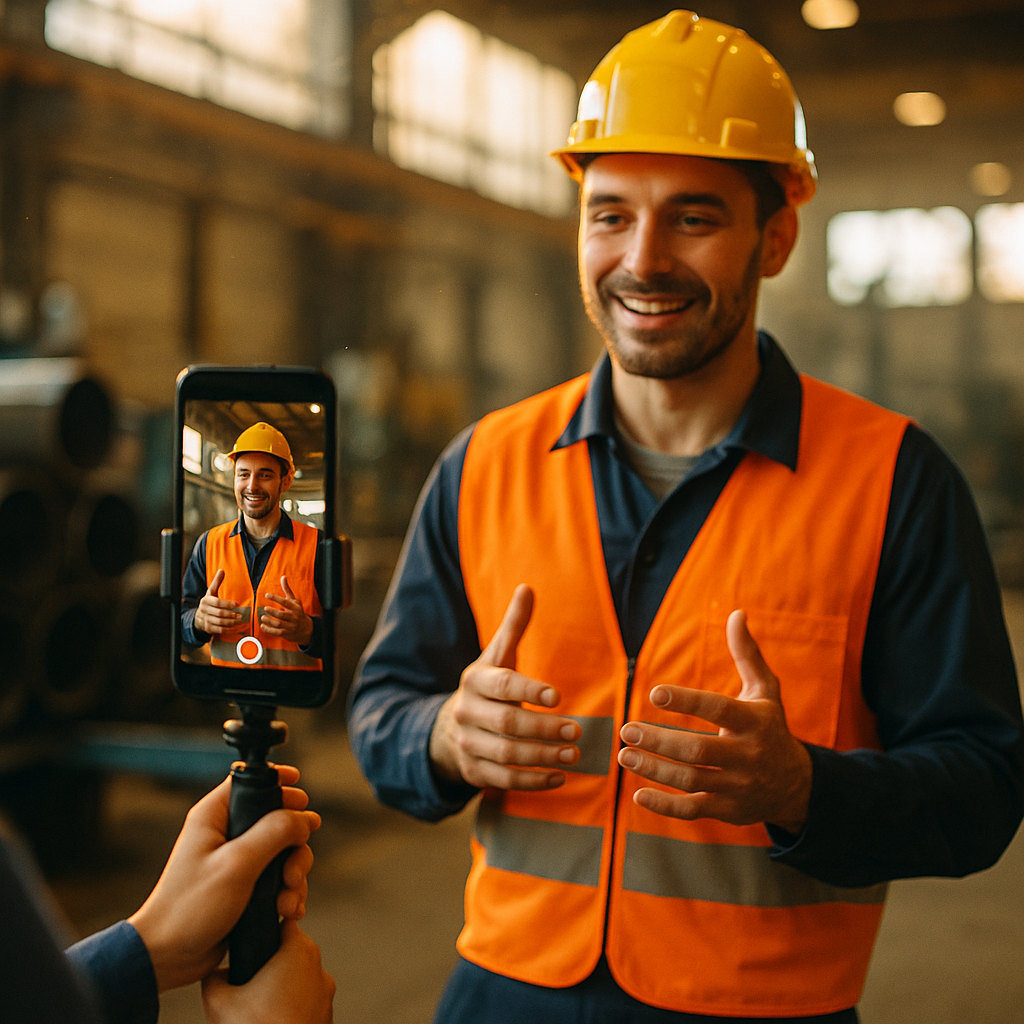
Case study social video recruitment is no longer a “nice-to-have” for industrial employers competing for skilled technicians, engineers, and operators in 2025. This article examines how a traditional manufacturer modernized hiring by building credible, human social video content that candidates actually watched. You’ll see the strategy, execution, results, and the repeatable system behind it—plus what to avoid if you want momentum, not noise.
Employer branding strategy for manufacturers
The manufacturer in this case study—an established, multi-site industrial supplier with a strong reputation among customers—faced a familiar issue: applicants didn’t match the quality of the work. Their brand said “stable,” but not “modern,” “growth-focused,” or “people-first.” Competitors and logistics employers were winning the same talent with clearer storytelling and faster hiring experiences.
Leadership set three concrete hiring goals for 2025:
- Increase qualified applicants for maintenance, CNC, quality, and production leadership roles without inflating salary bands beyond market realities.
- Reduce time-to-fill on hard-to-hire roles by improving inbound interest and interview show rates.
- Improve retention signals by aligning expectations before day one (shifts, safety, career paths, and culture).
Instead of starting with a glossy “brand film,” the team built an employer branding strategy anchored in candidate questions. They reviewed exit interviews, new-hire feedback, and recruiter call notes, then translated recurring concerns into content themes:
- Safety and standards: “Is this a place that invests in training and equipment?”
- Growth: “Can I move from operator to lead, or from tech to supervisor?”
- Stability with modernization: “Are they stuck in old ways or improving processes?”
- Schedule reality: “What are the shifts and overtime expectations?”
That framing created a content plan that served both recruitment marketing and HR operations. It also supported EEAT: real employees, real processes, real constraints, and real answers—delivered consistently.
Social video recruitment tactics
The company chose a social-first approach because most candidates—especially passive candidates—won’t read lengthy career pages. Social video let them show the work environment, team dynamics, and leadership credibility quickly.
They implemented five tactics that made the program work:
- Vertical-first production: Videos were designed for mobile viewing, with clear framing, captions, and a strong opening line in the first two seconds.
- Series-based content: Instead of one-off posts, they ran repeatable series such as “Day Shift vs. Night Shift,” “Toolbox Talk in 60 Seconds,” and “How Promotions Actually Happen Here.”
- Role-specific storytelling: Separate playlists were built for maintenance, CNC, quality, and supervisors. Candidates could self-select the path that matched their interests.
- Practical transparency: Pay ranges were addressed where policy allowed; when not, they clearly explained how compensation was determined (skill level, certifications, shift differential) and what benefits mattered most to current employees.
- Low-friction calls to action: Every video ended with one simple next step: “Text ‘JOBS’ to this number,” “Apply in under 3 minutes,” or “Book a 10-minute recruiter call.”
To protect credibility, the company avoided scripted “corporate speak.” Employees spoke in their own words. Safety and compliance teams reviewed content to ensure accuracy, especially when showing equipment, PPE, and floor processes.
They also answered likely follow-up questions inside the content itself: what training looks like in week one, how performance is measured, whether the plant is climate-controlled, what the most common reasons people succeed are, and what tends to frustrate new hires. This reduced recruiter back-and-forth and improved interview readiness.
Talent acquisition metrics and hiring funnel
The team treated video as a measurable recruiting channel, not a branding experiment. They built a simple hiring funnel dashboard shared weekly by HR, recruiting, and plant leadership. Metrics focused on leading indicators and outcomes:
- Reach and retention: 3-second views, average watch time, and completion rate by topic.
- Conversion: clicks to job pages, text-in leads, and recruiter call bookings.
- Quality signals: interview-to-offer ratio, offer acceptance, and hiring manager satisfaction scores.
- Speed: time-to-first-contact and time-to-fill for priority roles.
- Fit and retention proxies: 30/60/90-day new-hire check-in outcomes and early turnover notes.
In 2025, the biggest operational improvement came from aligning content with the hiring process. Videos didn’t just attract interest; they pre-answered questions that usually delay decisions. For example:
- A “Meet the Maintenance Manager” video clarified expectations on preventive maintenance discipline, reducing candidate drop-off after the first interview.
- A “How Our Apprenticeship Works” video reduced unqualified applications while increasing qualified ones, because applicants self-screened based on schedule and training requirements.
- A “What Overtime Really Looks Like” video reduced offer reneges by setting accurate expectations early.
They also standardized job postings to match the tone of the videos. When candidates clicked from a human, transparent video to a vague job description, conversion dropped. Updating postings with clearer requirements, shift details, and realistic “what success looks like in 90 days” language improved completion rates.
To strengthen EEAT, the company included on-screen identifiers: employee name, role, tenure, and (when relevant) certifications. This simple context made the content feel grounded and verifiable.
Employee advocacy videos and authentic storytelling
The program’s turning point was shifting from “marketing content” to employee advocacy videos built around pride in craft. The manufacturer created a lightweight internal system so participation stayed voluntary and sustainable:
- Clear consent process: Employees opted in with a simple release form and could withdraw future participation at any time.
- Content boundaries: No sensitive customer data, no proprietary process steps, no filming in restricted zones, and mandatory PPE compliance on camera.
- Micro-interviews: Filming sessions were 20–30 minutes, capturing multiple short clips to reduce disruption to production schedules.
- Recognition, not pressure: Participants received internal recognition and small non-cash perks aligned with policy, but no quotas and no public “participation leaderboard.”
They prioritized three storyteller groups because each built trust with a different audience:
- Newer hires (0–12 months): They spoke directly to “what surprised me” and onboarding reality.
- High performers (1–5 years): They described skill growth, cross-training, and what it takes to earn more responsibility.
- Frontline leaders and trainers: They explained standards, coaching approach, and what “good” looks like on the floor.
To avoid overly polished messaging, editors kept natural pauses and real shop-floor sound where safe and appropriate. Captions were accurate, not paraphrased, which improved accessibility and trust. When employees mentioned challenges—like ramping up to a faster line rate—the company paired that honesty with specifics: the training cadence, who supports new hires, and the milestones used to gauge readiness.
This approach improved candidate quality because it filtered for people who respected standards and wanted to learn. It also made interviews easier: candidates arrived with context, asked sharper questions, and engaged more seriously with hiring managers.
Industrial recruitment marketing across platforms
The company avoided spreading content too thin. They focused on the platforms where their candidates were already present and where video distribution was predictable.
The channel plan:
- Short-form video platforms: Used for awareness and reach, targeting local radius and relevant interests. Posts emphasized “day in the life,” team stories, and facility upgrades.
- Professional network video: Used for skilled trades, engineering, and leadership hiring, highlighting process improvement, safety culture, and career paths.
- Owned channels: A refreshed careers page hosted playlists by role, plus an FAQ section that mirrored the content themes. Job postings embedded the most relevant videos.
They repurposed intelligently rather than duplicating blindly. The same core footage was edited into multiple versions: a 15–25 second hook for discovery, a 45–60 second explainer for consideration, and a 90-second cut for the careers page where intent was higher.
Paid distribution was treated as amplification, not a crutch. The team boosted only the videos that already performed well organically, then retargeted viewers with role-specific clips and a simple conversion offer (text-in lead or short application). This kept cost per applicant under control and reduced wasted spend on content that didn’t resonate.
Operationally, they built a monthly content calendar tied to hiring forecasts. When a plant anticipated a maintenance hiring push, the content shifted two to three weeks earlier to warm the audience before requisitions opened. That sequencing mattered: candidates who saw the story first converted at higher rates than candidates who saw a cold job ad first.
Workforce retention and onboarding outcomes
While the program was designed to win talent, the manufacturer also used social video to support retention by setting accurate expectations and reinforcing early engagement.
They integrated select videos into onboarding:
- Welcome and standards: Short clips from site leaders and trainers covering safety basics and what “quality” means in practice.
- Career paths: Real examples of internal moves, including required skills and typical timelines.
- Support network: Introductions to maintenance, HR, and shift leads so new hires knew who to ask for help.
This reduced “surprise factors” that often drive early turnover, such as shift pace, documentation requirements, and communication norms. It also improved consistency across locations: every new hire received the same baseline messages, even when individual trainers differed.
Importantly, the company used feedback loops to refine content. Recruiters tagged candidate questions after each screen. HR compiled themes monthly, then produced new videos to address the top friction points. That created a compounding effect: fewer repetitive questions, faster screens, and better alignment between candidate expectations and the reality of the work.
FAQs
What types of social videos work best for manufacturing recruitment?
Short “day in the life” clips, role-specific walkthroughs (maintenance, CNC, quality), leader introductions, and transparent videos about shifts, training, and overtime consistently perform well. Candidates want to see the environment, standards, and people they may work with.
How do you keep social video content authentic without risking compliance issues?
Use voluntary participation, simple talking points instead of scripts, and clear filming rules: PPE must be correct, restricted areas stay off-camera, and no proprietary or customer-sensitive details are shown. Have safety and operations review videos before publishing.
Should a traditional manufacturer post pay ranges in recruitment videos?
If policy allows, yes—clarity improves trust and reduces unqualified applications. If not, explain the compensation framework (skill tiers, certifications, shift differential, overtime rules) and highlight benefits that matter to employees.
How often should a manufacturer post recruiting videos on social media?
A sustainable baseline is 2–3 posts per week with one recurring series. Consistency matters more than volume. Batch filming once a month can supply enough clips to maintain a steady cadence.
How do you measure whether social video is improving hiring quality?
Track interview-to-offer ratio, offer acceptance rate, time-to-first-contact, and early retention indicators from 30/60/90-day check-ins. Also monitor conversion from video views to actions such as recruiter call bookings and completed applications.
Can social video help attract experienced skilled trades, not just entry-level applicants?
Yes. Experienced candidates respond to credible proof of standards: preventive maintenance discipline, tool investment, training systems, leadership clarity, and realistic workload expectations. Feature respected techs, supervisors, and trainers who can speak to those specifics.
What’s the biggest mistake manufacturers make with social recruiting video?
Producing a polished “brand video” that avoids real details. Candidates then fill the gap with assumptions. Practical transparency—showing the work, expectations, and support—drives better fit and better results.
Conclusion
In 2025, traditional manufacturers win talent when they show the truth of the work with clarity, consistency, and respect for the candidate’s time. This case study proves that social video performs best when it answers real questions, supports the hiring funnel, and features credible employees—not slogans. Build repeatable series, measure conversions, and let operations lead the story. The payoff is faster hiring and stronger fit.
Top Influencer Marketing Agencies
The leading agencies shaping influencer marketing in 2026
Agencies ranked by campaign performance, client diversity, platform expertise, proven ROI, industry recognition, and client satisfaction. Assessed through verified case studies, reviews, and industry consultations.
Moburst

-
2

The Shelf
Boutique Beauty & Lifestyle Influencer AgencyA data-driven boutique agency specializing exclusively in beauty, wellness, and lifestyle influencer campaigns on Instagram and TikTok. Best for brands already focused on the beauty/personal care space that need curated, aesthetic-driven content.Clients: Pepsi, The Honest Company, Hims, Elf Cosmetics, Pure LeafVisit The Shelf → -
3

Audiencly
Niche Gaming & Esports Influencer AgencyA specialized agency focused exclusively on gaming and esports creators on YouTube, Twitch, and TikTok. Ideal if your campaign is 100% gaming-focused — from game launches to hardware and esports events.Clients: Epic Games, NordVPN, Ubisoft, Wargaming, Tencent GamesVisit Audiencly → -
4

Viral Nation
Global Influencer Marketing & Talent AgencyA dual talent management and marketing agency with proprietary brand safety tools and a global creator network spanning nano-influencers to celebrities across all major platforms.Clients: Meta, Activision Blizzard, Energizer, Aston Martin, WalmartVisit Viral Nation → -
5

The Influencer Marketing Factory
TikTok, Instagram & YouTube CampaignsA full-service agency with strong TikTok expertise, offering end-to-end campaign management from influencer discovery through performance reporting with a focus on platform-native content.Clients: Google, Snapchat, Universal Music, Bumble, YelpVisit TIMF → -
6

NeoReach
Enterprise Analytics & Influencer CampaignsAn enterprise-focused agency combining managed campaigns with a powerful self-service data platform for influencer search, audience analytics, and attribution modeling.Clients: Amazon, Airbnb, Netflix, Honda, The New York TimesVisit NeoReach → -
7

Ubiquitous
Creator-First Marketing PlatformA tech-driven platform combining self-service tools with managed campaign options, emphasizing speed and scalability for brands managing multiple influencer relationships.Clients: Lyft, Disney, Target, American Eagle, NetflixVisit Ubiquitous → -
8

Obviously
Scalable Enterprise Influencer CampaignsA tech-enabled agency built for high-volume campaigns, coordinating hundreds of creators simultaneously with end-to-end logistics, content rights management, and product seeding.Clients: Google, Ulta Beauty, Converse, AmazonVisit Obviously →