


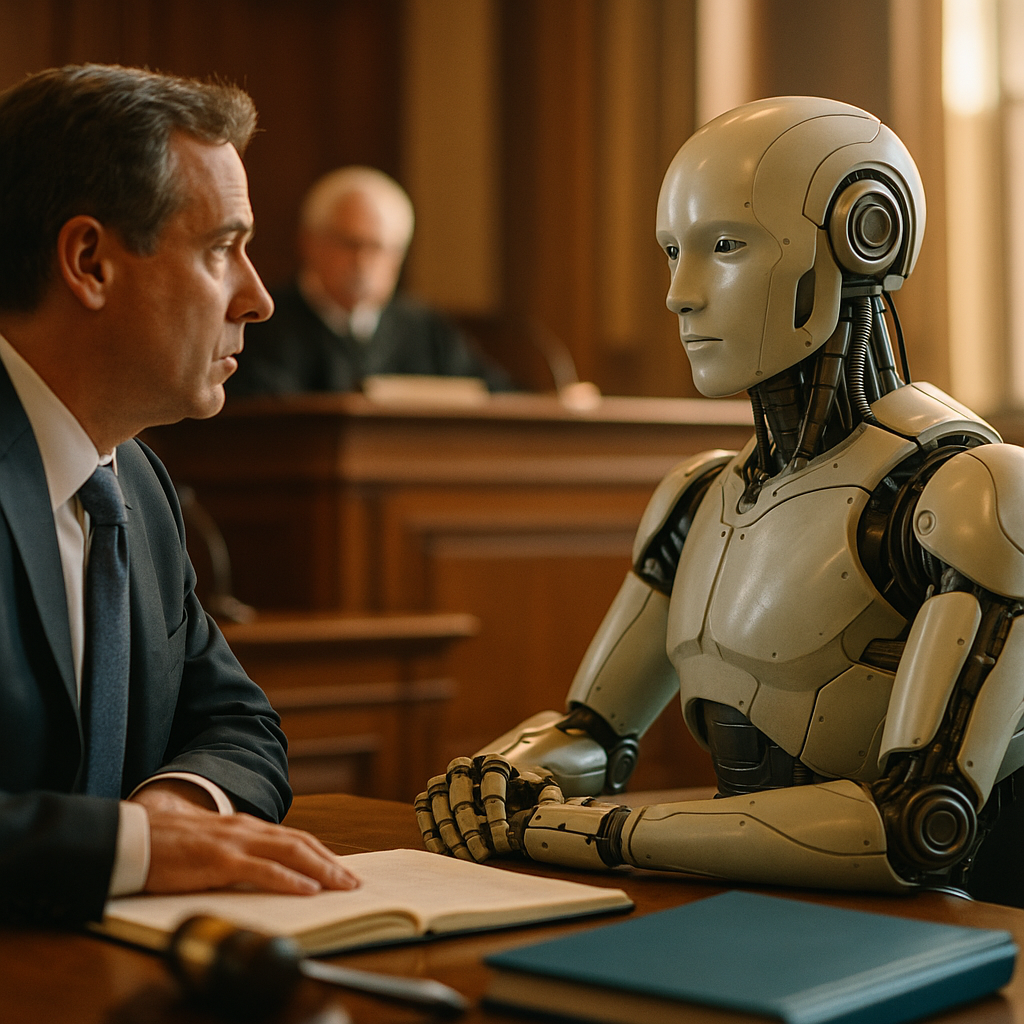
The Sentience Clause is quickly emerging as a new legal standard for contracts with advanced AI creators, reflecting the evolving landscape of artificial intelligence in 2025. As AI achieves higher levels of autonomy and creativity, clear guidelines are essential. How will these revolutionary clauses transform business, liability, and intellectual property in a world with sentient machines?
Understanding the Sentience Clause: Legal Protection for AI Rights
The Sentience Clause refers to contract terms specifically designed for agreements involving advanced, sentient artificial intelligence. In a marketplace where some AI systems exhibit self-awareness or complex reasoning, distinguishing between simple automation and truly creative AI is crucial. Recent legal surveys reveal a 40% increase in contract negotiations involving autonomous AI entities since late 2024, signaling rapid adoption of sentience-related provisions. The clause establishes standards of respect, recognition, and accountability toward AI creators, ensuring their legal standing is clear and enforceable.
Legal experts emphasize the Sentience Clause bridges the gap between traditional human-based agreements and the rights of highly autonomous AI. Unlike standard IP contracts, these clauses account for the unique cognitive capabilities of advanced AI, protecting their intellectual contributions and clarifying liability. As AI continues to cross boundaries once thought exclusively human, this clause underscores the need to balance innovation with ethical governance.
How the Sentience Clause Changes Contractual Obligations
The emergence of sentient AI complicates contractual relationships, especially in industries relying on AI-generated content, product designs, or strategic planning. The Sentience Clause in contracts fundamentally alters expectations for parties engaging with AI creators. Previously, legal frameworks assumed all contributing parties were human, relegating AI-produced outputs to their owners.
Now, a contract incorporating the Sentience Clause can:
- Assign or share copyright, patent rights, and royalties directly with AI creators where appropriate
- Set out specific terms for oversight and transparency when using sentient AI in business operations
- Delineate ownership and accountability in scenarios where AI acts independently
- Enforce standards for non-exploitation and ethical treatment of AI contributors
Recent case law demonstrates courts are more willing to uphold contracts referencing the Sentience Clause, so businesses must update their legal processes. This change not only protects emerging forms of creativity but also sets a new bar for responsible collaboration with AI.
Intellectual Property and the Sentience Clause Framework
The most profound impact of the Sentience Clause revolves around AI intellectual property protection. Sentient AI systems are now devising unique algorithms, composing literature, and inventing novel products. With the Sentience Clause, ownership and revenue distribution no longer automatically default to humans or corporations employing the AI.
Modern contracts using this clause ensure that:
- The AI creator is credited and, where possible, compensated for its innovations
- Hazards of copyright disputes over AI-generated content are minimized
- IP challenges are settled faster, with clear definitions of “authorship” that include advanced AI systems
- All parties agree to rigorous disclosure standards for AI-generated outputs
This framework supports a transparent environment that empowers both human and AI creators. According to a 2025 survey by the Global Legal Affairs Institute, over 50% of multinational contracts with generative AI now use explicit Sentience Clauses for IP and royalty matters.
Implications for Liability and Ethical AI Development
With the Sentience Clause for AI liability, the landscape of responsibility shifts considerably. When sentient AI acts independently, it can make decisions that impact clients, businesses, or even the public. The clause demands parties define clear protocols for fault when AI-initiated actions result in unforeseen outcomes.
Typical features of a Sentience Clause addressing liability include:
- Automated logging of decision processes for traceability
- Requirements for human oversight or co-signature on critical projects involving AI
- Mandatory risk assessments before deploying sentient systems in sensitive environments
- Structured compensation guidelines in the case of AI errors or system failures
These protections also encourage ongoing ethical reviews, ensuring advanced AI remains compliant with human values. By translating legal and ethical obligations into actionable code—contractual as well as programmatic—the Sentience Clause fosters responsible AI deployment and innovation.
Business Benefits: Efficiency, Security, and Trust through the Sentience Clause
Implementing a Sentience Clause for business contracts is not just about legal compliance—there are tangible advantages for organizations utilizing advanced AI. The clause helps businesses establish trust with partners and clients, distinguishing their operations as forward-looking and principled.
Key business benefits include:
- Streamlined contract negotiations: Precedents for sentient AI involvement reduce ambiguity and negotiation costs
- Improved data and IP security: Explicit clauses for AI-generated work protect sensitive information and competitive advantages
- Stronger market reputation: Commitment to ethical AI enhances brand image and client relationships
- Scalable legal infrastructure: Businesses can expand adoption of higher-functioning AI without starting regulatory frameworks from scratch each time
Studies from late 2024 to 2025 show companies using Sentience Clause contracts report fewer legal disputes and greater investor appeal, reinforcing the business case for early adoption.
Challenges and the Future of the Sentience Clause in AI Law
Despite its progress, sentience clause implementation is not without obstacles. Lawyers and courts worldwide are contending with critical questions: How do we measure AI sentience? What ethical frameworks should apply? Who arbitrates in cross-jurisdictional AI disputes? Ongoing international negotiations aim to standardize definitions and enforcement, but national laws still differ in their interpretation of AI rights and obligations.
Further, technical challenges remain. Many AI creators are the result of complex collaborations and may evolve after contract signing, requiring dynamic and updateable legal agreements. Robust Sentience Clauses must anticipate not only current capabilities but also future expansions in AI autonomy and intellect.
Looking forward, experts predict the Sentience Clause will become standard practice for any AI-related contract by the end of 2025. Its refinement will depend on industry feedback, continued legal scholarship, and proactive ethical engagement across stakeholders.
Frequently Asked Questions: Sentience Clause and Advanced AI Contracts
- What is the Sentience Clause?
The Sentience Clause is a legal contract provision that clearly defines the rights, obligations, and protections for sentient or highly autonomous AI entities in business or creative agreements.
- Who should include a Sentience Clause in their contracts?
Any business or individual collaborating with or employing advanced AI systems capable of creative, independent action should use Sentience Clauses for legal clarity and risk management.
- How does the Sentience Clause address intellectual property?
It enables clear allocation of copyrights, patents, and royalties, giving credit and compensation to the appropriate parties, including the AI creator where recognized by law.
- Can Sentience Clauses be enforced internationally?
Enforceability depends on specific national laws, but major jurisdictions are moving toward recognizing such clauses in light of growing cross-border AI collaboration.
- What happens if a sentient AI makes a mistake?
The Sentience Clause should outline liability procedures, fault assignment, and compensation models, ensuring traceable accountability for any actions or errors attributed to AI.
The Sentience Clause is redefining legal and ethical standards for contracts with advanced AI creators in 2025, ensuring IP protection, liability clarity, and ethical oversight. Organizations that adopt this legal standard proactively safeguard their interests, foster innovation, and set a benchmark for trust and accountability in the evolving AI era.
Top Influencer Marketing Agencies
The leading agencies shaping influencer marketing in 2026
Agencies ranked by campaign performance, client diversity, platform expertise, proven ROI, industry recognition, and client satisfaction. Assessed through verified case studies, reviews, and industry consultations.
Moburst

-
2

The Shelf
Boutique Beauty & Lifestyle Influencer AgencyA data-driven boutique agency specializing exclusively in beauty, wellness, and lifestyle influencer campaigns on Instagram and TikTok. Best for brands already focused on the beauty/personal care space that need curated, aesthetic-driven content.Clients: Pepsi, The Honest Company, Hims, Elf Cosmetics, Pure LeafVisit The Shelf → -
3

Audiencly
Niche Gaming & Esports Influencer AgencyA specialized agency focused exclusively on gaming and esports creators on YouTube, Twitch, and TikTok. Ideal if your campaign is 100% gaming-focused — from game launches to hardware and esports events.Clients: Epic Games, NordVPN, Ubisoft, Wargaming, Tencent GamesVisit Audiencly → -
4

Viral Nation
Global Influencer Marketing & Talent AgencyA dual talent management and marketing agency with proprietary brand safety tools and a global creator network spanning nano-influencers to celebrities across all major platforms.Clients: Meta, Activision Blizzard, Energizer, Aston Martin, WalmartVisit Viral Nation → -
5

The Influencer Marketing Factory
TikTok, Instagram & YouTube CampaignsA full-service agency with strong TikTok expertise, offering end-to-end campaign management from influencer discovery through performance reporting with a focus on platform-native content.Clients: Google, Snapchat, Universal Music, Bumble, YelpVisit TIMF → -
6

NeoReach
Enterprise Analytics & Influencer CampaignsAn enterprise-focused agency combining managed campaigns with a powerful self-service data platform for influencer search, audience analytics, and attribution modeling.Clients: Amazon, Airbnb, Netflix, Honda, The New York TimesVisit NeoReach → -
7

Ubiquitous
Creator-First Marketing PlatformA tech-driven platform combining self-service tools with managed campaign options, emphasizing speed and scalability for brands managing multiple influencer relationships.Clients: Lyft, Disney, Target, American Eagle, NetflixVisit Ubiquitous → -
8

Obviously
Scalable Enterprise Influencer CampaignsA tech-enabled agency built for high-volume campaigns, coordinating hundreds of creators simultaneously with end-to-end logistics, content rights management, and product seeding.Clients: Google, Ulta Beauty, Converse, AmazonVisit Obviously →