


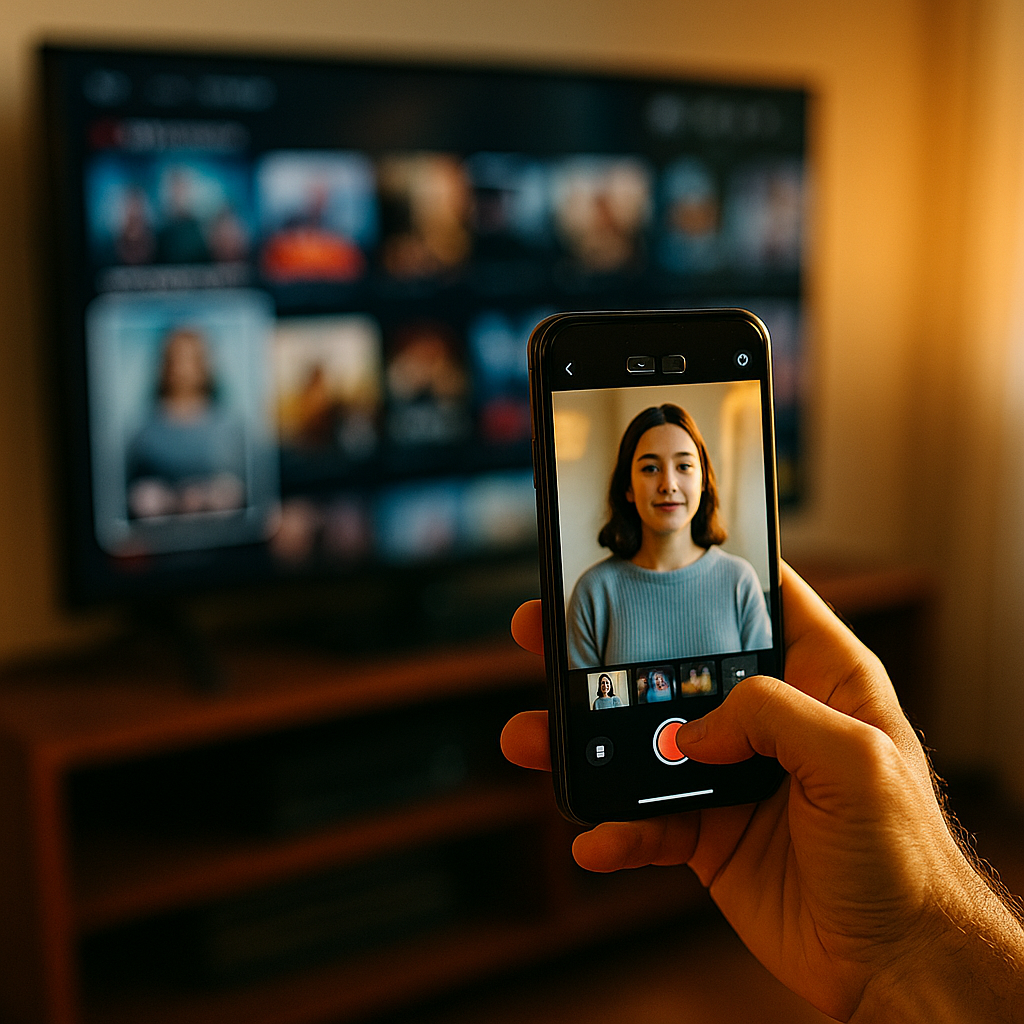
Short-form video now accounts for 12 to 13 percent of total daily streaming time, according to Nielsen’s streaming data. That’s not a rounding error. That’s a primetime-sized audience sitting inside vertical feeds, and most brand TV budgets are still pointed at linear schedules that can’t reach them.
The Nielsen Number Your CFO Will Actually Care About
Nielsen’s Gauge report tracks total streaming consumption across platforms, breaking down share of screen time by content category. Short-form video, which includes creator-produced content on TikTok, YouTube Shorts, and Instagram Reels, now holds a category share that rivals some of the most-watched cable networks. The difference is that cable networks charge premium CPMs for guaranteed delivery, while short-form creator inventory delivers comparable reach at a fraction of the cost per thousand impressions.
The internal business case writes itself, but most brand teams fail to connect the Nielsen data to their own media mix models. They treat it as a digital trend report rather than a reallocation signal. That’s the gap this article closes.
When short-form video commands 12–13% of daily streaming time, it has crossed the threshold from “emerging channel” to “must-buy.” The question is no longer whether to invest, but how to justify the budget shift internally.
What “Primetime Audience” Actually Means in a Vertical Feed
Traditional TV planning defines primetime as 8 to 11 PM, when household viewing peaks. Brand teams pay significant premiums to reach adults 25 to 54 during those windows. The assumption is that attention concentration justifies the cost.
Short-form video breaks that logic. Nielsen’s own data shows that mobile video consumption spikes across multiple windows throughout the day, including early morning, lunch, and evening commute periods that overlap directly with traditional primetime. Creators publishing to TikTok and YouTube Shorts during those windows are, in effect, broadcasting into the same audience moment that a primetime network spot was designed to capture.
The mechanism is different. The audience is the same.
For brands running 30-second broadcast spots against a target demo of adults 18 to 49, the strategic implication is direct: creator-produced vertical video formats can reach that demo during equivalent high-attention moments, with better targeting fidelity, lower CPMs, and built-in social proof from the creator’s existing audience relationship.
Building the Internal Business Case Step by Step
Budget reallocation proposals fail for predictable reasons. They lack apples-to-apples comparison data. They use digital-native metrics that finance teams don’t recognize. Or they anchor the argument in brand sentiment rather than reach and frequency. Nielsen data solves all three problems because finance and procurement already trust it.
Here’s the framework that works in practice.
Step 1: Pull your current TV buy data. Extract the last four quarters of linear and streaming TV spend from your media plan. Identify the specific dayparts, networks, and audience guarantees you’re buying against. Note the CPM for each placement.
Step 2: Map Nielsen Gauge data to your category. Use Nielsen’s category-level streaming share data to show what percentage of your target audience’s total viewing time is now spent in short-form formats. If your demo is 18 to 34, that number is substantially higher than the 12 to 13 percent average. Position that against the percentage of your current budget allocated to short-form. The gap is your argument.
Step 3: Run a cost-per-reach comparison. Use verified CPM benchmarks from eMarketer or your media agency’s rate cards to compare linear TV CPMs against creator-amplified vertical video CPMs on TikTok and YouTube. The delta is typically 40 to 60 percent in favor of creator formats, even after adding paid amplification costs. Understanding how to structure that spend is covered in more detail in this guide to amplification budget strategy.
Step 4: Show attribution, not just reach. CFOs and CMOs won’t approve a reallocation based on reach alone. Pair the Nielsen viewership data with performance metrics from pilot creator campaigns: click-through rates, branded search lift, and, where available, conversion data from creator-driven landing pages or promo codes. If you haven’t run a pilot yet, use industry benchmarks from Sprout Social or your platform partners to model expected outcomes.
Step 5: Frame it as a test, not a wholesale shift. Proposing to move 10 to 15 percent of linear TV budget into creator-produced vertical video as a controlled test reduces the perceived risk for stakeholders who are anchored to broadcast. Successful tests compound. One quarter of proof data beats six months of strategic argument.
Why Creator-Produced Beats Brand-Produced for This Format
This is the part that trips up traditional brand teams. The instinct is to adapt existing brand spots for vertical placement. Crop the 16:9 to 9:16, add captions, done. That instinct is wrong, and Nielsen’s engagement data shows why.
Vertical video formats on TikTok, Reels, and Shorts were built around creator-native content patterns. Native creative outperforms repurposed broadcast creative on completion rates, saves, shares, and downstream search behavior. The audience skips what looks like an ad. They watch what looks like content.
Creator-produced vertical video solves the production problem and the cultural fit problem simultaneously. It also produces content that can scale across an always-on program, generating a library of assets that compound in reach over time rather than expiring after a campaign flight.
There’s also a cost efficiency argument buried here. A single creator can produce multiple content units at a cost that is a fraction of a broadcast production budget, while generating content that is more likely to be completed, saved, and shared. For brands thinking about creator spend as a media line item, this reframes production cost as reach generation, not overhead.
The Data Architecture That Makes Reallocation Defensible
A business case without measurement infrastructure is just a presentation. Before you move budget, you need to answer two questions: how will you measure success, and how will you compare that success against the TV spend you’re replacing?
For reach and frequency, use first-party platform data from TikTok Ads Manager, YouTube Studio, and Meta Business Suite alongside Nielsen’s Digital Ad Ratings, which provides cross-platform deduplication. This gives you audience measurement in a currency that media buyers and CFOs recognize.
For brand impact, run Brand Lift studies through TikTok’s native tools or through third parties like Kantar or Lucid. These provide awareness, recall, and consideration metrics that map directly to what your TV buy was designed to move.
For attribution, build a clean test-and-control structure. Geo-test if you can. If you can’t, use incrementality measurement through your MMM (media mix model) provider to isolate the creator channel’s contribution. Tools like Northbeam, Rockerbox, or Nielsen’s own marketing mix solutions can do this.
The brands winning this argument internally aren’t just showing that vertical video is popular. They’re showing that it delivers the same audience metrics their CFO already uses to evaluate the TV buy.
If you’re building toward a more comprehensive cross-channel measurement setup, the principles of cross-platform ROI measurement apply directly to this use case. And for teams wanting to understand how engagement metrics translate into budget approval language, the framework around engagement lift as a KPI is worth reviewing before the next budget cycle.
One Risk to Name Before You Walk Into That Meeting
Brand safety. It’s the first objection your legal or compliance team will raise, and if you don’t have an answer ready, it will stall the approval process.
Creator-produced content on open platforms carries different content adjacency risks than broadcast placements. The answer isn’t to avoid the channel; it’s to build governance around it. Creator selection criteria, content approval workflows, exclusivity clauses, and platform-level brand safety controls on TikTok Ads and Meta’s business tools all reduce this risk to manageable levels. Having a documented governance framework in place before the proposal lands shows stakeholders that the team has done the operational homework, not just the strategic pitch.
Start with the Nielsen data, build the cost comparison, and bring a governance slide. That combination turns a “maybe next year” into a Q3 test budget.
FAQ
What does Nielsen’s 12–13 percent short-form video figure actually measure?
Nielsen’s Gauge report measures total streaming time across U.S. households and breaks it down by content category. The 12–13 percent figure represents short-form video’s share of total daily streaming time, aggregated across platforms including TikTok, YouTube Shorts, and Instagram Reels. It is a share-of-time metric, not a share-of-audience metric, meaning it reflects how much of people’s total video consumption is happening inside short-form formats.
How do I get internal approval to reallocate TV budget to creator content?
The most effective approach is to frame the reallocation as a controlled test rather than a permanent shift. Use Nielsen’s streaming data to show the audience gap between where your TV budget is allocated and where your target demo is actually spending viewing time. Pair that with a cost-per-reach comparison using verified CPM benchmarks, and include a measurement plan that uses metrics your CFO already trusts, such as Brand Lift, reach and frequency, and marketing mix model attribution.
Is creator-produced vertical video really comparable to a primetime TV spot?
In terms of audience composition, yes, for key demographics like adults 18 to 49. Nielsen data shows that short-form video consumption spikes during the same high-attention windows that primetime TV was designed to capture. The format and experience are different, but the audience moment is equivalent. Creator-native production also tends to outperform repurposed broadcast creative on platform-specific engagement metrics because it fits the content environment rather than interrupting it.
What percentage of TV budget should I propose to move to vertical video formats?
For a first-round internal proposal, 10 to 15 percent is a defensible test range. It’s large enough to generate statistically meaningful results but small enough to limit perceived risk for stakeholders who are anchored to linear TV. If the test delivers on reach, engagement lift, and attribution metrics, subsequent reallocation becomes a data-driven decision rather than a strategic bet.
How do I handle brand safety concerns with creator-produced content?
Address brand safety proactively by building a governance framework before the proposal goes to legal or compliance. This includes documented creator selection criteria, content approval workflows, exclusivity and content standards clauses in creator contracts, and use of platform-level brand safety controls available through TikTok Ads Manager and Meta Business Suite. Having this infrastructure in place before the meeting demonstrates operational readiness and reduces the objection surface area significantly.
Top Influencer Marketing Agencies
The leading agencies shaping influencer marketing in 2026
Agencies ranked by campaign performance, client diversity, platform expertise, proven ROI, industry recognition, and client satisfaction. Assessed through verified case studies, reviews, and industry consultations.
Moburst

-
2

The Shelf
Boutique Beauty & Lifestyle Influencer AgencyA data-driven boutique agency specializing exclusively in beauty, wellness, and lifestyle influencer campaigns on Instagram and TikTok. Best for brands already focused on the beauty/personal care space that need curated, aesthetic-driven content.Clients: Pepsi, The Honest Company, Hims, Elf Cosmetics, Pure LeafVisit The Shelf → -
3

Audiencly
Niche Gaming & Esports Influencer AgencyA specialized agency focused exclusively on gaming and esports creators on YouTube, Twitch, and TikTok. Ideal if your campaign is 100% gaming-focused — from game launches to hardware and esports events.Clients: Epic Games, NordVPN, Ubisoft, Wargaming, Tencent GamesVisit Audiencly → -
4

Viral Nation
Global Influencer Marketing & Talent AgencyA dual talent management and marketing agency with proprietary brand safety tools and a global creator network spanning nano-influencers to celebrities across all major platforms.Clients: Meta, Activision Blizzard, Energizer, Aston Martin, WalmartVisit Viral Nation → -
5

The Influencer Marketing Factory
TikTok, Instagram & YouTube CampaignsA full-service agency with strong TikTok expertise, offering end-to-end campaign management from influencer discovery through performance reporting with a focus on platform-native content.Clients: Google, Snapchat, Universal Music, Bumble, YelpVisit TIMF → -
6

NeoReach
Enterprise Analytics & Influencer CampaignsAn enterprise-focused agency combining managed campaigns with a powerful self-service data platform for influencer search, audience analytics, and attribution modeling.Clients: Amazon, Airbnb, Netflix, Honda, The New York TimesVisit NeoReach → -
7

Ubiquitous
Creator-First Marketing PlatformA tech-driven platform combining self-service tools with managed campaign options, emphasizing speed and scalability for brands managing multiple influencer relationships.Clients: Lyft, Disney, Target, American Eagle, NetflixVisit Ubiquitous → -
8

Obviously
Scalable Enterprise Influencer CampaignsA tech-enabled agency built for high-volume campaigns, coordinating hundreds of creators simultaneously with end-to-end logistics, content rights management, and product seeding.Clients: Google, Ulta Beauty, Converse, AmazonVisit Obviously →