


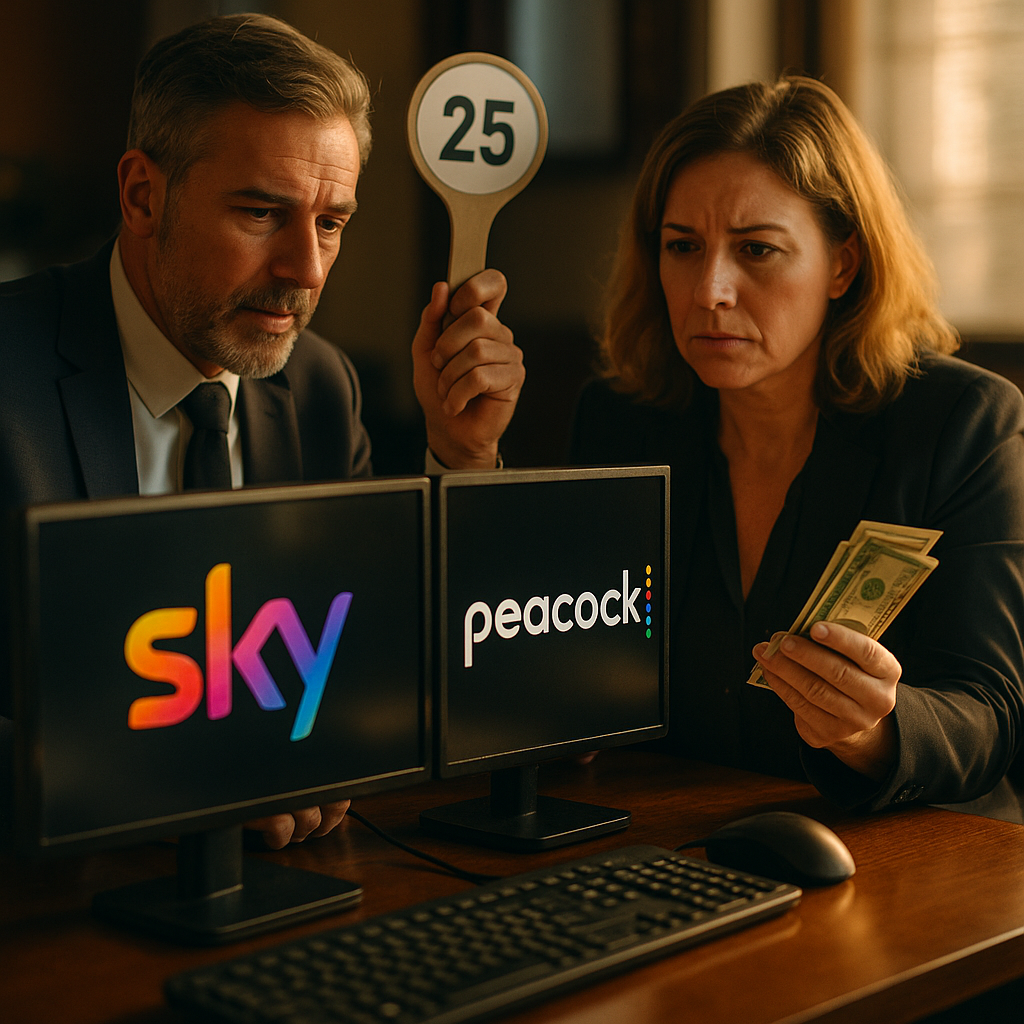
Two of the biggest names in streaming just did something Hollywood studios spent a decade refusing to do: they signed creators like they matter more than shows. Sky’s push into creator-led programming and Peacock’s expanding talent partnerships aren’t side experiments anymore. They’re a bet that the audience streaming platforms need most now lives on TikTok and YouTube, not in a writers’ room. For brands running influencer programs, this changes who you’re negotiating against for the same talent pool.
The Deals, Briefly
Sky has been quietly building out creator-fronted formats, licensing talent for original programming rather than just running ads against their content. Peacock’s approach, detailed in our earlier coverage of the Peacock creator deal, follows a similar logic: sign creators to development slates, give them production budgets, and let their existing audience do the subscriber acquisition work that traditional marketing spend used to handle.
Neither platform is doing this out of generosity. Subscriber growth for legacy streamers has flattened across most mature markets, and content costs keep climbing. Creators solve two problems at once: they come with a built-in audience, and their content costs a fraction of a scripted series. That math is hard to ignore when you’re a CFO staring at a churn report.
When a streaming platform signs a creator, it’s not buying content. It’s buying an audience acquisition channel with a built-in trust layer that traditional media can’t replicate.
Why This Matters to Brands, Not Just Streamers
Here’s the part that should get a brand strategist’s attention: streaming platforms are now competing with you for the same creators. If Sky or Peacock offers a mid-tier lifestyle creator a six-figure development deal plus a revenue share, that creator’s brand partnership rate card just changed. Availability gets tighter. Exclusivity clauses get stricter. And creators with leverage will start asking whether your campaign fits around their platform obligations, not the other way around.
This is the same dynamic we flagged when covering how agency roll-ups are forcing brands to rethink vetting and pricing. Consolidation and new bidders both push prices up and compress the pool of “safe,” vetted talent available for brand work. Streaming deals are just the latest entrant into that bidding war.
There’s also a discovery angle. According to eMarketer, streaming ad spend continues to climb even as linear TV budgets shrink, and platforms are increasingly blending entertainment content with shoppable and sponsored formats. If a creator’s Peacock series includes product integrations, that creator’s brand rate for a standalone Instagram post has to account for the fact their attention is now split across a bigger, more lucrative deal structure.
What Streaming Platforms Actually Want From Creators
It’s not just reach. Sky and Peacock are after three things influencer marketers already understand intimately:
- Built-in trust: Creators arrive with an audience that already believes them, something traditional TV talent rarely offers on day one.
- Production efficiency: Many creators already run lean production operations. That’s cheaper than a studio crew and faster to greenlight.
- Cross-platform promotion: A creator with a Peacock series will promote it on their own channels for free, effectively acting as their own marketing department.
Sound familiar? It’s the exact value proposition brands have been chasing in influencer marketing for years. The difference is that streaming platforms are now paying development-level money for it, not a per-post rate. That reframes what “fair market value” looks like for top-tier creators, and brands negotiating flat fees are going to feel the squeeze first, a trend we’ve already tracked in how performance pay is overtaking flat fees across creator contracts.
The Risk Side: Exclusivity, Compliance, and Contract Sprawl
Here’s where things get operationally messy. A creator signed to a streaming platform likely has exclusivity clauses covering categories, competing platforms, or even content formats. If your brand’s category overlaps with something in that creator’s Sky or Peacock deal, you could be locked out entirely, or forced into a costly carve-out negotiation.
Brands still tracking creator deal terms in spreadsheets are especially exposed here. Our earlier reporting on how creator program spreadsheets expose brands to compliance risk applies directly: exclusivity conflicts, disclosure requirements, and usage rights windows are exactly the kind of detail that gets lost when contract management lives in a shared Google Sheet instead of a proper rights management system.
There’s a regulatory layer too. The FTC has been increasingly active on influencer disclosure enforcement, and a creator juggling a streaming platform deal, multiple brand partnerships, and their own content slate creates more surface area for disclosure mistakes. If you’re a brand relying on that creator, sloppy disclosure on their end becomes your compliance problem too.
Exclusivity clauses buried in a streaming platform’s talent contract can quietly shrink your available creator pool overnight, and most brands won’t find out until a deal falls through.
Is This the Start of Platforms Becoming Talent Agencies?
Not quite, but the line is blurring fast. Streaming platforms aren’t replacing agencies or management companies. What they are doing is inserting themselves directly into the value chain between a creator and their audience, which used to be the exclusive territory of brand deals and platform ad revenue. That’s a structural shift worth watching alongside the broader move we’ve covered of creator strategy roles rising to the C-suite. Brands that treat creator relationships as a strategic function, not a marketing line item, will adapt faster to these overlapping bids for the same talent.
It’s also worth noting the timing. Streaming platforms are chasing the same engagement metrics brands care about: watch time, completion rate, and social sharing. Data from Statista shows streaming subscriber growth slowing across most major markets, which is exactly the pressure pushing platforms toward creator-led content as a cheaper acquisition lever. Brands should read that as a signal, not a footnote. If platforms are willing to pay development budgets for creator trust, brands undervaluing that same trust in their own negotiations are leaving money and leverage on the table, a gap we detailed in deal structure literacy costing brands real leverage.
What Brands Should Do Right Now
A few practical moves, none of which require waiting for the next big platform announcement:
- Audit exclusivity clauses in your current creator contracts and flag anyone with a pending or rumored platform deal.
- Diversify your bench instead of concentrating spend on a handful of “safe” top-tier creators who are now attractive acquisition targets for streamers.
- Move contract and rights tracking out of spreadsheets and into a proper system before disclosure or usage conflicts surface.
- Watch nano and mid-tier creators more closely. They’re less likely to get scooped up by a streaming deal and often deliver stronger ROI anyway, per the pattern outlined in CreatorIQ’s nano creator ROI data.
None of this requires a bigger budget. It requires treating creator relationships with the same rigor you’d apply to any other high-value vendor contract, something tools like Sprout Social and LinkedIn’s B2B marketing resources increasingly build workflows around.
Frequently Asked Questions
FAQs
What exactly are the Sky and Peacock creator deals?
Both platforms are signing individual creators to development and production deals, giving them budgets to produce original streaming content in exchange for exclusivity and audience reach, rather than treating them as one-off talent for ads or sponsorships.
How does this affect brand influencer budgets?
As streaming platforms compete for top creators with development-level pay, brand rate cards for the same talent tend to rise, and exclusivity clauses may reduce which creators are available for brand partnerships in certain categories.
Should brands avoid creators who sign streaming deals?
Not necessarily. It depends on the exclusivity terms. Brands should review contracts carefully for category conflicts and consider whether the creator’s expanded platform reach could actually amplify a brand partnership rather than block it.
Are nano and micro creators a safer bet given this trend?
Often, yes. Nano and micro creators are less likely to be pulled into large streaming development deals, which means more consistent availability and, according to recent industry data, comparable or better ROI on brand campaigns.
What compliance risks come with creators who have streaming platform deals?
The main risks are exclusivity conflicts and disclosure complexity. A creator juggling a streaming contract alongside brand partnerships has more contractual obligations to track, increasing the chance of disclosure errors that could create FTC compliance exposure for the brand.
FAQs (Structured Data)
The takeaway is simple: streaming platforms just became a competitive bidder for the same creators your brand relies on. Audit your contracts, diversify your talent bench, and treat this as a pricing and availability shift, not a passing headline.
Top Influencer Marketing Agencies
The leading agencies shaping influencer marketing in 2026
Agencies ranked by campaign performance, client diversity, platform expertise, proven ROI, industry recognition, and client satisfaction. Assessed through verified case studies, reviews, and industry consultations.
Moburst

-
2

The Shelf
Boutique Beauty & Lifestyle Influencer AgencyA data-driven boutique agency specializing exclusively in beauty, wellness, and lifestyle influencer campaigns on Instagram and TikTok. Best for brands already focused on the beauty/personal care space that need curated, aesthetic-driven content.Clients: Pepsi, The Honest Company, Hims, Elf Cosmetics, Pure LeafVisit The Shelf → -
3

Audiencly
Niche Gaming & Esports Influencer AgencyA specialized agency focused exclusively on gaming and esports creators on YouTube, Twitch, and TikTok. Ideal if your campaign is 100% gaming-focused — from game launches to hardware and esports events.Clients: Epic Games, NordVPN, Ubisoft, Wargaming, Tencent GamesVisit Audiencly → -
4

Viral Nation
Global Influencer Marketing & Talent AgencyA dual talent management and marketing agency with proprietary brand safety tools and a global creator network spanning nano-influencers to celebrities across all major platforms.Clients: Meta, Activision Blizzard, Energizer, Aston Martin, WalmartVisit Viral Nation → -
5

The Influencer Marketing Factory
TikTok, Instagram & YouTube CampaignsA full-service agency with strong TikTok expertise, offering end-to-end campaign management from influencer discovery through performance reporting with a focus on platform-native content.Clients: Google, Snapchat, Universal Music, Bumble, YelpVisit TIMF → -
6

NeoReach
Enterprise Analytics & Influencer CampaignsAn enterprise-focused agency combining managed campaigns with a powerful self-service data platform for influencer search, audience analytics, and attribution modeling.Clients: Amazon, Airbnb, Netflix, Honda, The New York TimesVisit NeoReach → -
7

Ubiquitous
Creator-First Marketing PlatformA tech-driven platform combining self-service tools with managed campaign options, emphasizing speed and scalability for brands managing multiple influencer relationships.Clients: Lyft, Disney, Target, American Eagle, NetflixVisit Ubiquitous → -
8

Obviously
Scalable Enterprise Influencer CampaignsA tech-enabled agency built for high-volume campaigns, coordinating hundreds of creators simultaneously with end-to-end logistics, content rights management, and product seeding.Clients: Google, Ulta Beauty, Converse, AmazonVisit Obviously →