


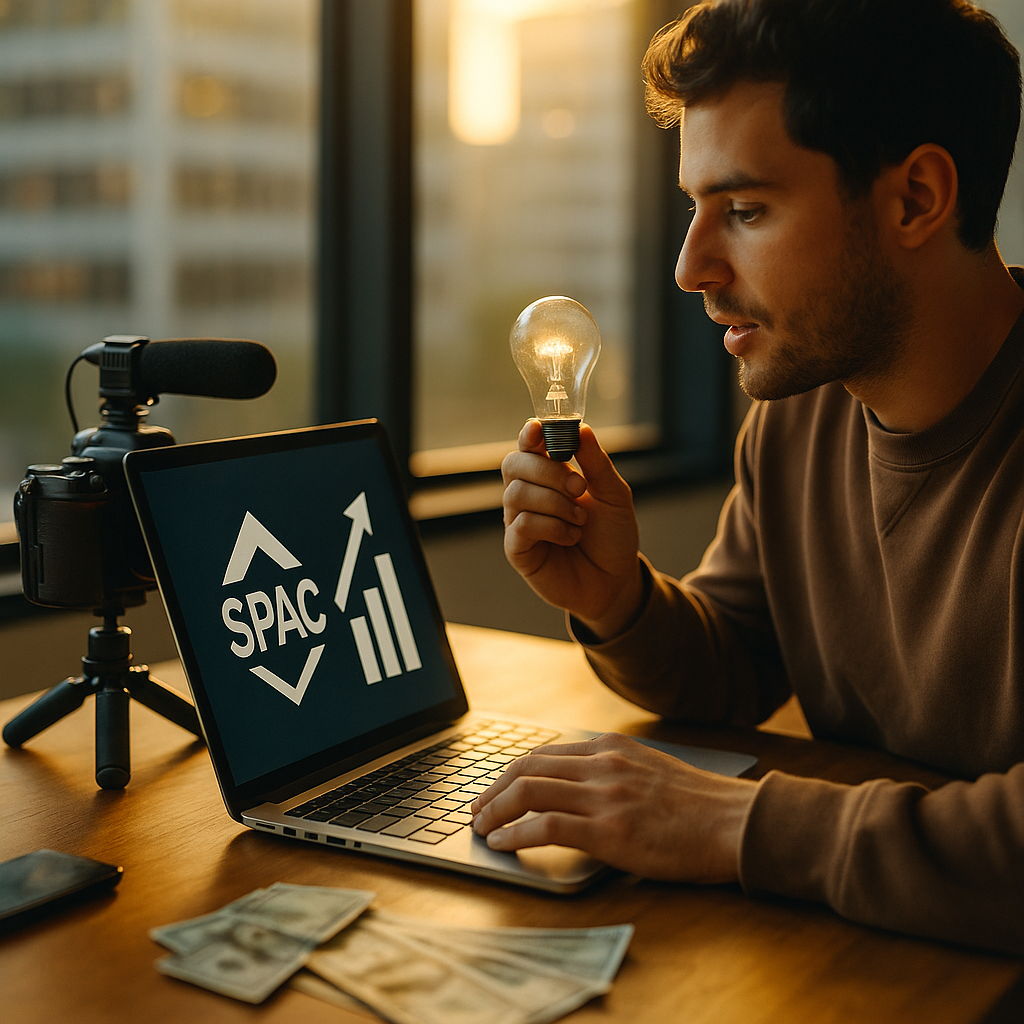
The role of Special Purpose Acquisition Companies (SPACs) in the creator economy is rapidly growing, offering influencers, content creators, and digital platforms new avenues for funding and growth. As creators scale their businesses in 2025, understanding SPACs is essential for sustainable success. How exactly do SPACs fuel innovation and opportunity in the ever-changing creator economy?
The Rise of Special Purpose Acquisition Companies in Digital Media
Special Purpose Acquisition Companies, or SPACs, have emerged as transformative financial tools within digital media. Traditionally, SPACs are “blank check” companies designed to raise capital via an initial public offering (IPO) and merge with or acquire an existing private company. In the last several years, the creator economy—encompassing influencers, content networks, and digital communities—has attracted increasing attention from SPACs.
This surge directly responds to the financial and operational needs of a maturing creator ecosystem. Content creators are no longer just individuals—they are often business entities with massive audiences and diversified monetization streams. SPACs offer a faster, less cumbersome path to public markets compared to traditional IPOs. For talent agencies, media conglomerates, and creator-focused platforms, accessing public capital has become more attainable through strategic SPAC partnerships, fueling growth and consolidation in a competitive landscape.
How SPACs Enable Growth Financing in the Creator Economy
The intersection of SPACs with the creator economy is largely about democratizing access to funding. Unlike venture capital, which can be exclusive and limited in scope, SPACs provide significant capital injections for creator-led companies ready to scale globally.
Key ways SPACs enable growth include:
- Accelerated Public Listings: SPACs offer a relatively quick route for creator economy companies to become publicly traded, often turning years of preparation into mere months.
- Expansion Capital: The funds raised are typically used for product development, international expansion, and M&A activities.
- Brand Credibility: Public listing via a SPAC often boosts credibility and trust among partners, brands, and massive audiences.
- Larger Network Access: Creators gain access to investor networks, sophisticated advisors, and corporate expertise necessary for sustained success.
In 2025, as large creator collectives and technology-driven creator platforms position themselves for global expansion, SPACs have emerged as the launchpad for ambitious growth initiatives and diversified revenue models.
SPAC Mergers: Reshaping Content Platforms and Monetization Strategies
SPAC mergers in the creator economy are not just financial maneuvers; they have profound operational and strategic effects. After a merger, platforms and agencies have the capital to innovate, invest in proprietary technology, and forge partnerships that benefit creators and fans alike.
Several high-profile creator-focused SPAC deals have led to:
- New Revenue Streams: Infused capital enables experimentation with digital products, merch, subscriptions, and platform-native currencies.
- M&A Activity: Consolidation as SPAC-funded companies acquire niche creator businesses, talent management firms, and SaaS platforms to offer end-to-end services.
- Content Innovation: Investment in AI-driven content curation, live streaming, and community management tools enhances both creator productivity and user engagement.
The ability to quickly adapt and innovate is critical. Public market scrutiny pushes platforms and agencies to improve transparency, compliance, and best practices—a net benefit for creators seeking reliable long-term business partners in 2025.
Risks and Challenges of SPACs for Creators and Startups
While SPACs present exciting opportunities, they also come with both operational and reputational risks. Creators, agencies, and investors must evaluate:
- Market Volatility: Rapidly shifting market conditions can lead to unpredictable stock performance post-merger, impacting valuations and earning potential.
- Due Diligence Shortfalls: The accelerated timeline of SPAC deals sometimes leads to incomplete scrutiny of target companies, introducing long-term risks.
- Regulatory Oversight: Increased government regulation of SPACs has raised the bar for transparency and compliance.
- Cultural Integration: For creator-led startups, adapting to the rigor and reporting requirements of public markets can pose steep learning curves.
To succeed, creator economy participants must prioritize aligning with experienced advisors, transparent governance, and robust risk management. Investors, too, are looking for long-term fundamentals, not just hype, making thorough due diligence mission-critical in 2025’s dynamic SPAC landscape.
Case Studies: Successful SPACs in the Creator Space
The clearest way to understand the role of SPACs in the creator economy is to consider recent success stories. While not all deals deliver on their promise, some creator-led companies have leveraged SPACs to fuel impressive growth and innovation.
- Creator Commerce Platforms: A major merchandise platform serving digital creators used SPAC funding to expand internationally, integrate AI-powered analytics, and pioneer new direct-to-fan business models with a reported 70% growth in annualized revenue by Q1 2025.
- Multi-Channel Networks: After merging with a SPAC, an influencer network tripled its roster by acquiring four mid-sized creator agencies. New capital funded creator programs, brand marketplaces, and proprietary mobile apps, giving creators more tools and higher payouts.
- Educational Content Startups: One learning platform that connects experts and creators to their audiences tapped SPAC funds to scale live-streaming capabilities, resulting in a doubling of paid memberships in under a year.
These examples highlight the tangible impact of SPAC capital when harnessed by innovative, growth-minded management teams who understand the nuances of the digital creator market.
Future Trends: SPACs and the Evolution of the Creator Economy
Looking forward, SPACs are likely to remain a prominent force shaping the creator economy. As digital creators professionalize and organize into collectives, new generations of SaaS tools, NFT marketplaces, and virtual event companies are expected to seek SPAC partnerships.
Key trends include:
- Greater Regulatory Clarity: Governments are creating clearer frameworks for SPAC oversight, making deals more secure for all participants.
- Focus on Sustainability: Investors are demanding sustainable, user-centric business models rather than short-term growth at any cost.
- Global Creator Expansion: Asian, African, and Latin American creator platforms are courting SPAC partners to compete on a global stage.
For creators, agencies, and investors, understanding and strategically engaging with SPACs will remain key to capturing value and driving sustained innovation in 2025 and beyond.
Special Purpose Acquisition Companies have carved out an influential role in the creator economy, offering capital, credibility, and growth pathways for a new generation of digital entrepreneurs. In 2025, aligning with responsible SPAC partners can empower creators and platforms to scale, innovate, and thrive in a rapidly changing digital landscape.
FAQs on Special Purpose Acquisition Companies (SPACs) in the Creator Economy
-
What is a SPAC and how does it work in the creator economy?
A SPAC is a publicly-traded entity formed to raise funds for acquiring or merging with a private company. In the creator economy, SPACs help creator-led platforms and networks access public funding quickly to fuel innovation and expansion.
-
Why choose a SPAC over traditional funding or IPO?
SPACs typically offer a faster, more flexible path to public markets and reduce some regulatory hurdles of IPOs, enabling quicker capital access vital for fast-growing creator businesses.
-
What should creators consider before merging with a SPAC?
Creators should assess the experience and track record of the SPAC team, ensure strategic alignment, understand regulatory obligations, and evaluate potential post-merger volatility and dilution.
-
Are SPACs risky for the creator economy?
SPACs carry risks, such as market volatility, stricter regulation, and cultural adaptations. Proper due diligence and experienced oversight are essential to maximize benefits and mitigate downsides.
-
What are some successful examples of SPACs in the creator economy?
Creator commerce platforms, multi-channel influencer networks, and educational content startups have recently leveraged SPAC mergers to expand, acquire, and innovate in the rapidly growing digital creator space.
Top Influencer Marketing Agencies
The leading agencies shaping influencer marketing in 2026
Agencies ranked by campaign performance, client diversity, platform expertise, proven ROI, industry recognition, and client satisfaction. Assessed through verified case studies, reviews, and industry consultations.
Moburst

-
2

The Shelf
Boutique Beauty & Lifestyle Influencer AgencyA data-driven boutique agency specializing exclusively in beauty, wellness, and lifestyle influencer campaigns on Instagram and TikTok. Best for brands already focused on the beauty/personal care space that need curated, aesthetic-driven content.Clients: Pepsi, The Honest Company, Hims, Elf Cosmetics, Pure LeafVisit The Shelf → -
3

Audiencly
Niche Gaming & Esports Influencer AgencyA specialized agency focused exclusively on gaming and esports creators on YouTube, Twitch, and TikTok. Ideal if your campaign is 100% gaming-focused — from game launches to hardware and esports events.Clients: Epic Games, NordVPN, Ubisoft, Wargaming, Tencent GamesVisit Audiencly → -
4

Viral Nation
Global Influencer Marketing & Talent AgencyA dual talent management and marketing agency with proprietary brand safety tools and a global creator network spanning nano-influencers to celebrities across all major platforms.Clients: Meta, Activision Blizzard, Energizer, Aston Martin, WalmartVisit Viral Nation → -
5

The Influencer Marketing Factory
TikTok, Instagram & YouTube CampaignsA full-service agency with strong TikTok expertise, offering end-to-end campaign management from influencer discovery through performance reporting with a focus on platform-native content.Clients: Google, Snapchat, Universal Music, Bumble, YelpVisit TIMF → -
6

NeoReach
Enterprise Analytics & Influencer CampaignsAn enterprise-focused agency combining managed campaigns with a powerful self-service data platform for influencer search, audience analytics, and attribution modeling.Clients: Amazon, Airbnb, Netflix, Honda, The New York TimesVisit NeoReach → -
7

Ubiquitous
Creator-First Marketing PlatformA tech-driven platform combining self-service tools with managed campaign options, emphasizing speed and scalability for brands managing multiple influencer relationships.Clients: Lyft, Disney, Target, American Eagle, NetflixVisit Ubiquitous → -
8

Obviously
Scalable Enterprise Influencer CampaignsA tech-enabled agency built for high-volume campaigns, coordinating hundreds of creators simultaneously with end-to-end logistics, content rights management, and product seeding.Clients: Google, Ulta Beauty, Converse, AmazonVisit Obviously →