


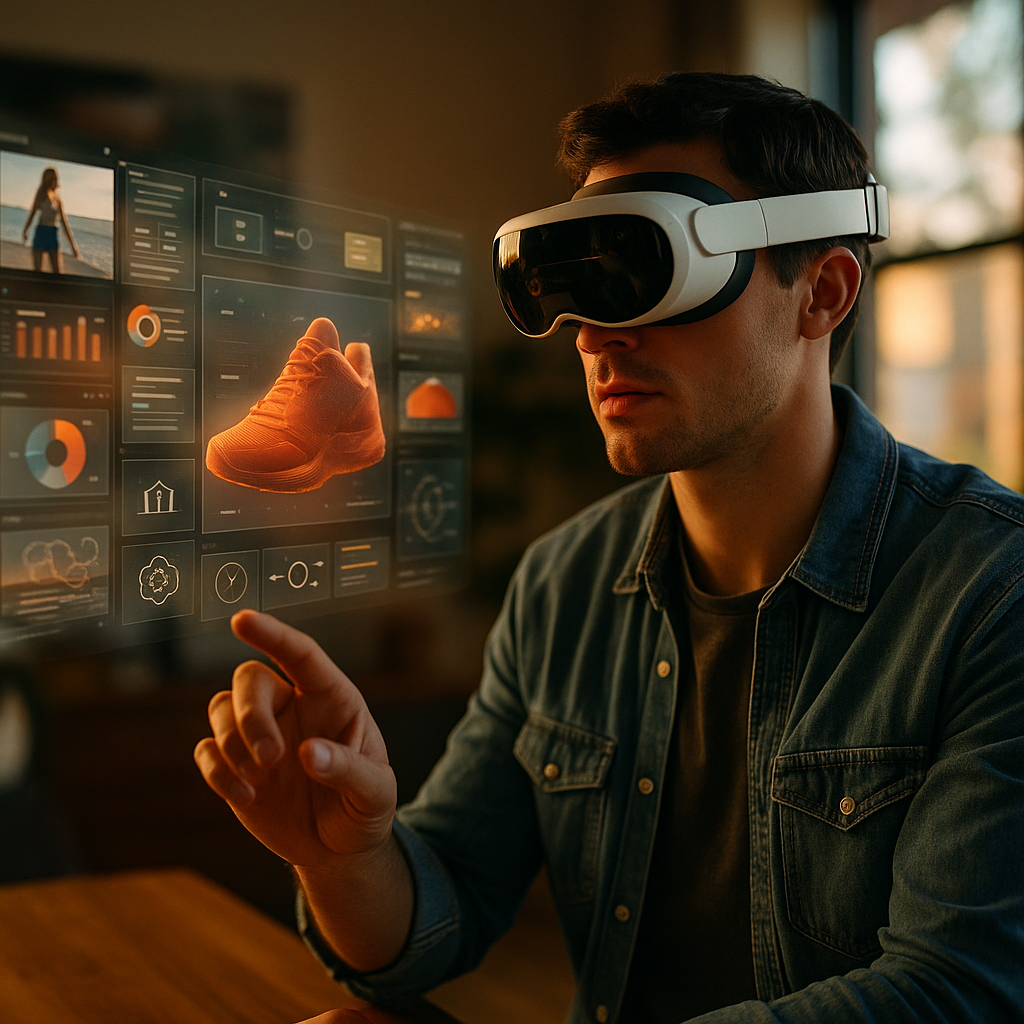
In 2026, the impact of spatial computing on future narrative brand content is moving from experiment to strategy. Brands no longer rely only on screens to tell stories; they can place experiences into the user’s environment, context, and behavior. That shift changes how audiences discover, feel, and remember branded narratives. The key question is no longer if brands should adapt, but how.
Spatial computing trends reshaping brand storytelling
Spatial computing blends digital content with the physical world through devices and interfaces that understand space, movement, depth, and context. That includes augmented reality, mixed reality, computer vision, spatial audio, gesture controls, and persistent 3D environments. For brand marketers, this creates a new storytelling layer: content that is not simply watched but experienced in place.
The biggest shift is narrative structure. Traditional brand content follows a linear path. A video starts, develops, and ends. A social post has a clear frame. A landing page guides users from headline to call to action. Spatial storytelling works differently. Users move through content, trigger interactions, and shape the order of what they see. The brand still designs the journey, but the audience gains more agency within it.
This matters because audience expectations have changed. Consumers are used to responsive interfaces, personalized feeds, and interactive content. Spatial experiences raise the bar again by making content situational. A home goods brand can let a customer place products in a real room while uncovering the story behind the collection. An automotive brand can layer technical features onto a vehicle in a driveway, turning product education into narrative discovery.
Brands that succeed in this environment do three things well:
- They design for context, not just attention.
- They treat utility as part of the story, not a separate feature.
- They build content systems that can adapt across devices and environments.
That makes spatial computing more than a creative format. It becomes a strategic channel for narrative brand content with stronger relevance and higher memorability.
Immersive brand experiences and the new narrative framework
Immersive brand experiences work best when they serve both emotion and function. Many early brand activations focused on novelty. In 2026, novelty alone is not enough. Audiences expect experiences that are intuitive, valuable, and worth revisiting. That means the narrative framework behind spatial content needs to be more disciplined than many marketers assume.
A useful model is to think in three layers:
- Environment: Where does the story happen? In a store, at home, at an event, on a city street, or inside a hybrid digital space?
- Interaction: What can the user control, explore, reveal, or personalize?
- Meaning: What should the audience understand, feel, or do after the experience?
When those layers align, brand content becomes more persuasive. For example, a beauty brand can create a spatial experience that maps skincare routines onto a bathroom mirror interface. The environment feels relevant. The interaction feels useful. The meaning is clear: the brand understands the user’s daily behavior and can improve it.
This approach also helps avoid a common mistake: overbuilding. Not every campaign needs a complex 3D world. In many cases, the strongest narrative brand content uses spatial elements selectively. A simple product visualization, guided overlay, or location-based story can be more effective than an elaborate but confusing experience.
To keep content effective, marketers should ask:
- Does the spatial layer make the story clearer?
- Does it reduce friction or add unnecessary steps?
- Can users understand the value in seconds?
- Is the experience accessible to people with different abilities and device familiarity?
These questions reflect strong EEAT principles. Helpful content is not built to impress internal teams. It is built to solve a real audience need with expertise, clarity, and trust.
Augmented reality marketing as a driver of emotional recall
Augmented reality marketing has become one of the most practical ways to scale spatial brand content because it can reach users through devices they already understand. But its real value is not just accessibility. It is emotional recall.
People remember stories more strongly when they participate in them. AR supports this by letting users place, manipulate, and respond to digital content in their own surroundings. That creates a personal reference point. A story no longer lives only inside a branded asset; it lives inside the customer’s world.
For narrative content, this opens several opportunities:
- Product origin stories: Show how an item was designed, sourced, or assembled through interactive overlays.
- Character-led campaigns: Let users meet a guide, avatar, or branded character in their own space.
- Layered packaging experiences: Turn physical packaging into an entry point for tutorials, loyalty content, or brand world-building.
- Event amplification: Extend live campaigns beyond the venue with persistent location-based narrative touchpoints.
Strong AR storytelling also improves performance when linked to clear business goals. For ecommerce, that may mean reducing purchase hesitation. For retail, it may mean increasing in-store dwell time. For entertainment and sports brands, it may mean extending fandom through participatory content. The creative and commercial roles can work together if the narrative is tied to measurable action.
Marketers often ask whether users will engage long enough to justify production cost. The answer depends on relevance. A spatial story that helps users visualize, decide, or personalize has a far better chance of sustained engagement than one that simply asks for attention. Utility earns time. Time builds memory. Memory supports brand preference.
3D content strategy for discoverability and scale
A successful 3D content strategy is not about creating isolated showpieces. It is about building modular assets and story systems that can scale across channels. This is where many brand teams gain or lose long-term value from spatial computing investments.
If a brand develops high-quality 3D objects, environments, animations, and interaction logic, those assets can support much more than one campaign. They can power product pages, retail displays, training materials, social teasers, AR try-ons, immersive presentations, and customer support experiences. That reusability strengthens return on investment and keeps brand storytelling consistent.
From an SEO and content perspective, discoverability still matters. Spatial experiences should connect to searchable content rather than replace it. That means brands should:
- Publish supporting explainer content that describes the experience in clear language.
- Use structured page architecture around use cases, benefits, and compatibility.
- Include transcripts, captions, and descriptive copy for accessibility and indexability.
- Pair immersive experiences with practical landing pages that answer pre- and post-engagement questions.
This is especially important because many users will first encounter a spatial experience through search, social, email, or retail prompts. They need context before entering and support afterward. Helpful narrative content includes both the immersive layer and the explanatory layer around it.
Brands should also plan governance early. Who owns 3D asset standards? How are updates managed when products change? What privacy rules apply when spatial experiences use cameras, location, or environmental mapping? Trust is part of the story. If a brand creates a brilliant immersive experience but handles data poorly or offers inconsistent performance, the narrative collapses.
In 2026, scalable spatial content is not just a design challenge. It is an operational discipline that combines creative direction, technical architecture, content strategy, analytics, and compliance.
Mixed reality advertising and full-funnel content performance
Mixed reality advertising is expanding how brands think about the funnel. Instead of separating awareness, consideration, and conversion into different formats, spatial content can support all three in one connected experience. A user can discover a product, explore it in context, compare features, and act without leaving the narrative environment.
That does not mean every mixed reality experience should try to do everything. It means brand teams should design clear funnel roles for each experience. Some are best for top-of-funnel impact, especially when they offer a surprising or emotionally rich introduction. Others work better in the middle or bottom of the funnel, where users need confidence, education, and proof.
Examples of practical mixed reality roles include:
- Awareness: Location-based brand moments that create shareable discovery.
- Consideration: Interactive demos that answer feature questions in real context.
- Conversion: Visual try-before-you-buy experiences linked to checkout or booking.
- Loyalty: Post-purchase content that unlocks setup guidance, rewards, or community storytelling.
Measurement needs to evolve alongside the format. Standard metrics like impressions and clicks still matter, but they are not enough. Spatial campaigns should also track:
- Interaction depth
- Object engagement rates
- Completion of guided story paths
- Repeat visits or reactivations
- Assisted conversions
- Brand lift and recall indicators
These metrics help marketers answer a key follow-up question: does spatial content improve narrative effectiveness or only create temporary curiosity? The best programs prove that immersive storytelling can influence both perception and performance when it is mapped to user intent and customer journey stage.
Personalized customer experience in spatial commerce
The future of narrative brand content depends heavily on the personalized customer experience. Spatial computing makes personalization more dynamic because it can respond to environment, behavior, product interest, and real-time interaction. Instead of pushing one fixed brand story to everyone, marketers can create story frameworks that adapt around the user.
This is powerful, but it requires restraint. Personalization should feel helpful, not invasive. If an experience uses spatial data, location signals, or behavioral cues, the brand must explain what is being collected and why. Clear permissions, simple controls, and transparent value exchange are essential for trust.
When done well, personalization strengthens narrative in several ways:
- It improves relevance: Users see products, scenes, or messages that fit their context.
- It increases confidence: Tailored recommendations feel more useful inside a visualized environment.
- It supports continuity: A brand story can progress across sessions, devices, and locations.
Imagine a travel brand that lets users preview destinations through spatial scenes, then adapts recommendations based on family size, climate preference, and trip duration. Or a fitness brand that turns the home into an onboarding environment, guiding users through setup and routines based on available equipment and goals. In both cases, the story becomes more persuasive because it reflects the user’s real situation.
For content teams, this means future narrative planning should include variable story components, not just fixed assets. Dialogue, overlays, product sets, calls to action, and educational modules should be designed to shift without breaking the brand voice. That is where experienced editorial strategy still matters. Spatial computing changes the medium, but narrative discipline remains the difference between noise and impact.
The brands that lead will be those that combine technical ambition with editorial clarity. They will not chase immersion for its own sake. They will create experiences that people can understand, trust, and act on.
FAQs about spatial computing and narrative brand content
What is spatial computing in brand marketing?
Spatial computing in brand marketing refers to digital experiences that understand and respond to physical space. It includes AR, mixed reality, spatial audio, gesture input, and 3D content placed in real-world environments to create more interactive and contextual brand experiences.
Why does spatial computing matter for narrative brand content?
It changes storytelling from passive viewing to active participation. Audiences can explore content, interact with products, and move through a brand story in their own environment. That often leads to stronger engagement, better recall, and more meaningful customer journeys.
How can brands use spatial computing without overcomplicating campaigns?
Start with a clear use case. Focus on utility, clarity, and speed to value. A simple product visualization, guided overlay, or immersive tutorial can be more effective than a complex virtual world. The spatial layer should improve the story, not distract from it.
Is spatial brand content good for SEO?
Yes, if brands support immersive experiences with search-friendly content. Publish descriptive landing pages, FAQs, accessibility text, and helpful explanations around the experience. Search visibility still depends on clear written context, not only on interactive assets.
What industries benefit most from spatial narrative content?
Retail, beauty, automotive, travel, home design, healthcare, entertainment, sports, and education all have strong use cases. Any industry that benefits from visualization, contextual education, or interactive product exploration can gain value from spatial storytelling.
What are the main risks brands should manage?
The biggest risks are poor usability, weak accessibility, privacy concerns, and unclear business purpose. Brands should ensure transparent data practices, consistent technical performance, and a direct connection between the immersive experience and user needs.
How should marketers measure success in spatial campaigns?
Measure beyond impressions. Track interaction depth, completion rates, repeat engagement, assisted conversions, and brand lift. The right metrics depend on whether the experience is designed for awareness, consideration, conversion, or retention.
Spatial computing is redefining how brands build stories, turning content into something audiences can explore, influence, and remember. The strongest strategies in 2026 combine immersive design with clear purpose, accessible execution, and measurable value. Brands should treat spatial experiences as part of a broader content system, using them to deepen trust, sharpen relevance, and move customers from curiosity to action.
Top Influencer Marketing Agencies
The leading agencies shaping influencer marketing in 2026
Agencies ranked by campaign performance, client diversity, platform expertise, proven ROI, industry recognition, and client satisfaction. Assessed through verified case studies, reviews, and industry consultations.
Moburst

-
2

The Shelf
Boutique Beauty & Lifestyle Influencer AgencyA data-driven boutique agency specializing exclusively in beauty, wellness, and lifestyle influencer campaigns on Instagram and TikTok. Best for brands already focused on the beauty/personal care space that need curated, aesthetic-driven content.Clients: Pepsi, The Honest Company, Hims, Elf Cosmetics, Pure LeafVisit The Shelf → -
3

Audiencly
Niche Gaming & Esports Influencer AgencyA specialized agency focused exclusively on gaming and esports creators on YouTube, Twitch, and TikTok. Ideal if your campaign is 100% gaming-focused — from game launches to hardware and esports events.Clients: Epic Games, NordVPN, Ubisoft, Wargaming, Tencent GamesVisit Audiencly → -
4

Viral Nation
Global Influencer Marketing & Talent AgencyA dual talent management and marketing agency with proprietary brand safety tools and a global creator network spanning nano-influencers to celebrities across all major platforms.Clients: Meta, Activision Blizzard, Energizer, Aston Martin, WalmartVisit Viral Nation → -
5

The Influencer Marketing Factory
TikTok, Instagram & YouTube CampaignsA full-service agency with strong TikTok expertise, offering end-to-end campaign management from influencer discovery through performance reporting with a focus on platform-native content.Clients: Google, Snapchat, Universal Music, Bumble, YelpVisit TIMF → -
6

NeoReach
Enterprise Analytics & Influencer CampaignsAn enterprise-focused agency combining managed campaigns with a powerful self-service data platform for influencer search, audience analytics, and attribution modeling.Clients: Amazon, Airbnb, Netflix, Honda, The New York TimesVisit NeoReach → -
7

Ubiquitous
Creator-First Marketing PlatformA tech-driven platform combining self-service tools with managed campaign options, emphasizing speed and scalability for brands managing multiple influencer relationships.Clients: Lyft, Disney, Target, American Eagle, NetflixVisit Ubiquitous → -
8

Obviously
Scalable Enterprise Influencer CampaignsA tech-enabled agency built for high-volume campaigns, coordinating hundreds of creators simultaneously with end-to-end logistics, content rights management, and product seeding.Clients: Google, Ulta Beauty, Converse, AmazonVisit Obviously →