


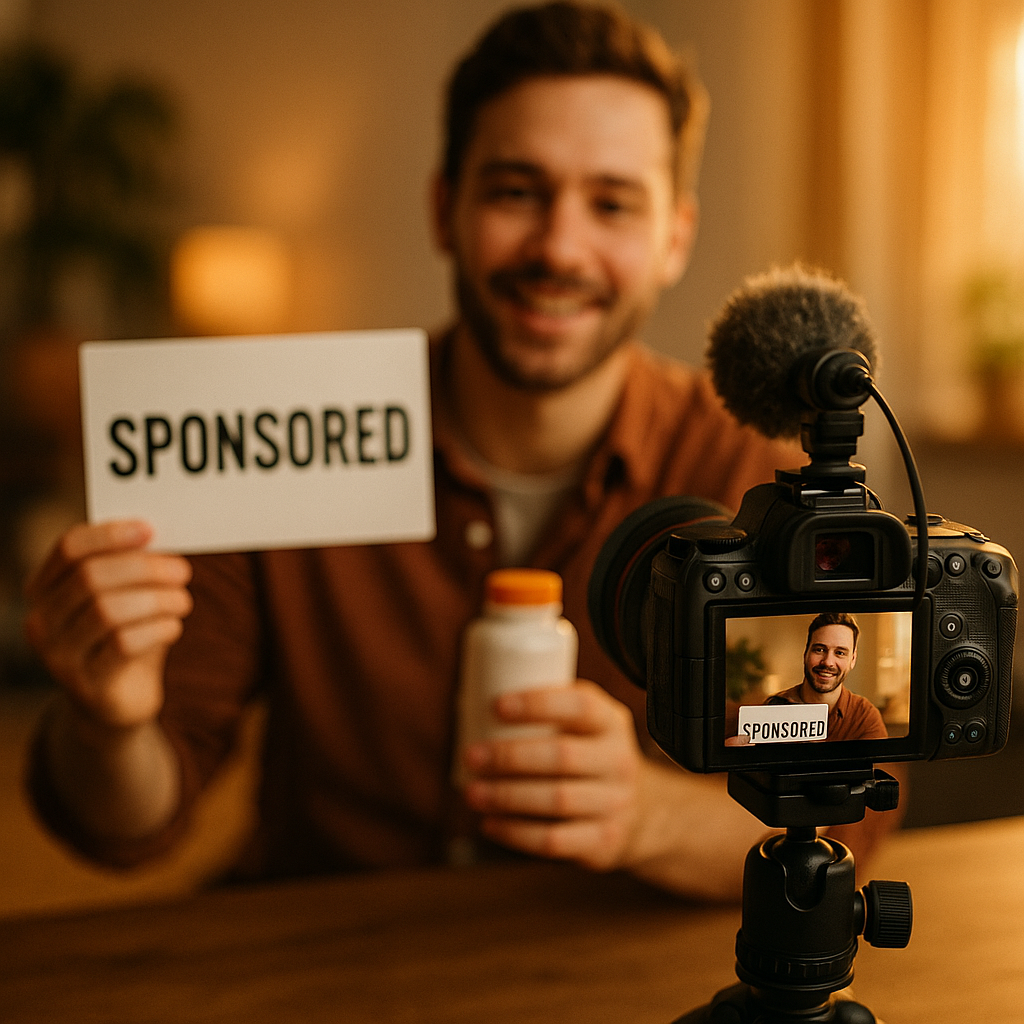
Disclosed sponsorships generate higher purchase intent than undisclosed ones, according to research consistently replicated across platform studies. If your legal team still treats FTC disclosures as compliance overhead, you’re leaving measurable performance on the table. The transparent creator partnership model isn’t just about avoiding enforcement risk — it’s a creative and commercial advantage hiding in plain sight.
The Data Case for Disclosure as a Performance Variable
Let’s start with what the numbers actually say. A 2023 Nielsen study cited by the FTC found that audiences who recognized a sponsorship but felt the creator’s endorsement was authentic reported higher brand favorability than those who suspected an undisclosed arrangement. The suspicion gap is real. When consumers sense hidden persuasion, trust collapses, and with it, conversion intent.
TikTok’s own internal research on branded content performance shows that posts using the Branded Content toggle (which displays a “Paid partnership” label) consistently see higher save rates and completion rates than equivalent content without the label. The platform rewards transparency algorithmically. That’s not incidental.
Disclosure isn’t the fine print at the end of a deal. It’s an audience signal that the creator vetted this brand and chose to align publicly — and audiences read it exactly that way.
Meta’s Brand Collabs Manager enforces disclosure by design, and brands running paid partnership labels on Instagram see the content eligible for boosting through Ads Manager. Undisclosed content cannot be amplified through paid channels. The operational cost of non-disclosure, in reach alone, is significant.
Why Audiences Respond Better to Transparency
This is the part most marketing teams understand intuitively but rarely operationalize. When a creator discloses a sponsorship, the viewer makes an active cognitive decision: I know this is paid. I still trust this person’s judgment. That trust transfer is worth more than any ambiguity you might preserve by burying the disclosure.
Contrast that with undisclosed content, where the viewer either doesn’t notice (no persuasion advantage) or does notice and feels manipulated. The asymmetry is stark. Disclosed, authentic endorsements activate what researchers call “parasocial permission” — the audience essentially grants the creator license to recommend because the relationship feels honest. Undisclosed content burns that permission without the brand ever knowing it happened.
This is why UGC outperforms polished brand content on engagement: authenticity signals matter more than production value. Disclosure is the same mechanism at the contract level.
The Legal-Creative Disconnect That’s Costing You Performance
Here’s where most enterprise programs break down. Legal reviews the disclosure language for compliance. Creative reviews the content for brand fit. Neither team is asking the question that actually drives results: How do we make the disclosure itself feel like part of the creator’s voice?
The standard boilerplate approach — “#ad” buried in a caption wall, or a verbal disclaimer whispered at the 55-second mark — is technically compliant but commercially wasteful. The FTC’s guidelines are explicit that disclosures must be clear and conspicuous, but “conspicuous” is doing a lot of work in most current interpretations. Legal teams optimize for defensibility. Creative teams optimize for aesthetics. Neither is optimizing for performance.
The fix is structural. Legal and creative need a shared disclosure architecture document, not a sign-off checklist. That document should answer:
- Where in the content does the disclosure appear for maximum attention (not minimum friction)?
- What language variants are pre-approved that still sound like the creator?
- How does the disclosure vary by platform format — Stories vs. feed posts vs. long-form YouTube vs. CTV placements?
- What testing protocol exists to compare disclosed variants against each other on engagement metrics?
If your brand runs omnichannel creator campaigns across TikTok, Instagram, and CTV simultaneously, a single disclosure language standard will fail. Each format requires its own compliant and optimized approach — and that requires legal and creative to build the system together upstream, not review in sequence downstream.
Building the Disclosure Architecture
The most operationally mature brands treat disclosure as a creative module, not a legal addendum. Here’s what that looks like in practice.
Creator-voice disclosure libraries. Work with each creator to develop 3-5 disclosure phrases in their natural voice that have been pre-cleared by legal. “I’ve been partnering with [Brand] on this” lands differently than “#ad” and performs differently too. These get built into the creator brief as a required creative element, not a compliance footnote.
Placement testing protocols. Run A/B tests on disclosure placement: opening disclosure versus mid-content versus end. Most teams assume audiences disengage when a sponsorship is declared early. The data often contradicts this. Early disclosure, delivered with confidence, can increase credibility and completion rates. You won’t know until you test systematically.
Platform-specific rules embedded in briefs. TikTok’s Branded Content toggle, Meta’s paid partnership label, YouTube’s “includes paid promotion” checkbox — these are not equivalent, and the audience experience of each differs. Your multi-creator program needs platform-specific disclosure protocols built into every brief, reviewed by legal for compliance and by creative for voice coherence before a single creator receives direction.
Measurement integration. Most brands measure campaign performance but don’t isolate disclosure variables. Add a disclosure placement and language tag to your campaign taxonomy. Track engagement rate, save rate, comment sentiment, and conversion lift by disclosure type. This turns compliance into an optimization dataset.
The brands winning on creator ROI in this environment aren’t the ones with the most creators. They’re the ones with the most disciplined creative systems — and disclosure architecture is part of that system.
Regulatory Risk Is Accelerating — and So Is Enforcement
The FTC’s updated endorsement guides, in effect since 2023, extended disclosure requirements to virtual influencers, employee testimonials, and AI-generated content. The UK’s ICO and ASA have been even more aggressive, with influencer non-disclosure cases resulting in public naming and mandatory compliance programs. The cost of getting this wrong has increased materially.
But the risk calculation isn’t just regulatory. Consumer advocacy organizations and creator accountability accounts on social platforms actively surface suspected non-disclosure. A single viral callout post can generate more negative brand sentiment than a formal regulatory notice. Your disclosure architecture is also your reputation architecture.
The content standards you build at scale need to treat disclosure as a first-order creative and compliance priority, not an afterthought managed by junior coordinators at the asset review stage.
What Co-Design Actually Looks Like in Practice
Brands that have moved to a legal-creative co-design model typically restructure in one of two ways. The first is a dedicated “compliance-creative” role: someone who sits in brand marketing, understands FTC and platform-specific requirements deeply, and translates legal requirements into creative guardrails that the brief-writing team can execute. The second is a standing cross-functional working group that meets at the campaign brief stage, not the review stage.
Either model works. What doesn’t work is the sequential handoff: creative writes the brief, legal reviews it, compliance comments are layered in as edits, and the creator receives a Frankenstein document that satisfies no one. That process produces disclosures that are compliant on paper and invisible in practice.
For brands running complex multi-format programs, the integrated short and long-form strategy approach makes co-design structurally necessary. A long-form YouTube video and a 15-second TikTok clip require categorically different disclosure executions, and both need to be planned before the creator is briefed, not corrected after the content is filmed.
Separately, as AI tools generate more creator content at scale, the disclosure question extends to synthetic media. If you’re using AI-assisted creative as part of your micro-asset generation workflow, your disclosure architecture needs to account for AI-generated content labels, which platforms including Meta and Google are increasingly enforcing as a separate category from standard paid partnership labels.
Start here: schedule a single joint session between your brand legal lead and your head of creator marketing this quarter. The agenda is one document — a disclosure architecture playbook that covers platform rules, approved language variants, placement guidelines, and a measurement framework. Build it once, apply it to every campaign.
FAQs
Does disclosing a sponsorship actually hurt engagement?
No — and the data consistently shows the opposite. When a creator’s endorsement feels authentic, disclosed sponsorships can increase engagement by reinforcing credibility. Audiences who trust the creator extend that trust to the brand recommendation, even knowing it’s paid. The risk to engagement comes from disclosure that feels awkward or poorly integrated, which is a creative execution problem, not a disclosure problem.
What are the FTC’s current requirements for influencer disclosures?
The FTC’s updated endorsement guides require that any material connection between a brand and a creator be clearly and conspicuously disclosed. This means disclosures must be placed where viewers will actually see them, not buried in hashtag strings or visible only after expanding a caption. The requirement now also applies to AI-generated endorsements and employee-posted content. You can review current guidance at ftc.gov.
How should disclosure language vary across platforms?
Each platform has its own native disclosure mechanism. TikTok’s Branded Content toggle, Meta’s paid partnership label, and YouTube’s paid promotion checkbox are all distinct tools with different audience-facing displays. Beyond platform tools, verbal and written disclosure language should be adapted to the format: a conversational mention works in a long-form YouTube video, while a clean on-screen label suits a 15-second TikTok. Brands should build platform-specific disclosure modules into creator briefs rather than using a one-size approach.
How do we measure whether our disclosure approach is performing?
Add disclosure type, placement position, and language variant as tags in your campaign measurement taxonomy. Track engagement rate, completion rate, save/share rate, and conversion lift segmented by those variables. Over time, you’ll build a dataset that tells you which disclosure formats drive the best performance for your specific audience, which turns compliance into an optimization input.
What’s the risk of not disclosing, beyond regulatory fines?
Regulatory fines are only part of the exposure. Consumer watchdog accounts and social media audiences actively surface suspected non-disclosure, and a viral callout can generate significant brand reputation damage that outlasts any formal enforcement action. Additionally, undisclosed content cannot be amplified through paid channels on platforms like Meta and TikTok, which limits the media efficiency of your investment.
Top Influencer Marketing Agencies
The leading agencies shaping influencer marketing in 2026
Agencies ranked by campaign performance, client diversity, platform expertise, proven ROI, industry recognition, and client satisfaction. Assessed through verified case studies, reviews, and industry consultations.
Moburst

-
2

The Shelf
Boutique Beauty & Lifestyle Influencer AgencyA data-driven boutique agency specializing exclusively in beauty, wellness, and lifestyle influencer campaigns on Instagram and TikTok. Best for brands already focused on the beauty/personal care space that need curated, aesthetic-driven content.Clients: Pepsi, The Honest Company, Hims, Elf Cosmetics, Pure LeafVisit The Shelf → -
3

Audiencly
Niche Gaming & Esports Influencer AgencyA specialized agency focused exclusively on gaming and esports creators on YouTube, Twitch, and TikTok. Ideal if your campaign is 100% gaming-focused — from game launches to hardware and esports events.Clients: Epic Games, NordVPN, Ubisoft, Wargaming, Tencent GamesVisit Audiencly → -
4

Viral Nation
Global Influencer Marketing & Talent AgencyA dual talent management and marketing agency with proprietary brand safety tools and a global creator network spanning nano-influencers to celebrities across all major platforms.Clients: Meta, Activision Blizzard, Energizer, Aston Martin, WalmartVisit Viral Nation → -
5

The Influencer Marketing Factory
TikTok, Instagram & YouTube CampaignsA full-service agency with strong TikTok expertise, offering end-to-end campaign management from influencer discovery through performance reporting with a focus on platform-native content.Clients: Google, Snapchat, Universal Music, Bumble, YelpVisit TIMF → -
6

NeoReach
Enterprise Analytics & Influencer CampaignsAn enterprise-focused agency combining managed campaigns with a powerful self-service data platform for influencer search, audience analytics, and attribution modeling.Clients: Amazon, Airbnb, Netflix, Honda, The New York TimesVisit NeoReach → -
7

Ubiquitous
Creator-First Marketing PlatformA tech-driven platform combining self-service tools with managed campaign options, emphasizing speed and scalability for brands managing multiple influencer relationships.Clients: Lyft, Disney, Target, American Eagle, NetflixVisit Ubiquitous → -
8

Obviously
Scalable Enterprise Influencer CampaignsA tech-enabled agency built for high-volume campaigns, coordinating hundreds of creators simultaneously with end-to-end logistics, content rights management, and product seeding.Clients: Google, Ulta Beauty, Converse, AmazonVisit Obviously →