


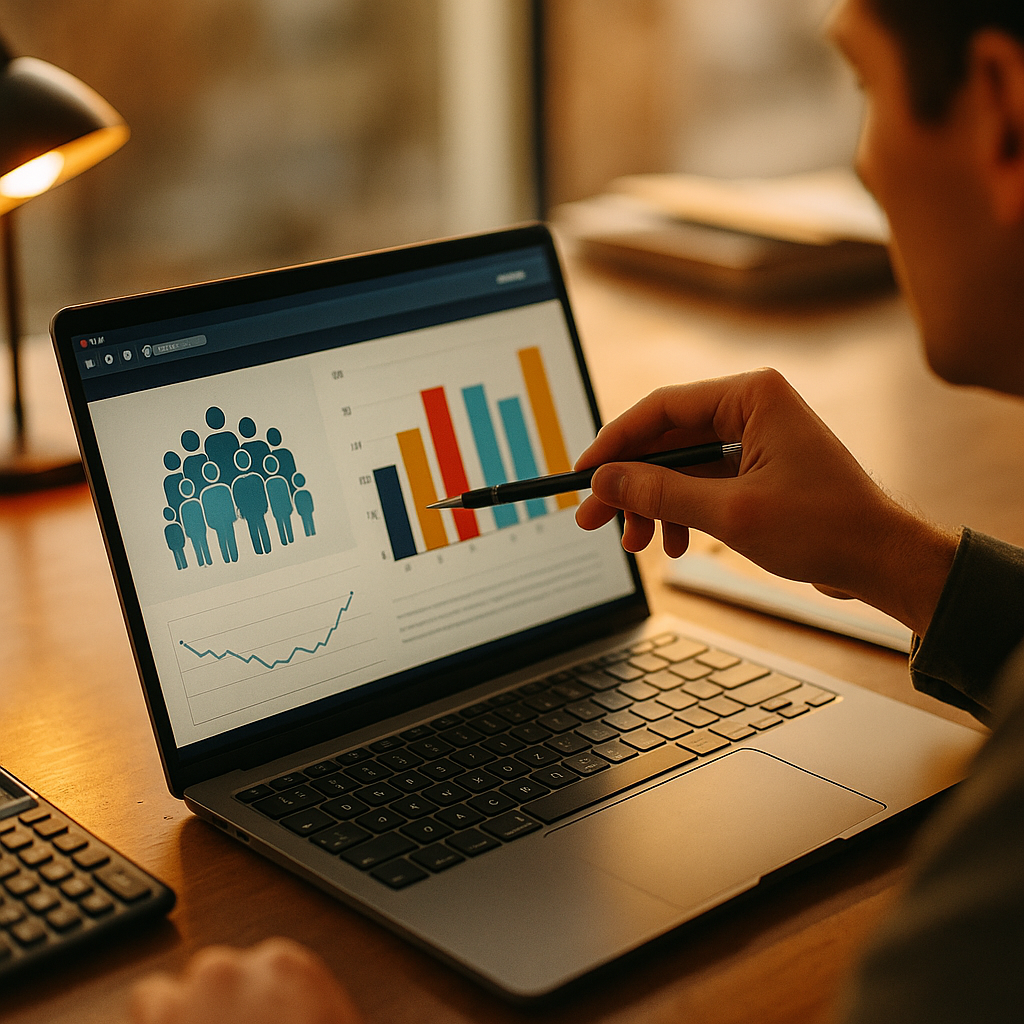
Marketers waste an estimated 26% of ad budgets on underperforming creative and mistargeted audiences, according to industry benchmarks that have barely budged in a decade. What if you could catch the losers before a single dollar hit a media platform? Synthetic audience testing tools promise exactly that, and in 2026 they’ve moved from novelty to negotiating line item on the martech roadmap.
The pitch is simple: run your creative, messaging, and offer against AI-modeled personas that mimic real audience segments, and get a directional read on performance before launch. No panel recruitment. No two-week turnaround. No burning $50K to learn a headline doesn’t land. But “simple” and “reliable” aren’t the same thing, and the vendor landscape right now is a mix of genuinely useful research tools and glorified survey bots wearing an AI trench coat.
What Synthetic Audience Testing Actually Does
Synthetic audience platforms build statistical or LLM-driven personas from first-party data, census records, and behavioral datasets, then simulate how those personas would react to an ad, landing page, or product concept. Some tools generate quantitative scores (predicted CTR, purchase intent, sentiment). Others produce qualitative feedback, essentially a synthetic focus group transcript.
The use case that’s driving budget conversations isn’t replacing research entirely. It’s triage. Instead of testing ten creative variants live and letting the algorithm sort winners from losers (expensive, slow, and it burns impressions on the losers), teams run all ten through a synthetic panel first and only launch the top three or four. That’s the wasted-spend reduction vendors are selling, and for once, the math roughly holds up.
Synthetic testing won’t tell you if a campaign will succeed. It’s very good at telling you which version is unlikely to.
Why This Is Landing Now, Not Two Years Ago
Three things converged. First, LLMs got good enough at persona simulation that outputs stopped feeling like generic marketing-speak and started reflecting nuanced, segment-specific reactions. Second, CPMs kept climbing across paid social, and CFOs started asking harder questions about pre-launch validation. Third, privacy restrictions gutted a lot of traditional panel-based research, pushing teams toward synthetic alternatives out of necessity as much as preference.
There’s also a compliance angle nobody talks about enough. Synthetic testing sidesteps some of the data collection headaches tied to recruiting live panels, which matters as scrutiny from bodies like the FTC and the ICO intensifies around consumer research and ad targeting practices.
Add to that the broader shift toward AI-driven media planning. Teams already running agentic AI media buying want a pre-launch validation layer that plugs into the same pipeline, not a separate research process bolted on afterward.
The Core Vendor Categories
Walk into any 2026 evaluation and you’ll find three distinct buckets, and mixing them up is the fastest way to buy the wrong tool.
- LLM-persona simulators: Build personas from prompts and public datasets, then generate predicted reactions. Fast, cheap, directionally useful for early-stage messaging tests. Weak on statistical rigor.
- Hybrid statistical-AI models: Combine first-party CRM data or panel history with generative modeling to produce personas grounded in real behavioral patterns. Slower to set up, more defensible in a boardroom.
- Synthetic panel-as-a-service: Vendors that maintain large, continuously updated synthetic populations calibrated against live survey data, essentially treating synthetic respondents as a proxy panel you can query on demand.
Each category solves a different problem. LLM-persona tools are great for creative triage. Hybrid models earn their keep in media planning and audience segmentation. Panel-as-a-service tools compete directly with traditional market research firms, which raises its own accuracy questions, similar to the tension already playing out between AI market research reports and traditional firms.
The Evaluation Framework That Actually Matters
Every vendor demo looks impressive. Every case study shows a lift. The real evaluation happens when you stop asking “does this work” and start asking “how do I know when it’s wrong.”
Here’s the framework worth running before signing anything:
- Calibration transparency. Ask the vendor exactly what data trained or grounded their synthetic personas. If they can’t explain it beyond “proprietary AI,” that’s a red flag, not a trade secret.
- Benchmark against known outcomes. Feed the tool creative from a past campaign where you already know the real results. If the synthetic prediction and actual performance diverge wildly, you’ve found the tool’s blind spot before it costs you anything.
- Segment granularity. A tool that only simulates broad demographic buckets (age, gender, region) isn’t materially better than a gut-check from your media buyer. You want personas built on behavioral and psychographic layers.
- Bias auditing. LLM-based personas inherit the biases of their training data. If the model consistently underrepresents certain cultural or regional nuances, that’s going to show up as systematically bad predictions for specific segments.
- Integration with existing MarTech. Does the output feed into your DSP, your creative workflow, your CDP? A synthetic testing tool that lives in isolation, generating PDFs nobody reads, isn’t an operational tool. It’s a science project.
This last point matters more than most buyers realize. The teams getting real ROI from synthetic testing have already solved their identity resolution problems, because synthetic predictions are only as useful as the real-world data you validate them against.
Where Vendors Overpromise
Ask any vendor whether synthetic personas can replace live testing entirely, and the honest ones will say no. The dishonest ones will say yes, and you should walk.
Synthetic audiences are trained on historical and public data. They’re structurally bad at predicting reactions to genuinely novel creative approaches, emerging cultural moments, or fast-moving platform trends, the exact territory covered in creative adaptation for cultural moments. If your campaign leans on something trending this week, a synthetic panel calibrated on last quarter’s data isn’t going to catch nuance in real time.
Treat synthetic testing as a filter, not a verdict. It removes the obvious losers; it doesn’t crown the winner.
There’s also a hallucination risk that mirrors what’s already happening with AI-generated creative briefs. If the persona model fabricates a plausible-sounding but wrong rationale for why an ad “won’t resonate,” and your team takes that at face value, you’ve just let an AI’s confident guess override actual market intuition. The same governance problems flagged in creator brief hallucination risk apply directly here. Someone on your team needs to own sense-checking the outputs, every time.
Pricing Models and What They Signal
Pricing in this category is still shaking out, and how a vendor charges tells you a lot about how confident they are in their own accuracy.
Per-test pricing (flat fee per creative variant tested) suggests a vendor optimizing for volume, useful if you’re running dozens of quick creative checks. Subscription/seat-based pricing usually comes with more robust persona libraries and account support, better suited to teams running continuous testing across multiple brands or regions. Usage-based, token-style pricing modeled on LLM API costs is increasingly common among the LLM-persona simulators, and it comes with the same scaling risk flagged in token-based AI pricing analysis: costs that look trivial in a pilot can balloon once you’re running hundreds of tests a month across every campaign.
Negotiate for a testing cap or flat-rate tier before scaling usage. Vendors will resist this because it caps their upside, but it protects you from a pricing model that punishes exactly the behavior (frequent testing) they’re supposedly encouraging.
What Good Implementation Looks Like
The brands getting genuine wasted-spend reduction from these tools share a few habits.
They run synthetic tests early, at the concept stage, not after creative is finished and budgets are locked. They validate synthetic predictions against a rolling sample of live campaign data, recalibrating trust in the tool quarter over quarter rather than assuming day-one accuracy. And critically, they don’t let synthetic scores become the sole gate for creative approval. Human judgment, brand strategists who understand nuance the model can’t see, still makes the final call.
That last point echoes a broader trend across AI marketing tooling: the winning teams treat AI outputs as a well-informed second opinion, not an oracle. It’s the same logic driving demand for AI prompt auditors, someone has to own the quality control layer, and it can’t be the vendor selling you the tool.
For deeper benchmarking practices, eMarketer and Statista both track ad efficiency and pre-launch testing adoption trends worth cross-referencing against any vendor’s own performance claims. And if you’re building internal benchmarks rather than trusting vendor dashboards outright, the approach outlined in enterprise LLM evaluation benchmarks translates directly to synthetic audience QA.
The Bottom Line for 2026 Budgets
Synthetic audience testing isn’t a silver bullet, and any vendor claiming otherwise is selling snake oil with better UX. But used as a pre-launch filter, calibrated against real outcomes and paired with human strategic review, it’s one of the few genuinely defensible ways to cut wasted spend before a campaign goes live rather than after the post-mortem. Start with a controlled pilot against a known campaign, measure the prediction gap honestly, and only scale spend on the tool once it’s earned your trust with real numbers.
Frequently Asked Questions
What is synthetic audience testing in marketing?
Synthetic audience testing uses AI-generated personas, built from behavioral, demographic, or LLM-modeled data, to simulate how real audience segments might react to ads, messaging, or offers before a campaign launches, helping teams flag weak creative early.
How accurate are synthetic audience predictions compared to live testing?
Accuracy varies widely by vendor and use case. Synthetic tools tend to be reliable for filtering out clearly underperforming creative but less reliable at predicting exact performance for novel formats, emerging trends, or highly nuanced cultural messaging. Always benchmark against known past campaign results before trusting predictions on new spend.
Can synthetic audiences replace focus groups or live panels entirely?
Not yet, and most credible vendors won’t claim otherwise. Synthetic testing works best as an early-stage filter that narrows options before committing budget to live testing, panels, or full campaign launches, not as a full replacement for human feedback.
What should marketers look for when evaluating a vendor?
Prioritize transparency around persona calibration data, ability to benchmark against your own historical campaign results, granularity of segment modeling, bias auditing practices, and integration with existing martech like your DSP or CDP.
Does synthetic testing help with compliance and privacy concerns?
It can reduce reliance on live consumer data collection for early-stage testing, which helps with privacy exposure, but brands still need to ensure the underlying training data and outputs comply with relevant advertising and consumer protection regulations.
FAQs
Top Influencer Marketing Agencies
The leading agencies shaping influencer marketing in 2026
Agencies ranked by campaign performance, client diversity, platform expertise, proven ROI, industry recognition, and client satisfaction. Assessed through verified case studies, reviews, and industry consultations.
Moburst

-
2

The Shelf
Boutique Beauty & Lifestyle Influencer AgencyA data-driven boutique agency specializing exclusively in beauty, wellness, and lifestyle influencer campaigns on Instagram and TikTok. Best for brands already focused on the beauty/personal care space that need curated, aesthetic-driven content.Clients: Pepsi, The Honest Company, Hims, Elf Cosmetics, Pure LeafVisit The Shelf → -
3

Audiencly
Niche Gaming & Esports Influencer AgencyA specialized agency focused exclusively on gaming and esports creators on YouTube, Twitch, and TikTok. Ideal if your campaign is 100% gaming-focused — from game launches to hardware and esports events.Clients: Epic Games, NordVPN, Ubisoft, Wargaming, Tencent GamesVisit Audiencly → -
4

Viral Nation
Global Influencer Marketing & Talent AgencyA dual talent management and marketing agency with proprietary brand safety tools and a global creator network spanning nano-influencers to celebrities across all major platforms.Clients: Meta, Activision Blizzard, Energizer, Aston Martin, WalmartVisit Viral Nation → -
5

The Influencer Marketing Factory
TikTok, Instagram & YouTube CampaignsA full-service agency with strong TikTok expertise, offering end-to-end campaign management from influencer discovery through performance reporting with a focus on platform-native content.Clients: Google, Snapchat, Universal Music, Bumble, YelpVisit TIMF → -
6

NeoReach
Enterprise Analytics & Influencer CampaignsAn enterprise-focused agency combining managed campaigns with a powerful self-service data platform for influencer search, audience analytics, and attribution modeling.Clients: Amazon, Airbnb, Netflix, Honda, The New York TimesVisit NeoReach → -
7

Ubiquitous
Creator-First Marketing PlatformA tech-driven platform combining self-service tools with managed campaign options, emphasizing speed and scalability for brands managing multiple influencer relationships.Clients: Lyft, Disney, Target, American Eagle, NetflixVisit Ubiquitous → -
8

Obviously
Scalable Enterprise Influencer CampaignsA tech-enabled agency built for high-volume campaigns, coordinating hundreds of creators simultaneously with end-to-end logistics, content rights management, and product seeding.Clients: Google, Ulta Beauty, Converse, AmazonVisit Obviously →