


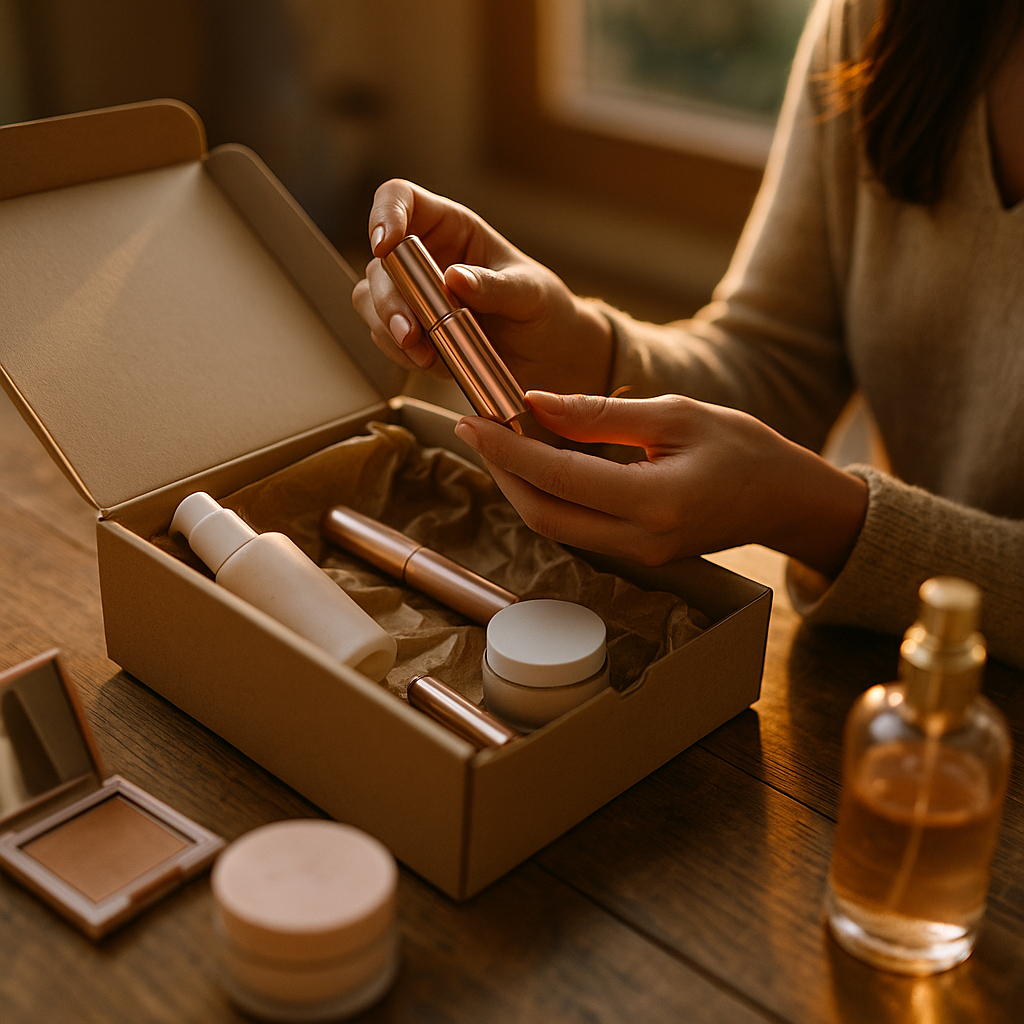
In 2025, shoppers don’t just buy beauty—they experience it, judge it, and share it. This case study shows how one brand grew faster by treating packaging as media, not overhead. The primary lever was tactile first unboxing content designed for hands, cameras, and memory. The results were measurable across conversion, retention, and UGC volume—so what exactly changed?
Packaging strategy for beauty brands: the brief, the constraints, the insight
The brand in this case study—an established DTC skincare line with selective retail distribution—hit a familiar ceiling: paid social costs rose, influencer partnerships delivered inconsistent performance, and repeat purchase growth slowed despite strong product reviews. Leadership suspected the issue wasn’t formula or price. It was perceived value at first touch.
The team built a packaging strategy with three constraints:
- Protect product better without adding “dead weight”: fewer breakages, fewer returns, minimal dimensional-weight impact.
- Improve first-impression clarity: the customer should instantly understand what they bought, how to use it, and why it’s premium.
- Make the unboxing worth recording: not by gimmicks, but by satisfying tactile cues and camera-friendly sequencing.
The insight came from qualitative research: customer interviews, post-purchase surveys, and returns notes. Many buyers described the brand as “effective” but not “special.” In side-by-side comparisons, competitors “felt more expensive” even when formulas were similar. The team concluded that the first two minutes after delivery shaped brand memory more than any ad.
They also audited the content ecosystem. Product pages had strong before/after assets, but social proof skewed toward static images. Video UGC existed, but unboxings were inconsistent: different angles, rushed openings, and no repeatable “moment” viewers recognized. In other words, there was no content ritual built into the packaging.
Unboxing experience design: building a tactile-first sequence customers want to film
The new unboxing was built like a short story with a beginning, middle, and end—each step engineered for touch and sound as much as visuals. The team mapped the “hands journey” before the “camera journey,” because tactile cues translate into on-camera reactions.
Key design changes:
- Opening resistance tuning: The mailer switched to a rigid, easy-grip tear strip with a slower “peel” that creates anticipation. Too easy feels cheap; too hard causes frustration. The target was a smooth, controlled opening with a soft tear sound.
- Soft-touch and micro-embossed surfaces: Instead of heavy coatings, they used a soft-touch laminate on the inner lid and micro-embossing on a brand pattern customers could feel when their fingers traced it.
- Layered reveal: Products were nested in a molded pulp tray (recyclable) with a thin tissue overlay and a tab that invited a single, satisfying lift. This created a repeatable “reveal” shot.
- Guided first use: A slim, matte card titled “Your first 7 days” gave the order of use, skin compatibility notes, and what to expect. This reduced overwhelm and improved early results—key for retention.
- A signature sensory cue: The brand added a subtle, allergen-conscious scent strip embedded in a removable card (not on the product) with clear opt-out instructions. This allowed the unboxing to carry a recognizable “brand smell” without risking formula contamination or sensitivity issues.
To keep the experience premium without waste, the team removed filler. Every insert had a job: orientation, reassurance, or delight. They also tested under real shipping conditions: drop tests, humidity exposure, and cold-chain simulation for certain SKUs.
Crucially, the team wrote the unboxing to be self-explanatory. Customers shouldn’t need a QR code to understand what to do. QR codes were present, but optional: one for a 30-second “first use” video and one for ingredient sourcing transparency. This supported accessibility while keeping the tactile narrative intact.
User-generated content (UGC) for unboxing: engineering shareability without begging for it
The brand’s goal wasn’t to “make it go viral.” It was to make the average customer feel comfortable filming. That meant creating obvious framing moments and reducing decision fatigue about what to show.
They built UGC prompts into the packaging in a low-pressure way:
- Camera-friendly placement: The inner lid had a clean, high-contrast brand mark centered where cameras naturally point during opening.
- Minimal text, strong hierarchy: The first message was a single line: “Welcome—start here.” It guided hands to the 7-day card.
- A “satisfying” interaction: The tray used a thumb notch that created a consistent lift motion. That consistency helps creators get a clean shot without retakes.
- Subtle permission to share: A small line on the back of the first-use card invited customers to share their routine and included a hashtag, but it wasn’t the focal point.
To answer a common follow-up question—does this work without influencers?—the brand treated influencers as validation, not the engine. They sent the new packaging first to existing repeat buyers who had previously left reviews. That group is more likely to create authentic content because the product already fits their life.
They also tightened their UGC rights process. The post-purchase email asked for permission to repost customer videos and explained where content might appear (site, ads, email). Clear consent improved response rates and reduced legal friction.
Within eight weeks, the content mix shifted: fewer generic “haul” clips and more structured unboxings that highlighted the same signature moments. That consistency made the unboxing recognizable and easier to stitch into paid ads.
Beauty ecommerce conversion rate: what changed on-site and in ads
The packaging redesign did not live in the warehouse alone. The brand updated digital touchpoints to match the tactile story, answering the next likely question—how do you translate touch into clicks?
They implemented three changes:
- Product page “arrival expectations”: A short section titled “What you’ll receive” showed the layered reveal and the 7-day card. This reduced uncertainty and improved confidence for first-time buyers.
- Unboxing video modules: They embedded creator-style unboxing videos near the “Add to cart” area, not buried in galleries. The goal was to show the first 20 seconds of opening—where sensory cues are most persuasive.
- Ad creative shift: Paid social moved from ingredient callouts to “first touch” storytelling: the peel, the lift, the reveal, the first-use card. This performed especially well for cold audiences who needed a fast sense of quality.
Measurement mattered. The team set up tracking to isolate the effect of the packaging change:
- A/B test by fulfillment batch: For a limited period, identical traffic was served while orders were randomly fulfilled with either old or new packaging (where operationally feasible).
- Post-purchase surveys: A one-question survey asked, “Did the unboxing affect how premium the brand feels?” plus an optional comment box.
- Return reasons normalization: They standardized return reasons to separate “didn’t like product” from “arrived damaged” and “not as expected.”
Results after rollout:
- Conversion lift: Product page conversion increased by 9–14% on sessions that viewed the unboxing module, compared with similar sessions that did not. This mattered because it improved efficiency of existing traffic, not just top-of-funnel growth.
- Lower “not as expected” returns: Returns labeled “not as expected” dropped, driven by clearer onboarding and better expectation setting.
- Higher email revenue per recipient: Post-purchase and replenishment email performance improved because customers understood how to use products earlier, saw results sooner, and trusted the brand more.
One operational lesson: creative fatigue slowed. The brand had a reliable set of “repeatable moments” to brief creators and editors. That reduced production time and gave performance marketers more variations without losing brand consistency.
Brand loyalty and retention in skincare: onboarding, trust, and repeat purchase lift
Unboxing affects retention when it reduces early confusion and strengthens trust. The brand focused on the first seven days because that window determines whether customers feel momentum or regret.
They treated the 7-day card as a retention tool, not a brochure:
- Simple sequencing: Morning vs evening steps, with clear “don’t combine” notes for actives.
- Expectation management: “What you may notice in week one” and “When to reassess.” This reduced panic about normal adjustment periods.
- Support pathway: A direct line to customer support plus a dermatologist-reviewed FAQ page. This lowered friction when customers needed reassurance.
They also improved perceived integrity—an EEAT lever—through transparent sourcing and testing notes accessible via optional QR. Importantly, the QR destination wasn’t marketing-heavy. It was practical: how to patch test, how to layer, and how to store products.
Retention outcomes:
- Higher second-order rate: Repeat purchase within the brand’s typical replenishment window increased. The team attributed this to improved first-use compliance and reduced confusion.
- Better review quality: Reviews became more specific (“I used it like the card said”), which increased credibility on-site and improved assisted conversions.
- Customer support efficiency: Ticket volume related to “how do I use this?” decreased, freeing the team to handle higher-value issues.
The follow-up question many operators ask is whether premium unboxing only works for luxury price points. This brand proved the opposite: a tactile-first approach can be cost-controlled. The key is prioritization—spend on one signature moment and remove everything else that doesn’t support product protection, clarity, or delight.
Sustainable packaging in cosmetics: balancing sensory delight with responsible choices
In 2025, customers often equate “premium” with “wasteful” unless brands prove otherwise. The brand protected trust by building sustainability into the design requirements from day one.
Changes that supported a responsible unboxing:
- Material simplification: The tray moved to molded pulp, the tissue was recyclable, and plastics were reduced where they didn’t improve product safety.
- Right-sizing: They adjusted box dimensions to reduce void fill and dimensional-weight costs. This also improved the visual density of the unboxing—products looked intentionally placed, not lost in space.
- Clear disposal guidance: A small icon system explained what to recycle or remove. This cut down “Is this recyclable?” support questions.
- Durability over excess: Better protection lowered damage rates, which is a sustainability win customers understand because it prevents waste from replacements and reverse logistics.
They avoided common pitfalls: vague eco claims, unverified labels, and green marketing language without proof. Instead, they disclosed what they could verify (material types, recyclability by common municipal standards) and acknowledged limits. That honesty increased trust and reduced skeptical comments on social posts featuring the unboxing.
Cost-wise, the team offset parts of the packaging upgrade through fewer damages, lower return handling, improved conversion efficiency, and reusable UGC assets. This made the program viable without raising prices.
FAQs
What is tactile-first unboxing content?
It’s unboxing designed around touch and physical interaction first—opening resistance, textures, layered reveal, and hand-guided steps—so the experience feels premium in real life and records well on camera.
How do you measure the ROI of an unboxing redesign?
Track conversion for visitors exposed to unboxing modules, return rates (especially “not as expected” and damage), post-purchase survey sentiment, UGC volume, and repeat purchase rate. Use controlled rollouts or batch-based A/B testing when possible.
Will this work for small beauty brands with limited budgets?
Yes, if you focus on one signature tactile moment (like a layered reveal or premium-feel inner surface) and remove nonessential inserts. Prioritize product protection and clarity first; delight should be intentional, not expensive.
Do you need influencers to make unboxing content effective?
No. Start with repeat customers and reviewers because they already trust the product. Their unboxings tend to be more authentic and provide reusable social proof for product pages and ads.
How do you keep unboxing premium but sustainable?
Right-size packaging, use recyclable fibers where feasible, reduce mixed materials, and design for durability to cut damage rates. Provide clear disposal guidance and avoid unverified eco claims.
What should be included inside the box to improve retention?
A concise first-use guide that reduces confusion: step order, frequency, what to expect in week one, and a clear support pathway. This improves early outcomes and increases the odds of a second purchase.
In 2025, beauty growth often comes from improving what customers feel, not just what they see. This case study showed how tactile-first design turned packaging into a repeatable content engine, lifted conversion with clearer expectations, and strengthened retention through better onboarding. The takeaway is practical: engineer one signature unboxing moment, measure it rigorously, and let your customers’ hands do the marketing.