


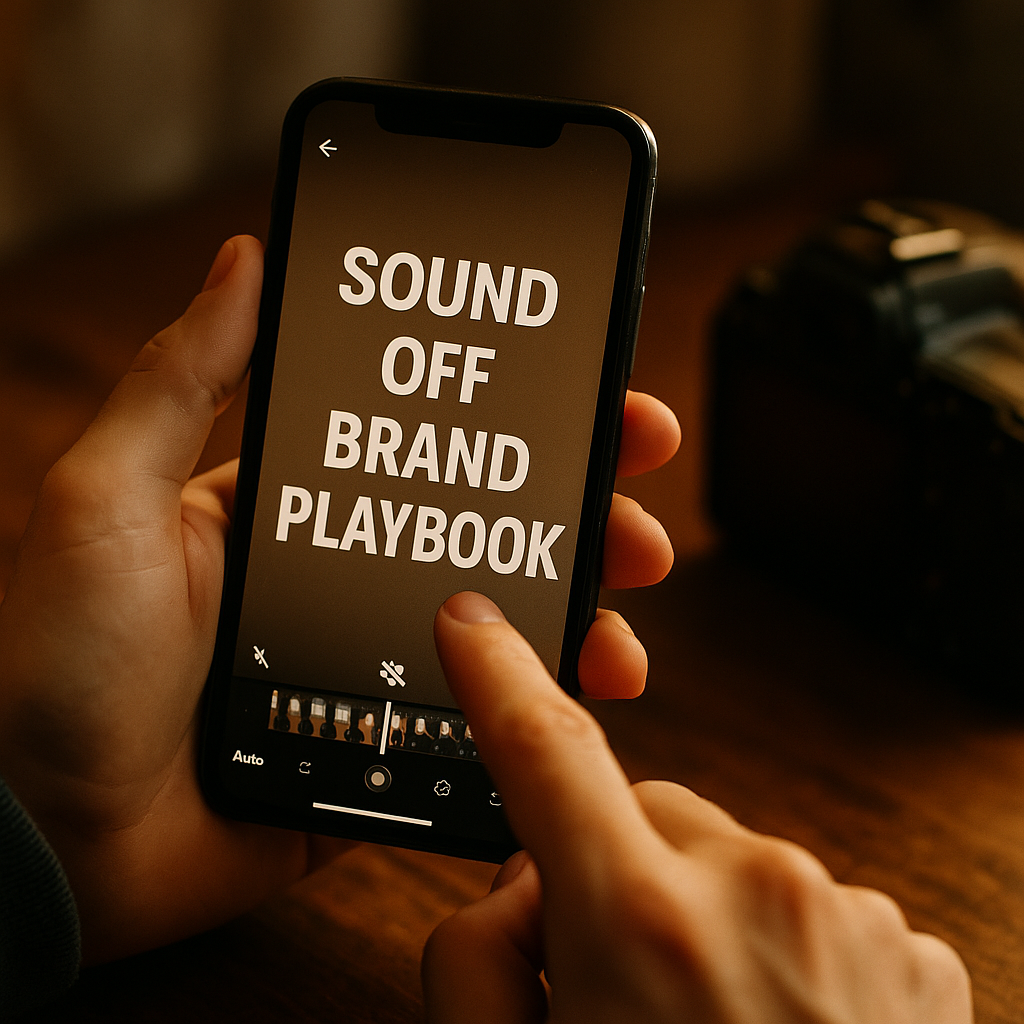
85% of Facebook video is watched with the sound off, and TikTok’s own data has long shown a huge share of mobile viewing happens in silent mode. Yet most brands still brief creators like every viewer is wearing headphones. The text-overlay-only story format flips that assumption entirely, building complete narrative arcs out of typography, pacing, and visual rhythm alone. No voiceover. No dialogue. Just words on screen doing all the emotional and persuasive heavy lifting.
Why Sound-Off Viewing Isn’t a Niche Problem Anymore
Commuters scrolling on trains. Office workers half-watching during meetings. Parents with a sleeping baby in the next room. Sound-off viewing isn’t an edge case you accommodate with subtitles as an afterthought — it’s the default environment for a huge chunk of your audience, and it has been for years. Meta has cited sound-off consumption figures north of 80% for feed video repeatedly, and captions have become table stakes rather than accessibility nice-to-haves.
The mistake brands make is treating text overlays as a compliance layer bolted onto a voice-led script. That’s backwards. If you’re briefing a creator to build a story that works without audio, the text itself needs to carry plot, tension, and payoff — not just repeat what’s being said.
Captions that merely transcribe dialogue are a translation. A text-overlay-only script that builds its own arc is a completely different creative product — and it performs differently too.
What Makes a Text-Only Narrative Arc Actually Work
A narrative arc needs setup, rising tension, a turn, and resolution. Doing that with text alone means every card, every line break, every pause between overlays has to function like a sentence in a short story. Rush it and you get a bullet-point list masquerading as a story. Slow it down and you lose the scroll.
Here’s the structural logic that tends to hold up across product categories:
- Cold open hook (0-2 seconds): A single line of text, often a question or a bold claim, timed to appear before the viewer’s thumb even considers scrolling past.
- Context drop (2-6 seconds): One or two short cards establishing the “problem” — a relatable frustration, a myth, a before-state.
- Escalation (6-15 seconds): Visual and textual pacing quickens. Shorter phrases. More cuts. This is where tension peaks, mirrored by faster text changes synced to visual beats.
- Turn (15-20 seconds): The reveal — product, insight, or twist — delivered in fewer words than anything before it. Brevity here reads as confidence.
- Resolution and CTA (20-30 seconds): A closing line that answers the opening hook, plus a clear next step.
Notice what’s missing: a narrator’s voice telling you how to feel. The pacing of text — how long each card sits on screen, how it enters and exits — becomes the emotional score. Quick cuts create anxiety or excitement. Longer holds create weight or sincerity. You’re essentially scoring a film with typography instead of music.
The Brief Has to Specify Timing, Not Just Copy
This is where most creative briefs fall apart. A brand marketer writes out the “script” as if it’s dialogue, hands it to a creator, and assumes the pacing will sort itself out in editing. It won’t, at least not reliably enough for a paid media budget.
Your brief needs a beat sheet, not just a script. Specify:
- Word count ranges per card (aim for 3-8 words on-screen at any moment; anything longer forces re-reading and kills retention)
- On-screen duration per card, tied to the emotional beat it serves
- Explicit instruction on when to use bold, caps, or color shifts for emphasis — and when not to
- A note on font/style consistency with brand guidelines, since text-only formats put typography under a magnifying glass
This is the same discipline that shows up in other structured UGC formats we’ve covered — the text-message-thread format lives or dies on similar timing precision, since the entire narrative unfolds through simulated typing and read receipts rather than spoken dialogue.
A Quick Gut-Check: Does Your Draft Script Pass the Mute Test?
Before approving any storyboard, play it back with the sound physically off — not just muted on your headphones, actually off. If you can’t follow the plot, understand the product benefit, and identify the CTA within three viewings, the arc isn’t ready. This sounds obvious. It’s astonishing how often it gets skipped because a creative team has been staring at the script with audio playing in their heads the whole time.
Where This Format Outperforms — and Where It Doesn’t
Text-overlay-only stories tend to overperform on:
- Comparison and myth-busting content, where a punchy claim-then-correction structure reads instantly (see how the split-screen price comparison format uses similar visual contrast logic).
- List-based value propositions
- Confessional or diary-style contentconfession-booth format.
Where it struggles: anything that depends on tone of voice for credibility. A skeptical product review, for instance, often needs vocal inflection to land the “I wasn’t sure about this, but…” beat. Strip the voice and you sometimes strip the trust signal. Test both versions before assuming text-only is a universal upgrade.
It’s also worth noting this format pairs well with paid amplification. According to Sprout Social’s ongoing research into short-form video consumption habits, captioned and text-led content consistently shows longer average watch time in silent-autoplay environments — which is most of them, on most platforms, most of the time.
Platform-Specific Quirks Worth Knowing
Instagram Reels and TikTok both auto-generate captions now, and both have gotten meaningfully better at accuracy. But auto-captions transcribe speech — they don’t build narrative arcs. If your creator is speaking and you’re relying on auto-captions as your “sound-off strategy,” you’re doing captioning, not the text-overlay-only format this article is about. They’re related but not interchangeable.
TikTok’s native text tool allows for more stylistic variation (colors, fonts, animated entrances) than Instagram’s, which tends to push creators toward the Reels-native caption sticker with less customization. If a script is built around dramatic font-size shifts for emphasis, confirm the platform can actually render that before you lock the brief. Check current capabilities directly via TikTok’s ad platform and Meta’s business tools, since these update frequently.
Compliance Doesn’t Disappear Just Because There’s No Spoken Disclosure
Some brand teams assume that because there’s no voiceover, FTC disclosure requirements get simpler. They don’t. The FTC’s endorsement guidance requires disclosures to be “clear and conspicuous” regardless of format — and in a text-heavy story, that actually raises the bar. A tiny #ad tag competing with a dozen other text cards for visual attention is a textbook example of a disclosure that’s technically present but not conspicuous.
If your entire story is told through on-screen text, your disclosure needs to hold its own visual weight in that same language — not hide as an afterthought in the caption below the video.
Best practice: give the disclosure its own card, or place it persistently in a fixed position (top-left, consistent font, consistent duration) throughout the full runtime. This is the same logic we’ve detailed in FTC-safe briefing frameworks for other structured formats — consistency and prominence matter more than clever placement.
Measurement: What Actually Tells You It’s Working
Don’t lean on completion rate alone. Text-overlay stories can have high completion simply because the format is short and skimmable, which tells you little about persuasion. Track:
- Replay rate — a strong signal viewers went back to re-read a card they missed, meaning the pacing might be slightly too fast, or the content was compelling enough to revisit
- Swipe-away timestamp — where in the arc people drop off tells you exactly which beat isn’t earning its place
- CTA click-through relative to hook impressions, not just overall video views, since hook strength and arc strength are two different variables you need to isolate
Platforms like eMarketer have flagged that short-form video engagement metrics are increasingly fragmented across platforms, so build your own dashboard rather than trusting any single platform’s default “engagement” score as gospel.
Briefing Creators Who’ve Never Done This Before
Most creators default to voice-led scripts because that’s what feels natural to perform. Asking someone to build a full story with zero narration is a genuinely different craft, closer to editing a silent film than shooting a talking-head video. Give reference examples. Show them a completed text-overlay story you liked, and annotate why each card timing works. Don’t just hand over a written script and assume the visual grammar will translate — the same lesson applies whether you’re running a multi-format creator brief or a single dedicated shoot.
Budget extra time for revisions on the first attempt. Creators who nail voice-led content sometimes need two or three rounds to internalize text-only pacing. That’s a normal part of the learning curve, not a red flag on the creator’s skill.
The takeaway: stop treating text overlays as subtitles for a voice-led script, and start briefing them as the primary storytelling device — with their own pacing, their own emotional arc, and their own compliance considerations. Run the mute test on every draft before it goes to paid media, no exceptions.
FAQs
What is the text-overlay-only story format?
It’s a short-form video approach where the entire narrative — setup, tension, turn, resolution — is delivered through on-screen text alone, without relying on voiceover, dialogue, or spoken narration to carry the story.
How is this different from just adding captions to a spoken video?
Captions transcribe what’s already being said aloud. A text-overlay-only story is written and paced as its own standalone script, meaning the words on screen are the primary storytelling device rather than a backup for sound-off viewers.
How many words should appear on screen at once?
Most effective text-overlay cards run three to eight words at a time. Longer blocks force re-reading, which slows pacing and increases the risk viewers scroll away before finishing the thought.
Does this format still need an FTC disclosure?
Yes. Disclosure requirements don’t change based on format. In a text-heavy story, the disclosure needs its own visual prominence — a dedicated card or a persistent, consistently placed tag — so it doesn’t get lost among the other on-screen text.
Which platforms support this format best?
TikTok’s native text tools generally offer more stylistic flexibility (fonts, colors, animated entrances) than Instagram Reels’ caption sticker, though both platforms support the format. Confirm current tool capabilities before finalizing a script that depends on specific visual effects.
What metrics show whether a text-only story is working?
Replay rate, the specific timestamp where viewers swipe away, and click-through relative to hook impressions tell you more than raw completion rate, which can be misleadingly high simply because the format is short.
Top Influencer Marketing Agencies
The leading agencies shaping influencer marketing in 2026
Agencies ranked by campaign performance, client diversity, platform expertise, proven ROI, industry recognition, and client satisfaction. Assessed through verified case studies, reviews, and industry consultations.
Moburst

-
2

The Shelf
Boutique Beauty & Lifestyle Influencer AgencyA data-driven boutique agency specializing exclusively in beauty, wellness, and lifestyle influencer campaigns on Instagram and TikTok. Best for brands already focused on the beauty/personal care space that need curated, aesthetic-driven content.Clients: Pepsi, The Honest Company, Hims, Elf Cosmetics, Pure LeafVisit The Shelf → -
3

Audiencly
Niche Gaming & Esports Influencer AgencyA specialized agency focused exclusively on gaming and esports creators on YouTube, Twitch, and TikTok. Ideal if your campaign is 100% gaming-focused — from game launches to hardware and esports events.Clients: Epic Games, NordVPN, Ubisoft, Wargaming, Tencent GamesVisit Audiencly → -
4

Viral Nation
Global Influencer Marketing & Talent AgencyA dual talent management and marketing agency with proprietary brand safety tools and a global creator network spanning nano-influencers to celebrities across all major platforms.Clients: Meta, Activision Blizzard, Energizer, Aston Martin, WalmartVisit Viral Nation → -
5

The Influencer Marketing Factory
TikTok, Instagram & YouTube CampaignsA full-service agency with strong TikTok expertise, offering end-to-end campaign management from influencer discovery through performance reporting with a focus on platform-native content.Clients: Google, Snapchat, Universal Music, Bumble, YelpVisit TIMF → -
6

NeoReach
Enterprise Analytics & Influencer CampaignsAn enterprise-focused agency combining managed campaigns with a powerful self-service data platform for influencer search, audience analytics, and attribution modeling.Clients: Amazon, Airbnb, Netflix, Honda, The New York TimesVisit NeoReach → -
7

Ubiquitous
Creator-First Marketing PlatformA tech-driven platform combining self-service tools with managed campaign options, emphasizing speed and scalability for brands managing multiple influencer relationships.Clients: Lyft, Disney, Target, American Eagle, NetflixVisit Ubiquitous → -
8

Obviously
Scalable Enterprise Influencer CampaignsA tech-enabled agency built for high-volume campaigns, coordinating hundreds of creators simultaneously with end-to-end logistics, content rights management, and product seeding.Clients: Google, Ulta Beauty, Converse, AmazonVisit Obviously →