


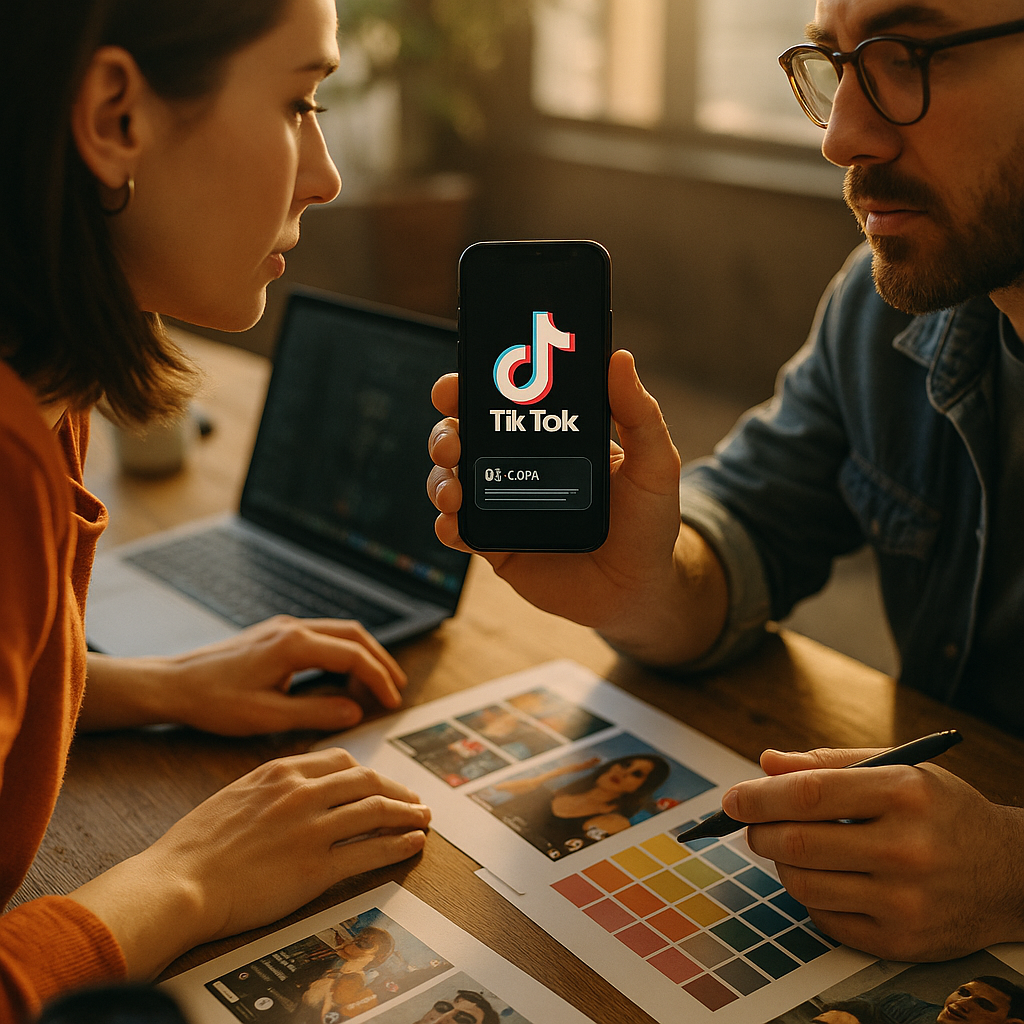
Here’s an uncomfortable question for your next creative review: can you actually prove which parts of your last TikTok campaign were shot on set, and which were generated by an AI tool nobody signed off on? TikTok C2PA labeling just made that question unavoidable. The platform’s move to adopt Content Credentials standards isn’t a back-end technical footnote — it’s a workflow change that touches briefing, production, legal, and reporting all at once.
Brands that treat this as “TikTok’s problem to solve” will find out the hard way that provenance is now a shared liability. Let’s break down what’s actually changing and what your team needs to do about it.
What TikTok Actually Signed Up For
TikTok joined the Coalition for Content Provenance and Authenticity (C2PA) to embed tamper-evident metadata into video files, the same open standard backed by Adobe, Microsoft, the BBC, and Google. In practice, this means uploaded content can carry a verifiable record: what device or tool created it, whether AI was involved, and what edits were made along the way.
This is different from TikTok’s existing “AI-generated” label, which relies largely on self-disclosure or platform-side detection. Content Credentials attach cryptographically signed metadata at the point of creation or export, from tools like Adobe Firefly, Photoshop, or camera hardware that supports the standard. When that file lands on TikTok, the platform can read and surface that history instead of guessing.
Provenance metadata doesn’t just label content as AI or human-made — it creates an auditable chain of custody that brands can be held to during a dispute, an FTC inquiry, or a client review.
For creative teams, that’s the shift worth sitting with. This isn’t a content moderation feature. It’s an audit trail.
Why Brand Creative Teams Should Care Right Now
Most in-house teams and agencies already juggle a patchwork of AI tools across the production pipeline: script generation, voice cloning, background removal, thumbnail creation, even full synthetic avatars for UGC-style ads. Few teams have a consistent policy for tagging which assets used what tool. That gap is about to become visible in a way it wasn’t before.
Consider the operational reality. A campaign might touch five vendors, three freelance editors, and two AI platforms before final export. If TikTok’s Content Credentials expose that an asset was substantially AI-generated and your brand labeled it as “authentic customer testimonial,” you’re not just facing a platform policy strike. You’re facing a disclosure problem that regulators, including the FTC, have already signaled they’re watching closely.
This connects directly to broader disclosure enforcement trends. If you haven’t already mapped how Meta’s disclosure requirements compare to TikTok’s, now’s the time. Regulatory pressure isn’t platform-specific, it’s converging.
The Practical Gaps Nobody’s Talking About
A few things creative teams routinely overlook:
- Stock and licensed assets: B-roll or stock footage may carry its own provenance metadata that conflicts with how you’re presenting it in a campaign.
- Creator-submitted content: Influencer-shot footage edited with consumer AI apps (think auto-enhance filters or AI voice cleanup) may trigger AI labels the creator never disclosed to the brand.
- Repurposed assets: Content edited across multiple platforms can lose or fragment its provenance chain, creating inconsistent labeling across channels.
- Agency handoffs: When production moves between vendors, metadata often gets stripped during file conversion, exports, or compression, especially on older editing software.
None of these are exotic edge cases. They’re Tuesday-afternoon realities for most mid-size brand creative operations.
Building a Provenance-Ready Workflow
The teams that will handle this smoothly aren’t the ones with the biggest budgets. They’re the ones who treat provenance as a checkpoint in the existing production pipeline, not a bolt-on audit at the end.
Here’s a practical structure worth adapting:
- Tool inventory first. Document every AI tool touching your content pipeline, from scriptwriting assistants to video upscalers. You can’t label what you haven’t mapped.
- Assign provenance ownership. Someone on the creative ops side, not legal, not the social manager, needs to own the “does this need a Content Credential” question at export.
- Standardize export settings. Work with your editing tools to preserve Content Credentials metadata through final export and compression. Adobe’s Content Authenticity Initiative tools are a reasonable starting reference point.
- Brief creators explicitly. Add a provenance disclosure line to creator contracts and briefs. If they used AI tools for voice, visuals, or editing, you need to know before it hits your feed.
- Audit before publish, not after. Build a pre-publish checklist that flags AI-touched assets for manual review, similar to how teams already handle TikTok’s AI content tags for compliance today.
This isn’t dramatically different from the disclosure automation logic brands have had to build for other platforms. If you’ve already benchmarked disclosure automation gaps across Google, Meta, and TikTok, you have a head start on the process muscle needed here.
Where This Intersects With Rights and Ad-Ops
Content provenance doesn’t live in isolation. It intersects directly with rights management, whitelisting, and how creative assets flow through your ad-ops stack. If your team is already managing usage rights and paid amplification for creator content, provenance labeling adds another data point that needs to travel with the asset, not get lost between systems.
Platforms built around unified ad-ops, like the frameworks discussed in unified budgeting, rights, and delivery systems, are increasingly relevant here. Provenance metadata is essentially another rights-adjacent attribute: it tells you what an asset is, who touched it, and what claims you can legally make about it. Treating it separately from your existing rights management workflow just creates another silo to reconcile manually.
The same logic applies to whitelisting and verification. If you’re already using tools to verify creator content authenticity for media buying, provenance credentials should feed into that verification layer rather than sit as a separate compliance checkbox.
What This Means for Reporting and Client Trust
Agencies managing multiple brand accounts face a sharper version of this problem. Clients are going to start asking: “How do you know this influencer content wasn’t synthetically generated?” Right now, most agencies don’t have a confident answer beyond “we asked the creator.”
Content Credentials give you something better: a technical basis for the claim. That’s a meaningful trust asset in client reporting, especially as marketing teams face increasing scrutiny over AI use in campaigns. Industry data from eMarketer has repeatedly shown that consumer trust in branded content correlates directly with perceived authenticity, and provenance labeling is quickly becoming the mechanism that substantiates authenticity claims rather than just asserting them.
Being able to show a client a verified provenance chain, instead of just a verbal assurance, is about to become a competitive differentiator for agencies pitching brand safety credentials.
Worth noting: this also changes vendor selection conversations. When evaluating AI video generation tools for campaign work, provenance support should now be part of the vendor scorecard, alongside cost-per-output metrics covered in AI video generation cost guides. A cheaper tool that strips metadata on export isn’t actually cheaper once you factor in compliance risk.
The Short Version for Busy Teams
If you only take three things from this: map your AI tool stack, assign clear ownership for provenance checks before publish, and update creator briefs to require disclosure of AI-assisted editing. Everything else is refinement. Platforms like TikTok, and eventually others following the same social platform trend lines, are moving toward verifiable metadata as the default, not the exception. Teams that build the habit now will spend far less time scrambling during the next policy update.
Frequently Asked Questions
What is C2PA and why does it matter for TikTok content?
C2PA (Coalition for Content Provenance and Authenticity) is an open technical standard that embeds tamper-evident metadata into media files, showing how content was created and edited. TikTok’s adoption means uploaded videos can carry a verifiable history of AI involvement, which affects labeling, compliance, and brand trust claims.
Does C2PA labeling replace TikTok’s existing AI-generated content tags?
Not exactly. TikTok’s existing AI labels often rely on self-disclosure or detection tools. C2PA-based Content Credentials add a cryptographically verified layer, giving the platform (and brands) a more reliable technical basis for those labels rather than relying purely on user honesty.
Who is responsible for provenance accuracy, the brand or the creator?
Both, practically speaking. Brands are typically held accountable in disclosure and advertising standards contexts, but creators generate much of the raw footage. This is why updating creator briefs and contracts to require AI-tool disclosure is a critical operational step, not just a legal formality.
Can Content Credentials metadata be stripped during editing?
Yes. Metadata can be lost during file conversion, compression, or export through software that doesn’t support the C2PA standard. Creative teams need to standardize export workflows and confirm which editing tools preserve provenance data through the full production pipeline.
How does this affect influencer whitelisting and paid amplification?
Provenance metadata functions similarly to rights and usage data; it should travel with the asset through your ad-ops and whitelisting systems. Brands running paid amplification on creator content should treat provenance verification as part of the same due diligence process used for usage rights and authenticity checks.
Next step: Audit your last three campaigns for AI-touched assets you can’t currently trace back to source, then build the ownership and export checkpoints outlined above before your next production cycle starts.
Frequently Asked Questions
What is C2PA and why does it matter for TikTok content?
C2PA (Coalition for Content Provenance and Authenticity) is an open technical standard that embeds tamper-evident metadata into media files, showing how content was created and edited. TikTok’s adoption means uploaded videos can carry a verifiable history of AI involvement, which affects labeling, compliance, and brand trust claims.
Does C2PA labeling replace TikTok’s existing AI-generated content tags?
Not exactly. TikTok’s existing AI labels often rely on self-disclosure or detection tools. C2PA-based Content Credentials add a cryptographically verified layer, giving the platform and brands a more reliable technical basis for those labels rather than relying purely on user honesty.
Who is responsible for provenance accuracy, the brand or the creator?
Both, practically speaking. Brands are typically held accountable in disclosure and advertising standards contexts, but creators generate much of the raw footage. This is why updating creator briefs and contracts to require AI-tool disclosure is a critical operational step, not just a legal formality.
Can Content Credentials metadata be stripped during editing?
Yes. Metadata can be lost during file conversion, compression, or export through software that doesn’t support the C2PA standard. Creative teams need to standardize export workflows and confirm which editing tools preserve provenance data through the full production pipeline.
How does this affect influencer whitelisting and paid amplification?
Provenance metadata functions similarly to rights and usage data; it should travel with the asset through your ad-ops and whitelisting systems. Brands running paid amplification on creator content should treat provenance verification as part of the same due diligence process used for usage rights and authenticity checks.
Top Influencer Marketing Agencies
The leading agencies shaping influencer marketing in 2026
Agencies ranked by campaign performance, client diversity, platform expertise, proven ROI, industry recognition, and client satisfaction. Assessed through verified case studies, reviews, and industry consultations.
Moburst

-
2

The Shelf
Boutique Beauty & Lifestyle Influencer AgencyA data-driven boutique agency specializing exclusively in beauty, wellness, and lifestyle influencer campaigns on Instagram and TikTok. Best for brands already focused on the beauty/personal care space that need curated, aesthetic-driven content.Clients: Pepsi, The Honest Company, Hims, Elf Cosmetics, Pure LeafVisit The Shelf → -
3

Audiencly
Niche Gaming & Esports Influencer AgencyA specialized agency focused exclusively on gaming and esports creators on YouTube, Twitch, and TikTok. Ideal if your campaign is 100% gaming-focused — from game launches to hardware and esports events.Clients: Epic Games, NordVPN, Ubisoft, Wargaming, Tencent GamesVisit Audiencly → -
4

Viral Nation
Global Influencer Marketing & Talent AgencyA dual talent management and marketing agency with proprietary brand safety tools and a global creator network spanning nano-influencers to celebrities across all major platforms.Clients: Meta, Activision Blizzard, Energizer, Aston Martin, WalmartVisit Viral Nation → -
5

The Influencer Marketing Factory
TikTok, Instagram & YouTube CampaignsA full-service agency with strong TikTok expertise, offering end-to-end campaign management from influencer discovery through performance reporting with a focus on platform-native content.Clients: Google, Snapchat, Universal Music, Bumble, YelpVisit TIMF → -
6

NeoReach
Enterprise Analytics & Influencer CampaignsAn enterprise-focused agency combining managed campaigns with a powerful self-service data platform for influencer search, audience analytics, and attribution modeling.Clients: Amazon, Airbnb, Netflix, Honda, The New York TimesVisit NeoReach → -
7

Ubiquitous
Creator-First Marketing PlatformA tech-driven platform combining self-service tools with managed campaign options, emphasizing speed and scalability for brands managing multiple influencer relationships.Clients: Lyft, Disney, Target, American Eagle, NetflixVisit Ubiquitous → -
8

Obviously
Scalable Enterprise Influencer CampaignsA tech-enabled agency built for high-volume campaigns, coordinating hundreds of creators simultaneously with end-to-end logistics, content rights management, and product seeding.Clients: Google, Ulta Beauty, Converse, AmazonVisit Obviously →