


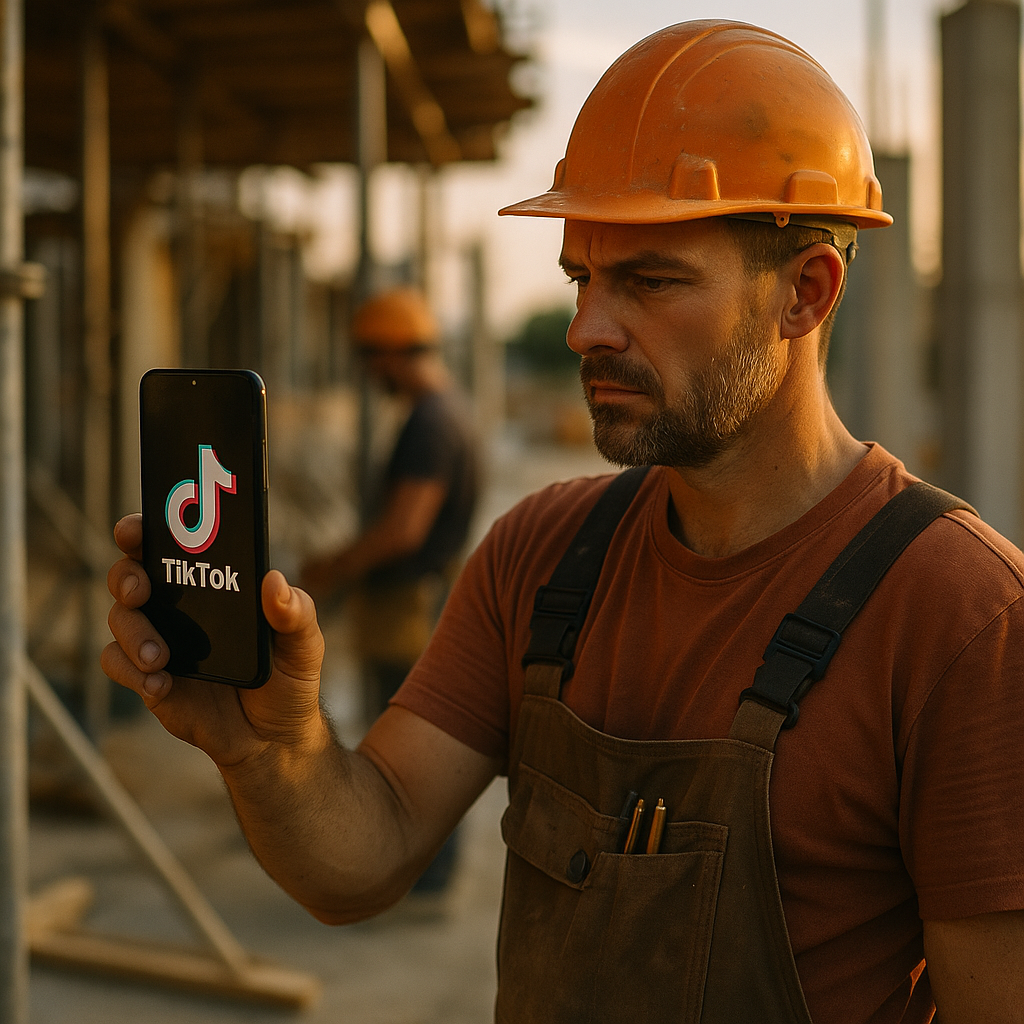
In 2025, many industrial employers struggle to hire welders, machinists, and maintenance techs fast enough to meet demand. This case study shows how one mid-sized manufacturer turned TikTok for trade recruiting into a practical hiring channel by pairing authentic shop-floor content with tight targeting and disciplined follow-up. The approach didn’t rely on gimmicks—it relied on clarity, speed, and trust. Here’s what changed when they pressed record.
Recruiting skilled trades on TikTok: The hiring challenge and the baseline
Company profile (anonymized for privacy): A 700-employee, multi-site manufacturer in the Midwest producing engineered components for transportation and energy customers. Hiring needs centered on welders (MIG/TIG), CNC machinists, industrial maintenance, and quality technicians.
The problem: By early 2025, the firm had open reqs sitting 45–70 days. Applicant volume existed, but fit was low and drop-off was high. Recruiters reported three recurring friction points:
- Misaligned expectations: Applicants didn’t understand shift schedules, physical demands, or the pace of work.
- Trust gap: Candidates questioned culture, training support, and whether “growth” claims were real.
- Slow conversion: The process required too many steps before a human conversation.
Baseline metrics (previous 90 days): Average time-to-fill for priority trades roles was 58 days; offer acceptance was 71%; 30-day retention for new hires in the trades was 84%. The company already used job boards, local workforce partnerships, and employee referrals, but those channels were saturating.
Why TikTok? The recruiting team noticed two trends: trades candidates increasingly consumed short-form video, and employees already shared workplace videos informally. Leadership approved a pilot on the condition that it remain brand-safe, measurable, and respectful of safety and confidentiality.
TikTok recruiting strategy for manufacturers: Goals, guardrails, and positioning
Primary goals for the 10-week pilot:
- Increase qualified applicants for three roles (welder, CNC machinist, maintenance tech).
- Reduce time-to-first-contact to under 24 hours for TikTok leads.
- Improve early retention by setting clear expectations before applicants apply.
Guardrails (to protect credibility and compliance):
- Safety-first content policy: PPE visible, machine guarding shown, no unsafe acts, and supervisors empowered to stop filming.
- No confidential exposure: No customer drawings, proprietary setups, or part numbers. Shots were framed to show people and process, not IP.
- HR review checklist: Pay ranges, shift differentials, and benefits were verified before posting. This supported truthful, consistent messaging.
- Respectful employment messaging: No discriminatory language; inclusive representation across teams and shifts.
Positioning statement: “Real work, real training, real advancement.” The firm avoided glossy branding and focused on showing what candidates actually care about: tooling, coaching, shift rhythm, and what “a good day” looks like on the floor.
EEAT in practice: The company used credible sources of experience—current welders, machinists, and maintenance techs—on camera. Each video included a practical detail (process, tool, training milestone, or schedule explanation) and a clear next step for interested candidates.
Short-form video content for skilled trades: What they posted and why it worked
The content plan followed a simple rule: every post answers one question a trades candidate would ask before applying. The team filmed in batches twice per week to keep production lightweight and consistent.
Content pillars (with examples):
- Job realism (reduce mismatches): “What a 2nd shift maintenance tech checks before start-up,” “How we stage fixtures for a CNC changeover,” “What a welder’s first 30 minutes looks like.”
- Pay and progression (build trust): “How our skill tiers work,” “What you can earn after passing the weld test,” “How shift differential is calculated.”
- Training and support (address fear of being thrown in): “Meet your trainer: how the first 2 weeks are structured,” “Our apprenticeship pathway in 30 seconds,” “Toolbox talk: how we handle lockout/tagout.”
- Culture and pride (human proof): “Why I stayed 6 years,” “From temp to lead—my timeline,” “What our team does when a line goes down.”
- Hiring process clarity (reduce drop-off): “What happens after you apply,” “What to bring to a weld test,” “How fast we schedule interviews.”
Format choices: Most videos were 15–35 seconds with on-screen text, captions, and a single takeaway. The strongest performers opened with a specific promise (for example, “Here’s exactly what the weld test includes”) and ended with a direct instruction (“Text ‘WELD’ to the link in bio to schedule”).
What they did not do: No dancing, no forced humor, no “corporate voice.” That restraint mattered. Trades candidates responded to competence and straight talk, not performance.
Answering follow-up questions inside the content: When comments asked, “Is this climate-controlled?” or “Do you hire with no certs?” the next week’s posts addressed those questions directly. This created a feedback loop and demonstrated responsiveness—an EEAT signal that the employer is present and accountable.
Employer branding on TikTok: Trust-building, safety, and authenticity at scale
The pilot succeeded because it treated employer branding as verifiable, not aspirational. The manufacturer focused on proof: the real shop, the real schedule, the real leaders, and the real constraints.
How they built trust quickly:
- On-camera expertise: Senior machinists explained tolerances in plain language; maintenance leads showed troubleshooting steps; welders described what “good” looks like.
- Visible leadership: A plant manager did a 30-second walkthrough answering, “What do you expect from a new hire in the first month?” It humanized standards without sounding vague.
- Transparent tradeoffs: Instead of pretending every role was perfect, videos acknowledged realities: weekend rotations, heat near certain operations, and the pace during peak orders. Candidates self-selected more accurately.
- Candidate respect: The team emphasized that applicants would get a response quickly. That promise was operationally supported (see next section).
Safety as employer brand: Safety content wasn’t compliance theater. It was framed as “how we keep you going home the same way you arrived.” Posts featured real lockout/tagout routines, PPE requirements, and why certain shortcuts aren’t tolerated. Candidates who value professionalism leaned in; those looking to cut corners filtered out.
Moderation and community management: The recruiting coordinator responded to comments daily, answered pay-range questions within policy, and moved detailed conversations to a secure application channel. Negative comments were addressed calmly with facts (“Here’s our starting range and test process”) or ignored if they were clearly trolling. That consistency prevented the comment section from undermining trust.
Manufacturing hiring funnel metrics: Tracking results and improving the process
The company treated TikTok as a funnel, not a fame contest. Every post had one measurable action, and every lead entered the same applicant tracking system with a TikTok source tag.
Funnel setup (simple and measurable):
- Link-in-bio landing page with three role buttons (Welder, CNC, Maintenance) and a “Talk to a recruiter today” option.
- Two-step interest form (name, phone, trade, years of experience, preferred shift) designed for mobile completion in under 60 seconds.
- Rapid response SLA: Recruiters committed to first contact within 24 hours on weekdays and within 36 hours after weekend submissions.
- Fast scheduling: Candidates could self-schedule phone screens and skills tests using time slots updated daily.
Pilot results (10 weeks):
- Applications attributed to TikTok: 312 total; 148 met minimum qualifications (47%).
- Interviews scheduled from TikTok leads: 86.
- Offers accepted from TikTok leads: 22 across the three priority roles.
- Time-to-fill improvement: Priority roles fell from a 58-day average to 41 days during the pilot window.
- Offer acceptance: Increased from 71% baseline to 82% for TikTok-sourced offers, driven by clearer expectations and faster follow-up.
- 30-day retention (TikTok cohort): 91%, helped by “day-in-the-life” realism and training previews.
What improved performance most: The biggest lift came not from viral videos but from operational speed. When recruiters responded quickly and the process stayed simple, candidates stayed engaged. The firm also discovered that showing the skills test up front reduced no-shows because candidates knew exactly what they were walking into.
Quality control: Hiring managers rated TikTok hires slightly higher on “job readiness” than job-board hires in the same period, mainly because candidates opted in with a clearer picture of the work.
Trade recruiting best practices 2025: Lessons learned and a repeatable playbook
The manufacturer ended the pilot with a repeatable system that other industrial employers can adapt without a large marketing budget.
What they would repeat:
- Keep content specific: “How we set up for aluminum TIG” beats “We’re hiring welders.” Specificity signals competence.
- Show the process, not just the building: Candidates care about tools, training, and expectations more than exterior shots.
- Put pay ranges in writing: Where policy allowed, listing ranges reduced back-and-forth and increased qualified applicants.
- Build a 24-hour response muscle: TikTok audiences expect speed. If you can’t respond quickly, you’ll waste demand you created.
- Let tradespeople speak: Peer credibility outperforms polished scripts. Provide prompts, not monologues.
What they changed after the pilot:
- Shift-specific content: Separate videos for 1st, 2nd, and weekend shifts because routines and leadership differ.
- Localized targeting: Posts and paid boosts focused on commute radius and highlighted “how long it takes to get here from X.”
- Hiring-event integration: Short videos invited viewers to on-site test days with clear instructions and time slots.
- Manager training: Supervisors learned how to support filming safely and how to reinforce the same expectations candidates saw online.
Risks to manage (and how): Content must never compromise safety, confidentiality, or dignity. The firm’s checklist, filming zones, and review workflow prevented mistakes. They also avoided overstating advancement or earnings; every claim needed an internal proof point (policy, pay bands, or documented progression criteria).
Clear takeaway playbook: If you can explain the job honestly in 30 seconds, respond within 24 hours, and streamline scheduling, TikTok becomes a reliable recruiting channel for trades—not a branding experiment.
FAQs: TikTok for trade recruiting
Is TikTok actually effective for recruiting welders, machinists, and maintenance techs?
Yes—when the content shows real work and the hiring process is fast. Trades candidates use short-form video to evaluate tools, training, leadership, and realism. Effectiveness comes from qualified conversion, not views.
Do we need paid ads, or can organic posts work?
Organic can work if posting is consistent and the shop-floor stories are strong. Many firms add small paid boosts to target a commute radius and specific interests (welding, CNC, industrial maintenance). Start organic, then boost the best performers.
What should a manufacturer post without revealing proprietary information?
Focus on people, process, and training: PPE routines, changeover steps, tool setups shown from safe angles, skills test walkthroughs, shift expectations, and progression tiers. Avoid customer drawings, part numbers, and sensitive screens.
How do we handle pay questions in comments?
Set a policy: share ranges when allowed, confirm shift differentials, and direct detailed discussions to a secure channel. Consistency matters—mismatched pay messaging damages trust and increases drop-off.
What’s the minimum operational setup to convert TikTok interest into hires?
A mobile-friendly landing page, a short interest form, source tracking in your ATS, and a response-time commitment. Pair that with self-scheduling for screens or test slots to reduce delays.
How often should we post for trade recruiting?
For a pilot, 3–5 posts per week is enough to learn quickly without overwhelming operations. Batch filming twice weekly keeps it manageable while maintaining steady output.
Who should appear on camera?
Real employees who do the work—supported by a recruiter for process clarity. A brief appearance by a plant leader helps set expectations, but peer voices usually drive the strongest credibility.
In 2025, this manufacturer proved that TikTok can drive real hires when it’s treated as a measurable recruiting funnel, not a popularity contest. They showed the work plainly, answered candidate questions quickly, and built trust with safety-forward transparency. The biggest gains came from operational discipline: fast response, simple scheduling, and honest previews of the job. Do those well, and your next great hire may already be watching.