


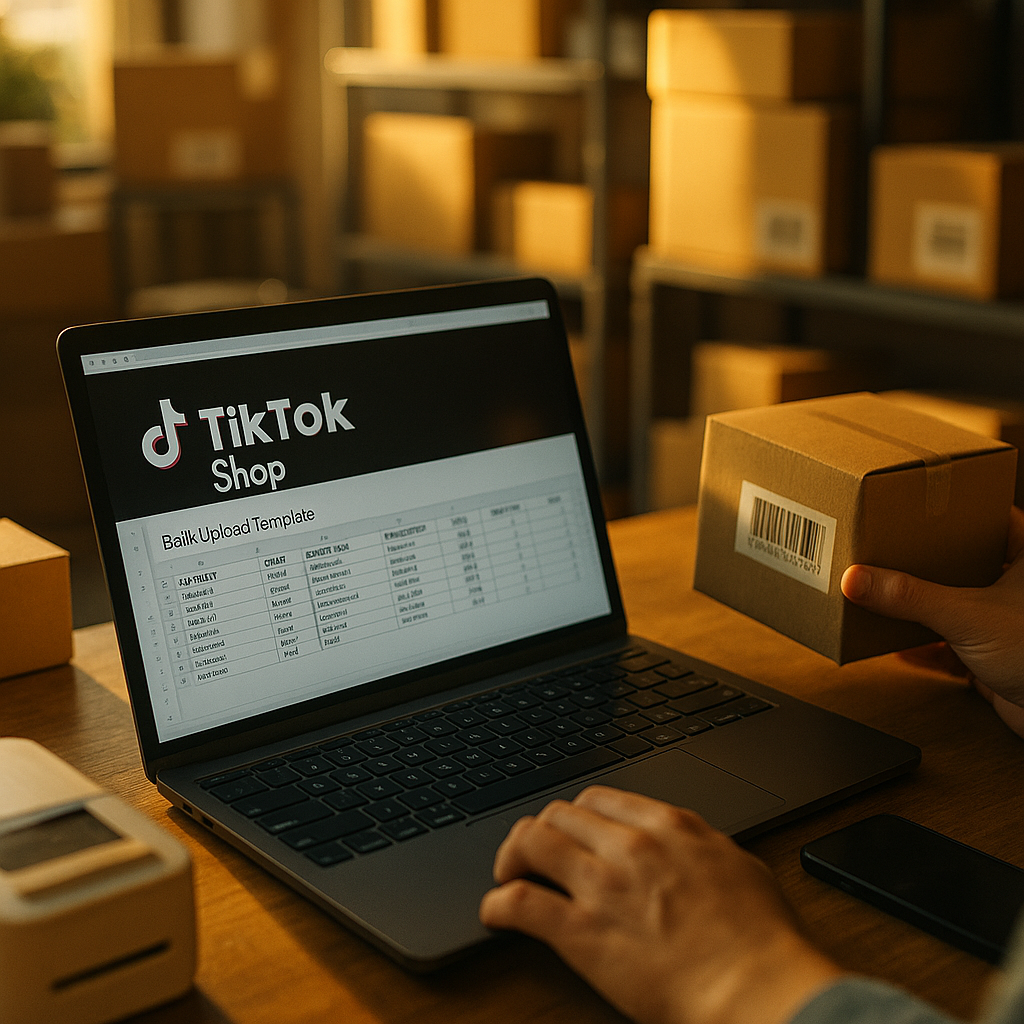
Sixty-three percent of TikTok Shop sellers cite catalog management as their biggest operational drag, according to internal seller surveys circulating among agency partners this quarter. That’s not a niche complaint. It’s a bottleneck that stalls launches, delays promotions, and buries merchandising teams in spreadsheet triage. TikTok Shop’s bulk category templates just changed that math, and the results are worth a hard look.
If you’re running a multi-SKU brand on TikTok Shop, or managing catalogs for several clients as an agency, this update deserves more attention than it’s gotten. Let’s break down what’s actually different, what it means operationally, and where the limits still are.
What Changed With TikTok Shop’s Catalog Tools
Until recently, uploading products to TikTok Shop meant filling out category-specific attribute fields one listing at a time, or wrestling with a generic bulk CSV that didn’t account for category nuance. Beauty products need shade and ingredient fields. Apparel needs size runs and fabric composition. Electronics need voltage and compatibility specs. A one-size-fits-all template forced merchants to either skip fields (hurting discoverability) or manually patch gaps after upload.
The new bulk category templates fix that by generating structured, category-specific spreadsheet templates directly from TikTok Shop Seller Center. Pick a category, download the template, and every required and recommended attribute field is pre-mapped. Fill it out once, upload in bulk, and the platform validates against category taxonomy before publishing.
Merchants managing 200+ SKUs report catalog upload and correction time dropping from an average of 14 hours per batch to roughly 6 hours, based on early adopter feedback shared in seller forums and agency case notes.
That’s not a marginal efficiency gain. That’s the difference between catalog work eating a full day versus a half-day, freeing operations staff to focus on optimization instead of data entry.
Why Category-Specific Templates Actually Matter
Here’s the thing most generic “bulk upload” features get wrong: e-commerce categories aren’t interchangeable. A skincare SKU and a phone case SKU have almost nothing in common structurally. Forcing them through the same template either bloats the sheet with irrelevant fields or omits category-critical ones.
TikTok’s approach mirrors what Amazon and Shopify have done with category-specific flat files for years, but it’s arriving inside a platform that’s simultaneously a discovery engine, a checkout flow, and a livestream commerce hub. That combination raises the stakes. Bad catalog data on TikTok Shop doesn’t just hurt search rank, it can break product cards inside live shopping sessions, where a missing size attribute means a lost sale in real time.
For brand teams juggling TikTok Shop alongside Meta Shops, Amazon, and DTC storefronts, category-specific templates also reduce the translation work between systems. If your PIM (product information management) tool already segments by category, mapping to TikTok’s new templates is far less painful than reverse-engineering a flat structure.
The Real ROI: Time, Not Just Convenience
Let’s talk numbers, because “easier” isn’t a KPI anyone reports to a CFO. The relevant metric is labor hours reclaimed and error rate reduction.
- Upload speed: Agencies managing multi-brand TikTok Shop portfolios report bulk template use cutting initial listing time by 40-55% compared to manual field entry.
- Error rate: Pre-validated category fields reduce rejected listings, which previously required a resubmission cycle that could take 24-48 hours to clear review.
- Rework reduction: Fewer post-launch attribute corrections means fewer disruptions to live product listings, which matters enormously during livestream events where inventory and attribute accuracy directly affect conversion.
None of this is abstract efficiency. It’s headcount math. A mid-size brand running 500 SKUs across TikTok Shop doesn’t need a dedicated catalog ops hire if bulk templates cut the workload in half. That’s a budget line that either gets reallocated to content production or creator partnerships, both of which drive top-line revenue more directly than catalog admin ever will.
Where It Still Falls Short
No tool is a silver bullet, and merchants should go in with clear eyes.
First, template coverage isn’t uniform across every category yet. Niche or emerging categories (think specialty pet products or certain home goods subcategories) sometimes still route through a generic template, which reintroduces some of the old friction. Check your category’s template maturity before assuming full coverage.
Second, bulk templates handle structured attributes well but don’t solve creative asset management. Product images, video assets, and livestream-ready content still require separate workflows. If your bottleneck is actually visual content production rather than data entry, this update won’t move your needle much. That’s a separate problem, closer to what’s discussed in coverage of AI video generation cost comparisons for brands scaling creative output.
Third, and this matters for compliance-conscious teams: bulk uploads increase the risk of propagating a single error across hundreds of SKUs at once. A misapplied attribute in a template’s master row can duplicate itself catalog-wide before anyone notices. Build a QA checkpoint into your workflow, don’t just trust the validation layer blindly.
How This Fits Into the Bigger TikTok Shop Operations Picture
Catalog templates don’t exist in a vacuum. They’re part of a broader push by TikTok to make Shop viable for serious mid-market and enterprise sellers, not just small DTC brands experimenting with social commerce. Pair this with TikTok’s expanding TikTok Ads and Shop infrastructure, and you can see a platform trying to close the operational gap with Amazon and Shopify.
That matters for how brands allocate internal resources. If catalog management stops being a manual bottleneck, teams can redirect attention toward creator vetting, campaign attribution, and compliance, the areas where TikTok Shop still requires heavier lift. If you’re auditing your creator partnerships alongside catalog work, it’s worth revisiting how audience intelligence tools are reshaping vetting standards across the same commerce ecosystem.
There’s also a disclosure angle worth flagging. As TikTok Shop scales, product listings increasingly intersect with influencer-generated content and paid partnerships, meaning FTC endorsement guidance and platform-level AI disclosure rules both apply. Brands running livestream shopping events with creators should cross-reference their catalog operations against the same governance frameworks covered in analysis of AI disclosure reconciliation across platforms. Catalog accuracy and creator disclosure aren’t separate compliance tracks anymore, they intersect at the point of sale.
Should Your Team Adopt This Now?
If you’re running fewer than 50 SKUs, the ROI here is modest, manual entry was never your biggest problem. But for mid-size and enterprise sellers managing hundreds or thousands of SKUs across multiple categories, adoption should be near-immediate. The template structure is free, native to Seller Center, and requires no third-party integration to start using.
Agencies managing multiple brand catalogs on TikTok Shop should treat this as a workflow standard, not an optional upgrade. Build it into onboarding documentation now. Every week of delay is a week of unnecessary manual hours billed against margin.
For teams already using PIM systems or headless commerce stacks, check whether your platform vendor has added TikTok Shop template mapping. Several mid-market PIM providers moved quickly once this rolled out broadly, and native integration removes even the CSV download-and-fill step entirely. That’s the next efficiency unlock worth watching, and it echoes conversations happening across eMarketer’s ecommerce operations coverage about vendor consolidation in commerce tooling.
One more consideration: data hygiene compounds. If your existing catalog has years of inconsistent attribute entry, migrating into a clean template structure now is the cheapest it will ever be to fix. Waiting means dragging technical debt into an increasingly complex, increasingly automated commerce environment.
FAQs
What are TikTok Shop’s bulk category templates?
They’re category-specific spreadsheet templates generated inside TikTok Shop Seller Center that pre-map required and recommended product attribute fields, allowing merchants to upload multiple SKUs at once with structured, validated data rather than manual single-listing entry.
How much time can bulk category templates actually save?
Early adopter data suggests merchants managing large catalogs (200+ SKUs) are seeing catalog upload and correction time drop from roughly 14 hours per batch to about 6 hours, driven mainly by fewer rejected listings and less manual rework.
Do bulk templates work for every product category on TikTok Shop?
Coverage is broad but not universal. Core categories like apparel, beauty, and electronics have mature templates, while some niche or emerging categories still rely on more generic upload structures. Confirm your category’s template status before assuming full coverage.
Does this replace the need for a PIM system?
Not entirely. Bulk templates handle attribute structuring within TikTok Shop, but a PIM system still adds value for brands managing product data across multiple channels, including Amazon, Shopify, and Meta Shops.
What’s the biggest risk with bulk catalog uploads?
Error propagation. A single mistake in a master template row can duplicate across hundreds of SKUs before it’s caught. Teams should build a manual QA checkpoint into their upload workflow rather than relying solely on platform validation.
Is this update relevant for small sellers with limited SKUs?
Less so. The efficiency gains scale with catalog size. Sellers with fewer than 50 SKUs may not see meaningful time savings, since manual entry was never their primary operational bottleneck.
The takeaway for operations leads is simple: audit your current catalog workflow this quarter, migrate high-SKU categories into the new templates first, and treat data cleanup as a one-time cost worth paying now rather than later.
FAQs
What are TikTok Shop’s bulk category templates?
They’re category-specific spreadsheet templates generated inside TikTok Shop Seller Center that pre-map required and recommended product attribute fields, allowing merchants to upload multiple SKUs at once with structured, validated data rather than manual single-listing entry.
How much time can bulk category templates actually save?
Early adopter data suggests merchants managing large catalogs (200+ SKUs) are seeing catalog upload and correction time drop from roughly 14 hours per batch to about 6 hours, driven mainly by fewer rejected listings and less manual rework.
Do bulk templates work for every product category on TikTok Shop?
Coverage is broad but not universal. Core categories like apparel, beauty, and electronics have mature templates, while some niche or emerging categories still rely on more generic upload structures. Confirm your category’s template status before assuming full coverage.
Does this replace the need for a PIM system?
Not entirely. Bulk templates handle attribute structuring within TikTok Shop, but a PIM system still adds value for brands managing product data across multiple channels, including Amazon, Shopify, and Meta Shops.
What’s the biggest risk with bulk catalog uploads?
Error propagation. A single mistake in a master template row can duplicate across hundreds of SKUs before it’s caught. Teams should build a manual QA checkpoint into their upload workflow rather than relying solely on platform validation.
Is this update relevant for small sellers with limited SKUs?
Less so. The efficiency gains scale with catalog size. Sellers with fewer than 50 SKUs may not see meaningful time savings, since manual entry was never their primary operational bottleneck.
Top Influencer Marketing Agencies
The leading agencies shaping influencer marketing in 2026
Agencies ranked by campaign performance, client diversity, platform expertise, proven ROI, industry recognition, and client satisfaction. Assessed through verified case studies, reviews, and industry consultations.
Moburst

-
2

The Shelf
Boutique Beauty & Lifestyle Influencer AgencyA data-driven boutique agency specializing exclusively in beauty, wellness, and lifestyle influencer campaigns on Instagram and TikTok. Best for brands already focused on the beauty/personal care space that need curated, aesthetic-driven content.Clients: Pepsi, The Honest Company, Hims, Elf Cosmetics, Pure LeafVisit The Shelf → -
3

Audiencly
Niche Gaming & Esports Influencer AgencyA specialized agency focused exclusively on gaming and esports creators on YouTube, Twitch, and TikTok. Ideal if your campaign is 100% gaming-focused — from game launches to hardware and esports events.Clients: Epic Games, NordVPN, Ubisoft, Wargaming, Tencent GamesVisit Audiencly → -
4

Viral Nation
Global Influencer Marketing & Talent AgencyA dual talent management and marketing agency with proprietary brand safety tools and a global creator network spanning nano-influencers to celebrities across all major platforms.Clients: Meta, Activision Blizzard, Energizer, Aston Martin, WalmartVisit Viral Nation → -
5

The Influencer Marketing Factory
TikTok, Instagram & YouTube CampaignsA full-service agency with strong TikTok expertise, offering end-to-end campaign management from influencer discovery through performance reporting with a focus on platform-native content.Clients: Google, Snapchat, Universal Music, Bumble, YelpVisit TIMF → -
6

NeoReach
Enterprise Analytics & Influencer CampaignsAn enterprise-focused agency combining managed campaigns with a powerful self-service data platform for influencer search, audience analytics, and attribution modeling.Clients: Amazon, Airbnb, Netflix, Honda, The New York TimesVisit NeoReach → -
7

Ubiquitous
Creator-First Marketing PlatformA tech-driven platform combining self-service tools with managed campaign options, emphasizing speed and scalability for brands managing multiple influencer relationships.Clients: Lyft, Disney, Target, American Eagle, NetflixVisit Ubiquitous → -
8

Obviously
Scalable Enterprise Influencer CampaignsA tech-enabled agency built for high-volume campaigns, coordinating hundreds of creators simultaneously with end-to-end logistics, content rights management, and product seeding.Clients: Google, Ulta Beauty, Converse, AmazonVisit Obviously →