


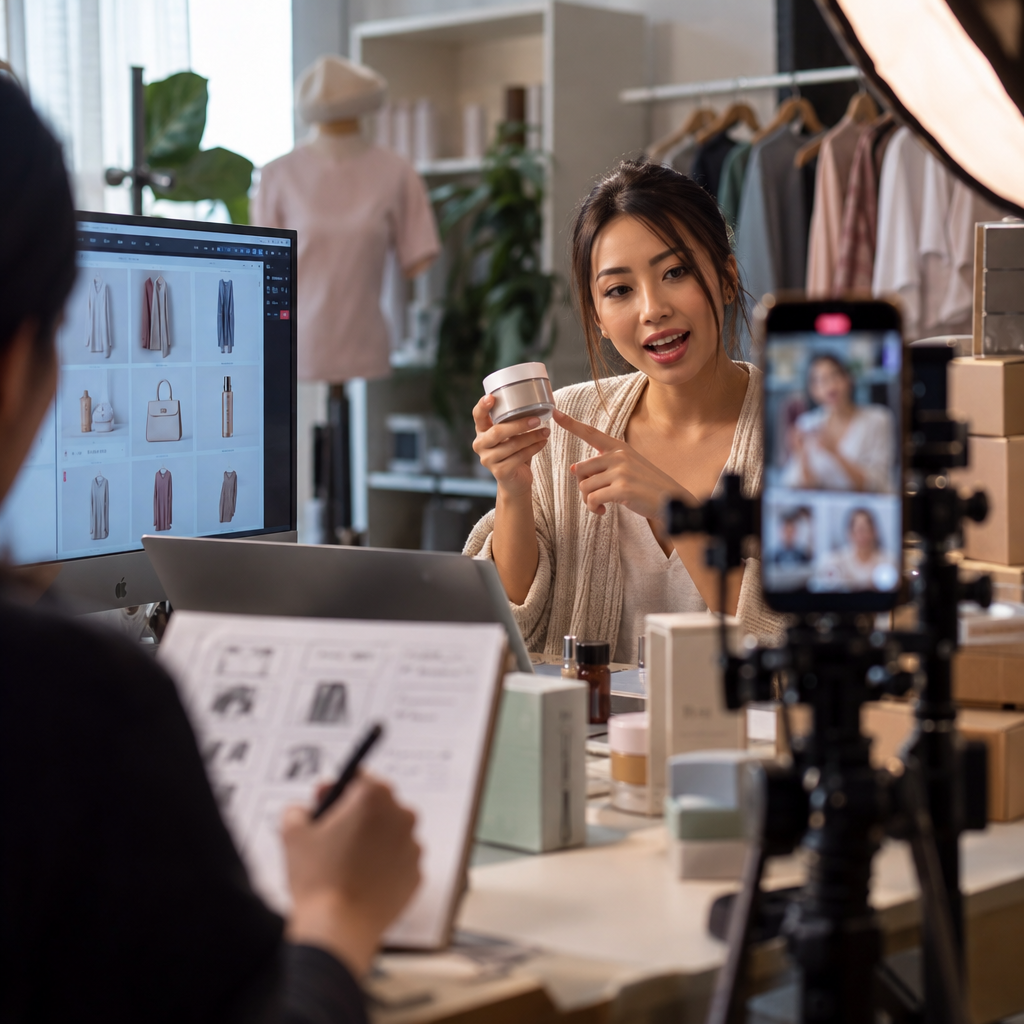
Seventy eight percent of TikTok Shop sellers say live shopping now outperforms static product videos on conversion rate, yet most brands are still bolting product tags onto livestreams like it’s 2023. TikTok Shop’s new Commerce API rollout changes the math entirely. It hands brands direct programmatic control over inventory sync, checkout flow, and creator payouts during live sessions, which means the old “just go live and hope” approach is now a competitive liability. If you’re still manually updating product cards mid-stream, you’re leaving revenue on the table.
What the Commerce API Actually Unlocks
Let’s be precise about what changed, because “API rollout” gets thrown around loosely. TikTok Shop’s updated Commerce API gives developers and brand tech teams direct endpoints for inventory management, order status webhooks, and product catalog syncing that used to require manual dashboard work or third party middleware. For live content specifically, this means real time stock updates can push directly into a livestream’s shoppable overlay without a creator or moderator touching anything.
That sounds like a technical footnote. It isn’t. Inventory mismatches during live sessions, where a creator pitches a product that’s already sold out, are one of the top reasons live shopping conversion rates tank in the final ten minutes of a stream. Fixing that sync lag at the API level is a direct revenue lever, not just an engineering nicety.
Brands that automated inventory sync during live sessions saw checkout abandonment drop by double digits compared to streams running on manual product tagging, according to early TikTok Shop partner data.
The API also opens up webhook based order confirmations, which matters for brands running paid promotion against live content. You can now trigger retargeting sequences the moment a live viewer completes checkout, instead of waiting for batch reporting the next day. That’s a meaningful shift for teams trying to build ambassador content calendars that actually track revenue in near real time rather than vanity engagement.
Building the Live Content Stack Before You Scale Spend
Here’s the mistake I see constantly: brands get excited about new commerce infrastructure and immediately pour budget into creator fees before the content framework exists to support it. Shoppable live content isn’t a creative afterthought bolted onto an API integration. It needs its own production logic.
Start with the pre-live asset layer. Every successful shoppable stream I’ve reviewed in the past year runs on a library of short form clips that get cut live, during the stream, and pushed into TikTok’s “For You” feed as teasers pointing viewers back to the live room. This is where a documented weekly UGC content cadence pays off, because you already have a backlog of product demo clips ready to repurpose as live teasers instead of scrambling to shoot new ones.
- Pre-live hook clips: fifteen to thirty second teasers published two to four hours before the stream, driving notification follows.
- In-stream product cycling: a scripted rotation of three to five SKUs per twenty minute block, synced to the Commerce API’s live inventory feed.
- Post-live clip harvesting: cutting the highest conversion moments from the stream into evergreen shoppable shorts within twenty four hours.
That third bullet is underused. Most brands treat live content as a one-time event and move on. But the segments where a creator demonstrates a product, answers an objection, or shows a before and after moment are exactly the clips that perform well as standalone shoppable video, long after the live session ends. This is the same logic behind clipping content strategy work that turns one stream into weeks of cheap, high-performing inventory.
Scripting the Live Session, Not Just Winging It
Live shopping gets pitched as spontaneous and unscripted. Fine, but spontaneity without structure is how you lose viewers in minute four. The creators and brands winning right now use a loose beat sheet, not a word-for-word script, to keep the stream moving while leaving room for real reaction.
A reliable structure looks like this: open with a hook within the first thirty seconds (a discount reveal, a product reveal, or a direct callout to viewers who just joined), move into a demo or usage segment, address a common objection or FAQ live, then transition into a limited time offer before cycling to the next product. This mirrors the logic in unboxing to review arc scripting, just compressed into a live, interruptible format where the creator has to adapt in real time based on chat volume and viewer questions.
Objection handling matters more in live formats than almost anywhere else, because viewers type their hesitation directly into chat. A creator who can pull from a documented objection list, the same muscle built in founder myth busting formats, converts noticeably better than one improvising responses on the fly.
Compliance Can’t Be an Afterthought Here
Live shopping content moves fast, and that speed is exactly why compliance risk spikes. A creator who makes an unverified claim about a supplement’s effects, or who forgets to disclose a paid partnership at the start of a stream, creates exposure that a pre-recorded video wouldn’t carry in the same way, because there’s no edit pass to catch it before it publishes.
Brands need a pre-live compliance checklist baked into the production stack, not a post-hoc review. That means creators get a written list of approved claims and disqualified language before they go live, mirroring the discipline covered in split screen videos, scripting claims that survive compliance. Disclosure requirements don’t disappear because the format is live instead of pre-recorded. The FTC’s endorsement guidelines apply identically, and enforcement attention on influencer disclosure has only intensified.
Practical fix: require creators to state the partnership verbally within the first sixty seconds and pin a disclosure graphic to the live overlay for the stream’s duration. It’s a small operational add that removes most of the legal exposure.
Measuring What Actually Matters
Views and concurrent viewer counts are vanity metrics for live shopping. The numbers that matter sit downstream: add-to-cart rate during the stream, checkout completion rate, and post-stream repeat purchase rate from viewers who bought during the session. The Commerce API’s webhook infrastructure makes pulling these numbers in near real time far easier than it was under the old reporting dashboard, which lagged by hours.
Build a simple scorecard per session: revenue per minute of stream time, cost per completed checkout (factoring in creator fees and any paid amplification), and average order value compared to your static shoppable video baseline. This is the same rigor applied in thumb stop metrics work, just adapted for a live format where the “hook” is the first ninety seconds of the stream instead of the first three seconds of a clip.
Don’t ignore branded search lift either. Live shopping events, especially ones tied to a launch or limited drop, tend to spike branded search volume in the hours immediately after. Tracking that lift, the way outlined in branded search lift analysis, gives you a fuller picture of the stream’s actual impact beyond the in-app checkout number, which matters when you’re justifying budget to finance teams who don’t live inside TikTok Shop analytics.
For benchmarking against broader platform trends, data from eMarketer’s social commerce research and Sprout Social’s platform reports is useful for calibrating whether your live shopping numbers are actually competitive or just internally improving against a low bar.
Where Brands Get This Wrong
The most common failure isn’t technical, it’s organizational. Marketing teams integrate the API, brief the creator, and run the stream, but nobody owns the handoff between live performance and the paid media team. A stream that converts well on a specific SKU should trigger an immediate paid push behind the clipped highlights, and that handoff needs an owner, not a hope that someone notices the dashboard.
Second common mistake: treating every live session like a one-off event instead of building a repeatable cadence. Brands running weekly or biweekly shoppable lives with consistent creators see compounding audience growth, because viewers learn when to show up. One-off lives tied only to product launches waste the relationship-building value that live format offers over static shoppable video content.
Third: under-resourcing the post-live clip harvest. I’ve said it already, but it bears repeating because it’s the step most teams skip under deadline pressure. A thirty minute live session can realistically produce four to six usable shoppable shorts if someone is assigned to pull and edit them within twenty four hours. Wait a week and the moment has passed, the product cycle has moved on, and that content library value evaporates.
Frequently Asked Questions
What is TikTok Shop’s Commerce API and why does it matter for live content?
It’s a set of developer endpoints that let brands sync inventory, order status, and checkout data directly into TikTok Shop without manual dashboard updates. For live content, this means product availability and checkout confirmations update in real time during a stream, reducing the conversion loss that happens when viewers try to buy a sold-out item.
Do I need a developer team to use the Commerce API for live shopping?
Most mid-size and enterprise brands integrate through an existing e-commerce platform or TikTok-approved partner solution rather than building custom endpoints in-house. Smaller brands can often access similar functionality through TikTok Shop’s native seller tools without direct API work.
How is shoppable live content different from scripting a regular UGC video?
Live content requires a flexible beat structure instead of a fixed script, since creators need to respond to live chat questions and objections in real time. The core principles, like leading with a hook and addressing objections early, carry over, but execution has to account for unpredictability.
What compliance risks are unique to live shopping formats?
Because there’s no edit pass before publishing, unverified product claims or missed disclosures go live instantly. Brands should require verbal disclosure within the first minute of a stream and provide creators with a pre-approved claims list before they go live.
What metrics should brands track for shoppable live sessions?
Prioritize add-to-cart rate, checkout completion rate, revenue per minute of stream time, and post-stream repeat purchase rate over vanity metrics like peak concurrent viewers.
Frequently Asked Questions
Don’t wait for a perfect integration before testing: run one weekly shoppable live with a documented beat sheet and compliance checklist, measure revenue per minute against your static video baseline, and let that data decide whether the Commerce API investment justifies scaling further.
Top Influencer Marketing Agencies
The leading agencies shaping influencer marketing in 2026
Agencies ranked by campaign performance, client diversity, platform expertise, proven ROI, industry recognition, and client satisfaction. Assessed through verified case studies, reviews, and industry consultations.
Moburst

-
2

The Shelf
Boutique Beauty & Lifestyle Influencer AgencyA data-driven boutique agency specializing exclusively in beauty, wellness, and lifestyle influencer campaigns on Instagram and TikTok. Best for brands already focused on the beauty/personal care space that need curated, aesthetic-driven content.Clients: Pepsi, The Honest Company, Hims, Elf Cosmetics, Pure LeafVisit The Shelf → -
3

Audiencly
Niche Gaming & Esports Influencer AgencyA specialized agency focused exclusively on gaming and esports creators on YouTube, Twitch, and TikTok. Ideal if your campaign is 100% gaming-focused — from game launches to hardware and esports events.Clients: Epic Games, NordVPN, Ubisoft, Wargaming, Tencent GamesVisit Audiencly → -
4

Viral Nation
Global Influencer Marketing & Talent AgencyA dual talent management and marketing agency with proprietary brand safety tools and a global creator network spanning nano-influencers to celebrities across all major platforms.Clients: Meta, Activision Blizzard, Energizer, Aston Martin, WalmartVisit Viral Nation → -
5

The Influencer Marketing Factory
TikTok, Instagram & YouTube CampaignsA full-service agency with strong TikTok expertise, offering end-to-end campaign management from influencer discovery through performance reporting with a focus on platform-native content.Clients: Google, Snapchat, Universal Music, Bumble, YelpVisit TIMF → -
6

NeoReach
Enterprise Analytics & Influencer CampaignsAn enterprise-focused agency combining managed campaigns with a powerful self-service data platform for influencer search, audience analytics, and attribution modeling.Clients: Amazon, Airbnb, Netflix, Honda, The New York TimesVisit NeoReach → -
7

Ubiquitous
Creator-First Marketing PlatformA tech-driven platform combining self-service tools with managed campaign options, emphasizing speed and scalability for brands managing multiple influencer relationships.Clients: Lyft, Disney, Target, American Eagle, NetflixVisit Ubiquitous → -
8

Obviously
Scalable Enterprise Influencer CampaignsA tech-enabled agency built for high-volume campaigns, coordinating hundreds of creators simultaneously with end-to-end logistics, content rights management, and product seeding.Clients: Google, Ulta Beauty, Converse, AmazonVisit Obviously →