


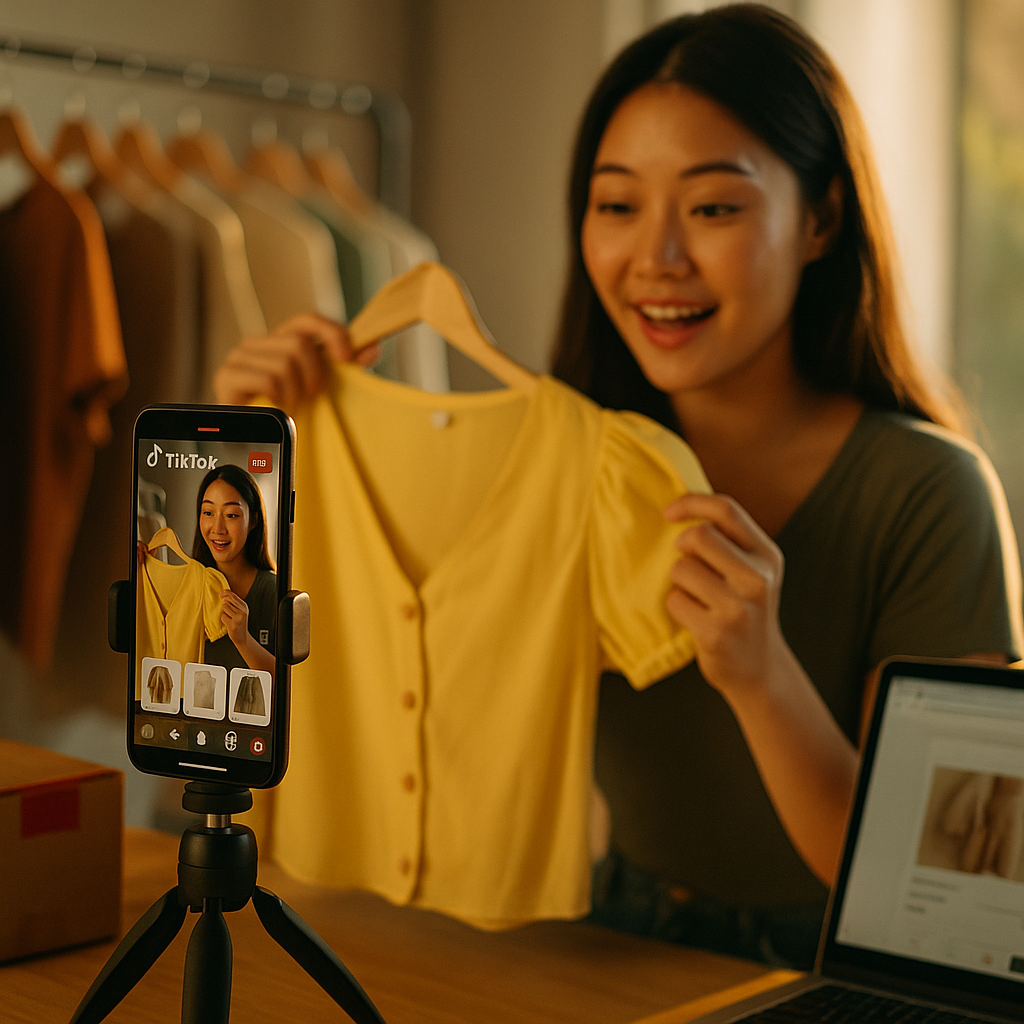
A 30% conversion rate sounds fabricated until you look at the mechanics behind it. Static e-commerce pages have hovered around 2-3% conversion for over a decade, no matter how much brands spend on CRO. TikTok Shop live-selling is blowing past that benchmark by an order of magnitude. For brand media buyers still allocating budget like it’s a display-and-detail-page world, that gap is now a strategic liability.
The Numbers Brand Media Buyers Can’t Ignore
Let’s start with what “30%” actually means, because the number gets thrown around loosely. TikTok Shop live sessions from established sellers, particularly in beauty, apparel, and home goods, are converting viewers into buyers at rates that would make a traditional DTC funnel manager weep. Compare that to the 2-3% conversion rate that’s been the industry norm for standard product detail pages since the early days of e-commerce, a figure Statista and other retail analytics trackers have confirmed year after year with barely any movement.
That’s not a rounding error. It’s a 10x to 15x gap. And it’s happening on the same phones, with the same payment friction, often for the same products.
A conversion gap this large isn’t a platform quirk — it’s evidence that the entire static product page model is losing to real-time, host-driven commerce.
Why Static Pages Are Structurally Capped at 2-3%
Static e-commerce has a ceiling problem. A product detail page is a monologue: photos, bullet points, maybe a video loop, then a buy button. The shopper does all the work of imagining fit, texture, and use case. No matter how good your copy is, you’re asking someone to make a purchase decision alone, in silence, with zero real-time reassurance.
Retailers have thrown everything at this problem — AI chatbots, size-recommendation engines, review widgets, urgency banners. The needle barely moves. HubSpot’s benchmarking data consistently shows average e-commerce conversion sitting in that same low single-digit band across industries, regardless of UX investment. That’s not a failure of execution. It’s a structural limit of the format.
Static pages also can’t answer objections in real time. If a shopper wonders “does this run small?” on a product page, they either dig through reviews or bounce. On a live stream, they type the question and get an answer in seconds — often from someone actively wearing or using the product on camera.
Live-Selling Removes the Decision Gap
TikTok Shop live-selling collapses discovery, evaluation, and purchase into one continuous, host-led moment. The mechanics matter here:
- Real-time objection handling: Hosts answer comments instantly, resolving the exact hesitations that cause page abandonment.
- Social proof at scale: Viewers see purchase notifications and comment activity from thousands of others in the same session, compressing the trust curve.
- Scarcity and urgency, done honestly: Limited-time bundle drops and flash pricing during a live session create urgency that a static “only 3 left in stock” banner can’t replicate.
- One-tap checkout inside the app: No redirect to a separate site, no re-entering payment details. Friction that kills static conversion simply doesn’t exist here.
This is why the format isn’t just “video commerce with a shopping cart bolted on.” It’s a fundamentally different persuasion architecture, closer to a QVC broadcast crossed with a group chat than anything resembling a traditional storefront.
What This Means for Media Buyers Allocating Budget
If you’re still running the majority of paid social spend toward static landing pages or even standard shoppable video ads, you’re optimizing for a ceiling that live commerce has already blown past. This isn’t an argument to abandon static commerce entirely — plenty of considered, high-ticket purchases still need a research phase. But for impulse-friendly categories (beauty, apparel, snacks, gadgets under $50), the math increasingly favors live formats.
Media buyers need to reframe live-selling not as a “nice to have” content experiment but as a distinct, budgetable channel with its own KPIs. That means:
- Separate line items for live-session production and host fees, not lumped into general “content creator” budgets.
- Attribution models that credit live sessions properly instead of collapsing them into last-click static page conversions.
- Testing host talent the way you’d test ad creative — some hosts will convert at 8%, others at 35%, and the variance is often driven by pacing and comment responsiveness, not follower count.
The category’s broader momentum backs this up. Coverage of the TikTok Shop beauty surge shows how fast retail categories are consolidating around creator-led commerce, forcing legacy retailers to rethink shelf space and merchandising entirely.
Risk Mitigation: What Live-Selling Doesn’t Solve
None of this means live-selling is risk-free. A few things brand teams need to watch closely:
- Return rates. High-emotion, urgency-driven purchases sometimes come with higher post-purchase returns than considered static purchases. Track this separately, don’t just celebrate the top-line conversion number.
- Compliance exposure. Live claims made verbally by hosts are harder to moderate than written ad copy. The FTC’s endorsement guidance still applies in real time, and unscripted claims about efficacy or health benefits can create liability fast. Brief hosts thoroughly and record every session for compliance review.
- Platform concentration risk. Building a growing share of revenue on one platform’s live infrastructure means you’re exposed to algorithm changes, fee structure shifts, or regulatory action affecting TikTok specifically.
These aren’t reasons to avoid the channel. They’re reasons to budget for a compliance and legal review layer alongside the media spend, the same way you would for any high-velocity paid channel.
How to Actually Test This Without Blowing Budget
You don’t need to reallocate half your e-commerce budget on day one. Start with a controlled pilot:
- Pick one SKU category with proven impulse-purchase behavior (beauty, apparel accessories, small home goods).
- Run three to five live sessions over a month with different host profiles, tracking conversion, average order value, and return rate for each.
- Compare blended CAC against your current static page CAC for the same SKUs, not against your best-performing paid social campaign ever.
- Scale budget toward whichever host archetype produces the best conversion-to-return ratio, not just raw conversion.
This mirrors how smart teams are already shifting spend elsewhere in the creator economy. The move toward affiliate-based creator deals reflects the same underlying logic: pay for performance you can measure, not exposure you’re hoping converts. Live-selling data makes that measurement easier than almost any other format available today, because every comment, tap, and purchase happens inside a single closed loop.
It’s also worth tracking how this fits into overall spend trends. Creator ad spend growth is already outpacing traditional digital budgets industry-wide, and live commerce is arguably the sharpest edge of that shift, not a side experiment.
The Uncomfortable Question for Legacy E-Commerce Teams
If a 10x conversion gap exists and it’s measurable, sustained, and repeatable across categories, at what point does maintaining a traditional static storefront as the primary sales channel become the riskier bet, not the safer one? That’s the question brand leadership needs to sit with, even if the honest answer is “our category isn’t ready yet.”
Sprout Social and other social commerce trackers have documented rising consumer comfort with in-app checkout generally, per Sprout Social’s platform research, suggesting this isn’t a TikTok-specific quirk but an early signal of where commerce behavior is heading broadly.
Frequently Asked Questions
Why does TikTok Shop live-selling convert so much higher than static e-commerce pages?
Live-selling combines real-time objection handling, visible social proof from other viewers, in-session urgency, and frictionless in-app checkout. Static pages ask shoppers to make decisions alone; live sessions replicate the reassurance of an in-store sales interaction at scale.
Is the 30% conversion rate typical across all TikTok Shop sellers?
No. That figure reflects strong-performing sessions, typically from experienced hosts in impulse-friendly categories like beauty and apparel. Conversion varies significantly by host skill, pacing, product category, and session promotion. Brands should benchmark against their own pilot data rather than assuming a universal rate.
Does higher conversion mean higher overall profitability?
Not automatically. Live-selling can carry higher return rates on impulse purchases and requires investment in host fees, production, and compliance review. Brands should track return rate and blended CAC alongside conversion rate before shifting significant budget.
What compliance risks should media buyers watch with live commerce?
Verbal claims made by hosts during live sessions are harder to moderate than written ad copy and are still subject to FTC endorsement guidelines. Brands should brief hosts on approved claims, record sessions for review, and build in a compliance check as a standard part of the workflow.
Should brands move their entire e-commerce budget to live-selling?
No. Static pages still serve considered, high-ticket purchases well. Live-selling is best suited to impulse-friendly categories and should be tested as a distinct, measurable channel alongside existing static commerce, not as a wholesale replacement.
Frequently Asked Questions (Structured Data)
The gap between 30% and 2-3% isn’t a curiosity, it’s a budgeting mandate. Run a controlled live-selling pilot on one impulse-friendly SKU category this quarter, measure blended CAC against your static baseline, and let the data decide how fast you scale from there.
Top Influencer Marketing Agencies
The leading agencies shaping influencer marketing in 2026
Agencies ranked by campaign performance, client diversity, platform expertise, proven ROI, industry recognition, and client satisfaction. Assessed through verified case studies, reviews, and industry consultations.
Moburst

-
2

The Shelf
Boutique Beauty & Lifestyle Influencer AgencyA data-driven boutique agency specializing exclusively in beauty, wellness, and lifestyle influencer campaigns on Instagram and TikTok. Best for brands already focused on the beauty/personal care space that need curated, aesthetic-driven content.Clients: Pepsi, The Honest Company, Hims, Elf Cosmetics, Pure LeafVisit The Shelf → -
3

Audiencly
Niche Gaming & Esports Influencer AgencyA specialized agency focused exclusively on gaming and esports creators on YouTube, Twitch, and TikTok. Ideal if your campaign is 100% gaming-focused — from game launches to hardware and esports events.Clients: Epic Games, NordVPN, Ubisoft, Wargaming, Tencent GamesVisit Audiencly → -
4

Viral Nation
Global Influencer Marketing & Talent AgencyA dual talent management and marketing agency with proprietary brand safety tools and a global creator network spanning nano-influencers to celebrities across all major platforms.Clients: Meta, Activision Blizzard, Energizer, Aston Martin, WalmartVisit Viral Nation → -
5

The Influencer Marketing Factory
TikTok, Instagram & YouTube CampaignsA full-service agency with strong TikTok expertise, offering end-to-end campaign management from influencer discovery through performance reporting with a focus on platform-native content.Clients: Google, Snapchat, Universal Music, Bumble, YelpVisit TIMF → -
6

NeoReach
Enterprise Analytics & Influencer CampaignsAn enterprise-focused agency combining managed campaigns with a powerful self-service data platform for influencer search, audience analytics, and attribution modeling.Clients: Amazon, Airbnb, Netflix, Honda, The New York TimesVisit NeoReach → -
7

Ubiquitous
Creator-First Marketing PlatformA tech-driven platform combining self-service tools with managed campaign options, emphasizing speed and scalability for brands managing multiple influencer relationships.Clients: Lyft, Disney, Target, American Eagle, NetflixVisit Ubiquitous → -
8

Obviously
Scalable Enterprise Influencer CampaignsA tech-enabled agency built for high-volume campaigns, coordinating hundreds of creators simultaneously with end-to-end logistics, content rights management, and product seeding.Clients: Google, Ulta Beauty, Converse, AmazonVisit Obviously →