


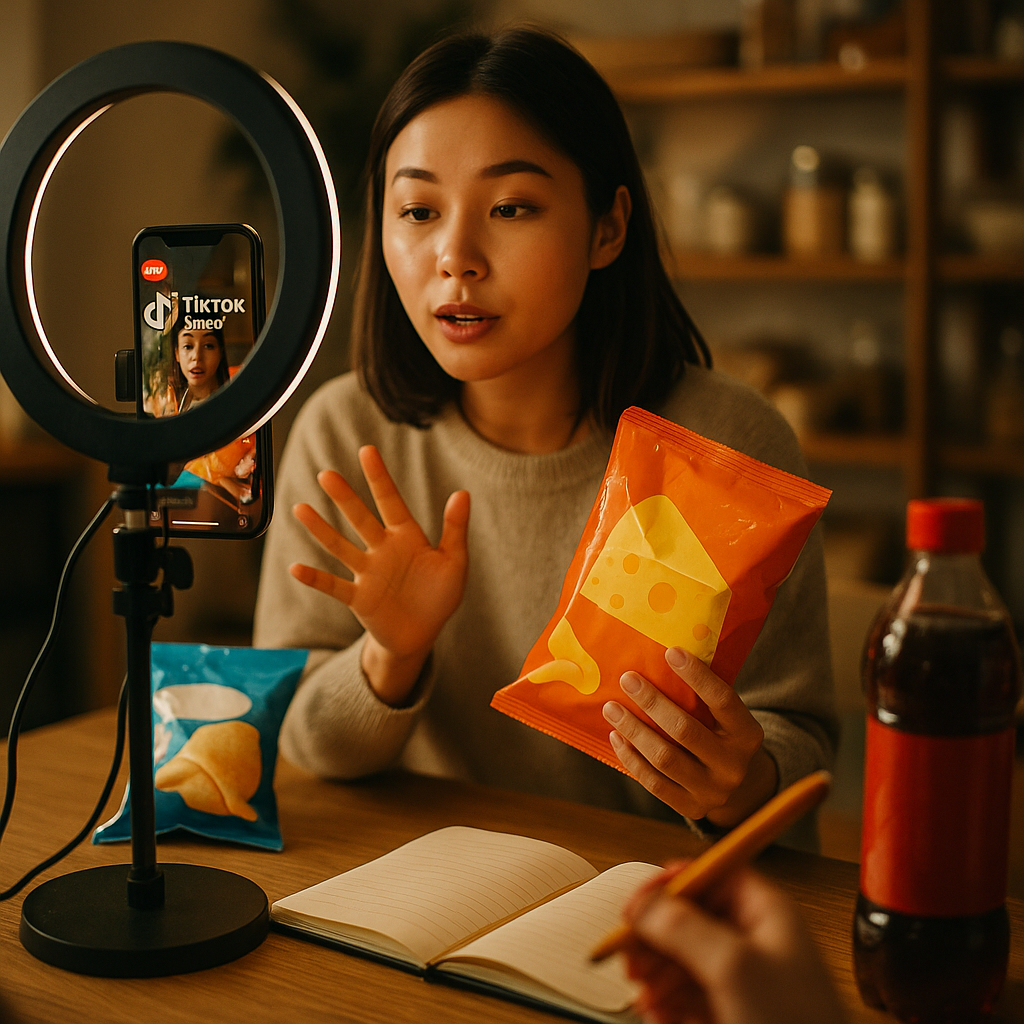
A shopper on TikTok Shop decides to buy a $14 skincare serum in under eight seconds. No product research. No comparison shopping. Just a host, a countdown timer, and a “link’s about to disappear” moment. This is the new reality of TikTok Shop livestream commerce, and it’s forcing CPG brands to rewrite the rulebook on content strategy.
If your livestream still looks like a QVC segment with better lighting, you’re leaving revenue on the table.
The Impulse Economy Has a New Storefront
Livestream shopping isn’t new. China perfected it years ago, and Western marketers spent a long time treating it as a curiosity rather than a channel worth real budget. That skepticism is gone. TikTok Shop generated over $33 billion in global gross merchandise value, according to eMarketer estimates, and CPG categories, beauty, snacks, household goods, supplements, are among the fastest-growing verticals on the platform.
What makes TikTok Shop different from traditional ecommerce isn’t the checkout flow. It’s the psychology. Viewers aren’t arriving with intent. They’re scrolling for entertainment and get sold to mid-scroll, mid-laugh, mid-distraction. That’s a fundamentally different buying context than a Google search or an Amazon listing, and it demands a different kind of content.
Traditional product marketing assumes a buyer moves through awareness, consideration, and decision in a linear path. TikTok Shop collapses that funnel into a single moment. The host creates urgency, the viewer’s thumb hovers, and the purchase either happens in the next fifteen seconds or it doesn’t happen at all.
On TikTok Shop, the difference between a scroll-past and a sale is often measured in seconds, not sessions. Brands optimizing for “consideration” content are optimizing for the wrong funnel.
Why CPG Brands Are Rebuilding Their Livestream Playbooks
CPG marketers built their playbooks around repeat purchase behavior and brand loyalty curves. Livestream commerce doesn’t reward loyalty. It rewards momentum. A host who can stack three product demos into ninety seconds, each with its own micro-urgency trigger, will consistently outperform a polished, single-product feature.
This has changed how brands brief their creators. Instead of handing over a script with brand messaging pillars, savvy teams are now briefing for pacing: how fast can the value proposition land, how quickly can objections get pre-empted, and how many “why now” moments can be built into a ten-minute stream.
- Pacing over polish: High-production content underperforms scrappy, fast-cut demos that mirror organic TikTok content.
- Bundling as a conversion lever: Multi-SKU bundles sold live create higher average order values than single-item pushes.
- Real-time scarcity: Flash discounts tied to viewer count or countdown clocks consistently lift conversion, according to platform data shared via TikTok For Business.
- Host chemistry over celebrity wattage: Micro and mid-tier hosts with strong live rapport often outsell larger names who read from a script.
This isn’t a minor tweak. It’s a full re-org of how content gets briefed, produced, and measured. Teams that are still applying static-post creative frameworks to livestream are essentially bringing a print ad to a live auction.
The Snack Aisle Goes Live
Snack and beverage brands have adapted fastest, partly because their products are low-consideration by nature. A $6 protein bar doesn’t need a comparison chart. It needs a host who looks like they’re genuinely enjoying it, a limited-time bundle, and a countdown.
Beauty and personal care brands face a tougher challenge. These categories carry higher price points and more purchase hesitation, ingredient concerns, skin type matching, allergy questions. The brands winning here have figured out how to compress consideration into the stream itself: live Q&A moderation, on-screen ingredient callouts, and hosts who address objections before viewers type them in chat.
Household and cleaning brands, historically the least “exciting” CPG segment, have found surprising traction by leaning into satisfying visual demos. Think stain removal in real time, viewers watching a mess disappear mid-stream. It’s not glamorous, but it converts.
The common thread: every category that succeeds on TikTok Shop has learned to compress its sales pitch into the attention span of a scroll, then re-expand it just enough to close the sale before the viewer moves on.
What This Means for Budget and Creator Selection
Brands can no longer treat livestream as a bolt-on to their broader creator program. The skill set required, thinking on your feet, reading live chat sentiment, adjusting offers in real time, is closer to a QVC host than a typical UGC creator. That changes who you cast and how you pay them.
Commission-based pay structures are becoming standard for livestream hosts, since performance is measurable to the dollar in real time. This mirrors a broader shift happening across the creator economy, where flat fees are giving way to outcome-based compensation. Brands rethinking their pay models more broadly should look at how flat fee to commission structures are being applied across formats, not just live selling.
Budget sequencing matters too. Livestream events cluster around key shopping moments, and brands that treat their creator spend as a static annual line item miss the compounding value of timing bursts around live events. For a broader framework on this, see how aligning creator spend and retail media can smooth out these seasonal spikes.
There’s also a discovery problem. Finding hosts who can actually perform live, not just look good in a nine-grid, requires a different vetting process than typical influencer sourcing. Brands building this muscle should borrow from the creator discovery vetting playbook already used for fraud-adjusted sourcing, since live selling scams (inflated viewer counts, bot-driven chat activity) are a growing risk category.
Compliance Can’t Be an Afterthought
Impulse-driven commerce raises real regulatory questions. When a host creates urgency, “only 12 left,” “price goes up in 60 seconds,” brands need to make sure those claims are true and disclosed properly. The FTC has been increasingly vocal about deceptive scarcity tactics and inadequate disclosure in livestream and social commerce contexts.
This isn’t just a legal team problem. It’s a content strategy problem. Scripts and talking points for live hosts need built-in compliance guardrails, not because it’s the safe thing to do, but because a single viral clip of a host making an unsubstantiated health claim about a supplement can trigger a platform-wide review of your entire program.
Brands that have already mapped out who owns what across legal, marketing, and creator ops tend to move faster when issues surface. If your org hasn’t formalized that structure yet, the social commerce compliance org chart is a useful starting point for assigning accountability before a live event goes sideways.
Live commerce compresses the sales cycle and the compliance review cycle at the same time. If your legal review process takes longer than the stream itself, you have a structural risk problem, not just a content one.
Measuring What Actually Matters
Traditional engagement metrics, likes, shares, watch time, tell you almost nothing useful about livestream commerce performance. The metrics that matter are conversion rate per viewer-minute, average order value during the stream, and post-stream return rate (impulse purchases often carry higher return rates, which eats into the apparent ROI if you’re not tracking it).
Brands still reporting livestream success purely on GMV without factoring in returns and refunds are getting an incomplete picture. A stream that generates $50,000 in sales but sees a 22% return rate within two weeks isn’t the win the top-line number suggests.
Attribution here is also messier than standard ecommerce, since a viewer might watch a stream, not buy, then purchase the same product days later through the TikTok Shop storefront. Brands trying to build a coherent measurement model across these touchpoints should look at how retail lift and influencer reach are being merged into unified models elsewhere in the industry, since the same logic applies to live commerce halo effects.
Tools like Sprout Social and platform-native TikTok Shop analytics can help brands track engagement-to-conversion patterns, but most CPG teams still need a custom dashboard that reconciles live commerce data with broader retail and DTC attribution.
The Talent Pipeline Problem
Here’s the uncomfortable part: there aren’t enough skilled livestream hosts to meet CPG demand. The category is growing faster than the talent pool of creators who can actually sell live, under pressure, without a script. Brands are increasingly building internal host benches, training employees or long-term brand ambassadors to run streams rather than relying solely on external creators.
This mirrors a challenge playing out across the creator economy more broadly, where brands are being asked to build durable, in-house creator capability rather than renting reach one campaign at a time. For teams thinking about how to structure this kind of capability internally, the creator economy center of excellence model offers a useful blueprint, even though it wasn’t written specifically for live commerce.
Smaller CPG brands without big budgets shouldn’t assume this game is only for scaled players. A well-run nano or micro host program, with the right pacing and compliance guardrails, can outperform a big-budget stream with the wrong creator. The nano-to-micro creator ladder framework applies just as well to live selling as it does to static content.
Where This Goes Next
Livestream commerce is not a fad that fades once the novelty wears off. It’s a structural shift in how impulse-category products get discovered and bought, and CPG brands that treat it as a side experiment will keep losing ground to competitors who’ve rebuilt their content, casting, and compliance processes around it. Start by auditing one upcoming livestream event against pacing, urgency mechanics, and compliance review speed, then fix whichever one is weakest before your next stream airs.
Frequently Asked Questions
What makes TikTok Shop livestreams different from traditional ecommerce content?
TikTok Shop livestreams compress the buying funnel into a single, real-time moment. Viewers arrive without purchase intent and are converted through pacing, urgency, and host chemistry rather than through research-driven consideration, which is how most traditional ecommerce content is built.
Which CPG categories perform best in TikTok Shop livestreams?
Low-consideration categories like snacks, beverages, and household cleaning products tend to convert fastest because they require minimal explanation. Beauty and personal care can perform well too, but only when hosts proactively address objections like ingredient concerns during the stream itself.
How should brands pay livestream hosts differently from standard influencer partners?
Commission-based or hybrid pay structures are becoming standard for live selling because performance is trackable in real time. Brands are increasingly shifting from flat fees to outcome-based models, similar to broader shifts happening across creator compensation industry-wide.
What compliance risks are specific to livestream impulse selling?
Scarcity claims (“only a few left,” time-limited discounts) must be accurate and properly disclosed. The FTC has increased scrutiny on deceptive urgency tactics in social commerce, so brands need compliance review processes fast enough to keep pace with live content.
How should brands measure livestream commerce success beyond GMV?
Track conversion rate per viewer-minute, average order value, and post-stream return rates. Impulse purchases often carry higher return rates, so top-line GMV alone can overstate a stream’s true profitability.
Top Influencer Marketing Agencies
The leading agencies shaping influencer marketing in 2026
Agencies ranked by campaign performance, client diversity, platform expertise, proven ROI, industry recognition, and client satisfaction. Assessed through verified case studies, reviews, and industry consultations.
Moburst

-
2

The Shelf
Boutique Beauty & Lifestyle Influencer AgencyA data-driven boutique agency specializing exclusively in beauty, wellness, and lifestyle influencer campaigns on Instagram and TikTok. Best for brands already focused on the beauty/personal care space that need curated, aesthetic-driven content.Clients: Pepsi, The Honest Company, Hims, Elf Cosmetics, Pure LeafVisit The Shelf → -
3

Audiencly
Niche Gaming & Esports Influencer AgencyA specialized agency focused exclusively on gaming and esports creators on YouTube, Twitch, and TikTok. Ideal if your campaign is 100% gaming-focused — from game launches to hardware and esports events.Clients: Epic Games, NordVPN, Ubisoft, Wargaming, Tencent GamesVisit Audiencly → -
4

Viral Nation
Global Influencer Marketing & Talent AgencyA dual talent management and marketing agency with proprietary brand safety tools and a global creator network spanning nano-influencers to celebrities across all major platforms.Clients: Meta, Activision Blizzard, Energizer, Aston Martin, WalmartVisit Viral Nation → -
5

The Influencer Marketing Factory
TikTok, Instagram & YouTube CampaignsA full-service agency with strong TikTok expertise, offering end-to-end campaign management from influencer discovery through performance reporting with a focus on platform-native content.Clients: Google, Snapchat, Universal Music, Bumble, YelpVisit TIMF → -
6

NeoReach
Enterprise Analytics & Influencer CampaignsAn enterprise-focused agency combining managed campaigns with a powerful self-service data platform for influencer search, audience analytics, and attribution modeling.Clients: Amazon, Airbnb, Netflix, Honda, The New York TimesVisit NeoReach → -
7

Ubiquitous
Creator-First Marketing PlatformA tech-driven platform combining self-service tools with managed campaign options, emphasizing speed and scalability for brands managing multiple influencer relationships.Clients: Lyft, Disney, Target, American Eagle, NetflixVisit Ubiquitous → -
8

Obviously
Scalable Enterprise Influencer CampaignsA tech-enabled agency built for high-volume campaigns, coordinating hundreds of creators simultaneously with end-to-end logistics, content rights management, and product seeding.Clients: Google, Ulta Beauty, Converse, AmazonVisit Obviously →