


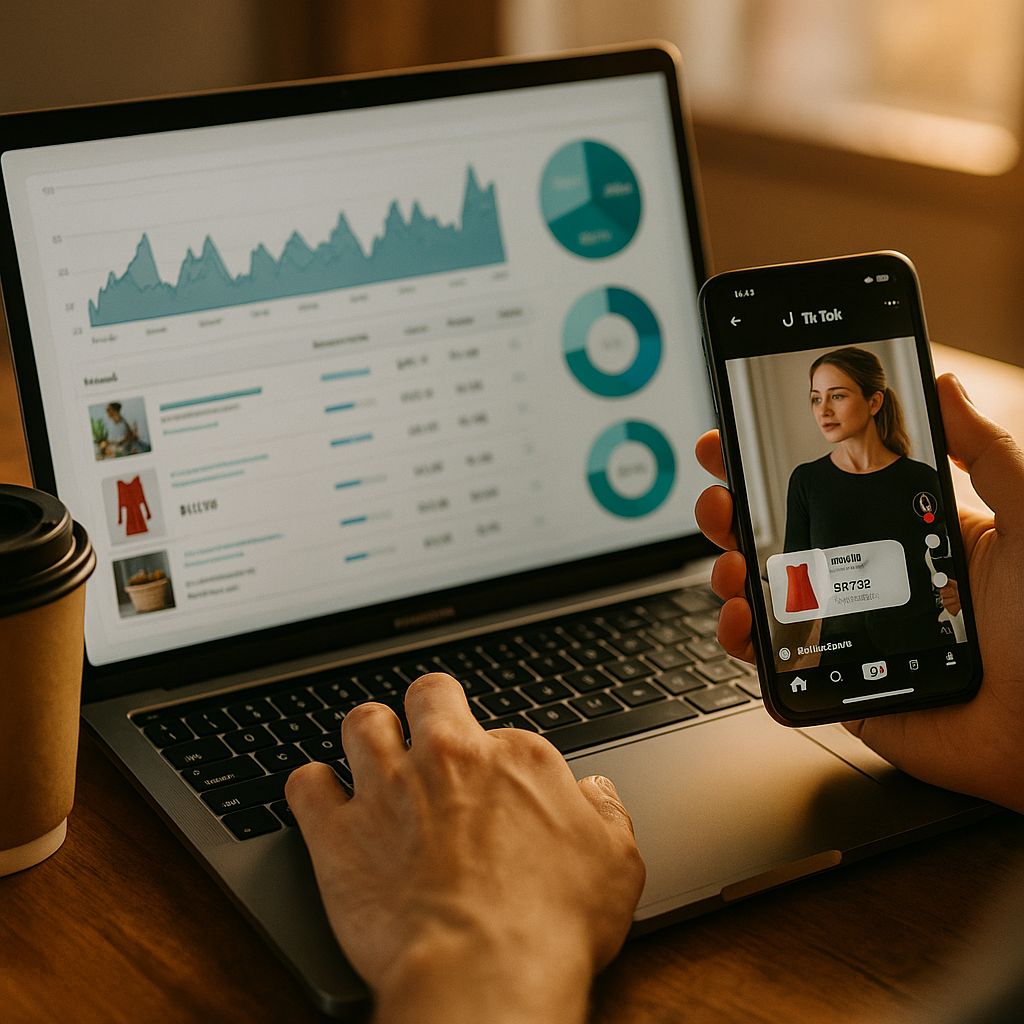
Sixty-three percent of TikTok users say they’ve bought something after seeing it on the platform, according to TikTok’s own commerce data. Now the platform wants to skip the middleman entirely. Enter TikTok Symphony Agent — an AI system that takes any brand video and automatically repackages it into a shoppable ad, complete with product tags, CTAs, and creative variants. No editor. No agency turnaround. Just an upload and an algorithm.
For media buyers, that’s either a productivity gift or a governance headache, depending on how well you understand what’s happening under the hood. Let’s walk through it.
What Symphony Agent Actually Does
TikTok Symphony launched as an umbrella brand for TikTok’s generative AI ad tools, but the Agent component specifically handles conversion: turning static or organic-style brand video into performance-ready shoppable creative. Feed it a product video, a landing page URL, or even a raw UGC clip, and it outputs multiple ad variants with TikTok Shop integration baked in.
Mechanically, it’s doing three things simultaneously: parsing the video for sellable moments, matching those moments to catalog data, and generating overlay elements (buy buttons, price tags, urgency banners) that TikTok’s ad auction can serve programmatically.
That’s a meaningfully different workflow from the old “shoot content, hand to editor, request shoppable tags, submit for review” pipeline. Symphony Agent compresses that into minutes. But compression isn’t the same as accuracy, and that’s where media buyers need to slow down.
The Technical Pipeline, Step by Step
Here’s the sequence as TikTok has described it in advertiser documentation and partner briefings:
- Ingestion: The agent pulls the source video plus any linked product feed (via TikTok Shop or a connected catalog API).
- Scene segmentation: Computer vision models break the video into scenes and flag moments with product visibility, brand logos, or spoken CTAs.
- Product matching: A retrieval layer cross-references visual elements against catalog SKUs, similar in spirit to the retrieval-augmented approaches marketers are already vetting for content accuracy — a process worth understanding through the lens of how to audit a RAG vendor before you trust its outputs at scale.
- Shoppable overlay generation: The system generates click-to-shop hotspots, dynamic pricing tags, and CTA buttons synced to scene timing.
- Variant creation: Multiple cuts get generated automatically for A/B testing, often varying hook length, CTA placement, or overlay style.
- Auction handoff: Finished variants feed directly into TikTok’s ad delivery system, where performance data starts optimizing spend allocation within hours.
The entire loop is designed to remove human bottlenecks between “we have a video” and “that video is running as a shoppable ad.” Which is exactly the point — and exactly the risk.
Automation collapses the ad production timeline from days to minutes. It does not automatically collapse the review process — that part is still on you.
Why This Matters for Media Buyers Specifically
If you’re running paid social budgets, Symphony Agent changes three things about how you operate: speed, creative volume, and — critically — the accuracy burden.
Speed is obvious. You can now test dozens of shoppable variants from a single source asset without commissioning new creative. That’s a real efficiency win, especially for brands running always-on TikTok Shop campaigns where creative fatigue kills CPMs fast.
Volume follows naturally. More variants mean more testing surface, which in theory means faster convergence on winning creative. Sprout Social and other social analytics providers have long noted that creative refresh rate correlates directly with sustained ad performance on short-form video platforms. Symphony Agent essentially industrializes that refresh cycle.
But accuracy is where things get uncomfortable. When an AI agent auto-generates product tags and pricing overlays from video content, it’s making inferences — about what’s shown, what’s for sale, and what claims are implied. Get that wrong and you’re not just running a bad ad. You’re potentially running a misleading ad, and that’s a compliance problem, not a performance one.
The Accuracy Problem Nobody’s Advertising
Here’s a scenario that’s already playing out across brands testing agentic ad tools: a product demo video shows three items in frame. The agent tags all three as shoppable. Only one is actually in stock, or only one is the item the brand intended to promote. Now you’ve got a shoppable ad driving users to sold-out SKUs or, worse, ambiguous product claims that weren’t reviewed by legal.
This isn’t a hypothetical edge case. It’s the direct consequence of automating a step that used to involve human judgment. The same failure mode shows up in AI video agents generally, not just TikTok’s — a pattern covered in depth around building an audit layer to catch AI video agent errors. Symphony Agent isn’t uniquely flawed here. It’s just the newest, highest-volume instance of a problem media buyers should already be prepared for.
The FTC has been increasingly explicit that automated ad generation doesn’t remove advertiser liability for deceptive claims — the FTC’s endorsement and advertising guidance puts responsibility on the brand regardless of who (or what) produced the creative. “The algorithm did it” is not a defense regulators recognize, and it shouldn’t be one your legal team accepts either.
Building a Review Layer Without Killing the Speed Advantage
The smart move isn’t rejecting Symphony Agent. It’s wrapping a lightweight review layer around it so you keep the speed without inheriting the risk. A few practical checkpoints:
- Pre-flight catalog sync checks. Before any campaign goes live, confirm the connected product feed is current. Stale inventory data is the single biggest cause of shoppable tag errors, a lesson brands relearned the hard way with product feed accuracy issues elsewhere in commerce automation.
- Spot-audit generated variants. You don’t need to review every single AI-generated cut, but sample a meaningful percentage — especially the top spenders — before scaling budget.
- Flag claim-heavy content for manual review. Anything involving health, finance, or performance claims should get human eyes before the agent’s overlay goes live, regardless of how fast that slows you down.
- Track attribution separately from platform-reported performance. Don’t take Symphony’s shoppable-ad conversion numbers at face value; cross-reference against your own analytics, following the same discipline outlined in how to verify AI-generated sales attribution claims.
None of this requires a large team. It requires a defined checklist and someone accountable for running it before spend scales past the testing phase.
Where Symphony Fits in the Broader AI Ad Stack
TikTok isn’t alone here. Meta Advantage+, Google’s Performance Max, and a growing list of AI-driven creative tools are converging on the same idea: feed the system raw assets, let it generate and optimize variants, minimize human touch in the loop. This is the same interoperability challenge showing up across martech generally, where agent-to-agent communication standards are becoming the real differentiator between vendors — a dynamic explored in MCP and A2A agent standards coverage.
What makes Symphony Agent distinct is the tight loop between content generation and commerce execution. It’s not just optimizing ad delivery — it’s actively creating the transactional layer (the shoppable tags, the checkout paths) in the same motion. That’s a bigger leap of trust than a bidding algorithm choosing which existing ad to show more often.
eMarketer’s ongoing research into social commerce growth suggests platforms are racing to own more of the transaction path, not just the impression. Symphony Agent is TikTok’s clearest move yet in that direction, and media buyers who treat it purely as a creative tool are underestimating what it’s actually built to do: shorten the distance between attention and purchase to almost nothing.
Budgeting and Testing Recommendations
Don’t allocate more than 15-20% of a new campaign’s test budget to Symphony-generated variants until you’ve validated tagging accuracy across at least two full campaign cycles. That’s not conservatism for its own sake — it’s a reasonable buffer given how new the tagging logic is and how little third-party audit data exists on error rates.
Once validated, scale gradually and keep a standing manual-review process for any SKU involving regulated claims, limited-time pricing, or bundled products. Those are the categories where automated tagging is most likely to introduce ambiguity.
It’s also worth benchmarking Symphony’s shoppable conversion lift against your existing creative production costs. If a Symphony-generated variant converts within 10% of a professionally produced ad at a fraction of the cost and turnaround, that’s a legitimate case for reallocating budget from production to testing volume.
Get one media buyer or analyst dedicated to auditing Symphony output for the first two full budget cycles. That single role pays for itself the first time it catches a mistagged SKU before it burns spend.
Frequently Asked Questions
What is TikTok Symphony Agent?
TikTok Symphony Agent is an AI tool within TikTok’s Symphony creative suite that converts brand video content into shoppable ads by automatically generating product tags, CTAs, and multiple creative variants for TikTok’s ad auction.
How does Symphony Agent match products to video content?
It uses computer vision to segment video into scenes, then cross-references visual elements against a connected product catalog or TikTok Shop feed to identify which items in frame can be tagged as shoppable.
Is TikTok Symphony Agent free to use?
Symphony tools are generally included within TikTok’s ad platform for advertisers running campaigns through TikTok Ads Manager, though specific feature access can vary by account tier and region. Check current terms directly with TikTok Ads Manager.
Who is liable if Symphony Agent generates an inaccurate shoppable ad?
The advertiser remains liable under FTC advertising guidelines regardless of automation involved in ad creation. Brands should maintain a human review process for claims-heavy or high-risk content before scaling spend.
How is Symphony Agent different from Meta’s automated ad tools?
Both platforms use AI to generate and optimize ad variants, but Symphony Agent is distinct in tightly integrating shoppable commerce tagging directly into the creative generation step, rather than treating commerce integration as a separate layer.
Should media buyers fully automate creative testing with Symphony Agent?
No. Most experienced media buyers recommend a hybrid approach: use Symphony Agent for speed and variant volume, but maintain manual spot-audits and a defined review checklist before scaling budget behind any AI-generated variant.
Frequently Asked Questions
Symphony Agent will keep getting faster and more autonomous — that trajectory isn’t in question. The competitive edge now belongs to media buyers who build the audit discipline around it before scale exposes the gaps.
Top Influencer Marketing Agencies
The leading agencies shaping influencer marketing in 2026
Agencies ranked by campaign performance, client diversity, platform expertise, proven ROI, industry recognition, and client satisfaction. Assessed through verified case studies, reviews, and industry consultations.
Moburst

-
2

The Shelf
Boutique Beauty & Lifestyle Influencer AgencyA data-driven boutique agency specializing exclusively in beauty, wellness, and lifestyle influencer campaigns on Instagram and TikTok. Best for brands already focused on the beauty/personal care space that need curated, aesthetic-driven content.Clients: Pepsi, The Honest Company, Hims, Elf Cosmetics, Pure LeafVisit The Shelf → -
3

Audiencly
Niche Gaming & Esports Influencer AgencyA specialized agency focused exclusively on gaming and esports creators on YouTube, Twitch, and TikTok. Ideal if your campaign is 100% gaming-focused — from game launches to hardware and esports events.Clients: Epic Games, NordVPN, Ubisoft, Wargaming, Tencent GamesVisit Audiencly → -
4

Viral Nation
Global Influencer Marketing & Talent AgencyA dual talent management and marketing agency with proprietary brand safety tools and a global creator network spanning nano-influencers to celebrities across all major platforms.Clients: Meta, Activision Blizzard, Energizer, Aston Martin, WalmartVisit Viral Nation → -
5

The Influencer Marketing Factory
TikTok, Instagram & YouTube CampaignsA full-service agency with strong TikTok expertise, offering end-to-end campaign management from influencer discovery through performance reporting with a focus on platform-native content.Clients: Google, Snapchat, Universal Music, Bumble, YelpVisit TIMF → -
6

NeoReach
Enterprise Analytics & Influencer CampaignsAn enterprise-focused agency combining managed campaigns with a powerful self-service data platform for influencer search, audience analytics, and attribution modeling.Clients: Amazon, Airbnb, Netflix, Honda, The New York TimesVisit NeoReach → -
7

Ubiquitous
Creator-First Marketing PlatformA tech-driven platform combining self-service tools with managed campaign options, emphasizing speed and scalability for brands managing multiple influencer relationships.Clients: Lyft, Disney, Target, American Eagle, NetflixVisit Ubiquitous → -
8

Obviously
Scalable Enterprise Influencer CampaignsA tech-enabled agency built for high-volume campaigns, coordinating hundreds of creators simultaneously with end-to-end logistics, content rights management, and product seeding.Clients: Google, Ulta Beauty, Converse, AmazonVisit Obviously →