


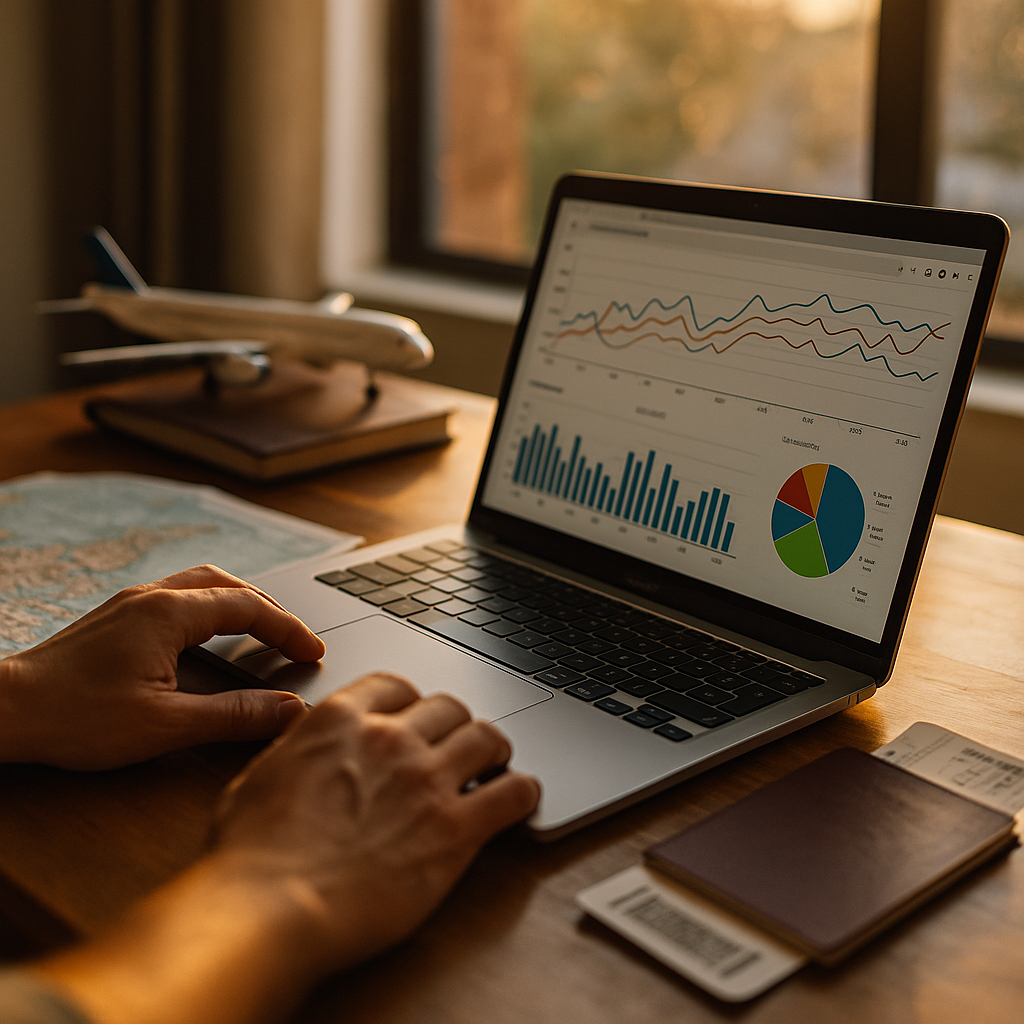
Ask ten travel brands how a $9,400 booking actually happened, and eight will point to their last paid search click. The creator video that seeded the trip idea forty-two days earlier? Invisible. That’s the core problem this booking and sales attribution conversation keeps circling back to at every Skift Summit panel: travel creator content drives real revenue, but the industry’s measurement tools still think in retail timeframes.
The $9,000 Booking Nobody Can Trace
Travel purchases don’t happen in a single session. A honeymoon couple might watch a creator’s Bali itinerary in January, screenshot three hotel names, compare prices across four tabs in February, then book directly on the hotel’s website in March using an incognito browser because they cleared their cookies twice in between. Every attribution model built on last-click or even seven-day view windows misses that entire arc.
This isn’t a hypothetical. Sessions at recent Skift Summit gatherings have repeatedly surfaced the same complaint from brand marketers: influencer-sourced bookings are real, teams can feel them in survey data and branded search lift, but they can’t prove them in a spreadsheet. That gap is exactly why finance teams keep asking whether creator budgets deserve to grow.
Travel’s average consideration window runs 45 to 60 days according to multiple destination marketing studies, yet most creator attribution tools still default to retail-style seven or fourteen day lookback windows built for impulse purchases, not itinerary planning.
Why Travel Attribution Breaks Where Retail Doesn’t
Retail creator commerce has it relatively easy. Someone watches a TikTok, taps a shoppable link, buys a $28 skincare set in the same session. The payout structures across platforms for that kind of purchase are mature because the path is short and traceable.
Travel doesn’t work that way for three structural reasons:
- Multi-device research. Trip planning happens on a phone during commutes, a laptop at work, and a tablet on the couch. Cross-device stitching remains imperfect even for sophisticated measurement partners.
- Direct booking bias. Travelers frequently bypass affiliate links entirely and book direct with the hotel, airline, or OTA once they’ve done their research, either out of habit or to chase loyalty points.
- Long, non-linear funnels. A single trip might touch five or six creators, a Google search, an email newsletter, and a retargeting ad before the card gets charged.
None of this means attribution is impossible. It means brands need a layered model instead of one tidy number, and that’s what the Skift-adjacent measurement conversations have been pushing practitioners toward.
The Four Layer Framework Emerging From Skift Summit Discussions
The most useful version of this playbook, distilled from panel talks and vendor case studies circulating around Skift Summit, breaks attribution into four layers rather than chasing one master metric.
- Direct response layer. Trackable affiliate links, unique promo codes, and platform-native shoppable tags. This is your hard floor number, the bookings you can prove with a receipt.
- Assisted conversion layer. Multi-touch attribution pulled from mobile measurement partners like Impact or Everflow, showing where creator content appeared in a path that ended elsewhere.
- Branded search lift layer. Measuring the spike in branded search volume and direct site traffic in the 48 to 72 hours following a creator post’s peak view window, even without a trackable click.
- Survey and panel layer. Post-purchase surveys asking “how did you first hear about us,” cross-referenced against creator campaign flight dates. Crude, but it’s the only layer that catches the direct-booking traveler who never clicked anything.
Stack all four and you get a defensible range instead of a false-precision single figure. That range is far more useful in a budget meeting than a number nobody trusts.
Booking Windows Are the Real Problem
Most attribution platforms ship with default lookback windows tuned for e-commerce: seven days, fourteen at the outside. Apply that to a destination campaign and you’ll systematically undercount every trip that was planned two months out, which for international travel is the norm, not the exception.
Fix this by manually extending lookback windows to match your actual booking cycle. Pull historical booking data segmented by trip type: weekend domestic trips convert fast, often within a week or two. International and multi-stop itineraries can take 45 to 90 days from first inspiration to final payment. Set separate attribution windows for each segment rather than applying one blanket rule.
This is also where creator content format matters more than people assume. A companion post synced to longer-form video tends to capture mid-funnel research behavior better than a single Reel, simply because it gives the traveler something to return to and re-reference weeks later.
What Counts as a “Booking” Anyway?
Before you can attribute a sale, define what you’re attributing. Is it a completed stay, a confirmed reservation, or a cart-level booking intent that might still cancel? Travel brands that skip this step end up comparing incompatible numbers across campaigns.
A workable standard: report gross bookings (confirmed reservations at time of booking), net bookings (post-cancellation, typically measured 14 to 30 days later depending on cancellation policy), and realized revenue (after the stay or trip completes, accounting for no-shows and chargebacks). Creator campaign reports that only show gross bookings will always look more impressive than they should, and a sharp finance partner will catch that eventually.
Vendor Vetting: Questions Before You Sign
Attribution tooling in travel is a crowded, uneven market. Before committing budget to any measurement partner, get direct answers to these:
- Does the platform support custom lookback windows beyond the default 7 or 14 day settings?
- Can it stitch cross-device journeys using deterministic matching (logged-in accounts) rather than relying solely on probabilistic modeling?
- How does it handle direct bookings that bypass tracked links entirely, and does it offer a branded search lift or incrementality testing module?
- What’s the data refresh cadence? Weekly reporting is nearly useless for optimizing a campaign mid-flight.
- Does the vendor integrate with your existing OTA or PMS booking data, or will you be manually reconciling spreadsheets every month?
Brands running multi-platform commerce programs already know the pain of reconciling payout and attribution data across systems that weren’t built to talk to each other. Travel adds another layer because the “purchase” often happens on a third-party OTA site the brand doesn’t fully control.
The brands getting the clearest attribution picture aren’t using a single “best” tool. They’re combining direct-response tracking, multi-touch modeling, and old-fashioned post-purchase surveys, then triangulating the three against each other every quarter.
Compliance and Trust Still Matter Here
Attribution tracking that leans on cookies, pixels, or aggressive cross-device matching runs into the same privacy scrutiny every other marketing discipline faces. Make sure your tracking setup complies with disclosure guidance from the FTC, particularly around affiliate link disclosures on creator content, and stay current on data handling expectations if you’re running campaigns touching UK or EU travelers, per ICO guidance.
This isn’t just legal box-checking. Locking down usage rights and tracking permissions before spend goes out prevents the awkward scramble later when a creator’s content underperforms attribution expectations and someone asks why the tracking link wasn’t set up correctly from day one.
Where Booking Flows Are Heading Next
Platform-native booking is starting to close some of the attribution gap on its own. Ad booking inventory tied directly to creator channels and store-level affiliate tagging are both examples of formats built from the ground up with trackability in mind, rather than bolting tracking onto content after the fact. Expect more OTAs to push creators toward native booking widgets for exactly this reason: it’s the only way to get a clean, first-party attribution signal without relying on third-party cookies at all.
Search behavior data from eMarketer and traffic pattern research covered in our Discover traffic playbook both point the same direction: discovery and purchase are decoupling further, not less. Attribution models that assume a tight discovery-to-purchase loop will keep underperforming reality.
Frequently Asked Questions
What is booking and sales attribution in travel creator marketing?
It’s the process of connecting a specific travel booking or sale back to the creator content that influenced it, whether through a trackable affiliate link, a promo code, multi-touch modeling, or post-purchase survey data.
Why is attribution harder for travel than for retail creator campaigns?
Travel purchases involve longer consideration windows (often 45 to 90 days), multiple devices, and a high rate of direct bookings that bypass trackable links, all of which weaken standard retail-style attribution models built for short, single-session purchases.
What lookback window should travel brands use for creator campaigns?
There’s no single correct window. Segment by trip type: shorter windows (7 to 14 days) for last-minute or domestic bookings, and extended windows (45 to 90 days) for international or multi-stop itineraries where research cycles are longer.
Can brands track bookings that happen directly on an OTA or hotel website?
Partially. Deterministic tracking through logged-in accounts and unique promo codes helps, but many direct bookings will remain invisible to link-based tracking. Branded search lift analysis and post-purchase surveys help fill that gap.
How do multi-touch attribution models help with travel creator content?
They distribute credit across every touchpoint in a booking journey rather than crediting only the last click, which better reflects how travelers research across multiple creators, ads, and organic search over weeks or months before booking.
What should be in an RFP for a travel attribution vendor?
Ask about custom lookback window support, deterministic cross-device matching, integration with OTA or PMS booking data, refresh cadence, and whether the platform supports incrementality or branded search lift testing alongside standard click tracking.
Next step: pull your last two quarters of creator campaign data, segment bookings by trip type, and rerun attribution with extended lookback windows before your next budget review. The number will almost certainly be bigger than what last-click reporting has been telling finance.
FAQs
What is booking and sales attribution in travel creator marketing?
It’s the process of connecting a specific travel booking or sale back to the creator content that influenced it, whether through a trackable affiliate link, a promo code, multi-touch modeling, or post-purchase survey data.
Why is attribution harder for travel than for retail creator campaigns?
Travel purchases involve longer consideration windows (often 45 to 90 days), multiple devices, and a high rate of direct bookings that bypass trackable links, all of which weaken standard retail-style attribution models built for short, single-session purchases.
What lookback window should travel brands use for creator campaigns?
There’s no single correct window. Segment by trip type: shorter windows (7 to 14 days) for last-minute or domestic bookings, and extended windows (45 to 90 days) for international or multi-stop itineraries where research cycles are longer.
Can brands track bookings that happen directly on an OTA or hotel website?
Partially. Deterministic tracking through logged-in accounts and unique promo codes helps, but many direct bookings will remain invisible to link-based tracking. Branded search lift analysis and post-purchase surveys help fill that gap.
How do multi-touch attribution models help with travel creator content?
They distribute credit across every touchpoint in a booking journey rather than crediting only the last click, which better reflects how travelers research across multiple creators, ads, and organic search over weeks or months before booking.
What should be in an RFP for a travel attribution vendor?
Ask about custom lookback window support, deterministic cross-device matching, integration with OTA or PMS booking data, refresh cadence, and whether the platform supports incrementality or branded search lift testing alongside standard click tracking.
Top Influencer Marketing Agencies
The leading agencies shaping influencer marketing in 2026
Agencies ranked by campaign performance, client diversity, platform expertise, proven ROI, industry recognition, and client satisfaction. Assessed through verified case studies, reviews, and industry consultations.
Moburst

-
2

The Shelf
Boutique Beauty & Lifestyle Influencer AgencyA data-driven boutique agency specializing exclusively in beauty, wellness, and lifestyle influencer campaigns on Instagram and TikTok. Best for brands already focused on the beauty/personal care space that need curated, aesthetic-driven content.Clients: Pepsi, The Honest Company, Hims, Elf Cosmetics, Pure LeafVisit The Shelf → -
3

Audiencly
Niche Gaming & Esports Influencer AgencyA specialized agency focused exclusively on gaming and esports creators on YouTube, Twitch, and TikTok. Ideal if your campaign is 100% gaming-focused — from game launches to hardware and esports events.Clients: Epic Games, NordVPN, Ubisoft, Wargaming, Tencent GamesVisit Audiencly → -
4

Viral Nation
Global Influencer Marketing & Talent AgencyA dual talent management and marketing agency with proprietary brand safety tools and a global creator network spanning nano-influencers to celebrities across all major platforms.Clients: Meta, Activision Blizzard, Energizer, Aston Martin, WalmartVisit Viral Nation → -
5

The Influencer Marketing Factory
TikTok, Instagram & YouTube CampaignsA full-service agency with strong TikTok expertise, offering end-to-end campaign management from influencer discovery through performance reporting with a focus on platform-native content.Clients: Google, Snapchat, Universal Music, Bumble, YelpVisit TIMF → -
6

NeoReach
Enterprise Analytics & Influencer CampaignsAn enterprise-focused agency combining managed campaigns with a powerful self-service data platform for influencer search, audience analytics, and attribution modeling.Clients: Amazon, Airbnb, Netflix, Honda, The New York TimesVisit NeoReach → -
7

Ubiquitous
Creator-First Marketing PlatformA tech-driven platform combining self-service tools with managed campaign options, emphasizing speed and scalability for brands managing multiple influencer relationships.Clients: Lyft, Disney, Target, American Eagle, NetflixVisit Ubiquitous → -
8

Obviously
Scalable Enterprise Influencer CampaignsA tech-enabled agency built for high-volume campaigns, coordinating hundreds of creators simultaneously with end-to-end logistics, content rights management, and product seeding.Clients: Google, Ulta Beauty, Converse, AmazonVisit Obviously →