


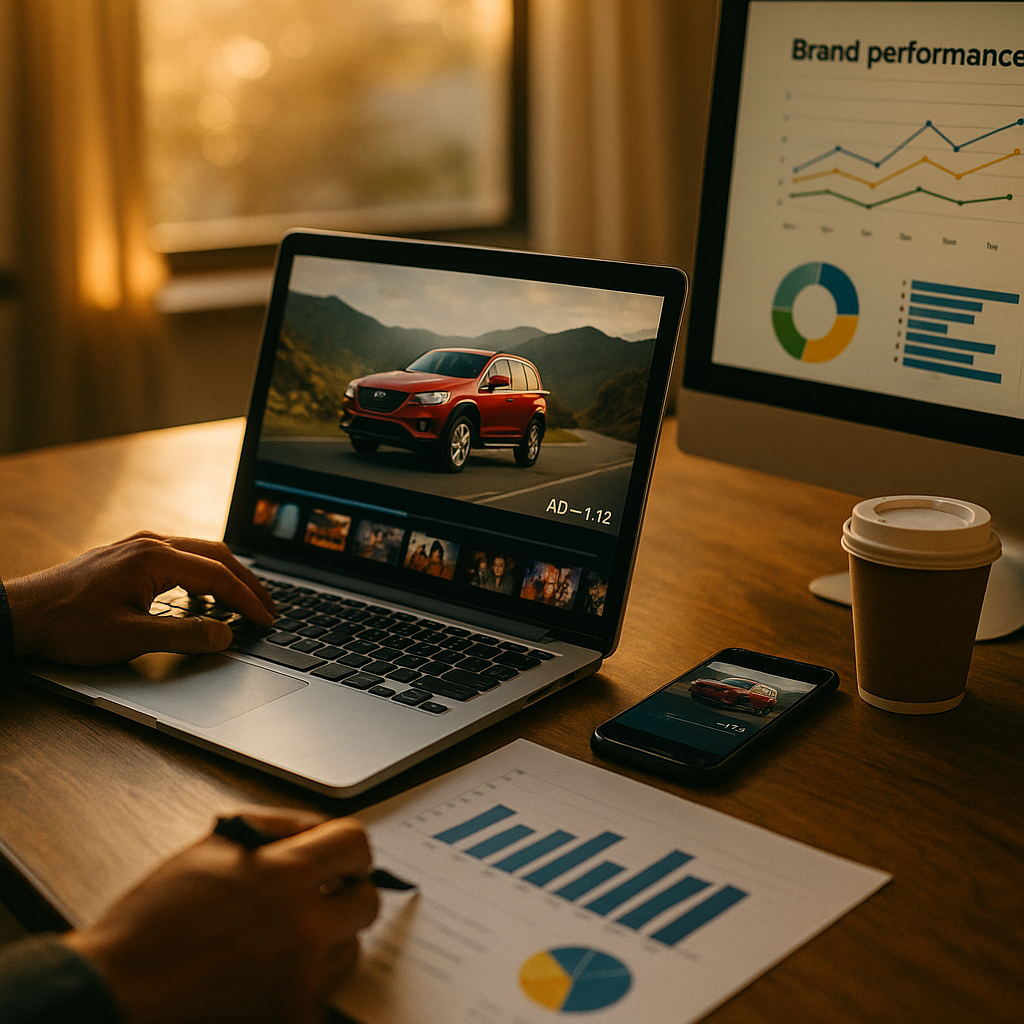
Sixty seven percent of ad supported streaming viewers now watch with a phone in hand, according to eMarketer research on second screen behavior. If your creator commercial airs on Peacock or Netflix’s ad tier and nothing shows up on that viewer’s Instagram or TikTok feed within minutes, you’ve left half the campaign’s impact on the table. AVOD companion posts are the fix, and brands that skip this step are essentially paying CTV rates for social level attention spans.
What Companion Posting Actually Means Here
An AVOD companion post is a social media asset, usually a short cutdown, behind the scenes clip, or a direct repost of the TV spot, published to time roughly with when a creator’s commercial is running across ad supported streaming inventory. Think of it as simulcasting, but instead of syncing a broadcast to a second network, you’re syncing a :15 or :30 creator ad to Reels, TikTok, and YouTube Shorts.
This isn’t a new idea dressed up in jargon. Linear TV advertisers have run “as seen on TV” social pushes for a decade. What’s changed is the creator layer. When the person in your CTV ad has 400,000 followers who might actually be watching Hulu or Amazon Freevee at that exact moment, the sync becomes a retention and recall play, not just a brand awareness afterthought.
Companion posts don’t just extend reach, they compress the gap between ad exposure and purchase intent by giving viewers something to click while the commercial is still fresh in short term memory.
Why Sync Timing Is the Whole Game
Post the companion content a day late and you’ve lost the moment. Post it three days early and you’ve spoiled the surprise or, worse, trained the algorithm to treat it as unrelated organic content instead of a paid extension. The sweet spot, based on patterns brands are testing across AVOD platforms similar to what we outlined in our Netflix ad tier playbook, is a window of two hours before the first major ad pod airs through about six hours after.
Why that range? AVOD ad slots aren’t scheduled with the precision of a Super Bowl commercial. Programmatic CTV buys rotate across dayparts, and frequency capping means the same viewer might see your spot Tuesday evening and again Thursday morning. A tight companion post window forces you to think in flights, not single air dates.
- Map your CTV flight calendar first, then build the social publishing calendar around it, never the reverse.
- Use creator scheduling tools that support UTC-adjusted, dayparted publishing so a national flight doesn’t post at 3am for West Coast audiences.
- Hold back 15 to 20 percent of the social budget for a rapid response wave if the AVOD platform reports higher than expected completion rates in the first 48 hours.
Creative Parity, Not Creative Duplication
A common mistake: brands simply re-upload the TV spot to Instagram and call it a companion post. It underperforms almost every time. Vertical crop jobs of horizontal ads read as an afterthought, and feed audiences know the difference. Instead, treat the AVOD spot as a source asset and produce a genuinely native cutdown, same creator, same hook, same call to action, but reframed for a scrolling thumb rather than a couch.
This is where the creator’s own production instincts matter more than the media plan. Creators who understand watch depth mechanics on Reels know the first 1.5 seconds carry the entire retention curve. A TV spot can afford a slow establishing shot. A companion post cannot.
Budget for a short second edit session with the creator’s team, not just a resize. It typically adds 10 to 15 percent to production cost but the lift in completion rate justifies it almost every time we’ve seen brands test it against straight repurposed cuts.
Platform Mechanics: Where the Friction Actually Lives
Every AVOD platform handles creator commercials differently, and that affects how cleanly you can sync a companion post.
Netflix’s ad tier runs shorter pods and stricter creative review, which means your companion content needs final approval well before the flight starts. There’s no room for a same day creative swap the way there is on programmatic display.
Amazon’s Freevee and Fire TV inventory connects more directly to shoppable moments, which pairs naturally with affiliate style companion posts. If you’re already running creator affiliate programs, this is a natural extension worth stacking on top of what’s covered in our Amazon creator connections breakdown.
FAST channels (free ad supported streaming TV) operate on looser scheduling but higher frequency, so companion posts here work better as an ongoing drumbeat rather than a single sync moment. If your team is booking inventory across FAST channels, the ad booking mechanics in our creator FAST channels playbook apply directly to how you’ll need to plan the social calendar around rotating air windows.
Attribution: The Part Nobody Wants to Admit Is Messy
Here’s the uncomfortable truth. You cannot cleanly attribute a sale to “saw the CTV ad, then saw the Instagram post, then bought.” Cross device measurement on connected TV remains fragmented, and most AVOD platforms don’t expose device graph data to advertisers at the granularity social marketers are used to.
What you can do is build a lift study using geo holdouts or matched market testing, running the companion post strategy in one DMA and withholding it in a comparable one. Pair that with brand lift surveys the AVOD platform offers natively. It’s not perfect, but it’s more honest than pretending last click attribution works here.
If your measurement plan assumes clean multi touch attribution across CTV and social, you’re measuring a campaign that doesn’t exist. Build for lift, not for a linear path.
Statista’s ongoing tracking of connected TV ad spend growth shows budgets moving into this space faster than measurement infrastructure has caught up, which is exactly why brands running companion post programs need to set expectations with finance teams early. Don’t promise attribution precision you can’t deliver.
Compliance Doesn’t Take a Break Because the Ad Aired on TV
A creator commercial that ran through an AVOD network is still a paid endorsement, and the companion social post is still subject to the same disclosure rules as any other sponsored content. The FTC’s endorsement guidance doesn’t carve out an exception for content that originated as a TV buy. If anything, regulators have shown more scrutiny toward ads that blur the line between traditional commercial and organic looking social content, precisely because companion posts are designed to feel native.
Label the companion post clearly, use the platform’s built in branded content tools, and don’t assume the “as seen on TV” framing does the disclosure work for you. We’ve written before about how brands need airtight processes here in our branded content labels compliance playbook, and the same standard applies even though the originating media is a streaming ad pod rather than a YouTube pre-roll.
Budgeting the Companion Layer Without Blowing Up the Media Plan
Treat the companion post as a media line item, not a bonus deliverable buried in the creator’s contract. A reasonable starting allocation is 12 to 18 percent of the total CTV creator media spend, covering the secondary edit, the organic posting cadence, and a modest paid boost to extend reach beyond the creator’s organic following.
Don’t skip the paid boost. Organic reach on a branded post, even from a creator with strong engagement, rarely matches the frequency needed to reinforce a TV impression within the same week. A small paid push, even $500 to $1,500 per post depending on the creator’s audience size, meaningfully increases the odds the same viewer sees both touches.
- Negotiate companion post usage rights into the original creator contract, not as a separate add on later.
- Budget for at least one revision round on the social cutdown since platform specs and TV specs rarely align on aspect ratio or duration.
- Track blended CPM across both the AVOD buy and the social boost so finance sees one number, not two disconnected line items.
Some of this budgeting logic mirrors what brands already do when they split spend between owned commerce and creator programs, similar to the tradeoffs we mapped in the Amazon Live versus influencer program budget guide. The principle carries over: define the split before the campaign launches, not after the invoices arrive.
A Quick Note on AI Generated Cutdowns
Some brands are experimenting with AI tools to auto generate the vertical companion cut from the horizontal TV master, cutting turnaround time significantly. It works reasonably well for straightforward product shots but tends to flatten the creator’s personality, the exact thing that made the CTV spot worth paying a creator for in the first place. If cost pressure is real, this overlaps with broader conversations happening around AI generated content and lower CPMs, but treat automated cutdowns as a supplement for lower tier flights, not a replacement for creator involved editing on flagship placements.
Platforms like Meta’s ad tools and TikTok’s ads platform continue to build out sparking and boosting features that make it easier to push creator content as paid media once it’s live, which is the mechanism you’ll lean on for the companion boost step described above.
Next Step
Pick one upcoming AVOD flight, map its exact air window, and brief the creator for a native vertical cutdown two weeks before launch instead of two days. That single scheduling change fixes the most common failure point in companion post programs before you even touch attribution.
FAQs
What is an AVOD companion post?
It’s a social media asset, typically a short vertical video, published to align with when a creator’s commercial airs on ad supported streaming platforms like Netflix’s ad tier, Peacock, Hulu, or Amazon Freevee. The goal is reinforcing the TV impression on a second screen close to the same moment.
How soon after the AVOD ad airs should the companion post go live?
A window of two hours before the flight starts through roughly six hours after tends to perform best, since AVOD ad rotations aren’t scheduled with the precision of a single broadcast slot.
Can I just repost the TV commercial to social feeds?
You can, but it usually underperforms. Native vertical edits with a faster hook, built specifically for feed viewing, consistently outperform straight resizes of horizontal TV creative.
How do I measure the impact of companion posts if attribution is unreliable?
Use geo holdout or matched market lift studies rather than relying on last click attribution. Pair that with the AVOD platform’s native brand lift surveys for a more honest read on incremental impact.
Do companion posts need FTC disclosure even though the source ad ran on TV?
Yes. The companion post is still sponsored content and must follow the same disclosure rules as any other paid creator post, regardless of where the original ad aired.
What percentage of the media budget should go toward companion posts?
A starting range of 12 to 18 percent of total CTV creator media spend, covering the edit, organic posting, and a modest paid boost, is a reasonable benchmark for most brands testing this for the first time.
Top Influencer Marketing Agencies
The leading agencies shaping influencer marketing in 2026
Agencies ranked by campaign performance, client diversity, platform expertise, proven ROI, industry recognition, and client satisfaction. Assessed through verified case studies, reviews, and industry consultations.
Moburst

-
2

The Shelf
Boutique Beauty & Lifestyle Influencer AgencyA data-driven boutique agency specializing exclusively in beauty, wellness, and lifestyle influencer campaigns on Instagram and TikTok. Best for brands already focused on the beauty/personal care space that need curated, aesthetic-driven content.Clients: Pepsi, The Honest Company, Hims, Elf Cosmetics, Pure LeafVisit The Shelf → -
3

Audiencly
Niche Gaming & Esports Influencer AgencyA specialized agency focused exclusively on gaming and esports creators on YouTube, Twitch, and TikTok. Ideal if your campaign is 100% gaming-focused — from game launches to hardware and esports events.Clients: Epic Games, NordVPN, Ubisoft, Wargaming, Tencent GamesVisit Audiencly → -
4

Viral Nation
Global Influencer Marketing & Talent AgencyA dual talent management and marketing agency with proprietary brand safety tools and a global creator network spanning nano-influencers to celebrities across all major platforms.Clients: Meta, Activision Blizzard, Energizer, Aston Martin, WalmartVisit Viral Nation → -
5

The Influencer Marketing Factory
TikTok, Instagram & YouTube CampaignsA full-service agency with strong TikTok expertise, offering end-to-end campaign management from influencer discovery through performance reporting with a focus on platform-native content.Clients: Google, Snapchat, Universal Music, Bumble, YelpVisit TIMF → -
6

NeoReach
Enterprise Analytics & Influencer CampaignsAn enterprise-focused agency combining managed campaigns with a powerful self-service data platform for influencer search, audience analytics, and attribution modeling.Clients: Amazon, Airbnb, Netflix, Honda, The New York TimesVisit NeoReach → -
7

Ubiquitous
Creator-First Marketing PlatformA tech-driven platform combining self-service tools with managed campaign options, emphasizing speed and scalability for brands managing multiple influencer relationships.Clients: Lyft, Disney, Target, American Eagle, NetflixVisit Ubiquitous → -
8

Obviously
Scalable Enterprise Influencer CampaignsA tech-enabled agency built for high-volume campaigns, coordinating hundreds of creators simultaneously with end-to-end logistics, content rights management, and product seeding.Clients: Google, Ulta Beauty, Converse, AmazonVisit Obviously →