


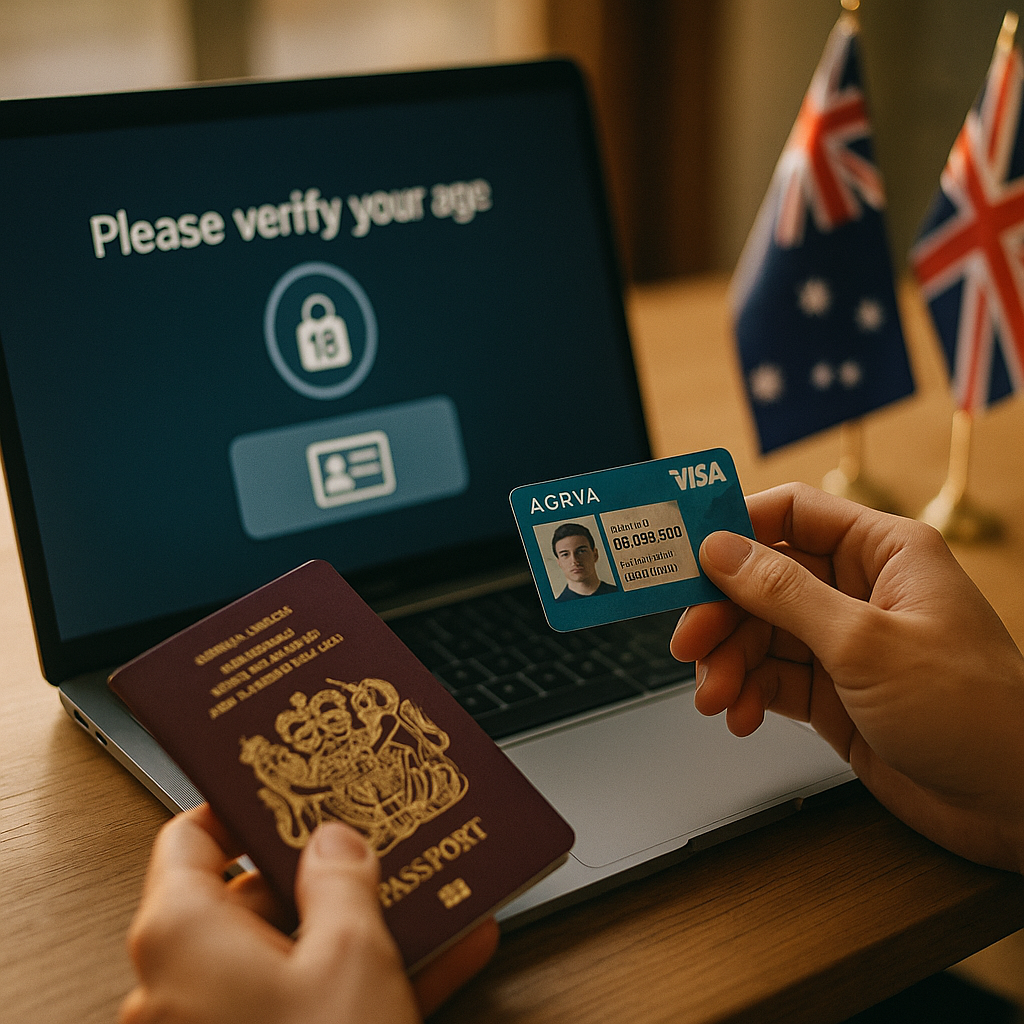
Two enforcement regimes, one campaign calendar, zero margin for error. When the UK’s under-16 social media restrictions and Australia’s social media age-verification law both hit full enforcement in the same quarter, brands running global influencer programs face a compliance collision most legal teams haven’t modeled yet. If your compliance matrix treats these as separate regional footnotes rather than one integrated risk map, you’re already behind.
Why Q1 2027 Is the Pressure Point
Australia’s Online Safety Amendment (Social Media Minimum Age) framework requires platforms to take “reasonable steps” to stop under-16s from holding accounts, with penalties reaching into the tens of millions for systemic non-compliance. The UK’s Online Safety Act obligations, layered with ICO guidance under the Age Appropriate Design Code, push platforms toward stricter age-assurance for younger users on a parallel but not identical timeline. Both regimes converge on enforcement activity in the same quarter, which means brands can’t sequence their compliance work. You need UK and Australian obligations mapped side by side, not handled as two separate legal tickets that happen to land close together.
The practical problem: platforms will respond differently. TikTok, Meta, YouTube and Snap are each building their own age-assurance stacks, and none of them are obligated to harmonize UK and Australian thresholds. A creator campaign compliant in Sydney could be non-compliant in Manchester by the same afternoon, depending on which age-verification signal fired.
Brands that build one compliance matrix instead of two regional checklists will cut audit time roughly in half and avoid the classic failure mode: a campaign that passes UK review but trips Australian enforcement three weeks later.
What a Compliance Matrix Actually Needs to Contain
A matrix isn’t a policy document. It’s an operational tool your media buyers, legal reviewers, and creator managers can check against before a single dollar moves. Structure it around five axes:
- Jurisdiction trigger — does the campaign target, or is it reasonably likely to reach, UK or Australian audiences under the relevant age threshold?
- Platform mechanism — what age-assurance method does the platform use in each market (self-declaration, ID verification, AI age-estimation, parental consent flow)?
- Creator audience composition — documented follower demographics per platform, refreshed quarterly, not once at onboarding.
- Content classification — is the content youth-adjacent by subject matter even if the creator’s stated audience skews older?
- Escalation owner — a named role (not a department) responsible for pausing spend if a flag trips.
Miss any one of these and the matrix becomes decorative. Legal teams love a well-formatted document. Regulators don’t care how it looks — they care whether it changed behavior before harm occurred.
Mapping UK Under-16 Rules Against Australian Verification Triggers
The UK’s approach leans on “highly effective age assurance” as a standard, which is deliberately technology-neutral. That’s useful for platforms building flexible systems but frustrating for brands trying to build a checklist, because “highly effective” isn’t a fixed bar. Australia’s regime, by contrast, sets a harder line: under-16 accounts must be actively restricted, not just flagged.
For your matrix, this means two different failure conditions. In the UK, non-compliance risk sits more with content exposure and design features (algorithmic recommendation to minors, autoplay, notification design). In Australia, risk sits with account existence itself. A campaign might be fine on UK exposure grounds but still fail if it relies on an Australian audience segment that platform-level enforcement has already started deleting.
Run both conditions in parallel columns. Don’t average them into a single “youth compliance” score. That’s the mistake we keep seeing in early drafts of these matrices — teams collapse two distinct legal tests into one composite risk number, which hides exactly the divergence you need to see.
Where Brands Already Get This Wrong
Most compliance failures in youth-adjacent marketing don’t come from bad intent. They come from stale audience data. A brand runs a creator vetting process at the start of a quarter, confirms the audience skews 18-34, and never checks again. By week six, the platform’s own age-estimation model has reclassified a chunk of that audience, or a viral moment has pulled in a much younger cohort. Nobody re-checks because nobody built a re-check trigger into the workflow.
This is precisely the gap covered in our age-verification compliance checklist — the audience snapshot at contract signing is not the audience six weeks into a campaign. Build quarterly (at minimum) re-verification into every influencer agreement touching UK or Australian markets, and tie payment milestones to it. Money is the only lever that reliably gets creator managers to actually run the check.
There’s also a contract gap worth closing now. Most influencer agreements still treat “compliance with applicable law” as boilerplate. That won’t survive scrutiny in a dual-enforcement quarter. You need explicit clauses naming the UK and Australian frameworks, defining what happens if a platform’s age-assurance mechanism flags the creator’s content, and specifying who eats the cost of a paused campaign. This sits alongside the broader push toward one global standard for youth-adjacent creator compliance, which is where most sophisticated brands are heading anyway — not because it’s legally required everywhere, but because running six regional standards is operationally exhausting and error-prone.
Building the Matrix: A Practical Template
Here’s the structure we’d recommend rolling out before enforcement ramps in Q1:
- Row 1 — Platform. List each platform separately. TikTok’s age-assurance stack is not Instagram’s. Treat them as distinct risk profiles, not a combined “social” line item.
- Row 2 — Jurisdiction flags. UK under-16 exposure risk and Australian under-16 account risk, scored independently on a simple red/amber/green basis.
- Row 3 — Verification method in use. Document exactly how the platform is currently verifying age in each market. This changes quarterly; don’t assume static methods.
- Row 4 — Creator obligation. What the creator contract requires them to disclose or confirm about their audience.
- Row 5 — Brand action trigger. The specific event (platform notice, audience data shift, regulatory bulletin) that pauses spend automatically.
- Row 6 — Owner and review cadence. Named individual, reviewed monthly at minimum during the enforcement window.
Keep it in a shared, living document — not a PDF that gets emailed once and forgotten. Airtable, Notion, or even a well-maintained shared spreadsheet works better than a static compliance report nobody reopens after the kickoff meeting.
Don’t Forget the Paid Media Layer
Age-verification enforcement doesn’t stop at organic creator content. Paid amplification, whitelisting, and spark ads push creator content into placements governed by the platform’s ad-targeting rules, which have their own age-related restrictions layered on top of organic content rules. A post that’s fine organically can become a compliance problem the moment you boost it into a UK feed with algorithmic delivery that platform can’t fully verify against age thresholds.
This is the same logic driving scrutiny of livestream urgency tactics and disclosure timing elsewhere in the compliance stack: enforcement follows the money, and paid amplification is where regulators look first because it’s documented, trackable, and easy to audit. Build your matrix to flag paid spend against organic content separately. A creator’s organic audience compliance status doesn’t automatically transfer to a paid placement.
What Happens If You Get It Wrong
Penalties aside, the reputational cost of a dual-market compliance failure is worse than a single-market one. A brand caught reaching under-16 audiences in Australia while claiming UK-compliant practices looks like it’s cherry-picking which laws it takes seriously. Regulators notice patterns across markets faster than brands expect, particularly when platforms themselves are reporting enforcement data upward.
There’s also the agency liability question. If your influencer agency built the campaign, does your indemnification clause cover a platform-side age-verification failure that wasn’t the agency’s doing? Most contracts are silent on this. Fix that silence before enforcement, not after a fine.
The Bottom Line
Build one matrix, not two. Score UK and Australian risk independently within it, refresh audience data quarterly, and name a human owner for every escalation trigger. Do that before Q1, and dual enforcement becomes a documented risk you manage — not a surprise you explain to legal after the fact.
FAQs
What’s the biggest mistake brands make when building a compliance matrix for youth age-verification rules?
Collapsing UK and Australian requirements into a single compliance score. The two regimes test different things — exposure design in the UK, account existence in Australia — and averaging them hides the specific failure point you need to catch.
How often should creator audience data be re-verified during this enforcement window?
Quarterly at minimum, though monthly checks are safer for high-reach creators. Audience composition shifts faster than most contracts assume, especially after a viral moment or a platform-side age-estimation update.
Does paid amplification of creator content carry different compliance risk than organic posts?
Yes. Boosting or whitelisting content pushes it into algorithmic ad delivery governed by separate targeting rules, so a compliant organic post can become non-compliant once it’s paid media.
Who should own the escalation trigger in a compliance matrix?
A named individual, not a department. Escalation triggers that route to “legal” or “compliance team” generically tend to sit unactioned; a named owner with authority to pause spend closes that gap.
Should influencer contracts explicitly name both the UK and Australian frameworks?
Yes. Generic “compliance with applicable law” clauses won’t hold up under dual enforcement. Name the specific frameworks, define the trigger events, and assign cost responsibility if a campaign gets paused.
Top Influencer Marketing Agencies
The leading agencies shaping influencer marketing in 2026
Agencies ranked by campaign performance, client diversity, platform expertise, proven ROI, industry recognition, and client satisfaction. Assessed through verified case studies, reviews, and industry consultations.
Moburst

-
2

The Shelf
Boutique Beauty & Lifestyle Influencer AgencyA data-driven boutique agency specializing exclusively in beauty, wellness, and lifestyle influencer campaigns on Instagram and TikTok. Best for brands already focused on the beauty/personal care space that need curated, aesthetic-driven content.Clients: Pepsi, The Honest Company, Hims, Elf Cosmetics, Pure LeafVisit The Shelf → -
3

Audiencly
Niche Gaming & Esports Influencer AgencyA specialized agency focused exclusively on gaming and esports creators on YouTube, Twitch, and TikTok. Ideal if your campaign is 100% gaming-focused — from game launches to hardware and esports events.Clients: Epic Games, NordVPN, Ubisoft, Wargaming, Tencent GamesVisit Audiencly → -
4

Viral Nation
Global Influencer Marketing & Talent AgencyA dual talent management and marketing agency with proprietary brand safety tools and a global creator network spanning nano-influencers to celebrities across all major platforms.Clients: Meta, Activision Blizzard, Energizer, Aston Martin, WalmartVisit Viral Nation → -
5

The Influencer Marketing Factory
TikTok, Instagram & YouTube CampaignsA full-service agency with strong TikTok expertise, offering end-to-end campaign management from influencer discovery through performance reporting with a focus on platform-native content.Clients: Google, Snapchat, Universal Music, Bumble, YelpVisit TIMF → -
6

NeoReach
Enterprise Analytics & Influencer CampaignsAn enterprise-focused agency combining managed campaigns with a powerful self-service data platform for influencer search, audience analytics, and attribution modeling.Clients: Amazon, Airbnb, Netflix, Honda, The New York TimesVisit NeoReach → -
7

Ubiquitous
Creator-First Marketing PlatformA tech-driven platform combining self-service tools with managed campaign options, emphasizing speed and scalability for brands managing multiple influencer relationships.Clients: Lyft, Disney, Target, American Eagle, NetflixVisit Ubiquitous → -
8

Obviously
Scalable Enterprise Influencer CampaignsA tech-enabled agency built for high-volume campaigns, coordinating hundreds of creators simultaneously with end-to-end logistics, content rights management, and product seeding.Clients: Google, Ulta Beauty, Converse, AmazonVisit Obviously →