


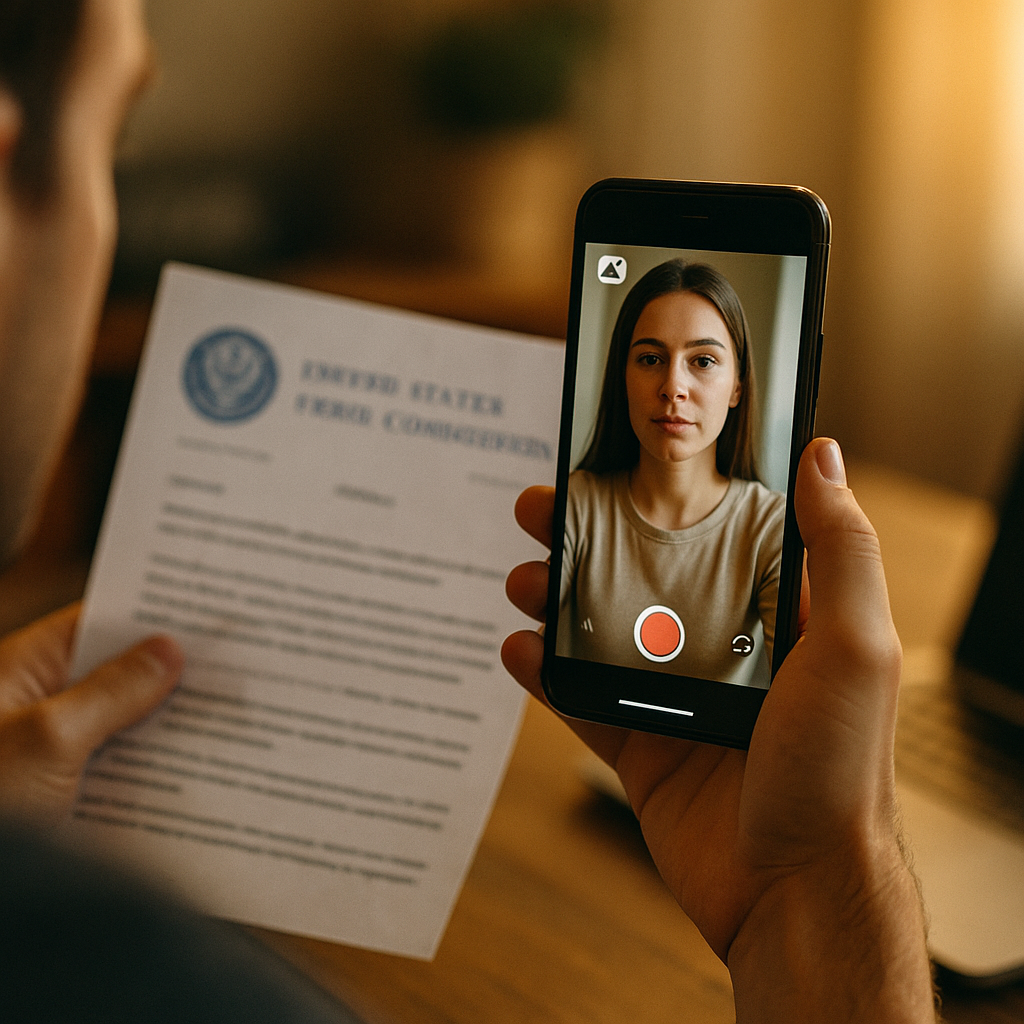
TikTok now auto-labels AI-generated content in over a dozen categories — and roughly 40% of those labels land in the wrong place, contradicting or duplicating the human disclosure a brand already added. If your creator says “AI-generated” while TikTok’s system tag says something slightly different, you don’t have redundancy. You have a legal problem. Reconciling TikTok’s automatic AI-content labels with FTC clear-and-conspicuous standards is quickly becoming one of the messiest compliance jobs in influencer marketing.
Two Disclosure Systems, One Post, Zero Coordination
Here’s the setup nobody planned for. TikTok’s platform-level detection scans uploads and auto-applies an “AI-generated content” label based on metadata, C2PA signals, or its own classifier. Separately, the FTC requires creators and brands to disclose material connections and, increasingly, synthetic elements, in a way that’s “clear and conspicuous” — unambiguous, hard to miss, and not buried under competing text.
Those two systems were built by different institutions, for different reasons, on different timelines. TikTok’s label exists to flag synthetic media for platform integrity and user trust. The FTC’s disclosure standard exists to protect consumers from being misled about commercial relationships and content authenticity. They overlap conceptually. They do not overlap procedurally.
So when a creator posts a sponsored video that used an AI voice-over or a generative background, you can end up with: a small platform tag reading “AI-generated,” a caption disclosure reading “#ad,” and maybe an on-screen text overlay the brand required reading “This video uses AI-enhanced visuals.” Three disclosures, three placements, and no guarantee any of them satisfies the FTC’s actual test on its own.
The FTC doesn’t care how many labels are on a post. It cares whether an average viewer, scrolling at normal speed, would clearly understand the AI use and the commercial relationship without hunting for it.
Why Contradiction, Not Just Redundancy, Is the Real Risk
Redundant disclosure is annoying but survivable. Contradictory disclosure is the actual danger. Consider a scenario already surfacing in creator audits: TikTok’s system labels a clip “AI-generated” because it detected synthetic audio in a background track, but the creator’s own caption says “100% real, no AI” because they’re referring to the product demo itself, not the music bed. A viewer sees two conflicting claims about the same word — AI — on the same post.
That’s not a labeling glitch. That’s a material misrepresentation risk. The FTC’s guidance on deceptive practices doesn’t grade on intent when the confusion is this direct. If the platform says one thing and the brand-approved disclosure says another, regulators and plaintiffs’ attorneys will treat the more damaging interpretation as the operative one.
This is the same pattern we’ve tracked with other platform-versus-brand disclosure conflicts. TikTok Shop’s FTC disclosure rules already break down when AI remixes clips, because the remix strips or relocates the original disclosure. Auto-labeling adds a second layer of failure on top of that first one.
Where the Two Standards Actually Diverge
- Placement logic: TikTok’s AI label typically sits in a fixed platform position (top of video or info panel). The FTC wants the disclosure where the eye naturally lands — near the claim itself, not tucked into a system UI element the user can dismiss or scroll past.
- Language specificity: TikTok’s label is generic — “AI-generated content” — regardless of what was actually generated (voice, video, background, translation). The FTC standard requires specificity proportional to what a reasonable consumer needs to know to avoid being misled.
- Persistence: Platform labels can be edited, removed on re-upload, or dropped when content is duetted, stitched, or downloaded and reposted elsewhere. FTC disclosure obligations travel with the content regardless of format changes.
- Who’s accountable: TikTok’s label is a platform statement. The brand’s disclosure is a brand statement. If they conflict, the brand is still the one the FTC will pursue, not TikTok.
That last point deserves its own paragraph, because it’s the one legal teams keep underestimating. Platforms aren’t co-defendants in FTC enforcement actions against advertisers. A brand can’t point to TikTok’s auto-label and say “the platform told a different story” as a defense. The FTC’s endorsement guidance puts the disclosure burden on the advertiser and the endorser, full stop.
What “Clear and Conspicuous” Actually Requires When Two Labels Exist
The FTC’s test isn’t new, but applying it to dual-label posts requires some translation. The core factors: proximity, prominence, and clarity of language, evaluated from the perspective of an ordinary consumer on the device and platform where the ad actually runs.
When two disclosures share a frame, the question becomes: does either one, or both together, still meet that bar? Sometimes yes. A TikTok AI label plus a brand disclosure that says something like “AI voice used; paid partnership with [Brand]” can work together cleanly, because they’re not saying contradictory things. Sometimes no. If the brand’s language is vague (“this video may include AI elements”) next to a platform label that’s definitive, the vagueness undercuts clarity for the whole post.
Practical rule: the more specific and human-readable disclosure should win, and everything else should be edited to match it, not replace it. Don’t rely on the platform label to do disclosure work it wasn’t designed to do. It’s a content-integrity flag, not an FTC-compliant statement, even though it might occasionally look like one.
This is the same logic we’ve applied to why paid partnership labels alone no longer satisfy FTC rules. A platform-native tag is a floor, not a ceiling. Brands that treat it as sufficient are the ones getting flagged in post-campaign audits.
Build the Reconciliation Step Into Your Content Workflow
Most brands still review disclosure at the script or caption stage, before the video ever touches TikTok’s classifier. That’s too early. The label gets applied after upload, sometimes hours later, sometimes only after the video’s been live and picked up traffic. You need a post-publish check, not just a pre-publish one.
A workable process looks like this:
- Pre-upload disclosure draft. Creator and brand agree on language before anything goes live — specific about what’s AI (voice, visual, script) and specific about the commercial relationship.
- Post-upload label audit. Within 24 hours, someone checks whether TikTok applied an auto-label, what it says, and where it sits relative to the human disclosure.
- Conflict resolution. If the platform label contradicts or is ambiguous next to the brand disclosure, edit the caption or overlay text immediately. Don’t wait for the next posting cycle.
- Screenshot and archive. Capture the live state of both disclosures together. This becomes your compliance record if a dispute or FTC inquiry ever surfaces.
- Re-check on remix or duet. Any derivative use resets the label check. Assume nothing carries over.
Step 5 matters more than people think. TikTok’s remix and stitch features are notorious for stripping the original disclosure while sometimes re-triggering a fresh AI label on the new composite. That’s covered in more depth in what brands need in creator contracts for AI remix consent, but the short version: your original post being compliant tells you nothing about the remix being compliant.
Contract Language That Actually Anticipates This Conflict
Most influencer agreements still treat “disclosure compliance” as a single clause: creator agrees to disclose per FTC guidelines. That’s not enough anymore. You need contract language that specifically addresses platform auto-labeling as a variable outside either party’s direct control, with a defined response protocol.
Useful clauses to add:
- A requirement that creators screenshot and report any platform-applied AI label within a set window (24–48 hours) after posting.
- A defined process for who edits the post if a conflict appears — brand, creator, or agency — and how fast.
- Indemnification language addressing platform-label-driven disclosure failures, not just creator-caused ones.
- A requirement to re-audit disclosure on any remix, duet, or cross-platform repost of the original content.
Brands negotiating these terms should also look at how data governance clauses for AI marketing platform contracts are being structured — the same discipline around vendor accountability applies here, just aimed at disclosure integrity instead of data handling.
The Multi-Platform Complication
None of this happens in isolation. A creator posting the same AI-assisted video to TikTok, Instagram, and YouTube will hit three different labeling systems with three different rules and thresholds. YouTube’s disclosure timing rules already differ meaningfully from TikTok and Instagram, and layering AI auto-labels on top means a single piece of content could be compliant on one platform and contradictory on another, using identical source footage.
The only durable fix is treating disclosure as content-level, not platform-level: write disclosure language specific and prominent enough that it holds up regardless of which platform’s auto-labeling system gets applied on top of it. Don’t design for TikTok’s label. Design for the FTC standard, and let the platform label be a secondary layer that either reinforces or gets corrected.
What Enforcement Trends Suggest Is Coming
The FTC hasn’t issued specific guidance yet on platform-auto-label conflicts, but the direction is visible in adjacent actions around synthetic media and endorsement disclosure. Expect scrutiny to focus less on whether a label existed and more on whether the overall viewing experience left room for confusion. Analysts at eMarketer have flagged AI-disclosure consistency as one of the top compliance risk areas brands are underprepared for heading into next year’s ad cycles.
Brands operating internationally have an added layer here too — the EU’s approach to AI transparency doesn’t map cleanly onto FTC rules, and reconciling both without duplicating disclosure work is its own project, covered in how the EU AI Act and FTC rules can be reconciled without duplication.
Visible FAQ
FAQs
Does TikTok’s AI label count as FTC-compliant disclosure on its own?
No. TikTok’s auto-label is a platform content-integrity tag, not a legal disclosure. It may inform viewers that AI was used, but it doesn’t reliably address material connection disclosure or meet the FTC’s clear-and-conspicuous placement and specificity standards on its own.
What should a brand do if TikTok’s label contradicts the creator’s disclosure?
Edit the post immediately to align the human disclosure with what’s actually true, and make it more specific than the platform label. Don’t leave the contradiction live while you debate whose fault it is — the exposure sits with the brand either way.
Who is liable if TikTok mislabels AI content and the brand’s disclosure is accurate but gets overshadowed?
The brand and creator remain primarily accountable under FTC endorsement guidance. Platform labeling errors don’t shift liability away from the advertiser, so brands need documented evidence they acted promptly once a conflict was identified.
Does this apply to gifted or unpaid AI-assisted content too?
Yes. Disclosure obligations around AI use and material connections apply regardless of payment structure, similar to how gifted and affiliate posts are increasingly held to one unified disclosure standard rather than separate rules based on compensation type.
How often should brands audit posts for label conflicts?
At minimum, within 24-48 hours of publishing and again after any remix, duet, or cross-platform repost, since platform labels can appear, disappear, or change after the original upload.
The fix isn’t waiting for TikTok and the FTC to align their standards. Build a post-publish label audit into every AI-assisted campaign now, and treat any contradiction as a same-day edit, not a quarterly cleanup item.
Top Influencer Marketing Agencies
The leading agencies shaping influencer marketing in 2026
Agencies ranked by campaign performance, client diversity, platform expertise, proven ROI, industry recognition, and client satisfaction. Assessed through verified case studies, reviews, and industry consultations.
Moburst

-
2

The Shelf
Boutique Beauty & Lifestyle Influencer AgencyA data-driven boutique agency specializing exclusively in beauty, wellness, and lifestyle influencer campaigns on Instagram and TikTok. Best for brands already focused on the beauty/personal care space that need curated, aesthetic-driven content.Clients: Pepsi, The Honest Company, Hims, Elf Cosmetics, Pure LeafVisit The Shelf → -
3

Audiencly
Niche Gaming & Esports Influencer AgencyA specialized agency focused exclusively on gaming and esports creators on YouTube, Twitch, and TikTok. Ideal if your campaign is 100% gaming-focused — from game launches to hardware and esports events.Clients: Epic Games, NordVPN, Ubisoft, Wargaming, Tencent GamesVisit Audiencly → -
4

Viral Nation
Global Influencer Marketing & Talent AgencyA dual talent management and marketing agency with proprietary brand safety tools and a global creator network spanning nano-influencers to celebrities across all major platforms.Clients: Meta, Activision Blizzard, Energizer, Aston Martin, WalmartVisit Viral Nation → -
5

The Influencer Marketing Factory
TikTok, Instagram & YouTube CampaignsA full-service agency with strong TikTok expertise, offering end-to-end campaign management from influencer discovery through performance reporting with a focus on platform-native content.Clients: Google, Snapchat, Universal Music, Bumble, YelpVisit TIMF → -
6

NeoReach
Enterprise Analytics & Influencer CampaignsAn enterprise-focused agency combining managed campaigns with a powerful self-service data platform for influencer search, audience analytics, and attribution modeling.Clients: Amazon, Airbnb, Netflix, Honda, The New York TimesVisit NeoReach → -
7

Ubiquitous
Creator-First Marketing PlatformA tech-driven platform combining self-service tools with managed campaign options, emphasizing speed and scalability for brands managing multiple influencer relationships.Clients: Lyft, Disney, Target, American Eagle, NetflixVisit Ubiquitous → -
8

Obviously
Scalable Enterprise Influencer CampaignsA tech-enabled agency built for high-volume campaigns, coordinating hundreds of creators simultaneously with end-to-end logistics, content rights management, and product seeding.Clients: Google, Ulta Beauty, Converse, AmazonVisit Obviously →