


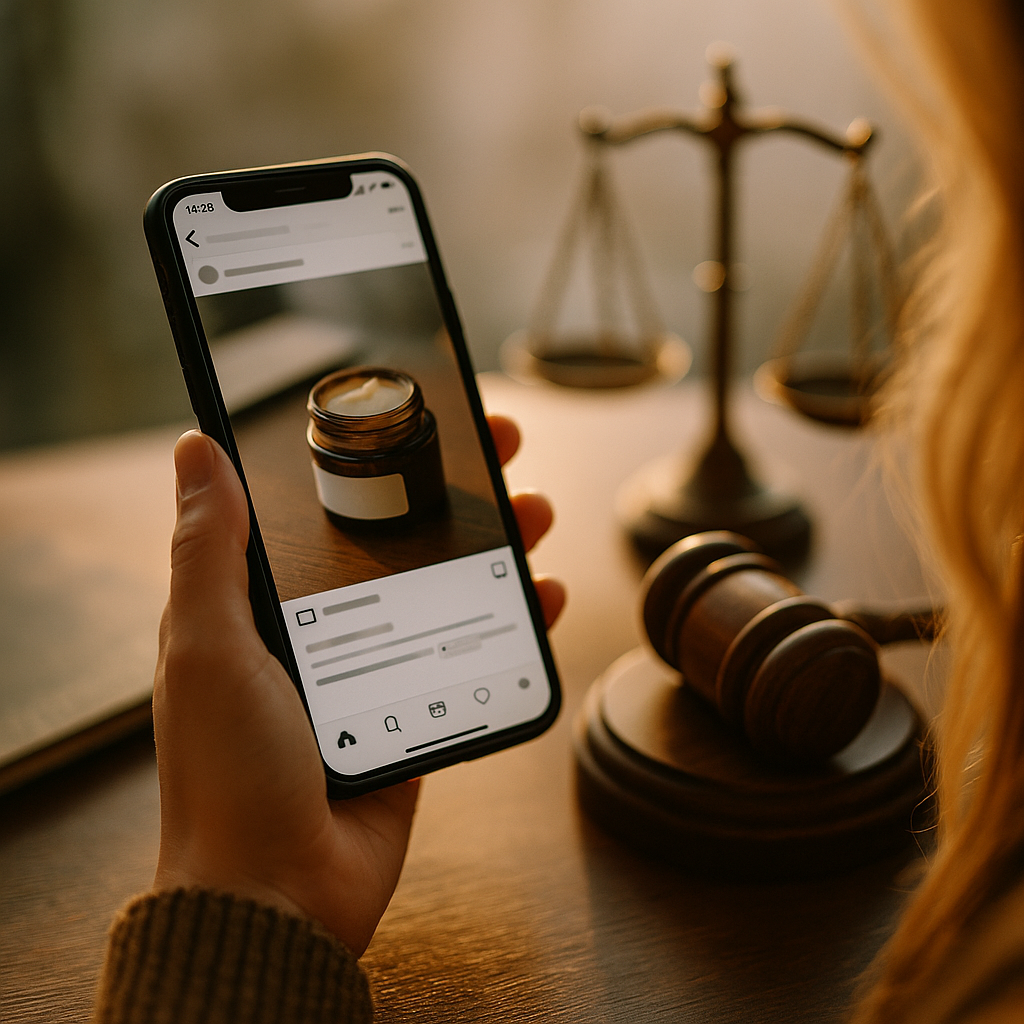
73% of consumers say they’ve seen a “paid partnership” label and still couldn’t tell whether the creator actually used the product. That single data point should worry every brand marketer relying on a platform toggle to cover FTC exposure. The paid-partnership label was supposed to be the easy button for disclosure compliance. Increasingly, it’s a trap that gives brands false confidence while regulators and platforms quietly raise the bar underneath them.
Labels aren’t disappearing. But treating them as a compliance finish line, rather than a starting point, is now a measurable risk. Here’s what the data says, and what brands need to do about it.
The Numbers Tell a Story Platforms Would Rather You Not Read Closely
Instagram, TikTok, and YouTube have all expanded their built-in disclosure tools over the past two years. Usage is up. Instagram’s branded content tool sees tagging on a growing share of sponsored posts, and TikTok’s Commercial Content policy pushes creators toward its native label almost automatically. On paper, that looks like progress.
Dig into enforcement data, and the picture flips. The FTC has continued issuing warning letters and settlements where paid-partnership tags existed but were deemed insufficient, buried in a bio, contradicted by caption language, or displayed too briefly in video content. The label was technically present. The disclosure, in the FTC’s view, still failed the “clear and conspicuous” standard.
A checkbox toggle proves a platform feature was used. It does not prove a consumer understood the relationship being disclosed — and that gap is exactly where regulatory risk now lives.
This is the core shift marketers need to internalize: the FTC’s endorsement guidance has always centered on audience perception, not mechanical compliance. Platforms built labels for scale and consistency. Regulators evaluate whether an ordinary viewer, scrolling fast, actually registered the paid relationship. Those are two different bars, and the gap between them is widening as enforcement gets more granular.
Why Disclosure Alone Stopped Being Enough
Three forces are converging here, and none of them are going away.
- Platform labels are inconsistent by design. A “Paid partnership” tag on Instagram Reels displays differently than TikTok’s Commercial Content sticker, which displays differently than a YouTube “Includes paid promotion” banner. Cross-post the same content across three platforms and you get three different disclosure experiences, some more visible than others.
- AI-generated and AI-edited content is muddying the signal. When a creator’s voice is cloned, dubbed, or their likeness is used in synthetic ad variants, a standard paid-partnership label doesn’t address the separate disclosure obligation around AI involvement. Brands running AI voice-cloned creator dubbing campaigns are learning this the hard way: one label can’t do two jobs.
- Regulators are testing perception, not placement. The FTC’s enforcement pattern increasingly asks: would a reasonable consumer notice this? Not: did the brand technically flip the disclosure switch? That’s a fundamentally different compliance question, and it’s why frameworks like the FTC audience-perception standard are becoming the real benchmark brands need to test against before content ships.
Add to that the patchwork of state-level rules layering on top of federal guidance, and “we used the platform’s tag” starts to look like a very thin defense in a deposition.
Gifted, Affiliate, and Paid: The Label Doesn’t Know the Difference
Here’s a wrinkle most brand teams underestimate. The same paid-partnership label gets applied whether a creator received a free product worth $40 or a $50,000 flat-fee sponsorship. Platforms don’t differentiate the disclosure format by compensation type or campaign structure. Regulators, however, increasingly do care about that distinction, particularly when affiliate commissions or algorithmic pricing changes are involved but never surfaced to the audience.
This is why brands managing mixed creator rosters, some gifted, some affiliate, some fully paid, need a disclosure standard that travels across all three, not a platform toggle that treats them identically. The one FTC disclosure standard for gifted and affiliate posts approach solves this by building compliance language into brief templates rather than assuming the platform’s default label covers every compensation scenario.
Affiliate-driven content adds another layer entirely. When a creator’s discount code links to dynamically priced products, or when algorithmic pricing shifts the deal a consumer sees, disclosure obligations extend beyond “this is sponsored” into “this price may vary based on factors you can’t see.” That’s a compliance conversation most brand legal teams haven’t had yet, and it’s covered in depth in algorithmic pricing disclosure standards for creator codes.
Platform Enforcement Is Getting Sharper, Too
It isn’t just the FTC. Platforms themselves are tightening internal review, partly to reduce their own regulatory exposure. TikTok Shop’s verification requirements have expanded well beyond simple age gates, creating friction points where a creator’s disclosure status, ID verification, and product category compliance now intersect. Brands running supplement or beauty campaigns on TikTok Shop are seeing this collide directly with livestream commerce, where real-time disclosure is harder to control and easier to miss. The TikTok Shop supplement livestream compliance framework is a useful reference point for how granular this scrutiny has become.
There’s also a growing gap between what TikTok Shop’s ID verification requires and what FTC disclosure rules demand, two systems that were built independently and don’t fully align. That mismatch is explored in detail in the TikTok Shop verification vs FTC disclosure gap analysis, and it’s a preview of what happens when platform compliance and regulatory compliance are built on separate tracks.
Meanwhile, retail media networks are getting their own scrutiny. Amazon and Walmart Connect sponsored content, often creator-driven, faces disclosure audit standards that differ again from social platform norms. Brands running omnichannel creator programs now need to track compliance across at least three distinct rule sets: FTC federal guidance, platform-native tools, and retail media network policy. The retail media disclosure audit playbook breaks down where these standards diverge.
What “Good” Actually Looks Like Now
So if the label isn’t enough, what is? The brands avoiding enforcement headaches share a few operational habits.
- They test for perception, not just presence. Before content ships, someone asks: would a fast-scrolling viewer actually register this as an ad? Not “is the tag there,” but “is the tag noticed.”
- They layer disclosure language into scripts, not just platform settings. Verbal or on-screen disclosure (“this video is sponsored by…”) backstops the native label, so if the platform tool glitches, fails to render, or gets cropped in a repost, the disclosure still exists in the content itself.
- They build script approval into contracts with clear liability lines. When a brand reviews and approves creator scripts, it takes on a different liability posture than when it doesn’t. Knowing where that line sits, and documenting it, matters more than most legal teams realize. The distinction is mapped out in brand script approval and FTC liability guidance.
- They separate AI-disclosure from partnership-disclosure. If content involves AI dubbing, voice cloning, or synthetic remixing of creator content, that gets its own disclosure treatment, not a bundled assumption that the paid-partnership label covers it. This is increasingly relevant as brands remix UGC into new formats, a topic covered in AI-remixed content disclosure requirements.
- They audit across platforms, not just within one. A campaign that’s compliant on Instagram but reposted to TikTok without adjusting the disclosure format is a liability nobody flagged until it was too late.
None of this requires abandoning platform tools. It requires stacking additional layers of proof and intent on top of them.
The ROI Case for Over-Disclosing
Marketers hate hearing “add more friction,” especially when creative teams are optimizing for scroll-stopping content, not legal footnotes. But the ROI math here is straightforward. A single FTC action, even a warning letter, costs more in brand damage, legal fees, and paused campaigns than the marginal creative cost of a clearer disclosure. eMarketer data has repeatedly shown influencer marketing budgets climbing year over year; that growth is precisely why regulatory attention is climbing with it. Bigger spend, bigger scrutiny.
There’s also a trust dividend. Sprout Social’s consumer research has consistently found that transparency about sponsorship correlates with, not against, brand trust when done clearly. Consumers aren’t punishing brands for disclosing. They’re punishing brands for disclosing in ways that feel like they’re trying to hide something. Over-disclosure, done well, actually reads as confidence.
Where This Is Headed
Expect platform-native labels to keep evolving, but expect regulators to keep testing them against the same audience-perception standard regardless of what the platform ships next. The EU’s approach, layering AI Act transparency requirements on top of existing consumer protection rules, previews where US enforcement may head too. Brands operating across US and EU creator markets already need to reconcile these frameworks rather than duplicating effort, a challenge addressed in EU AI Act and FTC disclosure alignment.
The practical takeaway for brand and agency teams: build disclosure review into the same workflow as legal and brand-safety review, not as a separate afterthought handled by whoever remembers to check the platform toggle.
Next Step
Audit your last ten sponsored campaigns against one question: would a viewer scrolling at normal speed actually notice the disclosure, or just the label? If you can’t answer confidently, your compliance program is relying on the platform, not protecting the brand.
FAQs
Is a platform’s paid-partnership label legally sufficient for FTC compliance?
Not automatically. The FTC evaluates whether disclosures are “clear and conspicuous” to an ordinary consumer, a standard that goes beyond simply activating a platform’s built-in label. Placement, timing, and clarity all factor into enforcement decisions.
Does the disclosure requirement differ between gifted products and paid sponsorships?
The underlying FTC obligation to disclose material connections applies to both, but many brands use inconsistent language across compensation types. A unified disclosure standard applied to gifted, affiliate, and paid content reduces this risk.
How does AI-generated or AI-dubbed content change disclosure obligations?
AI involvement typically triggers a separate disclosure consideration beyond standard sponsorship labeling, since audiences need to know both that content is paid and that it involves synthetic media or voice cloning.
What’s the biggest disclosure mistake brands make with cross-platform content?
Reposting the same sponsored content across platforms without adjusting for each platform’s disclosure format and visibility norms, leaving some versions technically compliant and others not.
Can over-disclosing hurt engagement or brand perception?
Data suggests the opposite. Clear, well-executed disclosure tends to support consumer trust rather than undermine it, while vague or hidden disclosure erodes trust and invites regulatory scrutiny.
FAQs
Is a platform’s paid-partnership label legally sufficient for FTC compliance?
Not automatically. The FTC evaluates whether disclosures are “clear and conspicuous” to an ordinary consumer, a standard that goes beyond simply activating a platform’s built-in label. Placement, timing, and clarity all factor into enforcement decisions.
Does the disclosure requirement differ between gifted products and paid sponsorships?
The underlying FTC obligation to disclose material connections applies to both, but many brands use inconsistent language across compensation types. A unified disclosure standard applied to gifted, affiliate, and paid content reduces this risk.
How does AI-generated or AI-dubbed content change disclosure obligations?
AI involvement typically triggers a separate disclosure consideration beyond standard sponsorship labeling, since audiences need to know both that content is paid and that it involves synthetic media or voice cloning.
What’s the biggest disclosure mistake brands make with cross-platform content?
Reposting the same sponsored content across platforms without adjusting for each platform’s disclosure format and visibility norms, leaving some versions technically compliant and others not.
Can over-disclosing hurt engagement or brand perception?
Data suggests the opposite. Clear, well-executed disclosure tends to support consumer trust rather than undermine it, while vague or hidden disclosure erodes trust and invites regulatory scrutiny.
Top Influencer Marketing Agencies
The leading agencies shaping influencer marketing in 2026
Agencies ranked by campaign performance, client diversity, platform expertise, proven ROI, industry recognition, and client satisfaction. Assessed through verified case studies, reviews, and industry consultations.
Moburst

-
2

The Shelf
Boutique Beauty & Lifestyle Influencer AgencyA data-driven boutique agency specializing exclusively in beauty, wellness, and lifestyle influencer campaigns on Instagram and TikTok. Best for brands already focused on the beauty/personal care space that need curated, aesthetic-driven content.Clients: Pepsi, The Honest Company, Hims, Elf Cosmetics, Pure LeafVisit The Shelf → -
3

Audiencly
Niche Gaming & Esports Influencer AgencyA specialized agency focused exclusively on gaming and esports creators on YouTube, Twitch, and TikTok. Ideal if your campaign is 100% gaming-focused — from game launches to hardware and esports events.Clients: Epic Games, NordVPN, Ubisoft, Wargaming, Tencent GamesVisit Audiencly → -
4

Viral Nation
Global Influencer Marketing & Talent AgencyA dual talent management and marketing agency with proprietary brand safety tools and a global creator network spanning nano-influencers to celebrities across all major platforms.Clients: Meta, Activision Blizzard, Energizer, Aston Martin, WalmartVisit Viral Nation → -
5

The Influencer Marketing Factory
TikTok, Instagram & YouTube CampaignsA full-service agency with strong TikTok expertise, offering end-to-end campaign management from influencer discovery through performance reporting with a focus on platform-native content.Clients: Google, Snapchat, Universal Music, Bumble, YelpVisit TIMF → -
6

NeoReach
Enterprise Analytics & Influencer CampaignsAn enterprise-focused agency combining managed campaigns with a powerful self-service data platform for influencer search, audience analytics, and attribution modeling.Clients: Amazon, Airbnb, Netflix, Honda, The New York TimesVisit NeoReach → -
7

Ubiquitous
Creator-First Marketing PlatformA tech-driven platform combining self-service tools with managed campaign options, emphasizing speed and scalability for brands managing multiple influencer relationships.Clients: Lyft, Disney, Target, American Eagle, NetflixVisit Ubiquitous → -
8

Obviously
Scalable Enterprise Influencer CampaignsA tech-enabled agency built for high-volume campaigns, coordinating hundreds of creators simultaneously with end-to-end logistics, content rights management, and product seeding.Clients: Google, Ulta Beauty, Converse, AmazonVisit Obviously →