


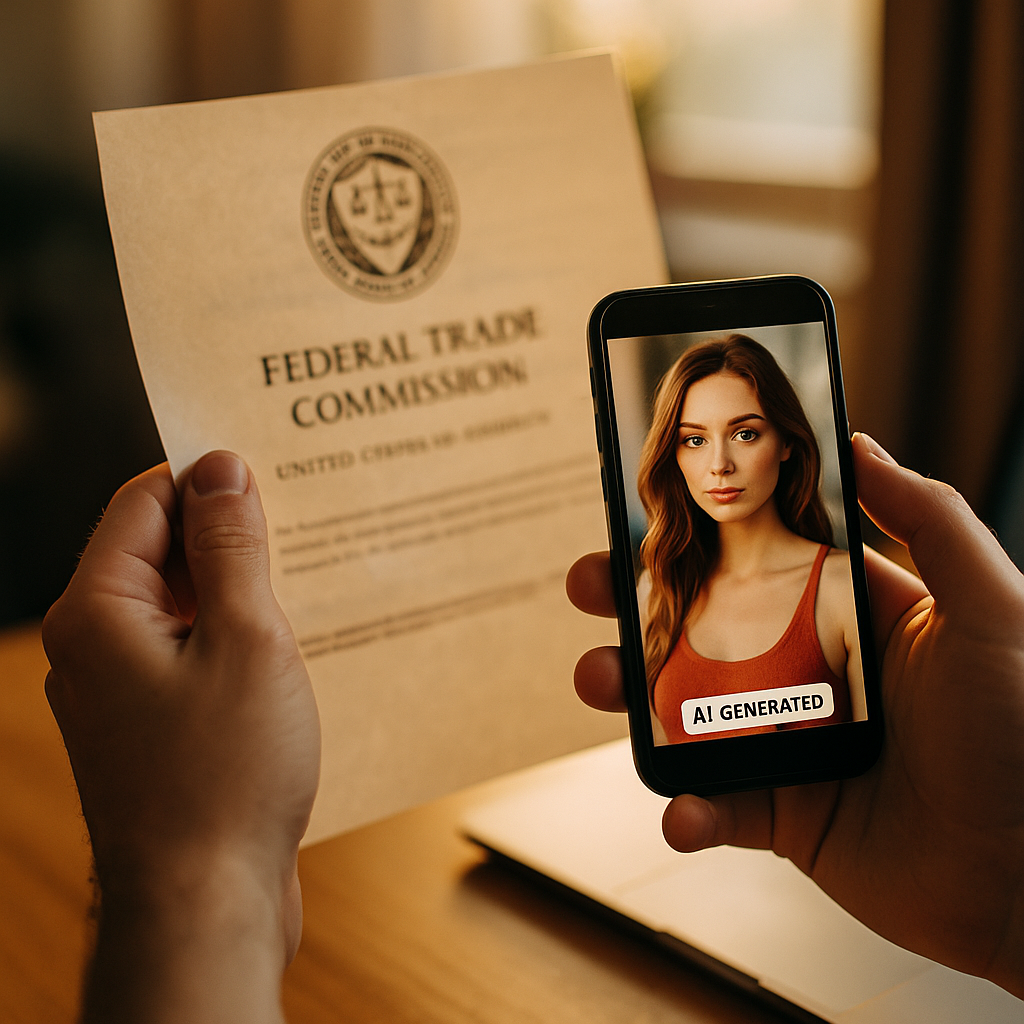
Here’s a question most legal teams haven’t been asked yet: if a chatbot pulls your creator’s sponsored review and remixes it into a personalized shopping summary, does the original #ad tag still count? The honest answer is often no. As AI-curated feeds increasingly repackage creator content into new formats, contexts, and audiences, the case for a fresh FTC disclosure on redistributed content is becoming harder for brands to ignore.
The Feed Isn’t the Post Anymore
For years, disclosure compliance meant one thing: check the caption, confirm the hashtag, move on. That model assumed a stable relationship between the content and its container — a post lived on a profile, in a feed, with context intact.
AI-curated feeds break that assumption. Platforms now use large language models to summarize, excerpt, translate, and recombine creator content into entirely new surfaces: chatbot answers, shopping assistant recommendations, algorithmic “for you” digests, even cross-platform syndication. A sponsored TikTok review gets summarized into three bullet points inside a retail app’s AI assistant. The original disclosure? Frequently stripped out in the remix.
When AI systems extract the substance of a review while discarding its disclosure, the resulting content is functionally new — and the FTC has been clear that new contexts can trigger new disclosure obligations.
This isn’t a hypothetical edge case anymore. eMarketer has tracked accelerating adoption of AI shopping agents and feed summarization tools across major retail and social platforms. Every one of those tools is a potential disclosure break point.
What Actually Triggers a Fresh Disclosure Requirement
The FTC’s Endorsement Guides don’t talk about “remixing” explicitly. But the underlying test hasn’t changed: would a reasonable consumer understand that this content is sponsored, given the context in which they’re encountering it? That’s a context-dependent test, and context is exactly what AI remixing destroys or alters.
A few scenarios where a fresh disclosure is very likely legally required:
- Disclosure text is dropped during summarization. If an AI system extracts product claims from a sponsored post but omits the #ad tag, the redistributed version reads as an unpaid opinion. That’s a material omission.
- Content is recontextualized into a “neutral” surface. A review pulled into a shopping assistant’s “top picks” carries an implicit credibility signal — one the original platform-native disclosure wasn’t designed to survive.
- Attribution is stripped or altered. If the creator’s identity is blurred, replaced with “a shopper said,” or merged with other reviews into an aggregate summary, consumers lose the cue that would normally prompt them to check for sponsorship.
- The remix creates a new commercial relationship. If a platform’s AI agent is itself compensated or incentivized to surface certain products (affiliate or ad-tech arrangements baked into the recommendation engine), you now have two disclosure obligations stacked on top of each other.
Compare this to the standard playbook covered in our chatbot recommendation audits piece — the same logic applies, just running in reverse. Instead of an AI generating a new recommendation, it’s redistributing an existing one. The disclosure risk is arguably higher here, because brands assume the original disclosure “travels” with the content. It often doesn’t.
Why Legal Teams Keep Missing This
Most brand compliance workflows are built around the moment of publication. Legal reviews the script, approves the caption, checks the hashtag placement, signs off. Then everyone moves on.
But AI-curated feeds operate downstream of publication, often weeks or months later, on infrastructure the brand doesn’t control and frequently doesn’t even know exists. Your creator’s review might get pulled into a retailer’s AI shopping tool six months after it was posted, repackaged into a “customers also loved” summary with zero disclosure carried over. Nobody on your team approved that. Nobody on your team was even aware it happened — until an FTC inquiry or a consumer complaint surfaces it.
This is structurally similar to the clipping-network problem discussed in audit rights for clipping networks: content gets redistributed by third parties your contracts never anticipated, and liability doesn’t disappear just because you didn’t authorize the redistribution.
A Working Legal Framework: Four Triggers
Rather than treating every AI remix as a fresh legal event (unworkable) or ignoring the issue entirely (risky), here’s a practical framework brands and agencies can apply. Ask these four questions whenever creator content resurfaces through an AI-curated feed, agent, or summarization tool.
1. Has the disclosure survived intact?
If the sponsorship disclosure is visibly present in the redistributed version — same placement logic, same clarity, same proximity to the claim — you’re likely still covered. If it’s been dropped, truncated, or buried, treat it as undisclosed content requiring remediation.
2. Has the context changed the implied source of the claim?
A claim inside a branded influencer post reads differently than the same claim inside a “neutral” AI assistant’s product summary. If the remix strips creator attribution and presents the content as aggregate consumer sentiment, that’s a materially different representation — and arguably a new claim requiring new substantiation and disclosure, not just a carryover.
3. Is there a new commercial actor in the loop?
If the platform, retailer, or AI agent surfacing the content has its own commercial incentive (affiliate revenue, sponsored placement, pay-to-rank), that’s a second disclosure obligation layered on top of the creator’s original one. Two parties, two disclosure duties. This mirrors the dual-disclosure logic we’ve covered in sponsored product compliance checklists for AI shopping agents.
4. Can the brand reasonably control or influence the redistribution?
This is the risk-allocation question. If your contracts give you audit rights, takedown rights, or platform-level controls over redistribution, you have both the ability and arguably the duty to intervene when disclosure breaks down. If you have none of that, it’s time to renegotiate.
If your creator contracts don’t address AI redistribution, you have no contractual lever to force a fix when disclosure disappears downstream — and “we didn’t know” is a weak defense once a pattern is established.
Where This Overlaps With Existing Disclosure Fights
This isn’t an entirely new problem — it’s an extension of tensions brands are already managing. The ongoing friction between platform-generated AI labels and brand-controlled FTC disclosures, covered in our earlier analysis of AI label conflicts, is a close cousin. In both cases, an automated system is inserting itself between the creator’s original disclosure and the consumer’s final view of the content, and the brand is left holding residual liability.
The synthetic media parallel is instructive too. Just as synthetic performer disclosure rules require fresh labeling when AI-generated personas are involved, AI-remixed content arguably requires fresh disclosure logic when the redistribution meaningfully alters how a reasonable consumer perceives the source and intent of the content.
And this doesn’t stay a US-only conversation. The ICO’s guidance on automated processing and transparency in the UK raises adjacent questions about whether AI-driven content redistribution requires its own transparency notice, separate from the original marketing disclosure. Global brands running creator programs across US, UK, and EU markets should expect regulatory convergence here, not divergence — similar to what we’ve tracked in cross-jurisdiction creator data agreements.
What Brands Should Actually Do
Waiting for FTC guidance written specifically for AI feed remixing is not a strategy. The agency has moved slowly on AI-specific rulemaking, and enforcement so far has leaned on existing Endorsement Guide principles applied to new fact patterns. That means brands need to build internal frameworks now, using current law as the baseline.
- Audit where your creator content lives beyond the original post. Check if retail partners, browser extensions, or shopping AI tools are pulling and summarizing your sponsored content. Most brands have never run this audit.
- Update creator and platform contracts to address redistribution. Build in audit rights, disclosure-persistence requirements, and takedown mechanisms specifically for AI-curated redistribution — not just the original posting terms.
- Establish an internal escalation path. When legal or compliance discovers a disclosure gap in redistributed content, there should be a clear, fast process for flagging the platform and requesting remediation, similar to the tiered approach in our escalation matrix for platform risk.
- Document everything. If an FTC inquiry ever arrives, your best defense is a documented, good-faith compliance program — not a scramble to explain why nobody noticed the disclosure vanished.
None of this requires exotic legal theory. It requires treating AI-curated redistribution as a live compliance surface, not a technical curiosity someone in engineering will figure out eventually.
FAQs
Does the FTC have rules specifically about AI-remixed creator content?
Not yet, in the form of dedicated rulemaking. The FTC applies its existing Endorsement Guides, which focus on whether a reasonable consumer would understand content is sponsored given its presentation. AI remixing is assessed under that same standard, even though the guides don’t name the technology explicitly.
Who is liable if an AI shopping assistant strips disclosure from a creator’s post?
Liability can attach to multiple parties depending on facts: the brand that sponsored the original content, the platform operating the AI redistribution tool, and potentially the retailer surfacing the summary. Brands should assume they carry residual exposure and build contractual protections rather than relying on platform-side fixes.
Is a hashtag disclosure enough to survive AI summarization?
Often no. Hashtags are frequently among the first elements stripped during text summarization, since AI systems tend to extract substantive claims and discard formatting elements they treat as metadata. Brands should push for disclosure language embedded in the substantive text, not just tags, where possible.
Should creator contracts be updated to cover AI redistribution specifically?
Yes. Most existing contracts were written around single-platform publication and don’t contemplate downstream AI redistribution. Updated contracts should include audit rights, disclosure-persistence clauses, and defined remediation timelines when redistribution strips required disclosures.
How does this connect to EU AI Act compliance?
The EU AI Act’s transparency obligations for certain AI systems add another layer brands operating in Europe need to track, particularly where AI tools classify as higher-risk under the Act’s framework. Brands should review their creator-matching and content-curation tools against that classification, as covered in our analysis of high-risk AI tools under the EU AI Act.
Next step: run a redistribution audit this quarter — identify every AI-curated surface touching your creator content, confirm disclosure integrity on each, and update your creator contracts before a regulator or reporter finds the gap first.
FAQs
Does the FTC have rules specifically about AI-remixed creator content?
Not yet, in the form of dedicated rulemaking. The FTC applies its existing Endorsement Guides, which focus on whether a reasonable consumer would understand content is sponsored given its presentation. AI remixing is assessed under that same standard, even though the guides don’t name the technology explicitly.
Who is liable if an AI shopping assistant strips disclosure from a creator’s post?
Liability can attach to multiple parties depending on facts: the brand that sponsored the original content, the platform operating the AI redistribution tool, and potentially the retailer surfacing the summary. Brands should assume they carry residual exposure and build contractual protections rather than relying on platform-side fixes.
Is a hashtag disclosure enough to survive AI summarization?
Often no. Hashtags are frequently among the first elements stripped during text summarization, since AI systems tend to extract substantive claims and discard formatting elements they treat as metadata. Brands should push for disclosure language embedded in the substantive text, not just tags, where possible.
Should creator contracts be updated to cover AI redistribution specifically?
Yes. Most existing contracts were written around single-platform publication and don’t contemplate downstream AI redistribution. Updated contracts should include audit rights, disclosure-persistence clauses, and defined remediation timelines when redistribution strips required disclosures.
How does this connect to EU AI Act compliance?
The EU AI Act’s transparency obligations for certain AI systems add another layer brands operating in Europe need to track, particularly where AI tools classify as higher-risk under the Act’s framework. Brands should review their creator-matching and content-curation tools against that classification.
Top Influencer Marketing Agencies
The leading agencies shaping influencer marketing in 2026
Agencies ranked by campaign performance, client diversity, platform expertise, proven ROI, industry recognition, and client satisfaction. Assessed through verified case studies, reviews, and industry consultations.
Moburst

-
2

The Shelf
Boutique Beauty & Lifestyle Influencer AgencyA data-driven boutique agency specializing exclusively in beauty, wellness, and lifestyle influencer campaigns on Instagram and TikTok. Best for brands already focused on the beauty/personal care space that need curated, aesthetic-driven content.Clients: Pepsi, The Honest Company, Hims, Elf Cosmetics, Pure LeafVisit The Shelf → -
3

Audiencly
Niche Gaming & Esports Influencer AgencyA specialized agency focused exclusively on gaming and esports creators on YouTube, Twitch, and TikTok. Ideal if your campaign is 100% gaming-focused — from game launches to hardware and esports events.Clients: Epic Games, NordVPN, Ubisoft, Wargaming, Tencent GamesVisit Audiencly → -
4

Viral Nation
Global Influencer Marketing & Talent AgencyA dual talent management and marketing agency with proprietary brand safety tools and a global creator network spanning nano-influencers to celebrities across all major platforms.Clients: Meta, Activision Blizzard, Energizer, Aston Martin, WalmartVisit Viral Nation → -
5

The Influencer Marketing Factory
TikTok, Instagram & YouTube CampaignsA full-service agency with strong TikTok expertise, offering end-to-end campaign management from influencer discovery through performance reporting with a focus on platform-native content.Clients: Google, Snapchat, Universal Music, Bumble, YelpVisit TIMF → -
6

NeoReach
Enterprise Analytics & Influencer CampaignsAn enterprise-focused agency combining managed campaigns with a powerful self-service data platform for influencer search, audience analytics, and attribution modeling.Clients: Amazon, Airbnb, Netflix, Honda, The New York TimesVisit NeoReach → -
7

Ubiquitous
Creator-First Marketing PlatformA tech-driven platform combining self-service tools with managed campaign options, emphasizing speed and scalability for brands managing multiple influencer relationships.Clients: Lyft, Disney, Target, American Eagle, NetflixVisit Ubiquitous → -
8

Obviously
Scalable Enterprise Influencer CampaignsA tech-enabled agency built for high-volume campaigns, coordinating hundreds of creators simultaneously with end-to-end logistics, content rights management, and product seeding.Clients: Google, Ulta Beauty, Converse, AmazonVisit Obviously →