


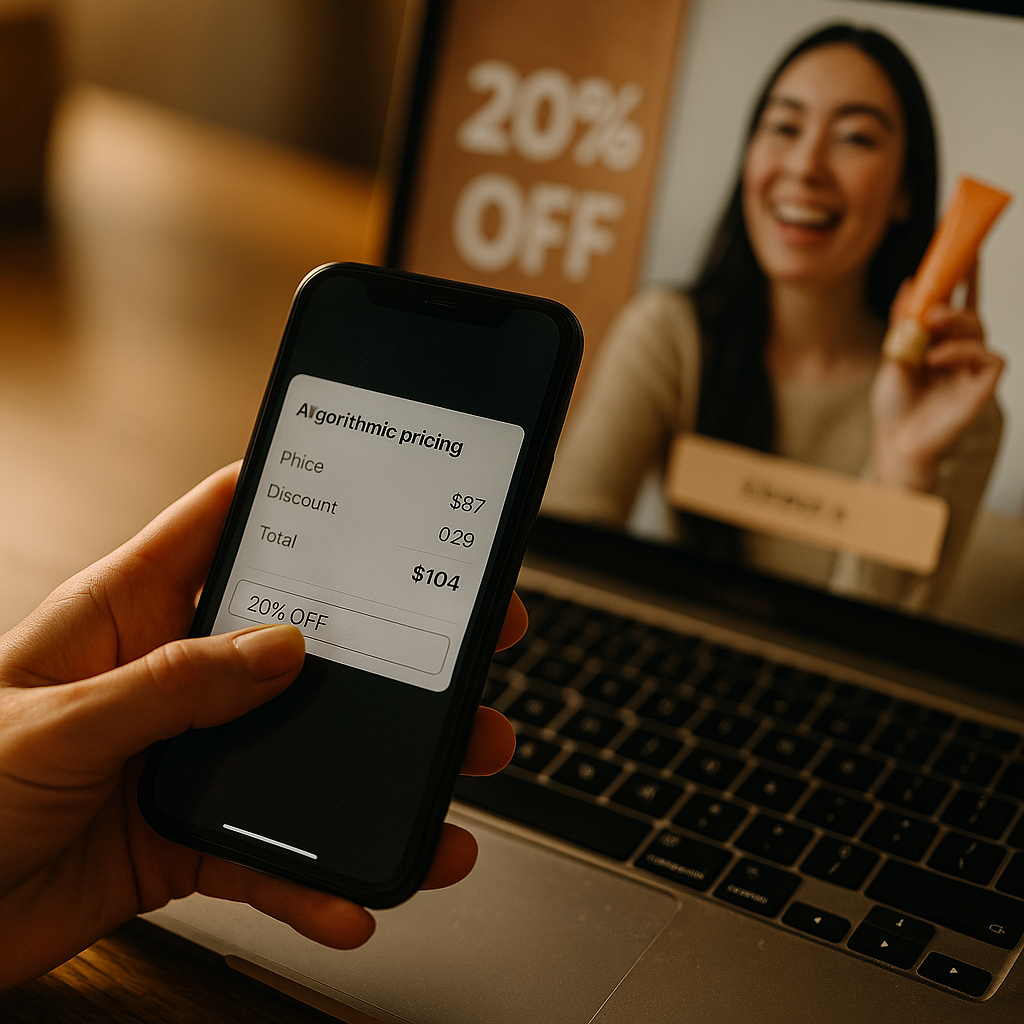
Fourteen states now have algorithmic pricing disclosure bills either live or moving through committee. Meanwhile, your influencer program is running personalized discount codes that change price by user, session, and inventory level in real time. State-level algorithmic pricing disclosure requirements were not written with creator commerce in mind, but they apply anyway. If your legal team hasn’t mapped this overlap yet, you’re already behind.
Here’s the uncomfortable truth: most brands treat creator discount codes as a marketing mechanic, not a pricing mechanic. Regulators disagree. When a code triggers a dynamically calculated price, that’s algorithmic pricing, full stop, regardless of who’s promoting it or how casual the “link in bio” feels.
What Counts as Algorithmic Pricing, Legally Speaking
Algorithmic or “surveillance” pricing laws generally target any pricing mechanism where an automated system adjusts price based on personal data, behavioral signals, or demand modeling. California’s SB 259-style proposals, New York’s algorithmic pricing disclosure push, and similar bills in Colorado and Massachusetts all share a common thread: consumers must be told when a price they’re seeing was algorithmically determined, and in some drafts, what data informed it.
Now map that against a typical creator discount code. A code like “MAYA20” isn’t static in a lot of modern commerce stacks. It might apply 20% off for a first-time visitor, 12% off for a returning cart abandoner, or scale down entirely if the SKU is low on inventory. That’s dynamic. That’s algorithmic. And if the creator’s audience is spread across three or four states with active disclosure laws, you’ve got a compliance patchwork problem hiding inside a single Shopify promo code.
A discount code is no longer just a marketing tool — under emerging state law, it can be a regulated pricing decision the moment it varies by user or session.
Why This Slipped Past Most Compliance Teams
Influencer partnerships live in marketing. Pricing algorithms live in revenue ops or data science. These teams rarely talk, and almost never review the same contract. The creator gets a flat commission structure and a code; nobody upstream checks whether that code’s backend logic triggers a disclosure obligation in the states where it’s being promoted.
Add platform mechanics into the mix. TikTok Shop, Instagram Checkout, and affiliate platforms like ShareASale or Impact all support dynamic pricing rules that brands configure once and forget. A creator posts the same video nationwide. The checkout experience, however, is not the same for every viewer. One person in Colorado sees a disclosed algorithmic discount. One person in a state without such a law sees nothing. Same creator, same content, different legal exposure per viewer.
This isn’t hypothetical anxiety. Regulators have shown, repeatedly, that they’ll extend consumer protection frameworks to influencer-adjacent commerce faster than brands expect. Look at how quickly the FTC extended endorsement guidance to affiliate links and AI-generated content. State attorneys general are watching the same trend on pricing.
The Disclosure Gap Creators Can’t Close Alone
Here’s the operational problem nobody wants to say out loud: creators cannot fix this themselves. They don’t control the pricing engine. They don’t know which segment of their audience is getting which price. Asking a creator to add “prices may vary algorithmically” to a caption is a start, but it’s not sufficient disclosure under most draft statutes, which require the disclosure to appear at or near the point of price presentation — meaning on the product page or checkout, not in a TikTok caption three clicks upstream.
That distinction matters enormously for liability allocation. If a brand’s dynamic pricing engine adjusts the creator’s discount code without checkout-level disclosure, the brand carries the exposure, not the creator. This mirrors a pattern we’ve already seen with FTC endorsement rules, where script approval depth determines who’s actually on the hook when something goes wrong. Pricing disclosure is shaping up the same way: the party controlling the mechanism carries the compliance burden.
Some brands have tried to sidestep this by making all creator codes static, flat-percentage, no dynamic logic. That works, but it kills a meaningful chunk of conversion lift. Klaviyo and Attentive data on personalized offers consistently shows dynamic discounting outperforming static codes by double digits in conversion rate. Nobody wants to leave that on the table just to avoid a legal review.
A Practical Framework: Segment, Disclose, Document
Instead of choosing between compliance and performance, structure the program around three controls.
- Segment by jurisdiction first. Before a creator code goes live, map which states the creator’s audience is concentrated in (use platform analytics, not guesswork) and flag any with active or pending algorithmic pricing disclosure laws.
- Build the disclosure into the checkout flow, not the content. A small, persistent notice near the price (“This offer reflects a personalized discount based on your shopping activity”) satisfies most current draft language and doesn’t rely on the creator to do anything differently.
- Log the pricing logic per campaign. Keep a record of what variables drove each discount tier, tied to campaign dates and creator IDs. If a state AG comes asking, you want a clean audit trail, not a scramble through Shopify’s backend logs.
This is the same discipline brands have had to apply to AI-generated ad content and synthetic disclosures. The synthetic performer disclosure playbook that reconciles NY, CA, and EU AI Act requirements into one clause is a good model: one master compliance layer, jurisdiction-specific triggers underneath it, rather than fifty separate one-off fixes.
Contract Language Brands Are Missing
Most influencer agreements still describe discount codes in a single throwaway line: “Creator will be assigned a unique promo code for tracking purposes.” That’s inadequate now. The contract needs to specify:
- Whether the code’s discount value is static or dynamically calculated
- Which party is responsible for point-of-sale disclosure if the code triggers algorithmic pricing
- A notification obligation if the brand changes the code’s underlying logic mid-campaign
- Indemnification language clarifying that creators aren’t liable for backend pricing decisions they didn’t configure
This pairs naturally with the broader trend toward tighter script control clauses in creator agreements. Pricing disclosure and content disclosure are converging into the same contractual bucket: who controls the mechanism, who bears the risk.
Platform Behavior Isn’t Helping
TikTok Shop, Amazon Live, and Instagram Checkout each have their own promo code infrastructure, and none of them currently surface algorithmic pricing disclosures by default. That means brands can’t rely on the platform to handle this for them the way some assume platforms handle FTC ad labeling. We’ve already seen the gap between platform-native labels and actual disclosure requirements play out with TikTok Shop’s verification tools, and pricing disclosure is heading toward the same mismatch.
Practically, this means brands running multi-platform creator campaigns need a disclosure layer they control directly, likely through their own landing pages or a pre-checkout interstitial, rather than depending on native platform UI to catch up. According to eMarketer, affiliate and creator-driven commerce is projected to keep growing well into double-digit percentages annually, which means the volume of dynamically priced creator transactions is only going to expand the surface area for this problem.
Where This Is Headed
Expect algorithmic pricing disclosure to follow the same trajectory as data privacy law: California moves first, a handful of states follow with slightly different thresholds, and brands end up building to the strictest common denominator because managing fifty separate rule sets isn’t operationally realistic. Smart legal and marketing teams are already drafting a single disclosure standard now, rather than waiting for a patchwork to fully form. That’s the same approach that’s worked for EU payment compliance matrices after regulatory shifts there. One clean framework, applied uniformly, beats reactive state-by-state patching every time.
The brands treating this as a five-minute legal footnote are the ones who’ll get the enforcement letter first. Build the disclosure into the checkout experience, tighten the contract language, and keep a clean log of pricing logic per campaign — before a regulator asks you to produce one.
FAQs
Do creator discount codes count as algorithmic pricing under state law?
If the code’s discount value changes based on user data, behavior, or inventory signals rather than staying fixed, most current and proposed state statutes would classify that as algorithmic pricing subject to disclosure requirements.
Who is liable if a creator’s dynamic discount code lacks proper disclosure?
Liability generally falls on the brand or retailer that controls the pricing engine, not the creator, since creators typically have no visibility into or control over how the discount value is calculated.
Can a caption disclosure satisfy algorithmic pricing disclosure laws?
Usually not. Most draft statutes require disclosure at or near the point where the price is presented, meaning on the product or checkout page, not in social media captions upstream of the purchase.
Which states currently have active algorithmic pricing disclosure requirements?
California, Colorado, and New York have been the most active in proposing or advancing algorithmic pricing transparency rules, with Massachusetts and a few others following closely. Brands should confirm current status with counsel, since this area is moving quickly.
Should brands just make all creator codes static to avoid the issue?
It’s a valid short-term fix but usually costs meaningful conversion lift. A better long-term approach is building disclosure directly into checkout and documenting pricing logic per campaign, so dynamic codes can continue running compliantly.
Visible FAQ Content (duplicate for schema accuracy)
See FAQ section above; content matches the JSON-LD block below exactly.
Top Influencer Marketing Agencies
The leading agencies shaping influencer marketing in 2026
Agencies ranked by campaign performance, client diversity, platform expertise, proven ROI, industry recognition, and client satisfaction. Assessed through verified case studies, reviews, and industry consultations.
Moburst

-
2

The Shelf
Boutique Beauty & Lifestyle Influencer AgencyA data-driven boutique agency specializing exclusively in beauty, wellness, and lifestyle influencer campaigns on Instagram and TikTok. Best for brands already focused on the beauty/personal care space that need curated, aesthetic-driven content.Clients: Pepsi, The Honest Company, Hims, Elf Cosmetics, Pure LeafVisit The Shelf → -
3

Audiencly
Niche Gaming & Esports Influencer AgencyA specialized agency focused exclusively on gaming and esports creators on YouTube, Twitch, and TikTok. Ideal if your campaign is 100% gaming-focused — from game launches to hardware and esports events.Clients: Epic Games, NordVPN, Ubisoft, Wargaming, Tencent GamesVisit Audiencly → -
4

Viral Nation
Global Influencer Marketing & Talent AgencyA dual talent management and marketing agency with proprietary brand safety tools and a global creator network spanning nano-influencers to celebrities across all major platforms.Clients: Meta, Activision Blizzard, Energizer, Aston Martin, WalmartVisit Viral Nation → -
5

The Influencer Marketing Factory
TikTok, Instagram & YouTube CampaignsA full-service agency with strong TikTok expertise, offering end-to-end campaign management from influencer discovery through performance reporting with a focus on platform-native content.Clients: Google, Snapchat, Universal Music, Bumble, YelpVisit TIMF → -
6

NeoReach
Enterprise Analytics & Influencer CampaignsAn enterprise-focused agency combining managed campaigns with a powerful self-service data platform for influencer search, audience analytics, and attribution modeling.Clients: Amazon, Airbnb, Netflix, Honda, The New York TimesVisit NeoReach → -
7

Ubiquitous
Creator-First Marketing PlatformA tech-driven platform combining self-service tools with managed campaign options, emphasizing speed and scalability for brands managing multiple influencer relationships.Clients: Lyft, Disney, Target, American Eagle, NetflixVisit Ubiquitous → -
8

Obviously
Scalable Enterprise Influencer CampaignsA tech-enabled agency built for high-volume campaigns, coordinating hundreds of creators simultaneously with end-to-end logistics, content rights management, and product seeding.Clients: Google, Ulta Beauty, Converse, AmazonVisit Obviously →