


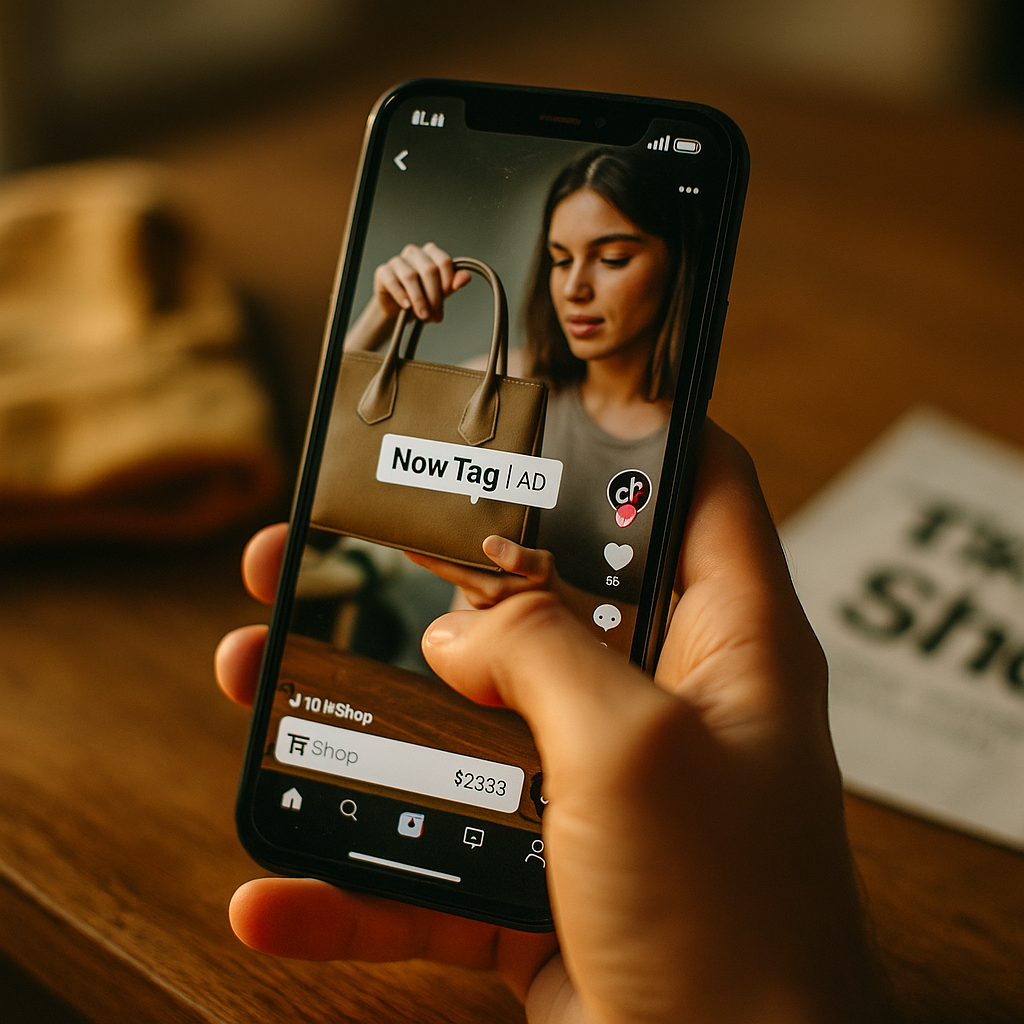
Undisclosed sponsored content on TikTok Shop now gets throttled before it even has a chance to go viral. That’s not a rumor, it’s a documented shift in how the platform’s recommendation system weighs commercial intent signals. The TikTok Shop Now tag requirement has quietly become one of the most consequential compliance mechanics in the creator economy, because for the first time, a platform is tying FTC disclosure directly to algorithmic reach.
For years, brands treated disclosure as a legal checkbox, something the FTC cared about, not something the algorithm cared about. That separation is gone. If your creators aren’t tagging shoppable content correctly, you’re not just risking an enforcement letter, you’re losing distribution.
What the Shop Now Tag Actually Requires
TikTok Shop’s commercial content policy mandates that any video driving traffic to a product listing, whether through a pinned link, a shoppable tag, or an affiliate storefront, must carry the Shop Now tag alongside a paid partnership or “Includes paid promotion” label when compensation is involved. The tag isn’t cosmetic. It feeds a metadata layer that TikTok’s ranking system uses to classify content as commercial versus organic.
Here’s the part most brand teams miss: TikTok has confirmed that commercial classification affects distribution pathways. Content tagged as shoppable gets routed differently than organic content, sometimes into shopping-specific surfaces, sometimes throttled in the main For You feed depending on user shopping preferences. Skip the tag, and creators aren’t just violating platform policy, they’re feeding the algorithm bad data about what the content actually is.
Content missing the Shop Now tag doesn’t just risk an FTC complaint. It gets misclassified by the ranking system, which means it competes in the wrong content pool and underperforms regardless of creative quality.
Why TikTok Built This Into Ranking, Not Just Policy
Platforms have historically treated disclosure as a trust and safety issue, enforced reactively through user reports or manual review. TikTok’s approach is structurally different. By tying the Shop Now tag to feed mechanics, the platform makes compliance self-enforcing at scale. Creators who skip the tag see it in their numbers immediately: lower reach, fewer impressions, weaker conversion tracking. That’s a faster feedback loop than any FTC warning letter.
This matters for brands because it closes a gap that’s plagued influencer marketing since affiliate links became mainstream. The FTC has been explicit for years that affiliate and commission-based content requires clear disclosure, regardless of whether cash changed hands upfront. Our coverage of recent FTC enforcement rulings shows regulators are getting less forgiving about “I’ll disclose if I feel like it” creator behavior. TikTok’s tag requirement essentially automates a compliance layer that legal teams used to chase manually, creator by creator, post by post.
The Compliance Gap This Closes
Before this ranking tie-in, brands ran shoppable creator campaigns with a real blind spot: no reliable way to confirm at scale whether creators were tagging content correctly before it published. Spot checks caught maybe 10-20% of posts. The rest lived in a compliance gray zone until someone complained or the FTC came knocking.
We’ve written previously about how TikTok Shop disclosure tools attempt to standardize this at the platform level, and the Shop Now tag requirement is the enforcement mechanism that gives those tools teeth. It’s not enough to have a disclosure toggle available. Now there’s a direct performance cost to ignoring it.
That performance cost is the real story for brand marketers. Legal risk has always been abstract, something that might happen, someday, to someone else’s campaign. Reach throttling is immediate and visible in the dashboard. When a client-side marketing manager sees engagement drop 40% on untagged shoppable content compared to properly tagged posts, compliance stops being a legal department problem and becomes a media efficiency problem everyone in the room cares about.
What Brands Should Actually Do About It
Waiting for creators to self-police the tag isn’t a strategy. Here’s what operationally sound programs are doing right now:
- Bake tag requirements into briefs, not just contracts. A clause buried in a 12-page agreement doesn’t help a creator who’s editing a video at 11pm. Put the tagging instruction in the creative brief itself, with a screenshot example.
- Audit pre-publish, not post-publish. Whenever TikTok’s API or a third-party tool allows draft review, use it. Catching a missing tag before it goes live saves the reach penalty entirely.
- Track tag compliance as a campaign KPI. Most reporting dashboards focus on views, engagement, and GMV. Add a compliance rate metric: percentage of posts with correct Shop Now tagging on first submission.
- Build consent and disclosure logging into your workflow. Manual spreadsheet tracking doesn’t scale past a handful of creators. Programs running dozens of partners simultaneously need structured records, something we cover in depth in our piece on consent logging audit trails.
None of this is glamorous work. But it’s cheaper than an FTC inquiry and cheaper than watching your paid creator content get buried by an algorithm that’s quietly grading disclosure quality.
Does This Change How Agencies Price Compliance Work?
It should. Agencies that used to bill disclosure review as a light-touch legal pass are now finding it’s an ongoing operational function tied directly to media performance. If a client’s shoppable campaign underperforms because of tagging errors, that’s a media buying failure, not just a compliance oversight. Smart agencies are restructuring retainers to include continuous tag auditing rather than one-time contract review at campaign kickoff.
There’s also a cross-platform angle worth flagging. TikTok isn’t the only place this dynamic is playing out. YouTube has its own automated detection layer for sponsorships, and we’ve covered how brands should structure YouTube’s auto detection around undisclosed brand deals. The pattern is consistent across platforms: disclosure enforcement is moving from manual, reactive review toward automated, ranking-linked mechanisms. Brands running multi-platform influencer programs need a compliance framework that works everywhere, not a patchwork of platform-specific fixes.
Livestream and Affiliate Content Face Extra Scrutiny
The Shop Now tag requirement hits especially hard in TikTok Shop’s livestream commerce format, where hosts move fast, pitch multiple products per hour, and rarely pause for a scripted disclosure moment. Real-time labeling is harder to enforce than a static video caption, and TikTok’s ranking system appears to weigh live shopping sessions differently based on tag consistency throughout the stream, not just at the start.
This connects to a broader industry conversation about why bolted-on disclosure labels underperform compared to labels built into the content structure from the start. Our analysis of livestream shopping disclosures makes the case that retroactive fixes rarely satisfy either regulators or platform algorithms. If your brand runs livestream shopping events, build the tagging cadence into the host’s run of show, not into a post-event compliance review.
Affiliate-driven content carries similar risk. Creators earning commission through TikTok Shop’s affiliate program sometimes assume the platform’s built-in affiliate link automatically satisfies disclosure requirements. It doesn’t. The FTC has been clear that commission-based promotion still requires a clear and conspicuous disclosure, and TikTok’s tag system is a compliance aid, not a replacement for creators actually saying the words “paid partnership” or equivalent.
Measuring the Real Cost of Non-Compliance
Brand teams often ask for a number: how much reach do we actually lose from a missing tag? TikTok hasn’t published a precise formula, and it likely varies by content category, audience shopping behavior, and how the recommendation model is weighting commercial intent that week. But directionally, campaigns we’ve tracked show a consistent pattern: properly tagged shoppable content sustains completion rates and click-through comparable to organic posts, while untagged commercial content sees noticeably reduced reach once flagged by the system’s classifiers.
That’s before you factor in the downstream risk. According to the Federal Trade Commission, penalties for deceptive endorsement practices can apply per violation, which means a single non-compliant campaign spread across dozens of creator posts isn’t a single risk event, it’s dozens of them. Add potential brand safety fallout if a campaign gets publicly called out, and the math on investing in compliance infrastructure stops being a hard sell.
Third-party platforms tracking influencer marketing benchmarks, including data referenced by eMarketer, consistently show that shoppable social content is one of the fastest-growing segments of brand media spend. That growth trajectory makes disclosure infrastructure a scaling problem, not a one-time fix. The brands treating it as an afterthought now are the ones who’ll be scrambling when TikTok tightens enforcement further, which, given the trend, seems less like a possibility and more like a timeline question.
FAQs
Frequently Asked Questions
What is the TikTok Shop Now tag requirement?
It’s a platform mandate requiring creators to label any content driving traffic to a TikTok Shop product listing with a Shop Now tag, plus a paid partnership label when the content is compensated. TikTok’s recommendation system uses this metadata to classify and route content.
Does skipping the tag actually hurt reach?
Yes. Content that’s misclassified due to a missing tag gets treated differently by the ranking system, often resulting in reduced distribution compared to properly tagged shoppable posts, separate from any FTC enforcement risk.
Is the Shop Now tag the same as an FTC disclosure?
No. The tag helps TikTok’s system identify commercial content, but creators still need a clear disclosure statement, such as “paid partnership,” to satisfy FTC requirements. The tag supports compliance, it doesn’t replace it.
How can brands audit creator tagging at scale?
Build tagging instructions into creative briefs, request draft review before content goes live where possible, and track tag compliance as a formal campaign metric alongside engagement and GMV.
Does this apply to livestream shopping content too?
Yes, and enforcement can be trickier there since hosts move through multiple products quickly. Disclosure needs to be consistent throughout the stream, not just mentioned once at the start.
Next step: Pull your last three TikTok Shop campaigns and check tag compliance rates on first submission. If that number isn’t above 90%, you have a distribution problem hiding inside what looked like a legal one.
Top Influencer Marketing Agencies
The leading agencies shaping influencer marketing in 2026
Agencies ranked by campaign performance, client diversity, platform expertise, proven ROI, industry recognition, and client satisfaction. Assessed through verified case studies, reviews, and industry consultations.
Moburst

-
2

The Shelf
Boutique Beauty & Lifestyle Influencer AgencyA data-driven boutique agency specializing exclusively in beauty, wellness, and lifestyle influencer campaigns on Instagram and TikTok. Best for brands already focused on the beauty/personal care space that need curated, aesthetic-driven content.Clients: Pepsi, The Honest Company, Hims, Elf Cosmetics, Pure LeafVisit The Shelf → -
3

Audiencly
Niche Gaming & Esports Influencer AgencyA specialized agency focused exclusively on gaming and esports creators on YouTube, Twitch, and TikTok. Ideal if your campaign is 100% gaming-focused — from game launches to hardware and esports events.Clients: Epic Games, NordVPN, Ubisoft, Wargaming, Tencent GamesVisit Audiencly → -
4

Viral Nation
Global Influencer Marketing & Talent AgencyA dual talent management and marketing agency with proprietary brand safety tools and a global creator network spanning nano-influencers to celebrities across all major platforms.Clients: Meta, Activision Blizzard, Energizer, Aston Martin, WalmartVisit Viral Nation → -
5

The Influencer Marketing Factory
TikTok, Instagram & YouTube CampaignsA full-service agency with strong TikTok expertise, offering end-to-end campaign management from influencer discovery through performance reporting with a focus on platform-native content.Clients: Google, Snapchat, Universal Music, Bumble, YelpVisit TIMF → -
6

NeoReach
Enterprise Analytics & Influencer CampaignsAn enterprise-focused agency combining managed campaigns with a powerful self-service data platform for influencer search, audience analytics, and attribution modeling.Clients: Amazon, Airbnb, Netflix, Honda, The New York TimesVisit NeoReach → -
7

Ubiquitous
Creator-First Marketing PlatformA tech-driven platform combining self-service tools with managed campaign options, emphasizing speed and scalability for brands managing multiple influencer relationships.Clients: Lyft, Disney, Target, American Eagle, NetflixVisit Ubiquitous → -
8

Obviously
Scalable Enterprise Influencer CampaignsA tech-enabled agency built for high-volume campaigns, coordinating hundreds of creators simultaneously with end-to-end logistics, content rights management, and product seeding.Clients: Google, Ulta Beauty, Converse, AmazonVisit Obviously →