


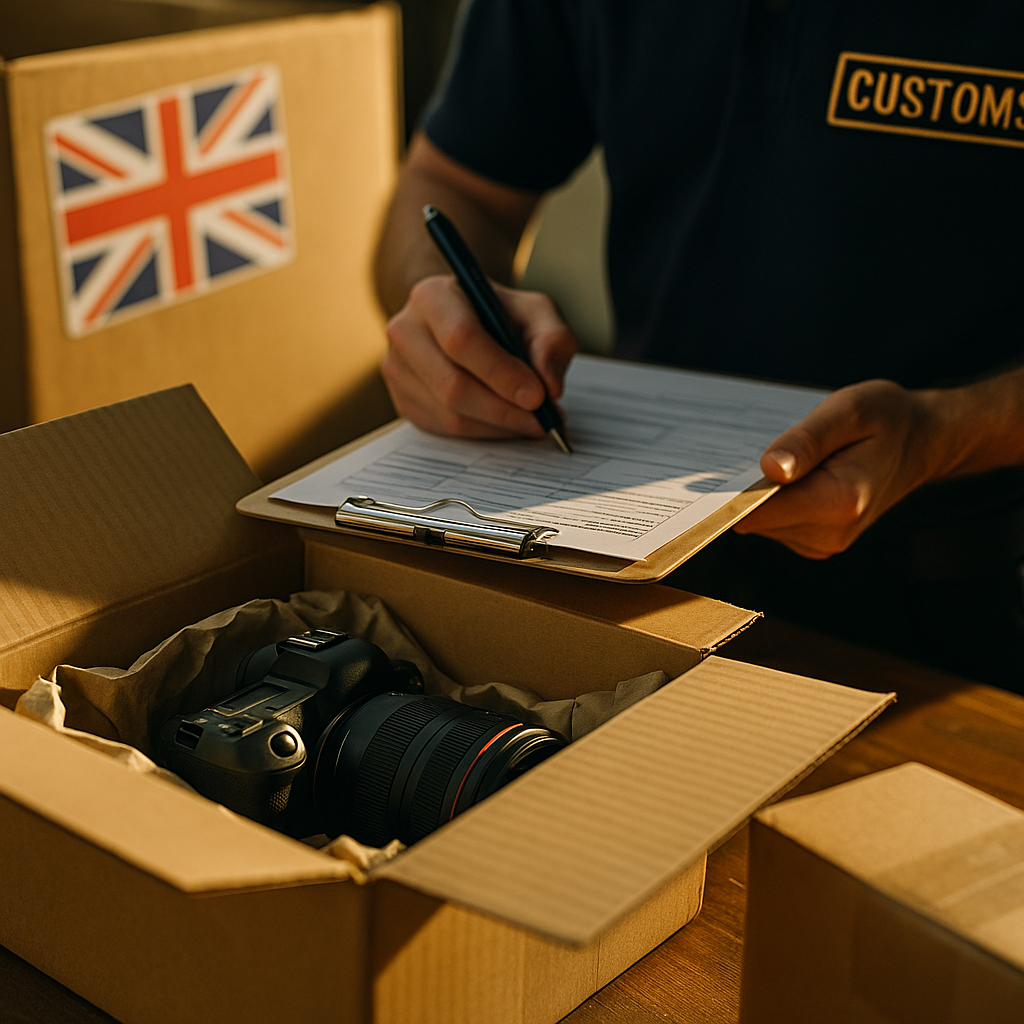
If your influencer seeding program ships product directly from a Chinese fulfillment center to a UK-based creator, you may already be in violation of post-reform import rules — and your campaign timeline is about to get significantly longer.
The UK’s accelerated crackdown on low-value import exemptions, driven largely by political pressure surrounding Shein and Temu’s explosive growth, is reshaping the operational infrastructure of creator-led social commerce. This isn’t a customs technicality. It’s a structural risk to any brand running direct-ship creator seeding programs that depend on speed, scale, and cross-border logistics.
What Actually Changed, and Why It Matters Now
For years, the de minimis threshold — the customs value below which imports entered the UK duty-free and with minimal documentation — functioned as the logistical backbone of fast-fashion gifting. Shein and Temu built entire business models around it. So, quietly, did a lot of influencer marketing teams at brands that source internationally.
The UK government has moved to close what it now publicly frames as a “loophole exploited by overseas retailers.” Proposed reforms would eliminate or significantly restrict the £135 low-value consignment threshold for goods shipped directly from China and other markets, subject those shipments to full VAT and customs duties, and introduce product safety documentation requirements at the point of entry. The UK government has signaled these changes are coming faster than the industry anticipated, with consultation periods compressed under political pressure from domestic retail lobbying groups.
For brand teams, the critical question isn’t whether you sell on Shein or Temu. It’s whether your creator gifting workflow — seed kits, PR packages, product trial programs — relies on direct international shipping to UK-based creators.
Many influencer programs are operationally indistinguishable from Shein’s logistics model: high-volume, low-declared-value parcels shipped directly from overseas fulfillment hubs to individual recipients. The regulatory net being cast at Shein will catch those programs too.
The Creator Seeding Supply Chain Most Brands Haven’t Audited
Here’s what a standard international seeding program looks like: a brand sources product in Asia, stores it in a third-party logistics (3PL) facility, and ships individual PR packages to creators across the UK, EU, and US. Declared values are often kept low to minimize customs friction. Fulfillment is fast. The brand treats it as a marketing cost, not a trade operation.
That model is now a liability. The new UK framework creates several concrete operational problems:
- Duty and VAT exposure: Packages previously entering under de minimis will now attract 20% VAT plus applicable import duties. A £100 product seed kit could incur £25-30 in additional charges — payable by the recipient creator unless the brand builds landed cost into its logistics contract.
- Customs documentation at scale: High-volume seeding programs sending hundreds of packages per campaign now face commodity coding, country-of-origin declarations, and product safety certificates for each shipment category.
- Delays that break content calendars: A gifting program timed to a product launch window cannot absorb 5-10 day customs holds. If your creator’s unboxing video goes up a week after launch, the attribution window is gone.
- Creator experience degradation: Creators asked to pay unexpected import duties on gifted product will decline future collaborations. The relationship cost is real.
For context on how the EU’s parallel changes have already hit programs on the continent, the analysis of the EU de minimis rule change provides a direct precedent — and a preview of what UK-based programs are now facing.
Shein’s Compliance Obligations Are Becoming Your Brand Safety Problem
There’s a second-order effect that brand strategists haven’t fully priced in: creator association risk. As Shein faces heightened regulatory scrutiny — not just on customs but on product safety, labor standards, and ASA advertising rules — creators who have built audiences on Shein hauls face reputational headwinds. Brands that seed product through those same creators, or that use Shein’s TikTok Shop infrastructure for affiliate programs, inherit that association.
The Shein seller compliance standards are tightening, and any brand operating adjacent to that ecosystem needs to treat compliance as a brand safety issue, not just a logistics one. The ASA has already demonstrated willingness to escalate enforcement on influencer advertising rules in the UK market. Add import duty evasion to that picture and the regulatory surface area expands considerably.
Rearchitecting Your UK Creator Seeding Operation
The operational fix is not simple, but it is tractable. Brands that get ahead of this now will have a significant competitive advantage in UK creator programming through the next product cycle.
Move to UK-based fulfillment hubs. If your seeding volume justifies it, establishing a UK 3PL relationship eliminates the cross-border customs problem entirely. Product enters the UK once, under a standard commercial import, and distributes domestically. Yes, this requires forward inventory commitment. But for programs with 50+ creator sends per quarter, it’s the only operationally sound model.
Build landed cost into your seeding budget. For programs that will continue to ship internationally, get accurate duty and VAT calculations into your cost-per-creator metrics now. The UK Trade Tariff tool lets you look up duty rates by commodity code. Do this before your next campaign brief, not after customs flags a shipment.
Restructure creator agreements to address duty liability. Your creator contracts need a clause specifying who bears import costs on gifted product. This is particularly important for UK creators receiving international sends. Clarity here protects both parties and keeps the creator relationship intact when unexpected charges appear. The framework in our guide on creator gifting disclosure and compliance is a useful starting point for building that contractual clarity.
Adjust your content calendar lead times. Any seeding program targeting UK creators should now build in a minimum 10-14 day buffer for customs processing on international shipments. If your launch window can’t absorb that, the fulfillment model needs to change before the content strategy does.
Audit your creator roster for cross-border dependency. Some creators in your UK roster may already be declining international sends or reporting customs friction. That signal — if you’re tracking it — tells you exactly where your operational gaps are.
Disclosure Obligations Don’t Pause During Logistics Disruption
One thing that doesn’t change under the new import rules: your disclosure obligations. A gifted product that takes two weeks to clear customs and costs the creator an unexpected duty payment is still a gifted product that requires ASA-compliant disclosure. The ICO’s guidance on commercial relationships in digital content reinforces that disclosure requirements apply regardless of how the product was delivered.
Brands under logistical stress sometimes let compliance slip — briefings get rushed, disclosure language gets dropped from updated creator instructions. Don’t let supply chain disruption become a disclosure compliance failure. The reputational and regulatory costs of an ASA ruling on non-disclosed gifting are orders of magnitude higher than the cost of a delayed unboxing video. For deeper guidance on building disclosure standards into your creator briefs, see our breakdown of creator brief disclosure standards.
Logistics disruption is the moment when compliance processes fail — not because teams ignore the rules, but because operational pressure creates shortcuts. Build your disclosure workflow so it functions independently of your fulfillment timeline.
The Broader Regulatory Direction of Travel
The UK’s move on low-value imports is part of a broader regulatory tightening on cross-border e-commerce that is accelerating across multiple jurisdictions simultaneously. The EU’s de minimis changes, US Section 321 enforcement scrutiny, and now UK customs reform all point in the same direction: the era of frictionless international direct-ship commerce is ending.
For brand teams running global creator programs, this means the operational model that worked two years ago — ship from a single overseas hub, keep declared values low, move fast — is no longer viable at scale in regulated markets. The brands that adapt fastest will be the ones that treat logistics as a core component of their influencer program architecture, not an afterthought managed by a fulfillment vendor.
Pair this with the ongoing UK platform regulation risk on TikTok and YouTube, and it becomes clear that UK influencer marketing operations now carry a compliance overhead that requires dedicated resource. This is not a task for a junior campaign coordinator.
Your immediate next step: Pull your last three UK creator seeding campaigns, map every shipment that originated outside the UK, and calculate your exposure under the proposed duty and VAT changes. That number — not a general concern about regulatory trends — is what your budget conversation with leadership needs to be built around.
FAQs
Does the UK low-value import crackdown apply to all brands gifting product to creators, or only to retailers like Shein and Temu?
The regulatory changes apply to the shipment, not the shipper’s category. Any brand or agency shipping product directly to UK-based creators from international fulfillment centers — regardless of industry — faces the same duty, VAT, and documentation requirements. The political focus on Shein and Temu doesn’t limit the regulatory scope.
If I use a UK-based PR agency to manage creator gifting, am I insulated from these import rules?
Only if the agency’s fulfillment operation actually stores and distributes product from within the UK. If the agency is coordinating direct-ship from an international vendor or 3PL on your behalf, the import obligations still apply. Ask your agency for explicit confirmation of where product is physically held before it ships to creators.
Who is liable for import duties on gifted product — the brand or the creator?
Under UK customs law, the recipient is typically liable for duties on imported goods unless the sender has arranged Delivered Duty Paid (DDP) shipping terms. Brands should specify DDP terms in their logistics contracts for creator sends, and clarify in their creator agreements who bears any residual import costs. Leaving this ambiguous creates relationship and compliance risk.
Do these import changes affect disclosure obligations for gifted product?
No. ASA rules on disclosure of gifted product are independent of how that product is delivered. A creator receiving an internationally shipped item that incurs customs delays and duties must still disclose it as gifted content in line with ASA CAP Code requirements. Logistics complexity does not create an exemption from disclosure rules.
How should brands adjust creator contract templates to account for cross-border gifting logistics?
Creator agreements should include a clause specifying the shipping terms (ideally DDP), a statement of who bears import duties or taxes on gifted product, and an updated delivery timeline acknowledgment that accounts for potential customs delays. Contracts should also preserve the creator’s obligation to disclose gifted status regardless of when the product is received relative to the campaign live date.
Top Influencer Marketing Agencies
The leading agencies shaping influencer marketing in 2026
Agencies ranked by campaign performance, client diversity, platform expertise, proven ROI, industry recognition, and client satisfaction. Assessed through verified case studies, reviews, and industry consultations.
Moburst

-
2

The Shelf
Boutique Beauty & Lifestyle Influencer AgencyA data-driven boutique agency specializing exclusively in beauty, wellness, and lifestyle influencer campaigns on Instagram and TikTok. Best for brands already focused on the beauty/personal care space that need curated, aesthetic-driven content.Clients: Pepsi, The Honest Company, Hims, Elf Cosmetics, Pure LeafVisit The Shelf → -
3

Audiencly
Niche Gaming & Esports Influencer AgencyA specialized agency focused exclusively on gaming and esports creators on YouTube, Twitch, and TikTok. Ideal if your campaign is 100% gaming-focused — from game launches to hardware and esports events.Clients: Epic Games, NordVPN, Ubisoft, Wargaming, Tencent GamesVisit Audiencly → -
4

Viral Nation
Global Influencer Marketing & Talent AgencyA dual talent management and marketing agency with proprietary brand safety tools and a global creator network spanning nano-influencers to celebrities across all major platforms.Clients: Meta, Activision Blizzard, Energizer, Aston Martin, WalmartVisit Viral Nation → -
5

The Influencer Marketing Factory
TikTok, Instagram & YouTube CampaignsA full-service agency with strong TikTok expertise, offering end-to-end campaign management from influencer discovery through performance reporting with a focus on platform-native content.Clients: Google, Snapchat, Universal Music, Bumble, YelpVisit TIMF → -
6

NeoReach
Enterprise Analytics & Influencer CampaignsAn enterprise-focused agency combining managed campaigns with a powerful self-service data platform for influencer search, audience analytics, and attribution modeling.Clients: Amazon, Airbnb, Netflix, Honda, The New York TimesVisit NeoReach → -
7

Ubiquitous
Creator-First Marketing PlatformA tech-driven platform combining self-service tools with managed campaign options, emphasizing speed and scalability for brands managing multiple influencer relationships.Clients: Lyft, Disney, Target, American Eagle, NetflixVisit Ubiquitous → -
8

Obviously
Scalable Enterprise Influencer CampaignsA tech-enabled agency built for high-volume campaigns, coordinating hundreds of creators simultaneously with end-to-end logistics, content rights management, and product seeding.Clients: Google, Ulta Beauty, Converse, AmazonVisit Obviously →