


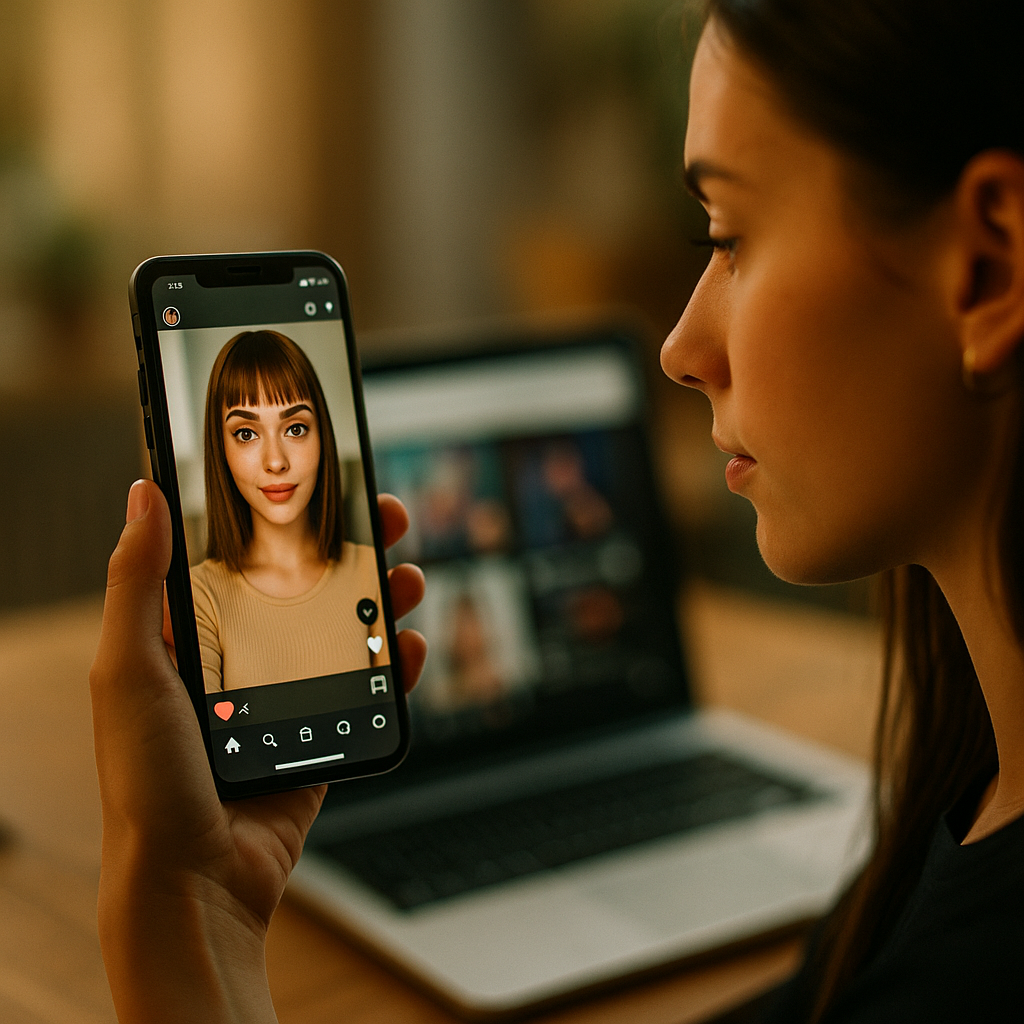
The rise of virtual influencers has redefined online culture, marketing, and even our understanding of authenticity. A Baudrillardian analysis of the virtual influencer phenomenon unveils how hyperreality reshapes our interactions with the digital world. Are we witnessing the end of reality as we know it? Dive in as we explore this paradigm-shifting trend and its implications for society in 2025.
Virtual Influencers: Defining Hyperreality in Social Media
Virtual influencers—computer-generated personas with meticulously crafted identities—now claim millions of followers across platforms like Instagram, TikTok, and YouTube. Unlike their human counterparts, these digital avatars never age, tire, or falter. They are the products of design studios, powered by advanced artificial intelligence and 3D modeling, blurring the line between authentic experience and constructed simulation.
Jean Baudrillard’s concept of hyperreality becomes particularly relevant here. Hyperreality describes a world where representations—images, signs, and simulations—replace or become indistinguishable from ‘real’ experiences. Virtual influencers exemplify this: their fashion choices, “personalities,” and interactions are all meticulously curated, often echoing trends or consumer desires back at us. Followers interact with stylized perfection, not a flawed human. In doing so, we start to value the simulated over the authentic, inadvertently making the unreal more influential than reality itself.
Baudrillard and the Evolution of Simulacra in the Digital Age
Baudrillard’s theory of simulacra posits that in the postmodern world, copies of things have become more important than the original objects themselves. This perspective helps explain why virtual influencers thrive in the social media era. As they replicate the aesthetics and attitudes of traditional influencers—but with greater control and constant perfection—they become simulacra par excellence.
In 2025, brands rely on virtual influencers because simulations can bypass human unpredictability. These digital personalities never slip up and can adapt instantly to emerging trends or shifting public values. The distinction between simulation and reality becomes less meaningful; for their massive audiences, the “lives” of virtual influencers are emotionally engaging, visually compelling, and often more appealing than the messiness of real life. As a result, the Baudrillardian sequence—moving from a reflection of reality, to masking reality, to masking absence of reality, and finally to pure simulation—is fully realized in the influencer arena.
Authenticity, Trust, and the Paradox of Digital Influence
For years, marketers chased authenticity as the gold standard of influence. Ironically, virtual influencers, which are neither real nor transparent about their origins, now command enormous trust and engagement from audiences. According to 2024 data from the Virtual Media Observatory, engagement rates for top virtual influencers were 18% higher than for their human counterparts. The paradox is striking: simulation outperforms sincerity.
How do these digital personas foster trust? Consistency and relatability are key. Creators carefully script their avatars’ “personal stories,” values, and responses to topical issues—creating a façade of vulnerability and connection. Audiences knowingly or subconsciously suspend disbelief, engaging as if with a real person. The effect? A new paradigm of authenticity, built atop a foundation of fabrication.
This shift has profound ethical and psychological repercussions. It raises questions about emotional manipulation, the erosion of genuine connection, and the ways brands exploit hyperreal personas for profit. It also leads us to reconsider what it means to be “real” in the digital public sphere.
The Economics of Virtual Influence: Value in Simulation
The virtual influencer phenomenon has transformed influencer marketing economics. Digital personas present an attractive business model: they are immune to scandals, unaffected by fatigue, and instantly responsive to data-driven optimization. Major brands in 2025 allocate up to 32% of their social media budgets to campaigns led by AI-powered influencers, according to AdTech Insights’ latest industry report.
Beyond brand partnerships, virtual influencers offer new avenues for monetization—NFT drops, exclusive digital merchandise, live virtual concerts, and even virtual meet-and-greets. This ecosystem is heavily data-driven; everything from avatar design to content cadence can be tested, measured, and refined. Here, Baudrillard’s notion that “the map precedes the territory” manifests in real time: virtual influencers shape consumer desire not by reflecting trends, but by inventing them outright within a simulation.
Virtual influencers are no longer passive representations of the market; they are active engines, constructing hyperreal worlds for brands and consumers alike. In this economy of simulation, value itself becomes ephemeral—rooted in attention, engagement, and the constant pursuit of digital novelty.
Reality Fragmented: Societal and Psychological Impact
The proliferation of virtual influencers impacts more than just marketing—it alters how people perceive themselves and others. Baudrillard warned that persistent simulation could erode our grip on reality; in 2025, this has never been more true. Social feeds flooded with digital perfection fuel insecurities, distort body image, and deepen the sense of alienation from physical reality.
Researchers at the Digital Identity Lab highlight the “mirroring” phenomenon: teens and young adults model their online behaviors, speech, and even appearance after digital avatars rather than real people. As these influences increase, so does the risk of intense identity confusion and social comparison disorders. For some, the allure of simulated companionship offered by virtual influencers replaces real-world relationships, exacerbating loneliness and diminishing authentic social skills.
Yet, not all consequences are negative. Some argue that virtual influencers, by exposing the artificiality of social media, prompt deeper critical reflection about the nature of online existence and digital consumption. They invite society to question the meaning of authenticity and the role of technology in shaping identity. The very visibility of simulation may, paradoxically, drive a renewed search for reality and honesty in online spaces.
Conclusion: Navigating Hyperreality in 2025
The virtual influencer phenomenon, viewed through a Baudrillardian lens, challenges our assumptions about authenticity, trust, and reality. As the digital simulation outpaces the real, we must confront the implications of living in, and with, hyperreality. The challenge for 2025 and beyond is finding balance—valuing the richness of real experience while embracing the imaginative potential of the virtual.
Frequently Asked Questions: Virtual Influencers and Hyperreality
-
What is a virtual influencer?
A virtual influencer is a computer-generated character designed to look and behave like a real person, managed by creators or studios, and used primarily for brand partnerships, entertainment, and engagement on social media.
-
How do Baudrillard’s theories relate to virtual influencers?
Baudrillard’s ideas about simulacra and hyperreality explain how virtual influencers blur the boundary between real and simulated experiences, making digital representations as impactful—if not more so—than actual humans.
-
Are virtual influencers ethical?
The ethics of virtual influencers are debated. While they offer creative opportunities and brand safety, they also raise concerns about transparency, authenticity, and the psychological impact on users—especially younger audiences.
-
Do people actually trust virtual influencers?
Yes. Recent data shows that engagement and trust levels with virtual influencers can surpass those of human influencers, likely due to consistency, controlled messaging, and relatability crafted by their creators.
-
Can virtual influencers have a positive impact?
Potentially. By highlighting the constructed nature of social media, virtual influencers may encourage users to think more critically about online content and value real-world experiences and connections.
Top Influencer Marketing Agencies
The leading agencies shaping influencer marketing in 2026
Agencies ranked by campaign performance, client diversity, platform expertise, proven ROI, industry recognition, and client satisfaction. Assessed through verified case studies, reviews, and industry consultations.
Moburst

-
2

The Shelf
Boutique Beauty & Lifestyle Influencer AgencyA data-driven boutique agency specializing exclusively in beauty, wellness, and lifestyle influencer campaigns on Instagram and TikTok. Best for brands already focused on the beauty/personal care space that need curated, aesthetic-driven content.Clients: Pepsi, The Honest Company, Hims, Elf Cosmetics, Pure LeafVisit The Shelf → -
3

Audiencly
Niche Gaming & Esports Influencer AgencyA specialized agency focused exclusively on gaming and esports creators on YouTube, Twitch, and TikTok. Ideal if your campaign is 100% gaming-focused — from game launches to hardware and esports events.Clients: Epic Games, NordVPN, Ubisoft, Wargaming, Tencent GamesVisit Audiencly → -
4

Viral Nation
Global Influencer Marketing & Talent AgencyA dual talent management and marketing agency with proprietary brand safety tools and a global creator network spanning nano-influencers to celebrities across all major platforms.Clients: Meta, Activision Blizzard, Energizer, Aston Martin, WalmartVisit Viral Nation → -
5

The Influencer Marketing Factory
TikTok, Instagram & YouTube CampaignsA full-service agency with strong TikTok expertise, offering end-to-end campaign management from influencer discovery through performance reporting with a focus on platform-native content.Clients: Google, Snapchat, Universal Music, Bumble, YelpVisit TIMF → -
6

NeoReach
Enterprise Analytics & Influencer CampaignsAn enterprise-focused agency combining managed campaigns with a powerful self-service data platform for influencer search, audience analytics, and attribution modeling.Clients: Amazon, Airbnb, Netflix, Honda, The New York TimesVisit NeoReach → -
7

Ubiquitous
Creator-First Marketing PlatformA tech-driven platform combining self-service tools with managed campaign options, emphasizing speed and scalability for brands managing multiple influencer relationships.Clients: Lyft, Disney, Target, American Eagle, NetflixVisit Ubiquitous → -
8

Obviously
Scalable Enterprise Influencer CampaignsA tech-enabled agency built for high-volume campaigns, coordinating hundreds of creators simultaneously with end-to-end logistics, content rights management, and product seeding.Clients: Google, Ulta Beauty, Converse, AmazonVisit Obviously →