


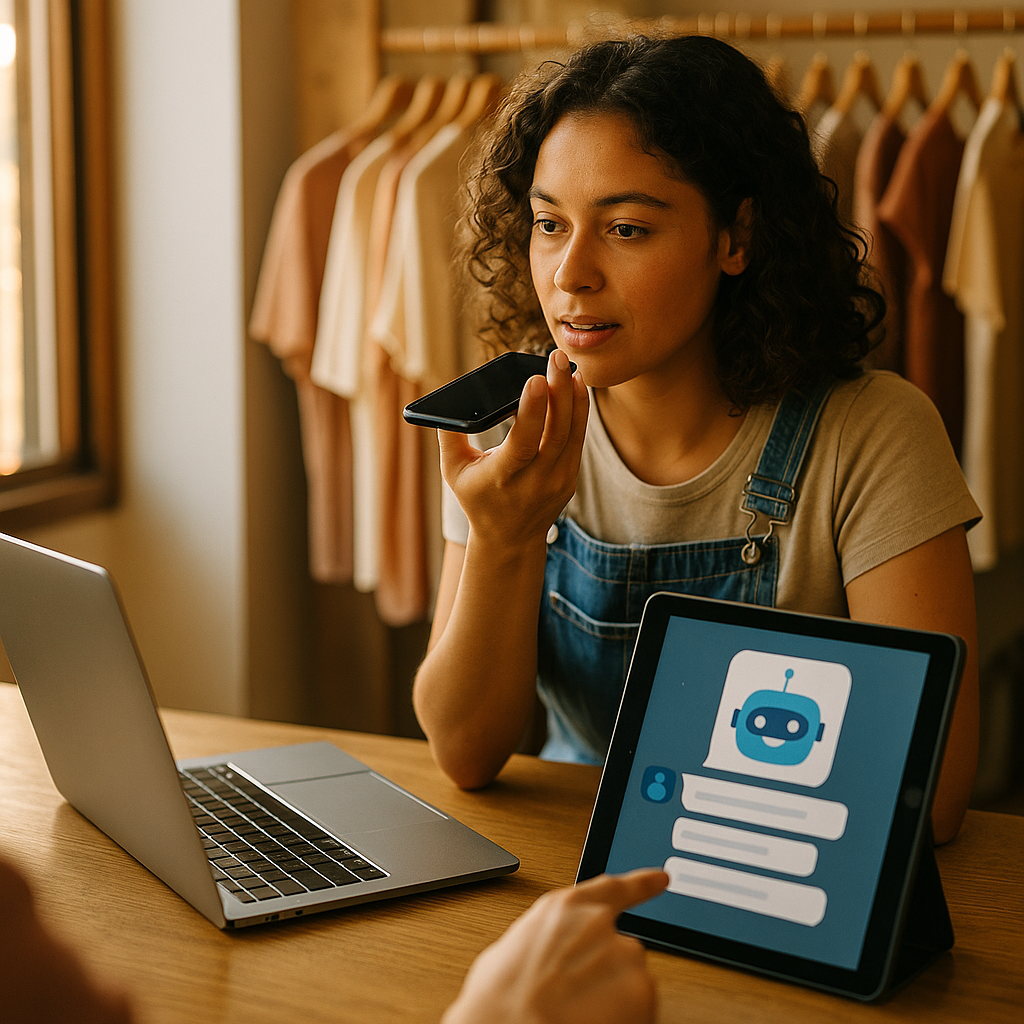
Forty-two percent of online shoppers abandon a purchase after one bad customer service interaction, according to HubSpot research. Now imagine that interaction happens on a creator storefront with no call center, no CRM, and a founder answering DMs at midnight. That’s the reality for most creator commerce brands today, and it’s exactly why voice bot and chatbot handoffs have become the quiet infrastructure decision separating storefronts that scale from storefronts that collapse under their own order volume.
Why Creator Storefronts Break Customer Service Math
Traditional ecommerce support models assume a support team. Creator storefronts rarely have one. A single viral TikTok can generate ten thousand orders overnight, and every one of those buyers expects an answer about shipping, sizing, or a damaged product within hours, not days.
Agencies managing multiple creator storefronts face a multiplied version of the same problem. Ten creators, ten support inboxes, ten sets of policies. Scaling human agents linearly against order volume kills margin fast, which is exactly the tension already playing out in white label AI services work across the industry.
A well-designed handoff system doesn’t just save labor cost. It protects the creator’s parasocial trust, which is the actual product being sold.
This is where automated voice and chat layers stop being a nice-to-have and start being the operating model. The question isn’t whether to deploy a bot. It’s how to design the handoff so the bot resolves routine friction while a human catches everything that threatens brand trust.
What a Handoff Actually Means in Practice
A handoff is the moment a conversation moves from automated to human, or from one automated channel to another. Get the trigger logic wrong and you either frustrate customers with a bot that won’t let go, or you bury your human team in tickets a bot should’ve handled.
Good handoff architecture typically splits into three tiers:
- Tier one (fully automated): order status, tracking numbers, return policy, sizing charts, restock alerts. These are repetitive, low-risk, and answerable from structured data.
- Tier two (bot-assisted, human-reviewed): refund requests, damaged goods claims, discount code disputes. The bot gathers details and drafts a resolution, but a person approves it before it ships.
- Tier three (immediate human escalation): allegations of fraud, legal threats, accessibility complaints, or anything involving a minor or health claim. No bot touches these.
Brands that skip tier three mapping are the ones who end up in a Reddit thread titled “this creator’s bot told me to go away.” The reputational cost of a bad escalation dwarfs the cost savings of automation.
Voice Bots Are Catching Up to Chat, Fast
Chat has dominated creator storefront support because it’s asynchronous and screenshot-friendly. But voice is closing the gap quickly, particularly for high-ticket creator products like courses, coaching, or physical goods bundles where buyers want to talk through a decision before purchase.
The same voice infrastructure local service businesses use for appointment booking is now being repurposed for creator commerce. The logic from our voice bot setup guide for local brands translates surprisingly well: define the call flow, set clear escalation points, and never let the bot pretend to be human when a customer asks directly.
Platforms like Salesforce are pushing hard into this space too. The Agentforce rollout into Marketing Cloud signals that enterprise players see creator-adjacent commerce as a real revenue category, not a side hustle, which lines up with what we reported in Salesforce Agentforce creator ops coverage.
Where Voice Still Falls Short
Voice bots struggle with tonal nuance. A frustrated customer typing in all caps is easy for a chatbot to flag. A frustrated customer on a call who’s just being quietly passive-aggressive is much harder for current speech models to catch. Sentiment detection on voice has improved, but it’s not yet reliable enough to be the sole trigger for escalation. Pair it with explicit keyword triggers (“refund,” “lawyer,” “never again”) as a backstop.
The Data Problem Nobody Talks About
Bots are only as good as the data layer feeding them. A chatbot that doesn’t know a creator just issued a public apology for a defective batch will confidently tell a customer their order is “on schedule,” which is worse than no bot at all.
This is an identity and attribution problem disguised as a customer service problem. If your support bot and your fulfillment system don’t share a real-time data layer, you’re automating inconsistency, not resolving it. The same unification challenge shows up in AI identity resolution work for creator attribution, and the fix is structurally similar: one source of truth, synced across every touchpoint the bot can see.
An unsynced chatbot doesn’t just fail to help, it actively manufactures new complaints by contradicting what the customer already knows.
Retrieval augmented generation is becoming the standard fix here. Instead of a bot improvising answers from a static script, it pulls live order data, return policy updates, and inventory status at query time. That’s the same grounding principle behind retrieval augmented generation approaches now spreading across marketing copy generation. Customer service is arguably a better fit for it, since the stakes of a wrong answer are higher and the data is more structured.
Compliance Isn’t Optional, Even for Small Storefronts
Regulators are paying closer attention to AI-driven customer interactions. The FTC has signaled it will treat deceptive bot disclosures as a consumer protection issue, and in the UK, the ICO has published guidance on automated decision-making that applies directly to refund and dispute bots.
Three compliance basics every brand should bake into their handoff design:
- Always disclose when a customer is talking to a bot, verbally and in writing. Never let the bot imply it’s the creator themselves.
- Log every automated decision that affects money (refunds, discounts, chargebacks) with a human-reviewable audit trail.
- Build an opt-out: any customer who asks for a human, at any tier, gets one within a reasonable window.
This isn’t just risk mitigation theater. Brands that get caught hiding behind bots during disputes face the same trust erosion documented in our coverage of AI hallucination risk, where confidently wrong automated outputs do lasting reputational damage that’s expensive to reverse.
Building the Handoff Stack: A Practical Checklist
If you’re deploying this for the first time, resist the urge to buy an all-in-one platform before mapping your own conversation volume. Most teams overbuild. Here’s a leaner sequence:
- Audit your last ninety days of tickets. What percentage were tier one, repetitive, and resolvable with existing data? That’s your automation ceiling, usually 60 to 75 percent for established storefronts.
- Pick one channel first. Chat is faster to deploy and cheaper to test than voice. Prove the handoff logic in chat, then port it to voice once escalation triggers are stable.
- Set a human response SLA for every escalated tier. A bot that escalates into a black hole is worse than no bot.
- Review transcripts weekly, not quarterly. Bot behavior drifts as product lines and promotions change. What worked for a standard order breaks during a flash sale.
Agencies running this across multiple creator clients should also watch margin impact closely. The infrastructure cost is real, and according to eMarketer estimates on conversational commerce adoption, the brands seeing the best ROI are the ones treating bot deployment as an ongoing product, not a one-time setup.
A Quick Gut Check
Ask yourself: if your bot made a wrong promise to a customer right now, would you find out before they posted about it? If the honest answer is “probably not,” your monitoring layer needs work before your automation layer gets bigger.
Next step: pull your last ninety days of support tickets, tag them by tier, and build your escalation map before you shop for a vendor. The platform matters less than the logic you feed it.
FAQs
What’s the difference between a chatbot handoff and a voice bot handoff?
A chatbot handoff moves a text conversation from automated replies to a human agent, usually triggered by keywords or sentiment flags. A voice bot handoff does the same on a phone or voice assistant call, typically transferring the customer to a live agent or scheduling a callback when the bot can’t resolve the issue.
How much customer service volume can a bot realistically automate for a creator storefront?
Most established storefronts can automate 60 to 75 percent of routine tickets like order status, sizing, and return policy questions. The remaining volume, disputes, damaged goods, and anything emotionally charged, needs human review to protect brand trust.
Do I need separate bots for chat and voice, or can one system handle both?
Many platforms now offer unified conversational AI that handles both channels from the same knowledge base, which reduces the risk of inconsistent answers. If budget is tight, start with chat since it’s cheaper to deploy and easier to audit before adding voice.
What happens if a bot gives a customer wrong information about an order?
This is a real liability risk, especially around refunds and promised ship dates. Build an audit trail for every automated response involving money or timelines, and make sure your escalation logic lets customers request a human immediately if something seems off.
Is disclosure legally required when a customer is talking to a bot?
Regulators including the FTC in the US are increasingly treating non-disclosure as a deceptive practice issue. Always identify the bot clearly at the start of the interaction and never let it imply it’s the creator or a human staff member.
FAQs
What’s the difference between a chatbot handoff and a voice bot handoff?
A chatbot handoff moves a text conversation from automated replies to a human agent, usually triggered by keywords or sentiment flags. A voice bot handoff does the same on a phone or voice assistant call, typically transferring the customer to a live agent or scheduling a callback when the bot can’t resolve the issue.
How much customer service volume can a bot realistically automate for a creator storefront?
Most established storefronts can automate 60 to 75 percent of routine tickets like order status, sizing, and return policy questions. The remaining volume, disputes, damaged goods, and anything emotionally charged, needs human review to protect brand trust.
Do I need separate bots for chat and voice, or can one system handle both?
Many platforms now offer unified conversational AI that handles both channels from the same knowledge base, which reduces the risk of inconsistent answers. If budget is tight, start with chat since it’s cheaper to deploy and easier to audit before adding voice.
What happens if a bot gives a customer wrong information about an order?
This is a real liability risk, especially around refunds and promised ship dates. Build an audit trail for every automated response involving money or timelines, and make sure your escalation logic lets customers request a human immediately if something seems off.
Is disclosure legally required when a customer is talking to a bot?
Regulators including the FTC in the US are increasingly treating non-disclosure as a deceptive practice issue. Always identify the bot clearly at the start of the interaction and never let it imply it’s the creator or a human staff member.
Top Influencer Marketing Agencies
The leading agencies shaping influencer marketing in 2026
Agencies ranked by campaign performance, client diversity, platform expertise, proven ROI, industry recognition, and client satisfaction. Assessed through verified case studies, reviews, and industry consultations.
Moburst

-
2

The Shelf
Boutique Beauty & Lifestyle Influencer AgencyA data-driven boutique agency specializing exclusively in beauty, wellness, and lifestyle influencer campaigns on Instagram and TikTok. Best for brands already focused on the beauty/personal care space that need curated, aesthetic-driven content.Clients: Pepsi, The Honest Company, Hims, Elf Cosmetics, Pure LeafVisit The Shelf → -
3

Audiencly
Niche Gaming & Esports Influencer AgencyA specialized agency focused exclusively on gaming and esports creators on YouTube, Twitch, and TikTok. Ideal if your campaign is 100% gaming-focused — from game launches to hardware and esports events.Clients: Epic Games, NordVPN, Ubisoft, Wargaming, Tencent GamesVisit Audiencly → -
4

Viral Nation
Global Influencer Marketing & Talent AgencyA dual talent management and marketing agency with proprietary brand safety tools and a global creator network spanning nano-influencers to celebrities across all major platforms.Clients: Meta, Activision Blizzard, Energizer, Aston Martin, WalmartVisit Viral Nation → -
5

The Influencer Marketing Factory
TikTok, Instagram & YouTube CampaignsA full-service agency with strong TikTok expertise, offering end-to-end campaign management from influencer discovery through performance reporting with a focus on platform-native content.Clients: Google, Snapchat, Universal Music, Bumble, YelpVisit TIMF → -
6

NeoReach
Enterprise Analytics & Influencer CampaignsAn enterprise-focused agency combining managed campaigns with a powerful self-service data platform for influencer search, audience analytics, and attribution modeling.Clients: Amazon, Airbnb, Netflix, Honda, The New York TimesVisit NeoReach → -
7

Ubiquitous
Creator-First Marketing PlatformA tech-driven platform combining self-service tools with managed campaign options, emphasizing speed and scalability for brands managing multiple influencer relationships.Clients: Lyft, Disney, Target, American Eagle, NetflixVisit Ubiquitous → -
8

Obviously
Scalable Enterprise Influencer CampaignsA tech-enabled agency built for high-volume campaigns, coordinating hundreds of creators simultaneously with end-to-end logistics, content rights management, and product seeding.Clients: Google, Ulta Beauty, Converse, AmazonVisit Obviously →