


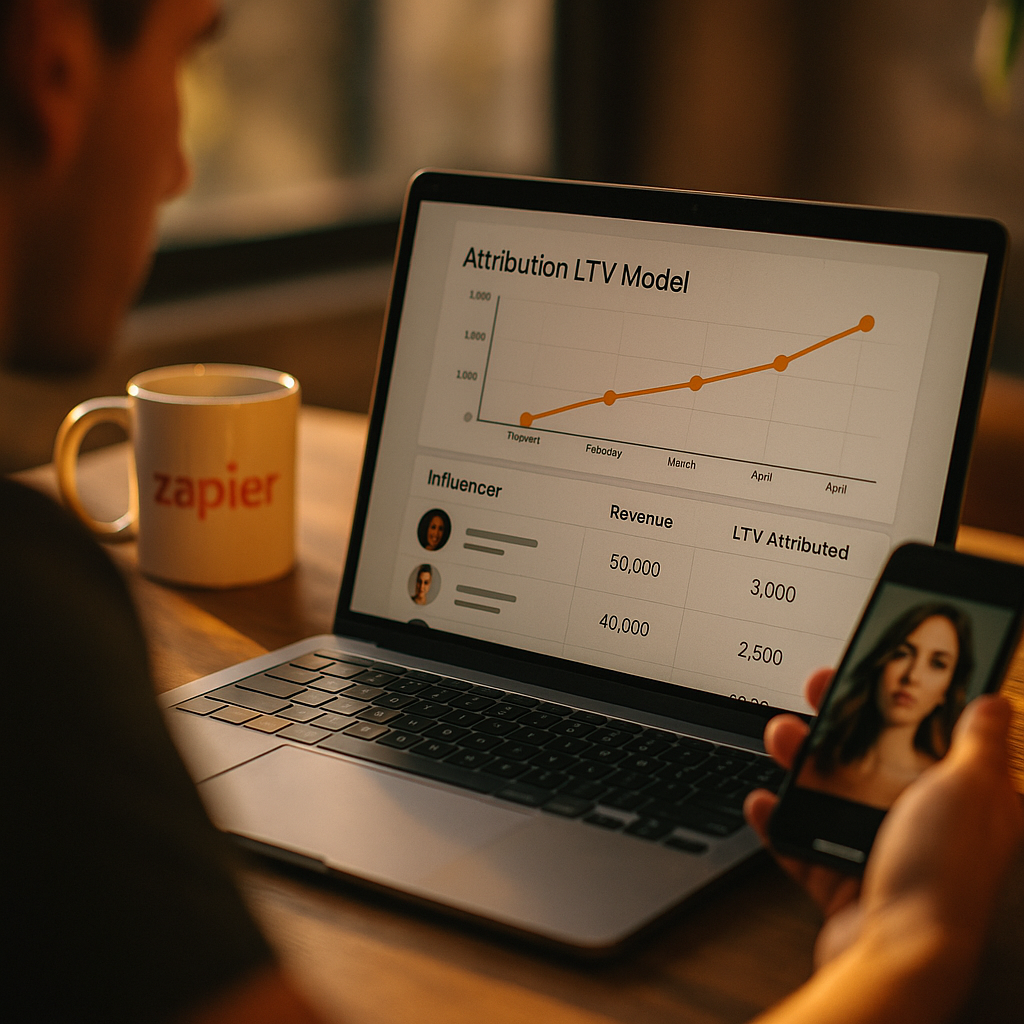
Zapier just gave marketing leaders a blunt reality check: 91% of its employees now use AI weekly, and its CMO drove that adoption from the top down, not through a bottom-up pilot program. Buried in that story is a bigger signal for anyone running influencer budgets. If AI adoption can be led, measured, and tied to revenue outcomes at the executive level, why is influencer attribution still stuck reporting last-click sales instead of lifetime value?
The Zapier Playbook Wasn’t About Chatbots
Zapier’s approach got attention because it skipped the usual corporate AI theater. No innovation lab. No six-month “exploration phase.” The CMO set adoption targets, tracked them like pipeline metrics, and tied AI usage to actual output: campaigns shipped, content produced, decisions made faster. It was treated as an operational mandate, not an experiment.
That distinction matters more than it sounds. Most marketing orgs still treat AI (and influencer marketing, frankly) as a side budget line, measured loosely and reported quarterly with vanity metrics. Zapier’s model forced accountability into the system: adoption had to produce measurable business impact, tracked continuously, owned by leadership.
Translate that discipline to influencer programs and the gap becomes obvious. Most brands can tell you cost-per-post or campaign-level ROAS. Very few can tell you what a creator-acquired customer is worth eighteen months later. That’s not a data problem anymore — it’s a leadership priority problem, the same one Zapier’s CMO solved for AI adoption.
If your influencer reporting stops at first-purchase revenue, you’re valuing creators the same way marketing valued display ads in 2015 — and missing most of the actual return.
Why Last-Click Attribution Undersells Creator Value
Here’s the uncomfortable math. A creator partnership that drives 500 first-time purchases at a $40 average order value looks fine on paper — $20,000 in tracked revenue against a $15,000 fee. Solid ROAS, everyone claps, campaign gets renewed or doesn’t based on that single number.
But what if those 500 customers have a 14-month retention rate 30% higher than customers acquired through paid search? What if they refer friends at twice the rate of your average buyer? That’s the value last-click attribution simply doesn’t capture. It’s not that the data doesn’t exist — it’s that most brands never built the infrastructure to connect creator-attributed customers to downstream behavior.
This is where the Zapier parallel gets specific. Zapier didn’t just measure whether employees opened an AI tool. They measured what happened after — time saved, output quality, downstream productivity. Influencer marketing needs the same second-order tracking: not just “did this creator drive a sale” but “what did that customer become.”
The LTV Attribution Gap, By the Numbers
According to eMarketer’s ongoing influencer spend research, brands are projected to pour record sums into creator partnerships this year, yet most measurement stacks still can’t connect creator-attributed customers to cohort-level LTV without manual CRM stitching. Meanwhile, HubSpot’s customer data shows retention-focused acquisition channels consistently outperform pure conversion channels on 12-month value, yet influencer budgets are almost never allocated using that lens.
The result: brands over-invest in creators who generate cheap first-time sales and under-invest in creators whose audiences become genuinely loyal customers. It’s a resource misallocation problem hiding inside a measurement gap.
What CMO-Led Adoption Actually Requires
Zapier’s model worked because three things happened simultaneously, and none of them were technical.
- Executive ownership. The CMO personally tracked adoption metrics weekly, not delegated to a data team buried three layers down.
- Standardized measurement. Everyone used the same tools and reported through the same dashboard, eliminating the “my team measures it differently” excuse.
- Tied to compensation and planning. Adoption wasn’t optional feedback — it fed directly into budget and headcount decisions.
Apply that same rigor to influencer LTV attribution and you get a workable framework. The CMO or VP of Marketing owns creator LTV as a reported metric, not a nice-to-have. Every creator campaign gets tagged with a first-party identifier that survives past the initial purchase. And renewal or scale-up decisions for creator partnerships get made using 6-12 month value data, not launch-week ROAS.
This requires the same identity infrastructure discussed in identity resolution frameworks — without a persistent way to recognize a customer across sessions and time, LTV attribution to a specific creator is guesswork dressed up as analytics.
The Technical Backbone: First-Party Data or Bust
You can’t attribute lifetime value to a creator without first-party data capture that survives the walled gardens. Platform-reported attribution windows are laughably short — typically 1 to 7 days — which means any value generated after that window simply vanishes from the creator’s scorecard.
Brands solving this well are building server-side data capture that ties a unique code or link to a customer ID at the moment of first purchase, then feeding that ID into their CDP or data warehouse for longitudinal tracking. This is nearly identical to the architecture covered in first-party server-side data capture guidance for identity resolution — the influencer use case is just a specific application of the same plumbing.
Without it, you’re stuck comparing creators using metrics that expire before the real value shows up. That’s like judging a marriage by the first date.
Attribution windows measure the transaction. Lifetime value measures the relationship. Most influencer programs are still optimizing for the wrong one.
Building the Framework: A Practical Sequence
You don’t need a data science team to start moving toward LTV-based creator attribution. Here’s a realistic sequence brands are using right now.
- Assign unique, trackable identifiers per creator — unique discount codes or UTM-tagged links tied to a customer record, not just a campaign.
- Push first-purchase data into your CDP or CRM immediately, tagged with the source creator, so it’s queryable later.
- Set a minimum observation window — 90 days at minimum, ideally 6-12 months — before making renewal or scale decisions on a creator relationship.
- Segment creators by cohort value, not campaign ROAS. Rank partnerships by average customer LTV, repeat purchase rate, and referral behavior.
- Report LTV-adjusted ROI to leadership quarterly, the same way Zapier reported AI adoption weekly — visibly, consistently, tied to budget decisions.
Step three is where most programs stall. Marketing teams are under pressure to prove immediate value, and waiting 90-180 days to judge a creator partnership feels risky when budgets get reviewed monthly. But that short-term pressure is exactly what produces the misallocation problem in the first place.
Platforms are catching up to this need. Tools built for predicting creator LTV in real time use historical cohort data to forecast which creator partnerships are likely to generate durable customers versus one-time discount hunters, compressing that 90-day wait into something closer to a real-time signal. That’s the direction this entire category is heading: less “how many sales did this post drive” and more “what customer quality did this creator source.”
Where This Intersects With AI Marketing Infrastructure
It’s not a coincidence that LTV attribution and AI adoption are converging as priorities. Both require the same foundational fix: clean, connected, first-party data that survives platform silos. Brands that struggled with the data quality issues outlined in why AI marketing deployments fail on bad data will hit the identical wall trying to attribute creator sales to lifetime value. Garbage data in, garbage cohort analysis out.
The prescriptive attribution models gaining traction in broader martech — moving from static dashboards to real-time recommendation engines — are the same architecture creator marketing needs. As covered in prescriptive attribution frameworks, the goal isn’t just reporting what happened. It’s generating an actionable next step: which creator to renew, which to cut, which audience segment to double down on.
Consider also how identity resolution vendors are approaching this at scale. The comparison in evaluating identity resolution at scale is directly relevant here: whichever platform you choose to unify customer identity needs to plug cleanly into your creator attribution stack, or you’ll end up rebuilding the same tracking logic twice.
Compliance Doesn’t Disappear Just Because You’re Tracking LTV
One caution: longitudinal tracking of customers acquired through influencer content raises the same privacy and disclosure obligations as any other data collection. The FTC’s endorsement guidelines still apply regardless of your attribution sophistication, and if you’re tracking EU or UK customers across a longer time horizon, ICO guidance on data retention and consent becomes directly relevant. Building a more sophisticated attribution model doesn’t give brands a pass on transparency — if anything, it raises the bar, because you’re now retaining customer data for months rather than days.
What Good Looks Like in Practice
Picture two creators running near-identical campaigns for a DTC skincare brand. Creator A drives 800 units sold in week one at a low CPA. Creator B drives 400 units at double the CPA. Under last-click attribution, Creator A wins easily, and gets the renewed contract.
Now run it forward six months. Creator A’s audience turns out to be deal-seekers who bought once during a discount push and never returned — 8% repeat purchase rate. Creator B’s audience, smaller but more aligned with the brand, shows a 34% repeat purchase rate and meaningfully higher average order value on repeat visits. Over a 12-month window, Creator B generated more total revenue despite the worse launch-week numbers.
That’s not a hypothetical. It’s the exact pattern showing up in cohort analyses across DTC brands using longer attribution windows, and it’s precisely the kind of decision Zapier’s CMO-led model would catch immediately, because the organization was structured to look past the first data point.
Getting this right also means rethinking briefs and creative guidance so creators attract the right audience from the start, not just the most responsive one. That’s a separate discipline covered in creative brief accuracy work, but it’s connected: better-targeted briefs produce better-fit customers, which produces better LTV, which makes the whole attribution model more meaningful.
The bottom line: attribution built for launch-week ROAS will keep rewarding the wrong creators. Start tagging every creator-driven customer with a persistent ID today, commit to a minimum 90-day evaluation window before judging any partnership, and report LTV-adjusted creator ROI to leadership the same way Zapier’s CMO reported AI adoption — visibly, consistently, and tied to real budget decisions.
Frequently Asked Questions
What does “CMO-led AI adoption” have to do with influencer attribution?
Zapier’s model shows how executive ownership and consistent measurement drive real accountability. Applying that same discipline to influencer marketing means CMOs need to own creator lifetime value as a reported metric, not delegate it to campaign-level ROAS reporting that ignores what happens after the first sale.
Why is lifetime value a better metric than last-click ROAS for influencer campaigns?
Last-click ROAS only captures the immediate transaction, often within a 1-7 day attribution window. Lifetime value captures retention, repeat purchase rate, and referral behavior, which frequently reveals that lower-converting creators produce more valuable long-term customers than high-converting ones.
How long should brands wait before judging a creator partnership on LTV?
Most brands should set a minimum 90-day observation window, with 6-12 months being ideal for categories with longer repurchase cycles. Making renewal decisions before that window closes risks cutting creators who generate durable, loyal customers in favor of ones who only drive one-time discount purchases.
What infrastructure is required to attribute lifetime value to specific creators?
Brands need first-party, server-side data capture that ties a unique identifier (a code or tagged link) to a customer record at first purchase, feeding into a CDP or data warehouse for longitudinal tracking. Without persistent identity resolution, LTV attribution to a specific creator is not reliable.
Are there compliance risks in tracking customers over a longer time horizon for creator attribution?
Yes. Extended data retention for LTV tracking still falls under standard privacy and disclosure obligations, including FTC endorsement guidelines and, for UK/EU customers, ICO data retention rules. Longer tracking windows increase the need for clear consent and transparent data practices, not less.
FAQPage Schema
Top Influencer Marketing Agencies
The leading agencies shaping influencer marketing in 2026
Agencies ranked by campaign performance, client diversity, platform expertise, proven ROI, industry recognition, and client satisfaction. Assessed through verified case studies, reviews, and industry consultations.
Moburst

-
2

The Shelf
Boutique Beauty & Lifestyle Influencer AgencyA data-driven boutique agency specializing exclusively in beauty, wellness, and lifestyle influencer campaigns on Instagram and TikTok. Best for brands already focused on the beauty/personal care space that need curated, aesthetic-driven content.Clients: Pepsi, The Honest Company, Hims, Elf Cosmetics, Pure LeafVisit The Shelf → -
3

Audiencly
Niche Gaming & Esports Influencer AgencyA specialized agency focused exclusively on gaming and esports creators on YouTube, Twitch, and TikTok. Ideal if your campaign is 100% gaming-focused — from game launches to hardware and esports events.Clients: Epic Games, NordVPN, Ubisoft, Wargaming, Tencent GamesVisit Audiencly → -
4

Viral Nation
Global Influencer Marketing & Talent AgencyA dual talent management and marketing agency with proprietary brand safety tools and a global creator network spanning nano-influencers to celebrities across all major platforms.Clients: Meta, Activision Blizzard, Energizer, Aston Martin, WalmartVisit Viral Nation → -
5

The Influencer Marketing Factory
TikTok, Instagram & YouTube CampaignsA full-service agency with strong TikTok expertise, offering end-to-end campaign management from influencer discovery through performance reporting with a focus on platform-native content.Clients: Google, Snapchat, Universal Music, Bumble, YelpVisit TIMF → -
6

NeoReach
Enterprise Analytics & Influencer CampaignsAn enterprise-focused agency combining managed campaigns with a powerful self-service data platform for influencer search, audience analytics, and attribution modeling.Clients: Amazon, Airbnb, Netflix, Honda, The New York TimesVisit NeoReach → -
7

Ubiquitous
Creator-First Marketing PlatformA tech-driven platform combining self-service tools with managed campaign options, emphasizing speed and scalability for brands managing multiple influencer relationships.Clients: Lyft, Disney, Target, American Eagle, NetflixVisit Ubiquitous → -
8

Obviously
Scalable Enterprise Influencer CampaignsA tech-enabled agency built for high-volume campaigns, coordinating hundreds of creators simultaneously with end-to-end logistics, content rights management, and product seeding.Clients: Google, Ulta Beauty, Converse, AmazonVisit Obviously →