


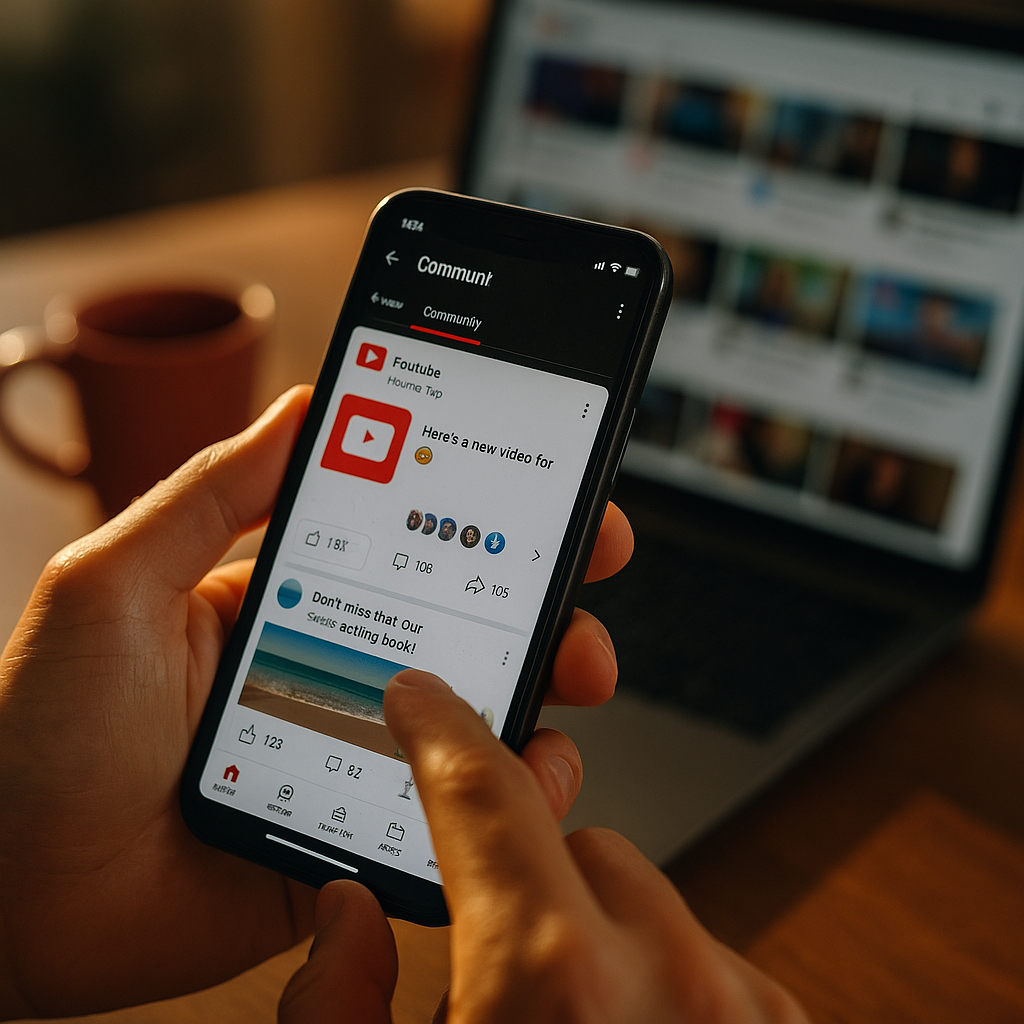
YouTube’s Community tab reaches channels with as few as 500 subscribers, yet most brand partnerships still treat it as an afterthought bolted onto a video deliverable. That’s a mistake. Channels running weekly Community Posts see meaningfully higher return-viewer rates than those that don’t, according to creator platform data shared by Google’s own creator support resources. For brands, YouTube Community Posts are the closest thing to owning a slice of a creator’s audience without buying a media placement.
What the Community Tab Actually Does
Think of it as a hybrid between a tweet and an Instagram Story, except it lives permanently on the channel and gets pushed into subscriber feeds and home page recommendations. Text, images, GIFs, polls, and quizzes all qualify. No editing software required, no upload queue, just a thought and a publish button.
For brands, that low friction is the whole point. A sponsored video takes days of scripting, filming, and revisions. A Community Post takes minutes. It’s the pressure-release valve that keeps an audience engaged between big content drops, and it’s where a lot of the actual relationship-building with subscribers happens.
Community Posts aren’t a content format, they’re a retention mechanism. Brands that treat them as owned media infrastructure get more mileage than those chasing one more video view.
Why Brands Should Care About a “Free” Feature
Every brand marketer has felt the sting of watching organic reach evaporate on a platform they don’t control. Community Posts sidestep some of that because they’re pushed directly to people who already opted in by subscribing. There’s no ad auction, no CPM creep, no algorithm punishing you for linking off-platform (within reason).
That doesn’t mean it’s unlimited reach. YouTube still curates what shows up in the “Community” feed and home page, and posting quality matters. But compared to the pay-to-play dynamics dominating Meta’s ad ecosystem, this is one of the few remaining channels where consistency and relevance still beat budget size.
There’s also a compounding effect. A creator who posts polls, behind-the-scenes shots, and launch teasers regularly trains their audience to check the tab. Brands riding along on those channels inherit that habit loop, essentially free distribution infrastructure they didn’t have to build themselves.
Building the Brand-Owned Hub: A Framework
Here’s where most brand playbooks fall apart: they treat Community Posts as an occasional creator ask instead of a coordinated program. If you’re running influencer partnerships at any scale, you need a repeatable structure. Five components matter most.
- Cadence contracts. Negotiate a minimum number of Community Posts per campaign cycle, not just videos. Two to three posts per week during an active partnership window is realistic without feeling spammy.
- Poll-driven feedback loops. Use polls to pre-test product angles, thumbnail concepts, or messaging before the paid video drops. It’s market research and audience-warming in one motion.
- Teaser sequencing. Post a text tease 48 hours before launch, an image tease 24 hours before, then the video. This mirrors the sequencing logic used in carousel sequencing for launches, just adapted for YouTube’s native tools.
- Cross-post reinforcement. Repurpose the same asset across Shorts and Community in slightly different formats. If you’re already mining podcast or long-form clips for short-form hooks, the workflow from podcast snippets to Shorts applies almost directly.
- Comment moderation SLAs. Community Posts generate comment threads fast. Assign someone (agency or in-house) to respond within a defined window, ideally under four hours during active campaigns.
Disclosure Isn’t Optional Here Either
Because Community Posts feel casual, brands and creators sometimes forget the FTC doesn’t care about the wrapper, only the substance of the endorsement. A sponsored poll asking “which flavor should we launch?” still needs clear disclosure if the brand is paying for the placement or providing product. The FTC’s endorsement guidance applies regardless of format length.
This is an area where brand legal teams often lag creator behavior. If your influencer contracts specify disclosure language for videos but say nothing about Community Posts, you have a gap. Close it now, not after a complaint. The compliance logic mirrors what we’ve covered in disclosure compliance frameworks for Instagram and TikTok’s automatic flagging systems, just ported to a platform with less enforcement infrastructure, which arguably makes brand diligence more important, not less.
Measuring What Actually Matters
YouTube Studio gives creators (and, if shared, brand partners) impression and engagement data on individual Community Posts. The metrics worth tracking aren’t likes. They’re:
- Click-through rate on linked posts (product pages, video premieres, landing pages)
- Poll participation rate as a proxy for audience attentiveness
- Comment sentiment and volume, which often predicts video performance before it publishes
- Subscriber growth correlation during high-cadence Community posting windows
Most brands still evaluate creator partnerships purely on video view counts, which misses the point entirely. A channel with modest video views but hyperactive Community engagement often converts better because that audience is paying closer attention. Data from Sprout Social’s platform benchmarking consistently shows engagement depth correlating more strongly with purchase intent than raw reach.
If a creator’s Community tab is quiet, their video sponsorships are probably underperforming their subscriber count on brand recall too. Community activity is a leading indicator, not a vanity metric.
Where This Fits Against Other Owned-Audience Plays
Brands building owned-audience strategy shouldn’t treat YouTube Community Posts as a standalone tactic. It sits alongside other creator-hosted community formats: Discord fan servers built for retention, Threads reply chains engineered for distribution, and Substack partnerships built around owned audiences. The common thread: brands are increasingly renting attention inside creator-controlled spaces rather than buying it from platform ad systems.
YouTube’s version is unique because it’s tied to a subscriber base that already demonstrated intent by hitting subscribe. That’s a warmer audience than a cold ad impression, and it’s one reason smart media planners are shifting a portion of influencer budgets away from one-off video buys and toward sustained Community-tab activity paired with Shorts, which we’ve broken down in the Shorts versus TikTok CAC comparison.
Common Mistakes That Waste the Opportunity
Brands new to this tend to make the same errors. First, treating Community Posts as ad copy dumped verbatim from another platform. Native tone matters here more than almost anywhere else; audiences can smell a corporate copy-paste job instantly. Second, ignoring polls entirely, which is like paying for a focus group and never reading the results. Third, failing to brief creators on posting cadence, leaving Community activity sporadic and unpredictable. Fourth, no comment monitoring, which lets negative sentiment sit unanswered in a space Google indexes and surfaces prominently.
Fix these four and you’re already ahead of most brand partners currently running YouTube influencer programs.
Next Step
Audit your current creator contracts for Community Post cadence requirements this week. If they’re silent on it, you’re leaving owned-audience reach on the table that costs nothing but a conversation.
Frequently Asked Questions
How many subscribers does a channel need to access the Community tab?
YouTube generally enables the Community tab for channels with at least 500 subscribers, though eligibility has shifted over time and brands should confirm current thresholds with the creator or through YouTube’s official channel requirements.
Can brands post directly to a creator’s Community tab?
No. Only the channel owner can publish Community Posts. Brands work through the creator, providing assets, copy direction, and cadence requirements as part of the sponsorship agreement.
Do Community Posts count toward influencer contract deliverables?
They can and should if negotiated upfront. Many brands now specify a minimum number of Community Posts alongside video deliverables to ensure sustained audience touchpoints, not just a single video drop.
Is disclosure required on Community Posts the same way it is on videos?
Yes. If the post is part of a paid partnership or involves free product, FTC disclosure rules apply regardless of format. Clear, unambiguous language like “paid partnership” or “#ad” should appear directly in the post.
What’s the best use of polls in a brand partnership?
Polls work well for pre-launch testing of product names, flavors, colors, or messaging angles. They also generate engagement data that helps predict how a paid video will perform before it publishes.
Top Influencer Marketing Agencies
The leading agencies shaping influencer marketing in 2026
Agencies ranked by campaign performance, client diversity, platform expertise, proven ROI, industry recognition, and client satisfaction. Assessed through verified case studies, reviews, and industry consultations.
Moburst

-
2

The Shelf
Boutique Beauty & Lifestyle Influencer AgencyA data-driven boutique agency specializing exclusively in beauty, wellness, and lifestyle influencer campaigns on Instagram and TikTok. Best for brands already focused on the beauty/personal care space that need curated, aesthetic-driven content.Clients: Pepsi, The Honest Company, Hims, Elf Cosmetics, Pure LeafVisit The Shelf → -
3

Audiencly
Niche Gaming & Esports Influencer AgencyA specialized agency focused exclusively on gaming and esports creators on YouTube, Twitch, and TikTok. Ideal if your campaign is 100% gaming-focused — from game launches to hardware and esports events.Clients: Epic Games, NordVPN, Ubisoft, Wargaming, Tencent GamesVisit Audiencly → -
4

Viral Nation
Global Influencer Marketing & Talent AgencyA dual talent management and marketing agency with proprietary brand safety tools and a global creator network spanning nano-influencers to celebrities across all major platforms.Clients: Meta, Activision Blizzard, Energizer, Aston Martin, WalmartVisit Viral Nation → -
5

The Influencer Marketing Factory
TikTok, Instagram & YouTube CampaignsA full-service agency with strong TikTok expertise, offering end-to-end campaign management from influencer discovery through performance reporting with a focus on platform-native content.Clients: Google, Snapchat, Universal Music, Bumble, YelpVisit TIMF → -
6

NeoReach
Enterprise Analytics & Influencer CampaignsAn enterprise-focused agency combining managed campaigns with a powerful self-service data platform for influencer search, audience analytics, and attribution modeling.Clients: Amazon, Airbnb, Netflix, Honda, The New York TimesVisit NeoReach → -
7

Ubiquitous
Creator-First Marketing PlatformA tech-driven platform combining self-service tools with managed campaign options, emphasizing speed and scalability for brands managing multiple influencer relationships.Clients: Lyft, Disney, Target, American Eagle, NetflixVisit Ubiquitous → -
8

Obviously
Scalable Enterprise Influencer CampaignsA tech-enabled agency built for high-volume campaigns, coordinating hundreds of creators simultaneously with end-to-end logistics, content rights management, and product seeding.Clients: Google, Ulta Beauty, Converse, AmazonVisit Obviously →