


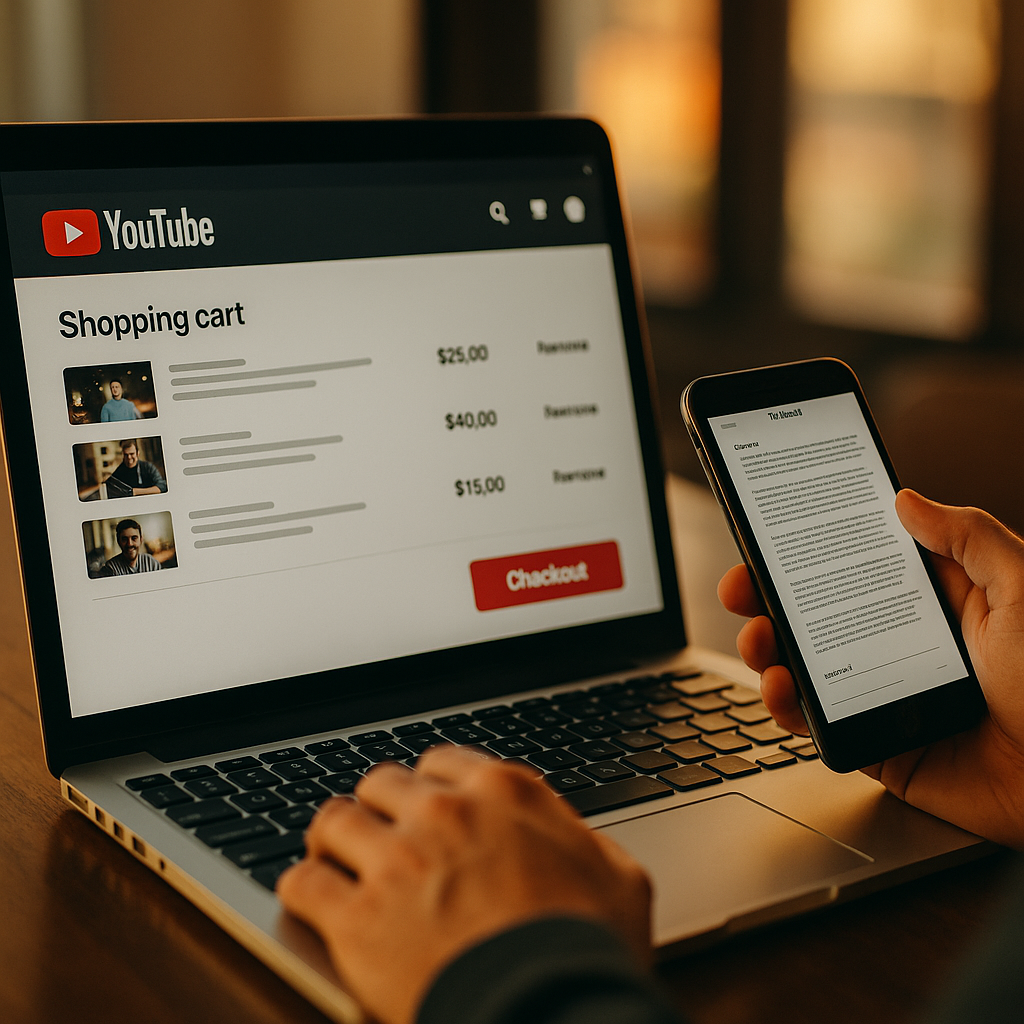
YouTube just told advertisers that every video is a storefront. With Universal Cart, a viewer can buy a product mid-video without ever leaving the player, and that single change rewrites how brands should structure creator deals, measure performance, and split revenue. If your contracts still treat YouTube as an awareness channel, you’re negotiating with last year’s playbook.
Conversational shopping, where a viewer asks a question, gets a product suggestion inside the content, and checks out on the spot, is no longer a TikTok Shop novelty. YouTube is building it into the world’s second largest search engine, and that changes the math on every influencer contract that touches the platform.
What Universal Cart Actually Does
Universal Cart consolidates product tags, shopping ads, and creator affiliate links into a single, persistent cart that follows the viewer across videos, Shorts, and even live streams. Instead of clicking out to a landing page, the shopper builds a basket while watching, then checks out once. Google has been layering shopping features into YouTube for a few years, but this is the first version that behaves like an actual commerce layer rather than a bolted on widget.
For brands, the practical shift is this: the video itself becomes the point of sale, not just the point of discovery. That means attribution data that used to live in a separate analytics platform can now be tied directly to a specific creator, a specific timestamp, and a specific SKU.
When the cart lives inside the content, “top of funnel” and “bottom of funnel” stop being separate line items in a media plan. They’re the same fifteen seconds of video.
Why Creator Deals Have to Change
Most influencer contracts still pay on a flat fee plus optional bonus for views or clicks. That structure made sense when creators couldn’t influence checkout directly. Now that a creator’s on-screen call to action can trigger an in-video purchase, the deal terms need to reflect actual sales contribution, not just impressions.
Three shifts are already showing up in deal negotiations across the mid-tier creator market:
- Hybrid compensation is becoming standard. Base fee plus commission on Universal Cart transactions, rather than flat fee alone.
- Exclusivity clauses are getting shorter and more specific. Brands don’t want to lock a creator into a 12 month exclusivity when a single high performing Short could justify a narrower, higher paying window.
- Content usage rights now include commerce rights. Brands need explicit permission to keep product tags live after a campaign ends, since Universal Cart content can keep generating sales long after the sponsorship period.
None of this is theoretical. Brands running affiliate style YouTube programs already report that top creators generate a meaningful share of revenue from evergreen videos, not just the launch week push. Universal Cart accelerates that long tail effect by removing the friction of leaving the app to buy.
The ROI Case: Does In Video Checkout Actually Convert Better?
Early signals suggest yes, mostly because it removes steps. Every additional click between “I want this” and “I bought this” costs conversion rate. Retailers have known this for two decades, and social commerce platforms have proven it repeatedly. TikTok Shop, for instance, built an entire growth story around collapsing the path to purchase, and YouTube is clearly taking notes.
That said, brands should be skeptical of any vendor or agency claiming instant conversion lift without platform level data to back it up. eMarketer’s research on social commerce adoption has repeatedly flagged that conversion gains vary wildly by category, price point, and creator trust level. A $30 skincare product sells very differently than a $300 kitchen appliance, even with identical checkout friction.
The real ROI question isn’t “does Universal Cart convert.” It’s “does Universal Cart convert well enough to justify paying creators a commission on top of their base fee, or does it just cannibalize sales that would have happened anyway through a description link.” Brands need clean attribution to answer that, and that’s where most influencer programs are still weak. If your measurement stack can’t isolate in-video purchases from other YouTube traffic, you’re negotiating commission splits blind. Teams working through this exact gap should look at how attribution platforms match spend to outcomes before locking in commission rates.
Risk Mitigation: What Legal and Compliance Teams Need to Watch
In-video checkout introduces new disclosure and consent complexity. The FTC’s endorsement guidelines already require clear and conspicuous disclosure when a creator has a material connection to a brand, and a purchase happening inside the video arguably raises the bar on how obvious that disclosure needs to be. Brands should assume regulators will scrutinize conversational shopping formats closely, since the line between “recommendation” and “sale” gets blurrier when the transaction happens in real time.
Practical steps for legal and compliance teams:
- Update creator contracts to require on-screen disclosure timed to the moment the shoppable moment appears, not just a caption disclosure buried below the fold.
- Confirm data handling practices for any customer information captured during in-video checkout, particularly around consent for retargeting.
- Review the FTC’s current endorsement guidance against your creator contract templates at least twice a year, since enforcement priorities shift.
Consent management is going to matter more, not less, as commerce moves inside content. Brands already wrestling with cookieless attribution should read the comparison of consent platforms built for creator programs, since Universal Cart transactions generate first party data that needs the same governance as any other checkout event.
Operational Efficiency: Where the Data Actually Lives
Here’s the part most media buyers underestimate: Universal Cart doesn’t just change how sales happen, it changes where the data lives. Purchase events now need to flow from YouTube’s commerce layer into whatever CDP or attribution stack the brand runs, and that pipeline has to be built correctly or the data is useless for future planning.
Brands running fragmented martech stacks, one tool for creator relationship management, a separate one for attribution, a third for consent, are going to feel this pain acutely. If a Universal Cart transaction can’t be traced back to the originating creator video with clean event taxonomy, you can’t pay commission accurately and you can’t optimize future spend. This is exactly the kind of gap covered in event taxonomy frameworks for influencer stacks, and it’s worth an audit before your next major YouTube push.
There’s also a CRM angle here. Sales reps and account managers negotiating creator deals need visibility into which creators are already driving Universal Cart revenue, so they don’t undervalue a partnership in renewal conversations. Brands using AI-assisted lead and relationship tools are starting to fold this signal into their creator scoring models, similar to what’s discussed in the CRM tooling built for influencer lead management.
A creator who drives $40,000 in Universal Cart transactions on a single evergreen video is a different negotiating partner than one who drove a spike of views three years ago. Deal terms need to reflect current commerce contribution, not historical reach.
How Should Brands Restructure Contracts Right Now?
Don’t wait for a template from your agency. Start with three concrete changes:
- Add a commerce performance clause. Define how Universal Cart sales are tracked, reported, and reconciled monthly, not just at campaign end.
- Set a clear content usage window. Decide explicitly how long product tags stay live after the paid partnership ends, and who benefits from sales generated after that window closes.
- Negotiate data access, not just payment. Brands should have visibility into aggregate Universal Cart performance data for their own products, even if YouTube keeps granular creator-level data proprietary.
Agencies and in-house teams managing multiple creator relationships should also revisit how they score partnerships overall. Fraud and authenticity scoring still matters, arguably more, since a bot-inflated audience now has a direct path to draining ad spend through fake cart activity. The comparison of fraud scoring tools for creator vetting is a useful starting point for tightening that process before commerce dollars are on the line.
The Bigger Shift: Search, Shopping, and Content Are Merging
Universal Cart isn’t an isolated YouTube feature. It’s part of a broader pattern where search engines, social platforms, and commerce systems are collapsing into single interfaces. Google’s own shopping ad ecosystem, TikTok’s shop tools, and now YouTube’s in-video checkout are all converging on the same idea: reduce the distance between “I saw it” and “I bought it” to near zero.
For brand strategists, this means influencer marketing budgets can no longer sit in a silo separate from performance marketing and search budgets. The creator who makes a product video is now, functionally, running a mini storefront with search visibility, social reach, and checkout capability all in one. Sprout Social’s research on social commerce trends has tracked this convergence for several years, and Universal Cart is one of the clearest examples yet of platforms building the infrastructure to match consumer behavior that was already happening informally.
Brands that keep influencer budgets, paid search budgets, and commerce operations in separate reporting lines are going to struggle to see the full picture. The ones that unify their stack, or at least their reporting, will have a real advantage in negotiating fair, performance-based creator deals going forward.
Next Step
Before your next YouTube creator renewal, audit your current contracts for commerce clauses, confirm your attribution stack can isolate Universal Cart transactions by creator, and bring a commission-based structure to the negotiating table instead of waiting for the creator’s agent to propose one.
FAQs
What is YouTube’s Universal Cart?
Universal Cart is YouTube’s in-video shopping feature that lets viewers add products to a persistent cart and check out without leaving the video player, consolidating product tags, shopping ads, and creator affiliate links into one checkout flow.
How does Universal Cart change creator payment structures?
It pushes brands toward hybrid compensation models that combine a base fee with commission on completed in-video transactions, replacing flat-fee-only arrangements that don’t account for a creator’s direct role in driving sales.
Does conversational shopping actually increase conversion rates?
Removing steps between interest and purchase generally improves conversion, but the effect varies by product category, price point, and creator trust level, so brands should validate results with their own attribution data rather than relying on platform claims alone.
What compliance risks come with in-video checkout?
The main risks involve disclosure timing (creators need to flag sponsorship clearly at the moment a shoppable prompt appears) and data handling for any customer information captured during checkout, both of which fall under existing FTC endorsement guidelines.
What should brands change in creator contracts today?
Add explicit commerce performance clauses, define how long product tags remain active after a campaign ends, and secure access to aggregate sales data tied to Universal Cart transactions before renewing any YouTube creator partnership.
Top Influencer Marketing Agencies
The leading agencies shaping influencer marketing in 2026
Agencies ranked by campaign performance, client diversity, platform expertise, proven ROI, industry recognition, and client satisfaction. Assessed through verified case studies, reviews, and industry consultations.
Moburst

-
2

The Shelf
Boutique Beauty & Lifestyle Influencer AgencyA data-driven boutique agency specializing exclusively in beauty, wellness, and lifestyle influencer campaigns on Instagram and TikTok. Best for brands already focused on the beauty/personal care space that need curated, aesthetic-driven content.Clients: Pepsi, The Honest Company, Hims, Elf Cosmetics, Pure LeafVisit The Shelf → -
3

Audiencly
Niche Gaming & Esports Influencer AgencyA specialized agency focused exclusively on gaming and esports creators on YouTube, Twitch, and TikTok. Ideal if your campaign is 100% gaming-focused — from game launches to hardware and esports events.Clients: Epic Games, NordVPN, Ubisoft, Wargaming, Tencent GamesVisit Audiencly → -
4

Viral Nation
Global Influencer Marketing & Talent AgencyA dual talent management and marketing agency with proprietary brand safety tools and a global creator network spanning nano-influencers to celebrities across all major platforms.Clients: Meta, Activision Blizzard, Energizer, Aston Martin, WalmartVisit Viral Nation → -
5

The Influencer Marketing Factory
TikTok, Instagram & YouTube CampaignsA full-service agency with strong TikTok expertise, offering end-to-end campaign management from influencer discovery through performance reporting with a focus on platform-native content.Clients: Google, Snapchat, Universal Music, Bumble, YelpVisit TIMF → -
6

NeoReach
Enterprise Analytics & Influencer CampaignsAn enterprise-focused agency combining managed campaigns with a powerful self-service data platform for influencer search, audience analytics, and attribution modeling.Clients: Amazon, Airbnb, Netflix, Honda, The New York TimesVisit NeoReach → -
7

Ubiquitous
Creator-First Marketing PlatformA tech-driven platform combining self-service tools with managed campaign options, emphasizing speed and scalability for brands managing multiple influencer relationships.Clients: Lyft, Disney, Target, American Eagle, NetflixVisit Ubiquitous → -
8

Obviously
Scalable Enterprise Influencer CampaignsA tech-enabled agency built for high-volume campaigns, coordinating hundreds of creators simultaneously with end-to-end logistics, content rights management, and product seeding.Clients: Google, Ulta Beauty, Converse, AmazonVisit Obviously →