


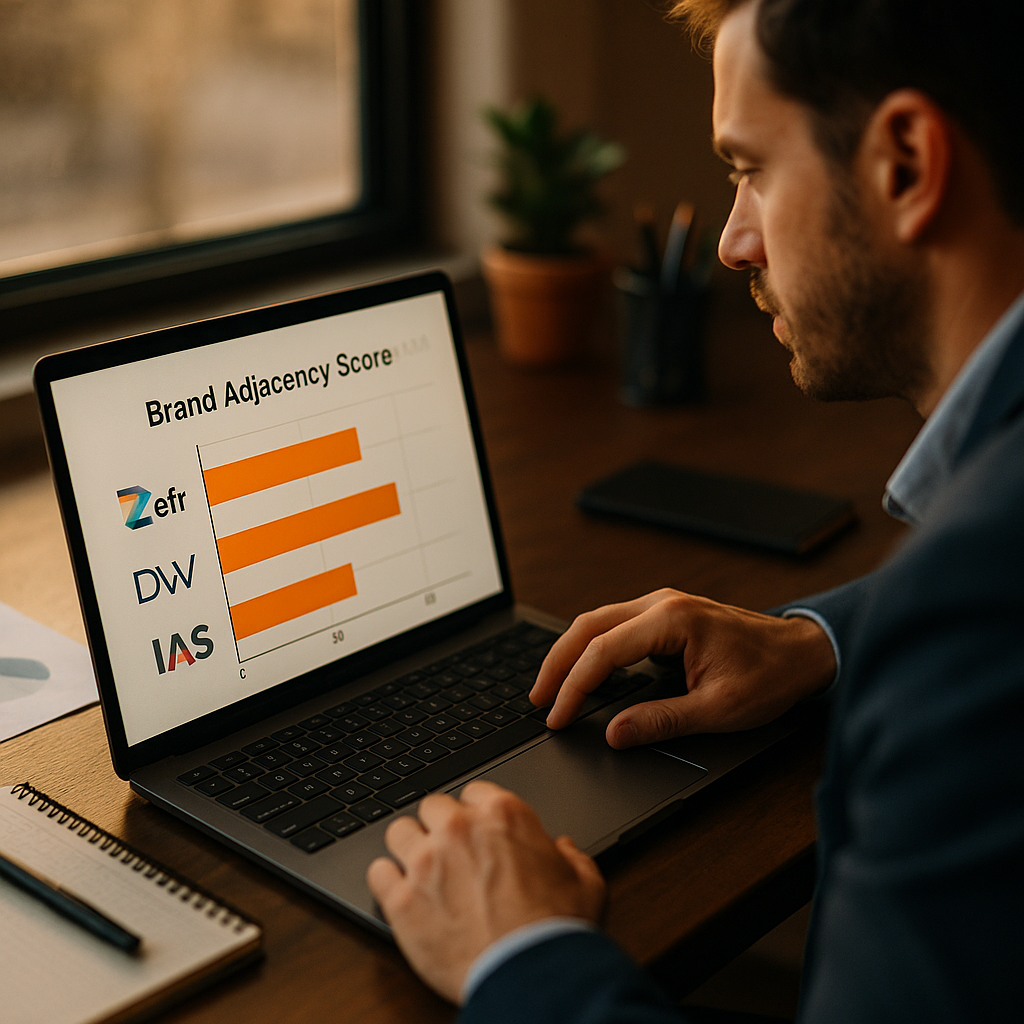
Roughly 63% of marketers say brand safety incidents on social platforms have gotten harder to predict since creator content started outpacing produced media in the feed mix, according to industry surveys from firms like eMarketer. If your brand adjacency scoring still treats creator content like static display inventory, you’re already behind. Brand adjacency scoring inside creator-heavy feeds is a different problem than pre-roll or in-feed static ads, and Zefr, DoubleVerify, and IAS have built genuinely different answers to it.
This isn’t a “which vendor is best” listicle. It’s a breakdown of how each platform actually scores adjacency risk when the content next to your ad is a 22-year-old’s unscripted rant, a de-influencing video, or a live shopping stream that pivots topics every ninety seconds.
Why Creator Feeds Broke the Old Adjacency Models
Traditional brand safety tools were built for a web of URLs, page-level context, and relatively static content. Creator feeds don’t work that way. A single TikTok or Reels feed can serve a user commentary, comedy, product reviews, and political discourse within the same scroll session, often from the same creator inside one video. Context shifts mid-asset, not just between assets.
That’s the core challenge all three vendors are racing to solve: scoring adjacency risk at the moment and scene level, not just the channel or account level. A creator who’s generally brand-safe can still post one video with a risky segment three minutes in. Account-level whitelisting misses that entirely.
Adjacency risk in creator feeds isn’t a channel property anymore — it’s a moment-by-moment variable, and scoring it requires frame-level or scene-level AI classification, not account-level allowlists.
This is why all three companies have pivoted hard toward computer vision, audio transcription, and multimodal AI models over the past two years. The question is how well each one executes, and where the gaps show up in practice.
Zefr: Built Contextually for Social-First Video
Zefr made its name doing exactly this kind of content-level classification for YouTube inventory before creator-heavy short-form video became the dominant ad environment. That heritage shows. Zefr’s AI adjacency engine is trained specifically on video-first, creator-native formats, and it leans heavily on scene-level classification rather than metadata or creator reputation scores alone.
In practice, that means Zefr is scoring things like visual content, spoken audio, on-screen text, and even background music cues to flag adjacency risk within a single video, not just at the account level. For brands running influencer-adjacent paid amplification on Meta, TikTok, or YouTube Shorts, this granularity matters. A skincare brand doesn’t just want to avoid “risky creators.” It wants to avoid the fifteen seconds inside an otherwise-safe video where the creator veers into a controversial topic.
We covered Zefr’s approach in more depth in our Zefr buyer’s guide for CMOs, and the standout is customization. Zefr lets brand safety teams define adjacency thresholds by category, which is critical because “brand safe” for a financial services client looks nothing like “brand safe” for a beverage brand targeting Gen Z.
The tradeoff? Zefr’s strength is narrower and deeper rather than broad. It’s exceptional at video and social platforms but historically has less footprint in display, CTV, and programmatic environments compared to the other two. If your media mix is heavily creator and social-first, that’s a feature. If you’re running an omnichannel brand safety stack, you may need to pair it with something else.
DoubleVerify: Scale and Standardization Across the Whole Stack
DoubleVerify (DV) plays a different game entirely. Its adjacency and suitability products, built around the MRC-accredited DV Authentic Brand Suitability framework, are designed to give one consistent risk score across display, video, CTV, and social. That standardization is DV’s whole value proposition: a media buyer running budget across Instagram Reels, YouTube, and connected TV wants one dashboard and one taxonomy, not three.
DV’s AI models classify content using natural language processing on captions and transcripts alongside image recognition, and it applies the same GARM-aligned suitability categories across every environment. That consistency is genuinely valuable for enterprise brand safety teams managing global campaigns across dozens of markets and platforms.
But creator content adds friction to standardized models. Slang, meme formats, sarcasm, and rapidly evolving trends move faster than most NLP training cycles. DV has invested heavily in expanding its social coverage, including creator-specific partnerships with platforms, but some practitioners report the scoring feels more conservative and blunt in creator-heavy feeds compared to Zefr’s scene-level approach. It tends to flag more false positives on borderline creator content, which can mean losing reach on perfectly safe inventory.
That conservatism isn’t necessarily bad. For regulated industries like pharma, finance, or insurance, a stricter false-positive lean can be the safer default. It’s a philosophical difference: DV optimizes for consistency and defensibility, Zefr optimizes for precision within social-native formats.
IAS: The Contextual Layer Meets Publisher-Level Integration
Integral Ad Science (IAS) has taken a middle path, combining its Total Visibility and Context Control products with expanding AI classification for creator and social content. IAS’s differentiator is depth of platform integration. It’s built direct data partnerships with major platforms, giving it visibility into signals that third-party crawlers sometimes can’t access, particularly on TikTok and Meta properties where content moves and gets removed quickly.
IAS’s adjacency scoring uses a mix of contextual AI (analyzing sentiment, topic, and tone) and its long-standing viewability and fraud detection infrastructure. That combination is genuinely useful because adjacency risk and viewability fraud often correlate. A channel farming views with recycled or bot-adjacent content is frequently also a brand safety risk. IAS catching both in one pass saves teams from stitching together two vendor reports.
Where IAS lags slightly is in the depth of scene-level video classification compared to Zefr. IAS is strong on textual and topical context, less granular on frame-by-frame visual risk inside long-form or fast-cut creator video. For brands running heavy short-form video spend, that’s a real gap worth testing before you commit budget.
Head-to-Head: What Actually Matters for Buyers
Strip away the marketing decks and the decision usually comes down to four variables: granularity, coverage breadth, false-positive tolerance, and integration cost. Here’s how the three stack up on each.
- Granularity: Zefr leads on scene/moment-level video classification. DV and IAS are improving but still lean more on aggregate content scoring.
- Coverage breadth: DV wins for omnichannel consistency across display, video, CTV, and social in one taxonomy. IAS is close behind. Zefr is narrower but deeper in social-native video.
- False-positive tolerance: DV tends conservative, which suits regulated categories. Zefr’s category customization lets you tune sensitivity by vertical.
- Integration cost: IAS’s direct platform partnerships often mean faster, lower-friction data access on TikTok and Meta specifically.
None of this happens in a vacuum, either. Brand adjacency scoring is only as good as the identity and targeting data feeding the broader campaign, and vendors that get this wrong on the front end tend to compound errors downstream. It’s the same lesson we’ve seen play out in CTV targeting audits, where sloppy identity resolution poisons everything built on top of it.
If your adjacency vendor can’t explain, in plain language, why a specific piece of creator content was flagged or cleared, that’s a governance risk your legal and compliance teams should be asking about now, not after an incident.
Where the Blind Spots Still Live
Every one of these platforms still struggles with a handful of the same edge cases. Live streaming is one. Live shopping events, Twitch-style Q&As, and real-time creator content are nearly impossible to score with the same rigor as pre-recorded video because there’s no time for pre-flight classification. Scoring happens near-real-time or after the fact, which means brands running live commerce campaigns are operating with more exposure than they might realize.
Multi-language and code-switching content is another gap. A creator switching between English and Spanish mid-sentence, or using regional slang, can confuse NLP models trained primarily on English-language datasets. If your influencer program spans Latin America, Southeast Asia, or multilingual European markets, ask every vendor directly about non-English model performance. Don’t assume parity.
Sarcasm and irony remain the classic AI blind spot too. A creator mocking a harmful trend can get flagged the same as one endorsing it, because tone detection still trails human judgment. This is where human review layers, which all three vendors offer as an add-on, still earn their cost premium.
Building the Actual Vendor Selection Process
Don’t run a bake-off based on vendor demos alone. Demos are curated. Instead, pull a sample of your own historical creator-adjacent campaign data, the messier the better, and run it through each platform’s trial environment. Look specifically for:
- How each tool scores the same piece of ambiguous content (sarcasm, mixed-topic videos, live-adjacent clips)
- Turnaround time from content publish to adjacency score availability
- False-positive rate on content your team has already manually reviewed and cleared
- API and DSP integration friction with your existing ad stack
This mirrors the discipline we recommend in our broader AI vendor evaluation matrix: score vendors against your actual data, not their case studies. It’s also worth pulling in your legal and compliance stakeholders early. Adjacency scoring increasingly intersects with regulatory expectations from bodies like the FTC, particularly around disclosure and misleading content adjacency in the creator economy.
Budget matters too, obviously. Enterprise DV and IAS contracts scale with impression volume and can get expensive fast across social-heavy programs. Zefr’s pricing tends to track more closely with video/social spend specifically, which can be more efficient if that’s where your creator budget concentrates. Get all three to quote against the same projected annual spend and impression volume before comparing headline numbers.
The Verdict, If You Need One
If your program is 70% or more short-form social video, start your evaluation with Zefr. If you’re running true omnichannel brand safety across CTV, display, and social with global compliance requirements, DV’s standardized framework will save your team headaches. If platform-level data access and combined fraud/safety reporting matter most, particularly on TikTok, put IAS on your shortlist.
Most enterprise brands running serious creator programs, honestly, end up running two of these in parallel for at least the first year, cross-referencing scores until they trust one enough to consolidate. That’s not indecision. That’s how you build a defensible audit trail.
Next step: Pull your last quarter’s creator campaign data, run it through trial environments at two of these three vendors, and compare their scores against content your team already manually reviewed. The gap between vendor confidence and reality will tell you more than any sales deck.
FAQs
What is brand adjacency scoring in creator feeds?
It’s the process of using AI to assess how risky or suitable it is for a brand’s ad to appear next to, or within, specific creator content, evaluated at the scene, moment, or video level rather than just the account level.
How is adjacency scoring different for creator content versus traditional display ads?
Creator content shifts topic and tone within a single video, often unscripted, which means static page-level or account-level scoring misses risk that shows up mid-asset. Vendors now need frame-level, audio, and transcript analysis to catch it.
Which vendor is best for short-form video specifically?
Zefr generally leads on scene-level classification for short-form and social-native video, based on its origins in YouTube content-level scoring extended into TikTok, Reels, and Shorts environments.
Do these tools work across CTV and display too, or just social?
DoubleVerify and IAS both offer standardized suitability scoring across display, video, CTV, and social. Zefr is more concentrated in social and video-native environments, though it has been expanding coverage.
What are the biggest blind spots in current AI adjacency scoring?
Live streaming content, code-switching or multilingual creator videos, and sarcasm or ironic tone remain the hardest cases for all three vendors, often requiring a human review layer as backup.
How much does brand adjacency scoring typically cost?
Pricing scales with impression volume and campaign scope. Enterprise DV and IAS contracts often track total ad spend across channels, while Zefr’s pricing tends to align more closely with video and social-specific budgets. Get comparable quotes against the same projected volume before deciding.
FAQs
Top Influencer Marketing Agencies
The leading agencies shaping influencer marketing in 2026
Agencies ranked by campaign performance, client diversity, platform expertise, proven ROI, industry recognition, and client satisfaction. Assessed through verified case studies, reviews, and industry consultations.
Moburst

-
2

The Shelf
Boutique Beauty & Lifestyle Influencer AgencyA data-driven boutique agency specializing exclusively in beauty, wellness, and lifestyle influencer campaigns on Instagram and TikTok. Best for brands already focused on the beauty/personal care space that need curated, aesthetic-driven content.Clients: Pepsi, The Honest Company, Hims, Elf Cosmetics, Pure LeafVisit The Shelf → -
3

Audiencly
Niche Gaming & Esports Influencer AgencyA specialized agency focused exclusively on gaming and esports creators on YouTube, Twitch, and TikTok. Ideal if your campaign is 100% gaming-focused — from game launches to hardware and esports events.Clients: Epic Games, NordVPN, Ubisoft, Wargaming, Tencent GamesVisit Audiencly → -
4

Viral Nation
Global Influencer Marketing & Talent AgencyA dual talent management and marketing agency with proprietary brand safety tools and a global creator network spanning nano-influencers to celebrities across all major platforms.Clients: Meta, Activision Blizzard, Energizer, Aston Martin, WalmartVisit Viral Nation → -
5

The Influencer Marketing Factory
TikTok, Instagram & YouTube CampaignsA full-service agency with strong TikTok expertise, offering end-to-end campaign management from influencer discovery through performance reporting with a focus on platform-native content.Clients: Google, Snapchat, Universal Music, Bumble, YelpVisit TIMF → -
6

NeoReach
Enterprise Analytics & Influencer CampaignsAn enterprise-focused agency combining managed campaigns with a powerful self-service data platform for influencer search, audience analytics, and attribution modeling.Clients: Amazon, Airbnb, Netflix, Honda, The New York TimesVisit NeoReach → -
7

Ubiquitous
Creator-First Marketing PlatformA tech-driven platform combining self-service tools with managed campaign options, emphasizing speed and scalability for brands managing multiple influencer relationships.Clients: Lyft, Disney, Target, American Eagle, NetflixVisit Ubiquitous → -
8

Obviously
Scalable Enterprise Influencer CampaignsA tech-enabled agency built for high-volume campaigns, coordinating hundreds of creators simultaneously with end-to-end logistics, content rights management, and product seeding.Clients: Google, Ulta Beauty, Converse, AmazonVisit Obviously →