


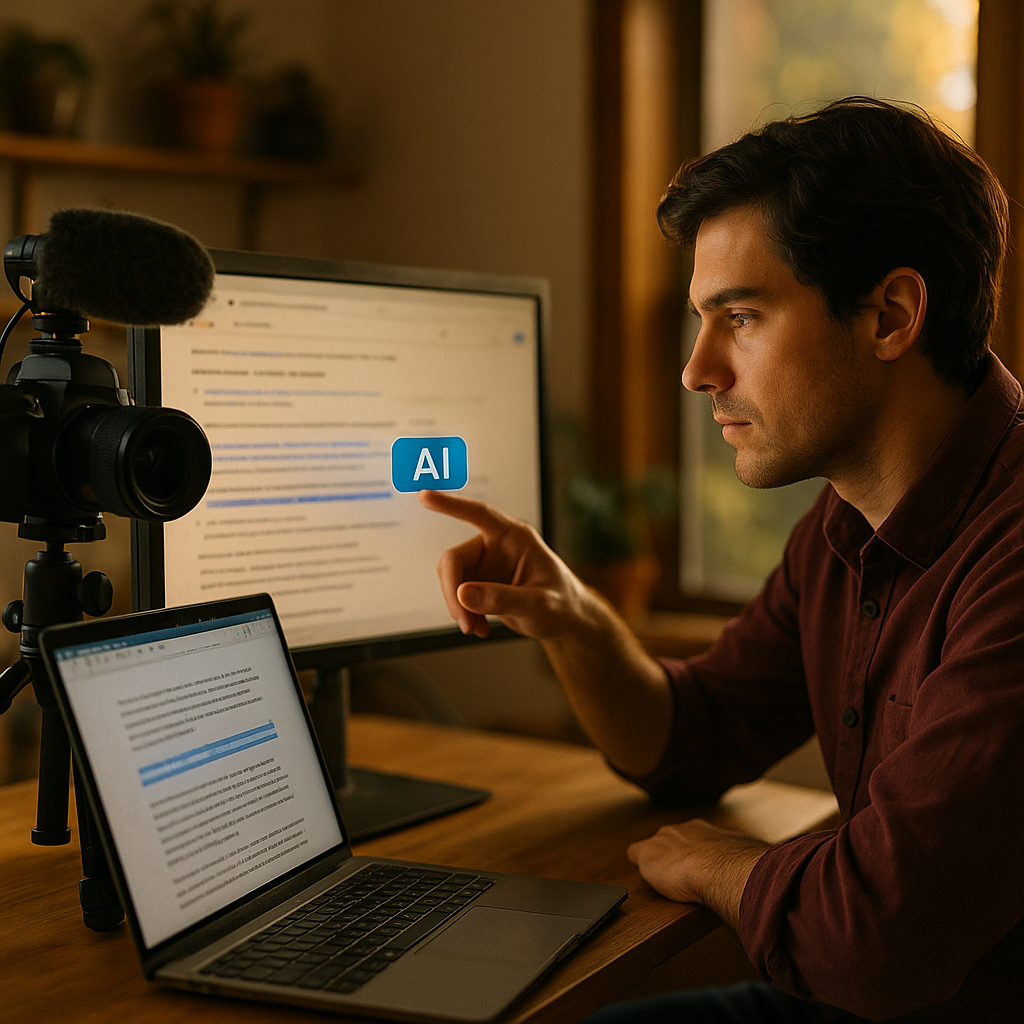
Nearly 60% of Google searches in the United States now end without a click, according to recent Statista analysis of search behavior. That means your carefully briefed creator content might be getting summarized, paraphrased, or ignored entirely by an AI Overview before a single human eye lands on your brand page. Optimizing influencer content for AI Overviews and zero click answer engines isn’t a future problem. It’s the operational reality for anyone running a program in 2026.
The old playbook, chase impressions, track link clicks, report engagement rate, was built for a web where people clicked through to read. That web is shrinking fast.
Why Zero Click Is the New Default
Google’s AI Overviews, ChatGPT search, Perplexity, and Microsoft Copilot are no longer novelty features. They’re the first touchpoint for a huge share of category research, product comparisons, and “best of” queries, the exact territory influencer content used to own. When a consumer asks an AI engine “what’s the best skincare routine for sensitive skin,” the answer engine isn’t sending them to a creator’s YouTube review. It’s synthesizing an answer from dozens of sources and citing a handful, if any.
This shift changes what “good” influencer content looks like. Virality still matters for brand awareness, but citability is the new currency for discovery and consideration. A piece of creator content that gets pulled into an AI Overview as a cited source carries disproportionate weight, because it’s shaping the actual answer a prospective customer sees, not just competing for attention in a feed.
If your creator content isn’t structured for retrieval, it doesn’t matter how good the production value is. AI engines can’t cite what they can’t parse.
We’ve written before about how GEO ownership gaps leave entire brands absent from AI answers, even when their organic SEO is strong. Influencer content is often the biggest blind spot inside that gap, because marketing teams treat it as a social asset, not a content asset that needs to feed answer engines.
What AI Overviews Actually Pull From Creator Content
Large language models don’t watch video the way humans do. They lean heavily on transcripts, captions, structured text, and metadata, plus whatever third-party sites (review aggregators, forums, publisher recaps) have already quoted or summarized the creator. This is a critical distinction for brand teams to internalize.
- Transcripts and captions, not just the video itself, are the primary ingestion point for most retrieval systems.
- Clear claims stated early, within the first 100 to 150 words of a caption or description, get weighted more heavily than claims buried in a narrative arc.
- Consistent entity references (brand name, product name, spelled the same way every time) help models connect creator content to your brand knowledge graph.
- Structured comparisons (“X works better than Y for sensitive skin because…”) map more cleanly to how answer engines construct comparative responses.
This is why a creator’s raw video performance and its AI citability can diverge wildly. A video with modest view counts but a tight, well-structured transcript can outperform a viral hit in terms of answer engine pickup. Brands optimizing purely for watch time are leaving citation value on the table.
Structural Fixes That Make Content Machine Readable
None of this requires creators to abandon authentic storytelling. It requires a few deliberate structural habits layered on top of the creative brief.
First, front load the verdict. Reviews and comparison content should state the conclusion early, then explain the reasoning, rather than building suspense toward a reveal at the end. AI summarization tools tend to grab the first clearly stated claim, so bury it and you lose it.
Second, use consistent naming. If a creator calls your product “the XYZ serum” in one post and “that new serum from XYZ” in another, you’re fragmenting the entity signal. Brief creators on exact product names and spellings, the same way you’d brief them on hashtags.
Third, publish supporting text assets alongside video. A blog recap, a detailed YouTube description, or a pinned comment with a structured summary gives retrieval systems a text-first version of the content to index. This is a big reason entity schema markup helps AI engines trust creator content, structured data gives machines a shortcut to understanding who said what about which product.
Fourth, treat FAQs as content, not afterthoughts. Creators answering specific, phrased-like-a-search-query questions (“does this foundation work for oily skin?”) give answer engines exactly the question-answer pairs they’re built to retrieve.
Entity Consistency Is the Unsexy Lever With Outsized Impact
Here’s an uncomfortable truth for a lot of brand teams: your influencer program is probably creating entity confusion at scale. Different creators spell your product differently, describe your category differently, and attribute claims inconsistently. Humans tolerate this. AI retrieval systems do not handle ambiguity gracefully, they either pick one version and ignore the rest, or they skip the source entirely because confidence is low.
Fixing this isn’t glamorous, but it’s high leverage. A shared brand glossary distributed to every creator, covering exact product names, approved claims, and category terminology, closes most of the gap. Pair that with entity salience audits to check whether your brand is actually showing up as a distinct, recognized entity across the answer engines your category cares about.
A brand mentioned inconsistently across fifty creators is weaker, in AI retrieval terms, than a brand mentioned identically across ten.
There’s also a risk dimension here. When creator claims get paraphrased by an LLM, there’s a real chance of distortion, a casual aside about “this cleared up my breakout in two days” can get compressed into an efficacy claim the brand never approved. That’s exactly the territory covered in our piece on AI hallucination risk and brand citations, and it’s a compliance conversation legal teams need to be part of, not just marketing.
Measurement Without Clicks: How Do You Prove ROI?
This is the question every CMO eventually asks, and it’s fair. If AI Overviews are suppressing click-through, how do you prove the influencer program is working?
The honest answer is that attribution models built entirely around last-click tracking are increasingly obsolete. You need a blended measurement approach that includes brand mention tracking inside AI answers themselves. Tools built specifically for this purpose have emerged over the past year, and our team ran a hands on comparison in Semrush, XFunnel, and Ortto tested for AI mention accuracy, which is worth reviewing before you pick a vendor.
Beyond mention tracking, brands should monitor:
- Share of voice inside category queries across ChatGPT, Perplexity, and Google AI Overviews.
- Sentiment of how your brand is characterized when it does get cited.
- Branded search lift, since zero click exposure often shows up downstream as direct navigation or branded query volume rather than referral traffic.
- Whether competitor products are being cited instead, and why, often a structural or entity consistency gap you can fix.
Platforms like HubSpot and Sprout Social have started layering AI mention monitoring into their existing analytics suites, which is a sign this measurement category is consolidating quickly rather than staying a niche add-on.
A Workflow Brands Can Actually Run
Theory is fine, but marketing teams need something operational. Here’s a practical sequence that fits inside an existing creator brief process without requiring a total rebuild.
- Brief for structure, not just message. Add a short section to creator briefs specifying verdict-first structure, exact product naming, and a required FAQ segment.
- Require a text companion asset. Every video deliverable should ship with a structured description or recap post, even a few hundred words, formatted with clear claims.
- Audit entity consistency quarterly. Pull a sample of published creator content and check naming and claim consistency against your brand glossary.
- Track citation share, not just reach. Add AI mention tracking to your reporting cadence alongside standard engagement metrics.
- Loop legal in early. Claims that get paraphrased by an AI engine can drift from what was originally approved, so build a review step for high-risk claim categories.
This isn’t about replacing creative judgment with a checklist. It’s about recognizing that answer engine optimization for creator UGC is now a distinct discipline sitting alongside traditional influencer strategy, and the brands that treat it as a bolt-on will keep losing citation share to competitors who don’t.
It also connects to broader GEO infrastructure questions. Grounding your creator claims in verifiable brand data, the same way retrieval augmented generation grounds AI copy in brand truth, reduces the odds that an answer engine invents a claim your creator never actually made. The FTC’s guidance on endorsements, available at ftc.gov, is also worth revisiting here, because misattributed AI-summarized claims carry the same disclosure and accuracy risks as the original content.
Finally, keep an eye on query volume data from sources like eMarketer to understand how fast zero click behavior is shifting in your specific category. Beauty and tech skew faster than B2B industrial, for instance, so your optimization urgency should match your category’s actual search behavior, not a blanket industry average.
What This Means for Creator Selection
One underrated consequence: creators who naturally speak in structured, claim-forward language (think reviewers and comparison specialists) are becoming more valuable for AI citability than pure entertainment creators, even if the entertainment creators post bigger numbers. That doesn’t mean ditch your lifestyle roster. It means your creator mix needs a citability lane alongside your reach lane, each measured against different KPIs.
Frequently Asked Questions
What are AI Overviews and why do they matter for influencer marketing?
AI Overviews are AI-generated summaries that appear at the top of search results, synthesizing information from multiple sources instead of sending users to individual pages. They matter for influencer marketing because they can cite, paraphrase, or ignore creator content entirely, shifting value from raw views toward citability.
How do you know if your influencer content is being cited by AI engines?
Dedicated mention tracking tools can monitor brand and product citations across ChatGPT, Perplexity, and Google AI Overviews. Manual spot checks, running your category’s top queries through each engine and noting which brands and creators get cited, are a useful starting point before investing in a full platform.
Does video content get indexed by AI answer engines the same way text does?
Not exactly. Most retrieval systems rely heavily on transcripts, captions, and accompanying text rather than parsing raw video. Pairing video content with a structured text companion asset significantly improves the odds of being pulled into an answer.
Will optimizing for AI Overviews hurt engagement on social platforms?
No. The structural changes, front loaded verdicts, consistent naming, FAQ segments, don’t conflict with strong storytelling. Most creators can incorporate these elements without sacrificing the tone that drives engagement.
Who should own AI Overview optimization inside a marketing team?
It typically sits between the influencer marketing and SEO or GEO teams, since it requires creator briefing expertise and technical understanding of how answer engines retrieve and rank content. Cross-functional ownership, with legal looped in for claims review, tends to produce the best results.
Next step: Pull your last quarter of creator content and run five of your top category queries through ChatGPT, Perplexity, and Google’s AI Overview. If your brand isn’t showing up, you’ve just found your highest priority GEO fix for the next sprint.
Frequently Asked Questions
What are AI Overviews and why do they matter for influencer marketing?
AI Overviews are AI-generated summaries that appear at the top of search results, synthesizing information from multiple sources instead of sending users to individual pages. They matter for influencer marketing because they can cite, paraphrase, or ignore creator content entirely, shifting value from raw views toward citability.
How do you know if your influencer content is being cited by AI engines?
Dedicated mention tracking tools can monitor brand and product citations across ChatGPT, Perplexity, and Google AI Overviews. Manual spot checks, running your category’s top queries through each engine and noting which brands and creators get cited, are a useful starting point before investing in a full platform.
Does video content get indexed by AI answer engines the same way text does?
Not exactly. Most retrieval systems rely heavily on transcripts, captions, and accompanying text rather than parsing raw video. Pairing video content with a structured text companion asset significantly improves the odds of being pulled into an answer.
Will optimizing for AI Overviews hurt engagement on social platforms?
No. The structural changes, front loaded verdicts, consistent naming, FAQ segments, don’t conflict with strong storytelling. Most creators can incorporate these elements without sacrificing the tone that drives engagement.
Who should own AI Overview optimization inside a marketing team?
It typically sits between the influencer marketing and SEO or GEO teams, since it requires creator briefing expertise and technical understanding of how answer engines retrieve and rank content. Cross-functional ownership, with legal looped in for claims review, tends to produce the best results.
Top Influencer Marketing Agencies
The leading agencies shaping influencer marketing in 2026
Agencies ranked by campaign performance, client diversity, platform expertise, proven ROI, industry recognition, and client satisfaction. Assessed through verified case studies, reviews, and industry consultations.
Moburst

-
2

The Shelf
Boutique Beauty & Lifestyle Influencer AgencyA data-driven boutique agency specializing exclusively in beauty, wellness, and lifestyle influencer campaigns on Instagram and TikTok. Best for brands already focused on the beauty/personal care space that need curated, aesthetic-driven content.Clients: Pepsi, The Honest Company, Hims, Elf Cosmetics, Pure LeafVisit The Shelf → -
3

Audiencly
Niche Gaming & Esports Influencer AgencyA specialized agency focused exclusively on gaming and esports creators on YouTube, Twitch, and TikTok. Ideal if your campaign is 100% gaming-focused — from game launches to hardware and esports events.Clients: Epic Games, NordVPN, Ubisoft, Wargaming, Tencent GamesVisit Audiencly → -
4

Viral Nation
Global Influencer Marketing & Talent AgencyA dual talent management and marketing agency with proprietary brand safety tools and a global creator network spanning nano-influencers to celebrities across all major platforms.Clients: Meta, Activision Blizzard, Energizer, Aston Martin, WalmartVisit Viral Nation → -
5

The Influencer Marketing Factory
TikTok, Instagram & YouTube CampaignsA full-service agency with strong TikTok expertise, offering end-to-end campaign management from influencer discovery through performance reporting with a focus on platform-native content.Clients: Google, Snapchat, Universal Music, Bumble, YelpVisit TIMF → -
6

NeoReach
Enterprise Analytics & Influencer CampaignsAn enterprise-focused agency combining managed campaigns with a powerful self-service data platform for influencer search, audience analytics, and attribution modeling.Clients: Amazon, Airbnb, Netflix, Honda, The New York TimesVisit NeoReach → -
7

Ubiquitous
Creator-First Marketing PlatformA tech-driven platform combining self-service tools with managed campaign options, emphasizing speed and scalability for brands managing multiple influencer relationships.Clients: Lyft, Disney, Target, American Eagle, NetflixVisit Ubiquitous → -
8

Obviously
Scalable Enterprise Influencer CampaignsA tech-enabled agency built for high-volume campaigns, coordinating hundreds of creators simultaneously with end-to-end logistics, content rights management, and product seeding.Clients: Google, Ulta Beauty, Converse, AmazonVisit Obviously →