


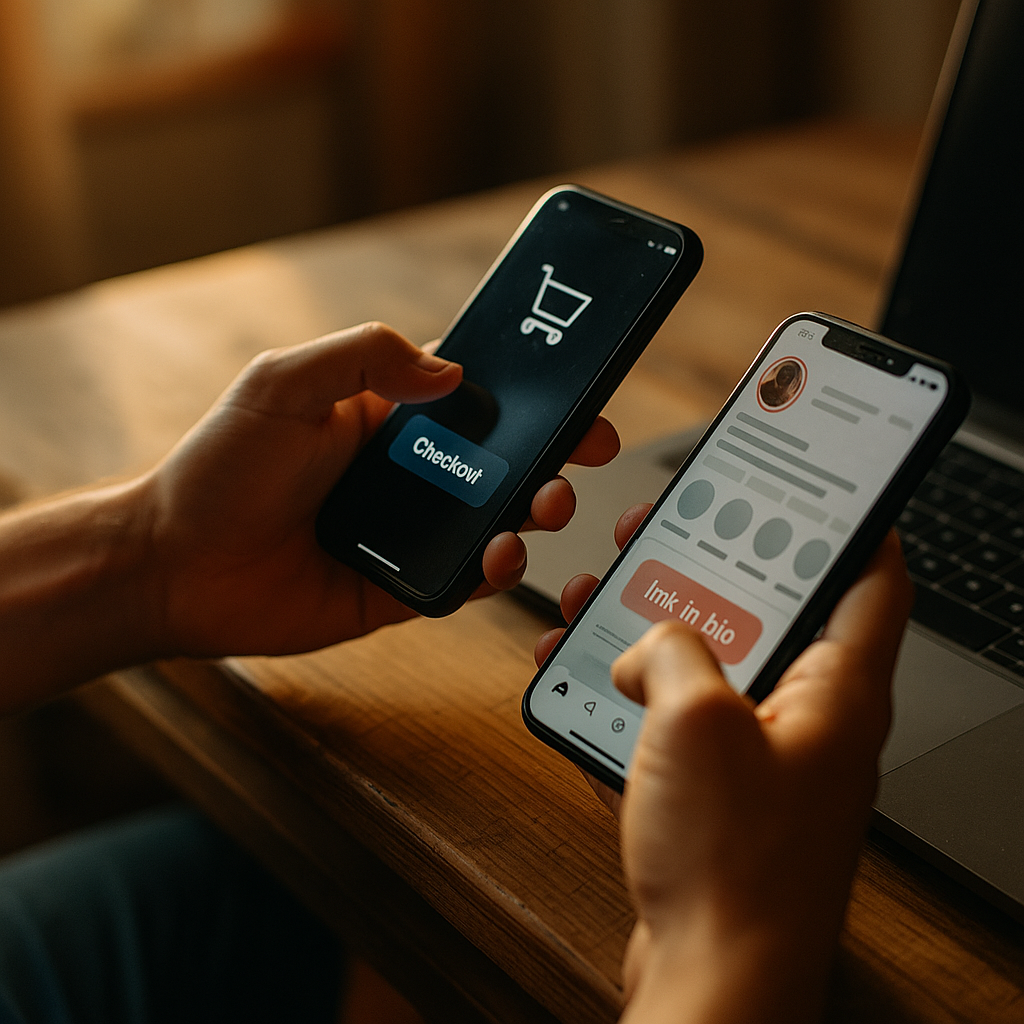
The future of social commerce is rapidly evolving, with brands and creators weighing the benefits of in-app checkouts versus traditional link-in-bio strategies. As platforms enhance their shopping features in 2025, businesses face critical decisions on where to focus their ecommerce efforts. Should you rely on seamless in-app purchases or stick with outbound links? Let’s explore what works best this year.
Understanding Social Commerce Trends in 2025
Social commerce has become a $1.5 trillion industry as of early 2025, reflecting a massive shift in how consumers discover and purchase products online. Social platforms like Instagram, TikTok, and Pinterest continue to expand shopping features, integrating product discovery and purchase journeys into a single, uninterrupted flow. For businesses, adapting to these changes means understanding customer behavior: shoppers crave speed, trust, and minimal friction.
According to Deloitte’s 2025 report, over 58% of Gen Z and Millennial consumers prefer buying directly from social apps. This trend is motivated by real-time interaction with influencers, AI-powered recommendations, and the convenience of skipping multiple redirects. As platforms compete to be the go-to shopping destination, the question is no longer “if” but “how” your brand should participate.
The Rise of In-App Checkouts: Seamless Conversion Paths
In-app checkouts represent the cutting edge of social commerce in 2025. Platforms like Instagram, TikTok, and Facebook have introduced robust native shopping features, allowing users to view, select, and purchase products without leaving the app. This significantly reduces the steps between discovery and conversion—a major advantage in capturing impulse buys.
Benefits of in-app checkouts include:
- Increased conversion rates: Shopify reports that sellers who enable in-app purchases on supported platforms see up to 30% higher conversion rates compared to external checkouts.
- Enhanced trust: Social networks invest in security and buyer protections, reassuring shoppers unfamiliar with smaller brands.
- Personalized experience: Algorithms tailor product recommendations, improving relevance and satisfaction.
However, businesses must relinquish some control over branding and data ownership, as much of the purchasing journey happens within the social platform’s ecosystem. Successful strategies require careful consideration of fees, limited customization options, and compliance with evolving platform policies.
The Enduring Value of Link-in-Bio Strategies
Despite the rapid adoption of in-app checkouts, link-in-bio approaches continue to deliver value, especially for businesses seeking more control over customer relationships. Link-in-bio tools such as Linktree, Beacons, and direct Shopify links empower brands to direct traffic to their owned online stores, landing pages, or multi-link hubs.
Key advantages of the link-in-bio method in 2025 include:
- Full brand control: Merchants can customize the customer journey, upsell, cross-sell, and design optimized checkouts.
- Robust analytics: Brands gain detailed insights into traffic sources, shopper behavior, and conversion funnels.
- Email and loyalty capture: Link-outs allow for collecting customer emails and building long-term relationships beyond one-off purchases.
However, studies show drop-off rates increase with every extra step in the purchase path. Optimizing your landing pages for mobile, speed, and clarity remains essential when relying on external checkouts.
EEAT Best Practices: Building Trust and Authority on Social Commerce
The future of social commerce demands that brands prioritize EEAT—Experience, Expertise, Authoritativeness, and Trustworthiness. Regardless of the checkout method, consumers expect transparency, authentic engagement, and consistent value delivery.
- Showcase real-world expertise: Share behind-the-scenes content, customer testimonials, and case studies to demonstrate product effectiveness.
- Prioritize safety and support: Use secure checkout solutions and make return policies, customer service, and warranties visible and easy to access.
- Stay updated with platform requirements: Social networks often update commerce policies, so maintain compliance and be transparent about shipping, returns, and data privacy.
Influencers and micro-creators can further bolster EEAT by sharing unbiased reviews and partnering with brands that align with their audience’s values. The result: greater customer confidence, improved retention, and stronger conversion rates.
How to Choose: In-App Checkout or Link-in-Bio?
Choosing between in-app checkouts and link-in-bio strategies requires aligning your approach with your brand’s resources, goals, and audience preferences. Here’s a quick comparison to guide your 2025 strategy:
- Best for fast, impulse buys: In-app checkouts streamline the purchasing process and capitalize on real-time engagement, ideal for trending products or low-consideration goods.
- Best for brand-building and higher-value products: Link-in-bio is perfect for brands needing richer product pages, storytelling, subscriptions, or bundled offerings.
- Consider the hybrid approach: Many successful brands are blending both options—using in-app purchase features for specific products while maintaining a strong “link in bio” presence for broader browsing, customer education, and loyalty programs.
Test, monitor, and iterate: analyze where your conversions are coming from and don’t hesitate to shift resources as your audience’s behavior evolves.
Optimizing Social Commerce for the Future
As social platforms continue refining their ecommerce features in 2025, savvy brands will focus on creating a frictionless, customer-centric journey. Top-performing businesses follow these optimization strategies:
- Mobile-first everything: Ensure every landing page or in-app listing is fast, visually appealing, and easy to navigate on smartphones.
- Leverage data analytics: Utilize both in-app insights and external analytics to refine your product mix, content, and checkout flows in real time.
- Update content regularly: Algorithmic feeds reward timely, relevant product posts and stories—keep your social storefront fresh and engaging.
- Engage authentically: Social commerce thrives on genuine interactions. Respond promptly to questions, address feedback, and foster community.
Staying adaptable—testing both in-app checkouts and external link strategies—gives you the flexibility to reach and convert diverse customer segments now and in the years ahead.
FAQs About the Future of Social Commerce: In-App Checkouts vs. Link-in-Bio
-
Is in-app checkout more secure than using a link-in-bio?
Leading social platforms now offer strong security, fraud protection, and buyer support for in-app purchases, but reputable external stores with SSL certificates also provide high security. Always ensure your chosen method uses secure payment processing and transparent policies. -
Do in-app checkouts offer better conversion rates than link-in-bio approaches?
In 2025, native in-app checkouts deliver higher conversion rates on trending or impulse products due to fewer steps. However, customized landing pages via link-in-bio often convert better for high-touch or complex offers. The ideal approach depends on your audience and product type. -
Can businesses use both in-app and link-in-bio strategies?
Absolutely. Hybrid approaches are increasingly popular: brands leverage in-app shopping for instant conversions and “link in bio” journeys for richer engagement, upselling, and customer list building. -
How do platform fees compare for in-app versus external checkouts?
Most social platforms charge transaction fees for in-app purchases, often similar to or slightly higher than standard ecommerce processor rates. Link-in-bio strategies give brands control over choosing their payment processors and associated fees. -
Is customer data available when using in-app checkouts?
Data visibility is often limited with in-app checkouts, as platforms may restrict access to customer email and purchase details. Directing shoppers to your own site via link-in-bio provides broader data insights and remarketing options.
In summary, the future of social commerce in 2025 rests on choosing the right balance between in-app checkouts and link-in-bio strategies. Prioritize seamless customer journeys, trust, and flexibility to maximize growth regardless of platform evolution.
Top Influencer Marketing Agencies
The leading agencies shaping influencer marketing in 2026
Agencies ranked by campaign performance, client diversity, platform expertise, proven ROI, industry recognition, and client satisfaction. Assessed through verified case studies, reviews, and industry consultations.
Moburst

-
2

The Shelf
Boutique Beauty & Lifestyle Influencer AgencyA data-driven boutique agency specializing exclusively in beauty, wellness, and lifestyle influencer campaigns on Instagram and TikTok. Best for brands already focused on the beauty/personal care space that need curated, aesthetic-driven content.Clients: Pepsi, The Honest Company, Hims, Elf Cosmetics, Pure LeafVisit The Shelf → -
3

Audiencly
Niche Gaming & Esports Influencer AgencyA specialized agency focused exclusively on gaming and esports creators on YouTube, Twitch, and TikTok. Ideal if your campaign is 100% gaming-focused — from game launches to hardware and esports events.Clients: Epic Games, NordVPN, Ubisoft, Wargaming, Tencent GamesVisit Audiencly → -
4

Viral Nation
Global Influencer Marketing & Talent AgencyA dual talent management and marketing agency with proprietary brand safety tools and a global creator network spanning nano-influencers to celebrities across all major platforms.Clients: Meta, Activision Blizzard, Energizer, Aston Martin, WalmartVisit Viral Nation → -
5

The Influencer Marketing Factory
TikTok, Instagram & YouTube CampaignsA full-service agency with strong TikTok expertise, offering end-to-end campaign management from influencer discovery through performance reporting with a focus on platform-native content.Clients: Google, Snapchat, Universal Music, Bumble, YelpVisit TIMF → -
6

NeoReach
Enterprise Analytics & Influencer CampaignsAn enterprise-focused agency combining managed campaigns with a powerful self-service data platform for influencer search, audience analytics, and attribution modeling.Clients: Amazon, Airbnb, Netflix, Honda, The New York TimesVisit NeoReach → -
7

Ubiquitous
Creator-First Marketing PlatformA tech-driven platform combining self-service tools with managed campaign options, emphasizing speed and scalability for brands managing multiple influencer relationships.Clients: Lyft, Disney, Target, American Eagle, NetflixVisit Ubiquitous → -
8

Obviously
Scalable Enterprise Influencer CampaignsA tech-enabled agency built for high-volume campaigns, coordinating hundreds of creators simultaneously with end-to-end logistics, content rights management, and product seeding.Clients: Google, Ulta Beauty, Converse, AmazonVisit Obviously →