


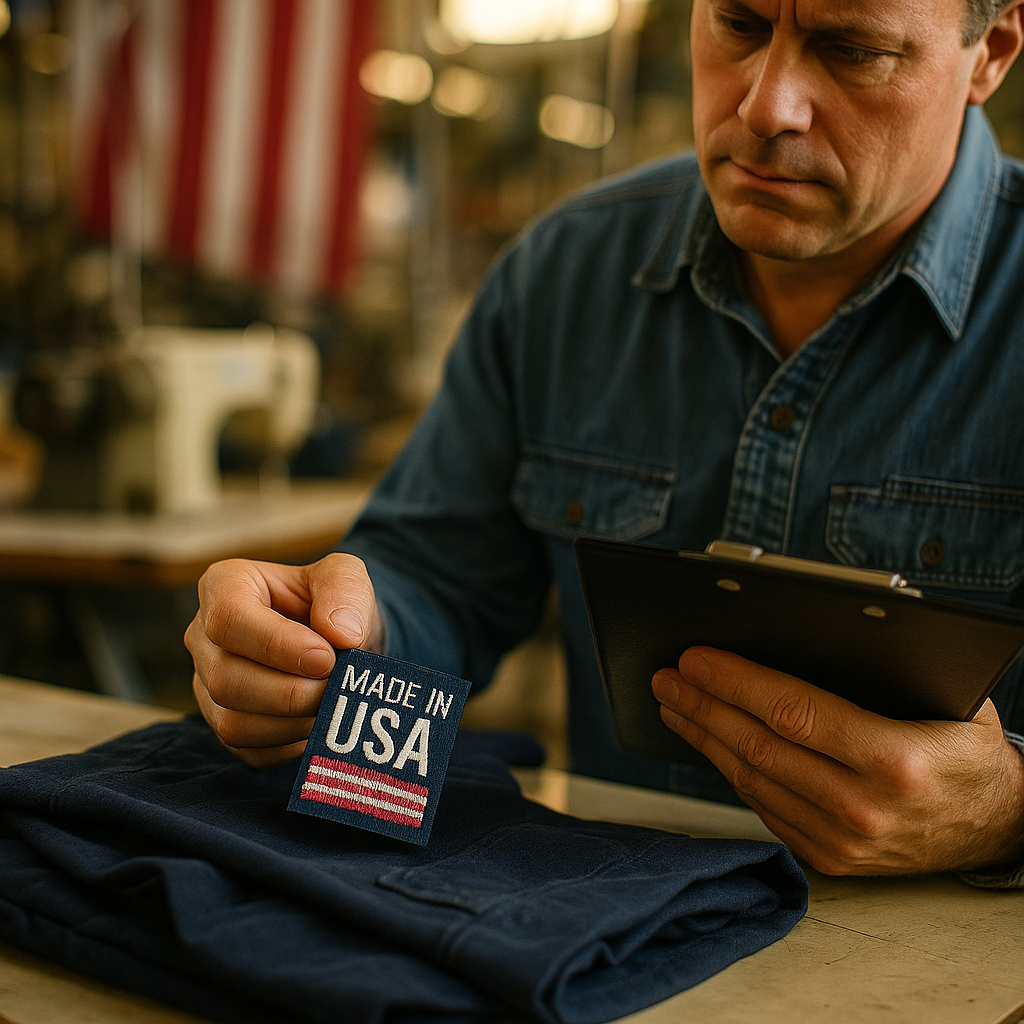
Navigating the landscape of made-in-USA and country of origin labeling laws is crucial for businesses aiming to promote transparency and earn consumer trust. These regulations impact marketing, consumer perception, and even legal compliance for manufacturers and retailers. Understanding what qualifies as “made in USA” and the nuances of origin labeling is more important than ever—here’s what you need to know to stay compliant and competitive in 2025.
Understanding Made-in-USA Claims and Their Impact
The phrase “made in USA” carries significant weight for American consumers, often associated with quality, job creation, and high manufacturing standards. However, using this claim requires compliance with strict legal standards set primarily by the Federal Trade Commission (FTC). According to a recent FTC Consumer Protection Data Spotlight, over 75% of surveyed Americans consider product origin when making purchases.
To make an unqualified “made in USA” claim, a product must be “all or virtually all” made in the United States. This means all significant parts, processing, and labor must originate domestically. Even small components made abroad can disqualify a product from making this claim. The FTC actively enforces these rules, especially as more brands leverage national pride in their marketing.
Country of Origin Labeling Laws: What Every Business Should Know
Country of origin labeling (COOL) laws establish vital consumer rights to know where products come from, especially for foods, textiles, and automobiles. The Food & Drug Administration (FDA), Customs and Border Protection (CBP), and Department of Agriculture (USDA) each regulate different industries under COOL requirements.
- Non-food goods: The U.S. CBP requires that imported goods conspicuously and legibly indicate their country of origin. No such universal requirement exists for wholly domestically manufactured products, but mislabeling, even by accident, can trigger severe penalties.
- Textiles and apparel: Specific labeling rules apply, including fiber content, country of origin, and manufacturer/importer identity. Each garment must have a permanent label identifying where it was made.
- Food: The USDA and FDA enforce COOL for products such as meat, fish, fresh produce, and some nuts. Mandatory country of origin label statements must appear at point of sale for covered commodities. For processed foods, requirements are more limited but still important for certain categories.
Businesses must keep comprehensive records to substantiate their claims—a practice essential for passing regulatory audits and earning consumer loyalty.
How to Substantiate Made-in-USA and Origin Claims
Demonstrating the truthfulness of a made-in-USA or other country of origin claim is more than a marketing exercise; it’s a legal requirement. The FTC has clarified its expectations in several recent guidance documents. Companies must have a “reasonable basis” for any origin claim, including robust documentation on sourcing, manufacturing, and assembly.
- Tracing supply chains: Maintain supplier affidavits, bills of lading, and manufacturing records showing where every component was sourced and processed.
- Auditing assembly practices: Prove that the final assembly or substantial transformation occurs in the claimed country.
- Continuous review: Update records regularly to ensure ongoing compliance, especially if sourcing or manufacturing processes change.
Remember, making an unsubstantiated origin claim can result in hefty FTC fines, product recalls, and serious reputational damage. Market leaders build compliance processes into their product development lifecycle.
Best Practices for Compliant Origin Labeling
Businesses have a competitive edge when they proactively address country of origin transparency. The best practices outlined below reflect both legal requirements and what industry watchdogs look for in 2025:
- Use qualified claims where necessary: If a product only partially meets made-in-USA standards, use clear qualifiers. For example, “Made in USA with domestic and imported parts.”
- Ensure labels are prominent and permanent: Both the FTC and CBP prioritize consumer accessibility when reviewing labeling placement and permanence.
- Train staff and partners: Educate internal teams and supply chain partners on labeling requirements so mistakes don’t slip through.
- Monitor supply chain changes: Establish a routine to review and approve any sourcing or manufacturing changes before adjusting labeling claims.
- Engage legal counsel for gray areas: Some products, especially complex ones, occupy tricky compliance territory. A legal review can prevent accidental violations.
Following these strategies can help businesses confidently market origin claims, minimize legal risks, and meet growing consumer demands for authenticity.
Made-in-USA Labeling Enforcement Trends in 2025
Regulatory enforcement of made-in-USA and origin labeling laws has increased over the past year. The FTC has announced several high-profile settlements and penalties for deceptive claims, reflecting its commitment to transparency. In particular, the surge in e-commerce and online marketplaces has brought origin claims to the forefront, as consumers have less opportunity to inspect products in person.
Technology is shaping enforcement as well. The FTC now uses artificial intelligence tools to scan and flag suspicious claims across thousands of websites and marketplaces. In 2025, regulators have urged small businesses to stay vigilant, since inadvertent violations are just as actionable as willful misstatements. As state-level enforcement picks up, especially in California and New York, companies must adapt swiftly to evolving standards.
Consumer advocacy groups also conduct independent testing and publicize violations, increasing reputational stakes. Transparent origin labeling isn’t just smart compliance, but a differentiator in a crowded marketplace.
Key Differences for Manufacturers, Importers, and Retailers
Origin labeling affects each business type differently. Manufacturers must design products and source components with compliance in mind from the outset. Importers face heightened scrutiny from CBP at U.S. ports, needing to ensure every item is properly marked and accompanied by documentation.
Retailers must verify claims made by their suppliers, as both the FTC and state attorneys general can hold retailers responsible for selling deceptively labeled products. Some major retailers have implemented regular supplier audits and random product testing to detect and correct potential violations before products reach shelves or online listings.
Each link in the supply chain shares responsibility. Coordination, transparency, and regular communication are essential for robust compliance, especially as product lines or suppliers evolve.
Conclusion
Understanding and following made-in-USA and country of origin labeling laws is imperative for business success, legal safety, and consumer trust in 2025. Proactive compliance, careful documentation, and ongoing updates to your processes can elevate your brand and protect against costly penalties. Stay informed, keep transparent, and use accurate origin information as a competitive advantage.
Frequently Asked Questions
-
What qualifies a product as “made in USA”?
A product must be “all or virtually all” made in the United States, meaning all significant parts, processing, and labor occur domestically. A minor foreign component can disqualify the claim. -
Who enforces made-in-USA and country of origin labeling laws?
The Federal Trade Commission (FTC), Customs and Border Protection (CBP), the USDA, and the FDA each regulate different aspects of labeling, depending on product type. -
Do all products require a country of origin label?
Most imported products must display a country of origin label. For domestically made products, requirements vary by industry and specific product category. -
How can businesses substantiate their origin claims?
Maintain thorough documentation of sourcing, manufacturing, and assembly. Periodically audit both processes and supply chains to ensure ongoing accuracy. -
Are there penalties for non-compliance?
Yes. Non-compliance can result in fines, forced product recalls, import seizures, and significant reputational harm. -
Is there a difference between “assembled in USA” and “made in USA”?
Yes. “Made in USA” means virtually all components and the manufacturing process are in the U.S. “Assembled in USA” is a qualified claim, indicating substantial assembly happened in the U.S. but not all parts necessarily originated there.
Top Influencer Marketing Agencies
The leading agencies shaping influencer marketing in 2026
Agencies ranked by campaign performance, client diversity, platform expertise, proven ROI, industry recognition, and client satisfaction. Assessed through verified case studies, reviews, and industry consultations.
Moburst

-
2

The Shelf
Boutique Beauty & Lifestyle Influencer AgencyA data-driven boutique agency specializing exclusively in beauty, wellness, and lifestyle influencer campaigns on Instagram and TikTok. Best for brands already focused on the beauty/personal care space that need curated, aesthetic-driven content.Clients: Pepsi, The Honest Company, Hims, Elf Cosmetics, Pure LeafVisit The Shelf → -
3

Audiencly
Niche Gaming & Esports Influencer AgencyA specialized agency focused exclusively on gaming and esports creators on YouTube, Twitch, and TikTok. Ideal if your campaign is 100% gaming-focused — from game launches to hardware and esports events.Clients: Epic Games, NordVPN, Ubisoft, Wargaming, Tencent GamesVisit Audiencly → -
4

Viral Nation
Global Influencer Marketing & Talent AgencyA dual talent management and marketing agency with proprietary brand safety tools and a global creator network spanning nano-influencers to celebrities across all major platforms.Clients: Meta, Activision Blizzard, Energizer, Aston Martin, WalmartVisit Viral Nation → -
5

The Influencer Marketing Factory
TikTok, Instagram & YouTube CampaignsA full-service agency with strong TikTok expertise, offering end-to-end campaign management from influencer discovery through performance reporting with a focus on platform-native content.Clients: Google, Snapchat, Universal Music, Bumble, YelpVisit TIMF → -
6

NeoReach
Enterprise Analytics & Influencer CampaignsAn enterprise-focused agency combining managed campaigns with a powerful self-service data platform for influencer search, audience analytics, and attribution modeling.Clients: Amazon, Airbnb, Netflix, Honda, The New York TimesVisit NeoReach → -
7

Ubiquitous
Creator-First Marketing PlatformA tech-driven platform combining self-service tools with managed campaign options, emphasizing speed and scalability for brands managing multiple influencer relationships.Clients: Lyft, Disney, Target, American Eagle, NetflixVisit Ubiquitous → -
8

Obviously
Scalable Enterprise Influencer CampaignsA tech-enabled agency built for high-volume campaigns, coordinating hundreds of creators simultaneously with end-to-end logistics, content rights management, and product seeding.Clients: Google, Ulta Beauty, Converse, AmazonVisit Obviously →